Luxury home remodeling in Northern Virginia means a kitchen, a bathroom, a whole floor or a whole house rebuilt to the standard the houses of McLean, Great Falls, Vienna, Ashburn and Leesburg are sold at: custom cabinetry rather than catalog boxes, natural stone where the hands land, appliances and fixtures chosen for how they work for twenty years, and a design process that settles every one of those choices before the first wall opens. It is not the same thing as an expensive remodel. Plenty of expensive remodels are ordinary work with costly materials bolted on. This guide covers what luxury remodeling actually includes, what it costs here in 2026 project by project, where the money goes, how long it takes, how the design build process differs from hiring an architect and a contractor separately, and how to choose a firm. The figures are the ones EA Home Design works to on its own projects across Fairfax and Loudoun County.
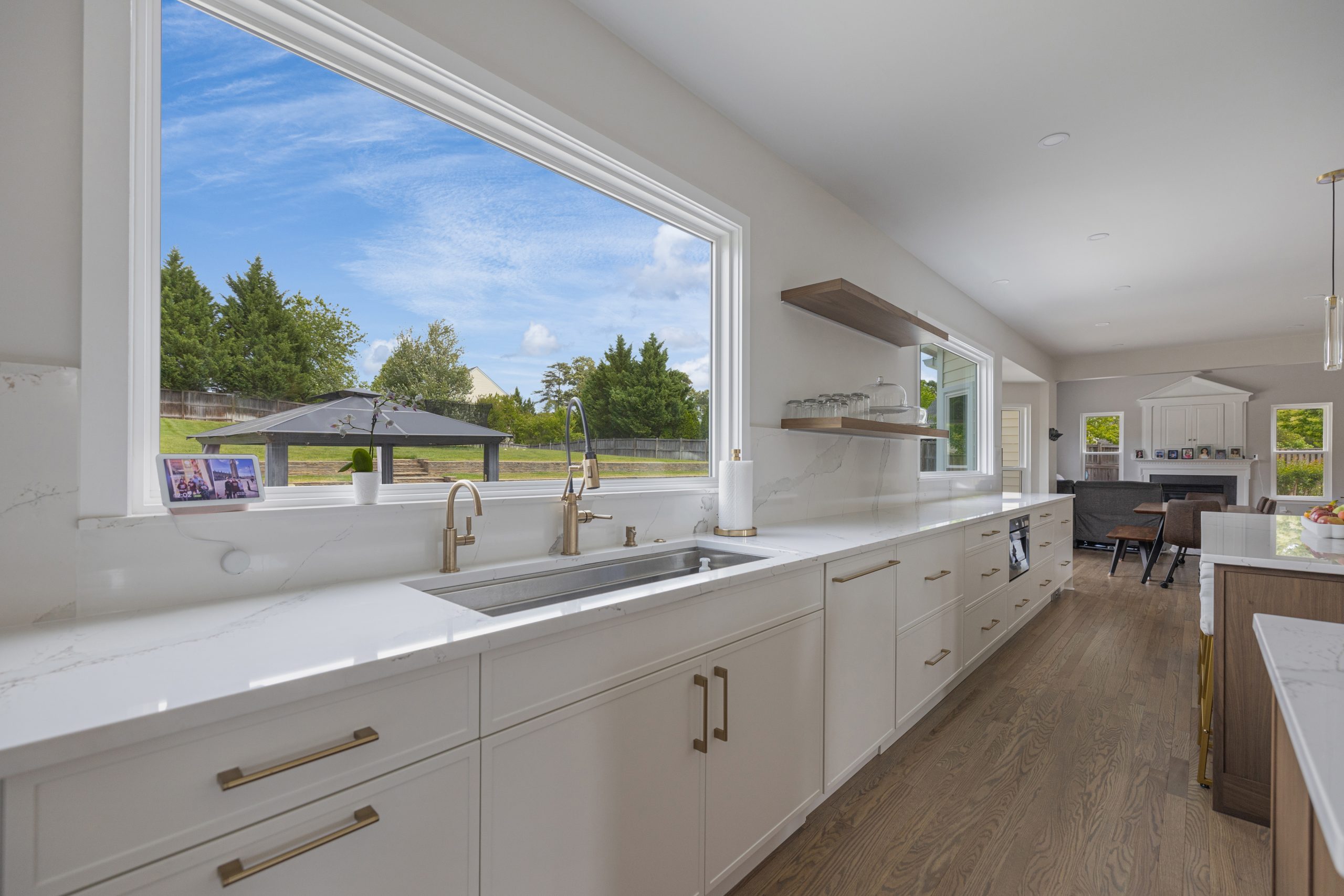
What Luxury Home Remodeling Actually Means
Ask five homeowners what makes a remodel luxury and four will say the materials. Materials matter, but they are the least of it. On the projects that earn the word, five things are true at once.
| What sets it apart | What it looks like on the job |
|---|---|
| The design is finished before construction starts | Every cabinet, counter, tile, fixture and finish is drawn, specified and priced on one set of documents, so nothing is decided on site |
| The layout changes to suit the house, not the other way round | Walls move, windows grow, ceilings open; the room is planned around the view, the light and the way the family lives |
| Materials are chosen for their first twenty years | Custom or inset cabinetry, natural stone, solid wood floors, plaster, steel and brass that age well instead of wearing out |
| The mechanical work is as good as the finishes | New electrical, plumbing and ventilation, proper waterproofing, sound insulation, lighting on scenes; the parts you never see |
| One team carries it from sketch to punch list | Designer, project manager and trades under one contract, with one person answerable for the result |
That last point is why most luxury remodeling in this region is done by design build firms, and the section on choosing a remodeling company later in this guide goes into how to tell them apart. First, the money.
Luxury Home Remodeling Cost in Northern Virginia (2026)
These are the 2026 ranges EA Home Design uses for Fairfax and Loudoun County, the same figures as our cost guides for each project type. They include design, permits, construction and the finishes that make the project luxury. They do not include furniture, and a project that moves plumbing, structure or the roof sits at the top of each range.
| Project | 2026 cost, Northern Virginia | What the range covers |
|---|---|---|
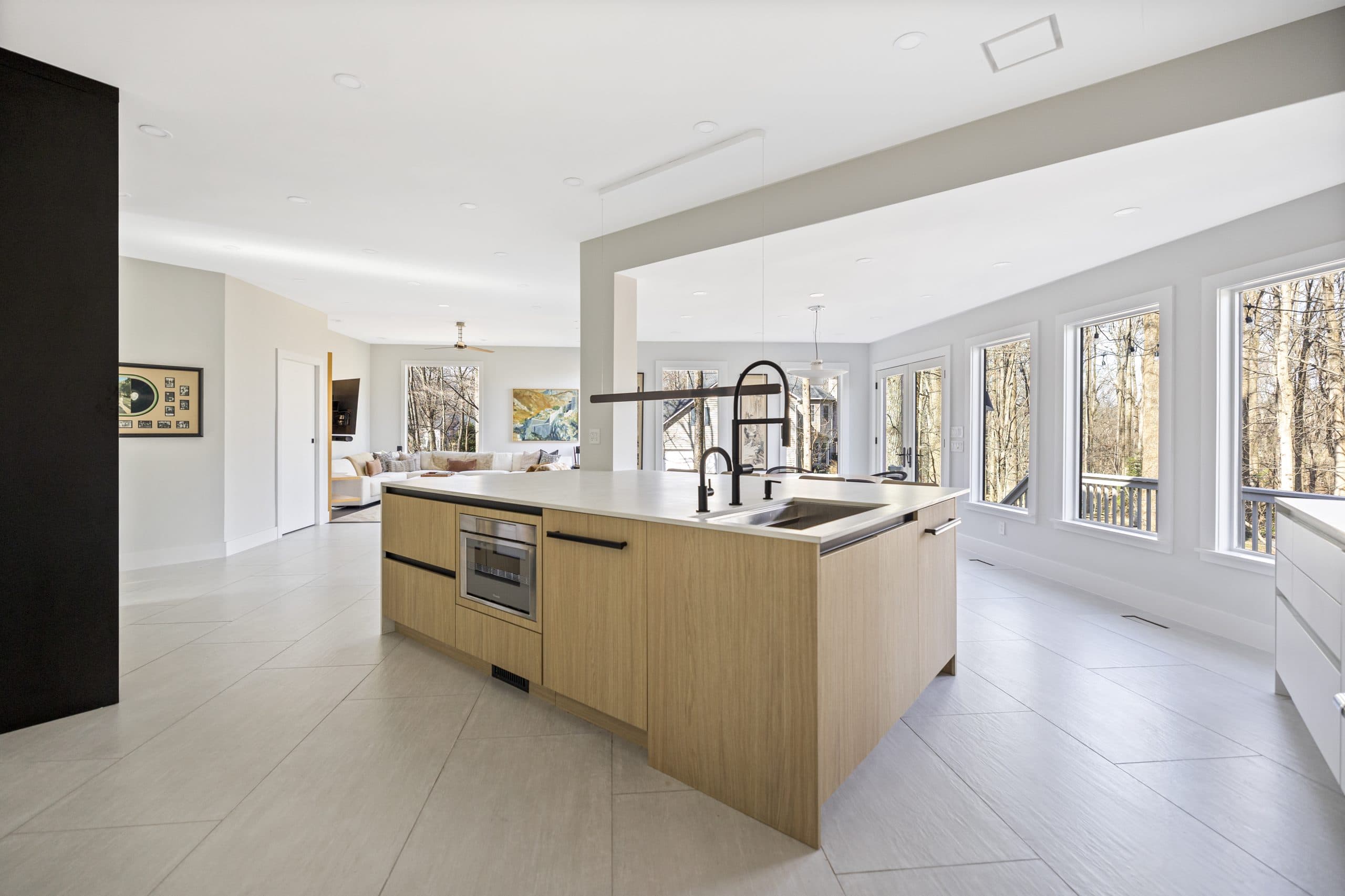
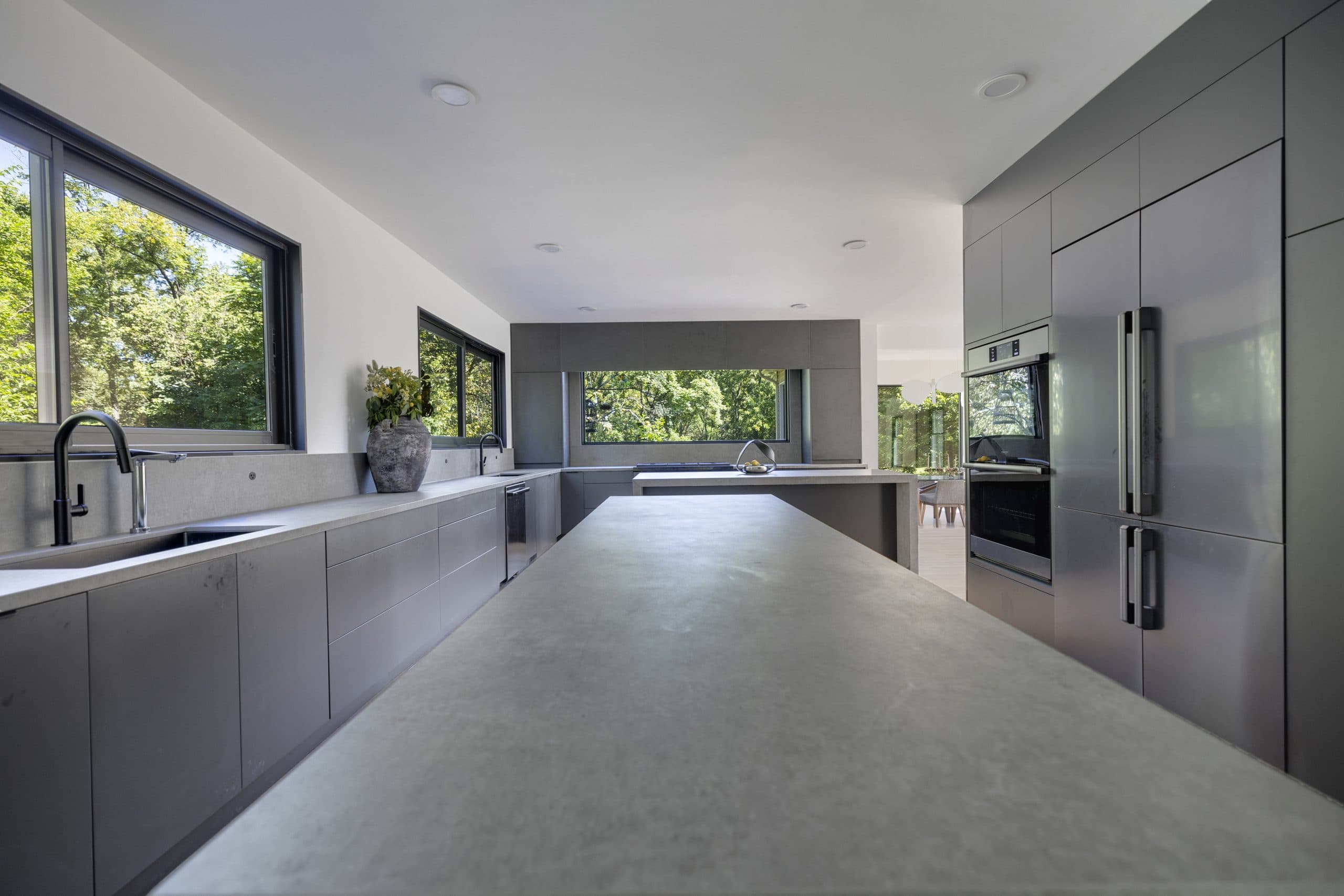
| Luxury kitchen remodel | $120,000 to $200,000 | Custom or inset cabinetry, stone counters, a built-in appliance package, new lighting and flooring, often a wall removed; our kitchen cost guide has the full breakdown |
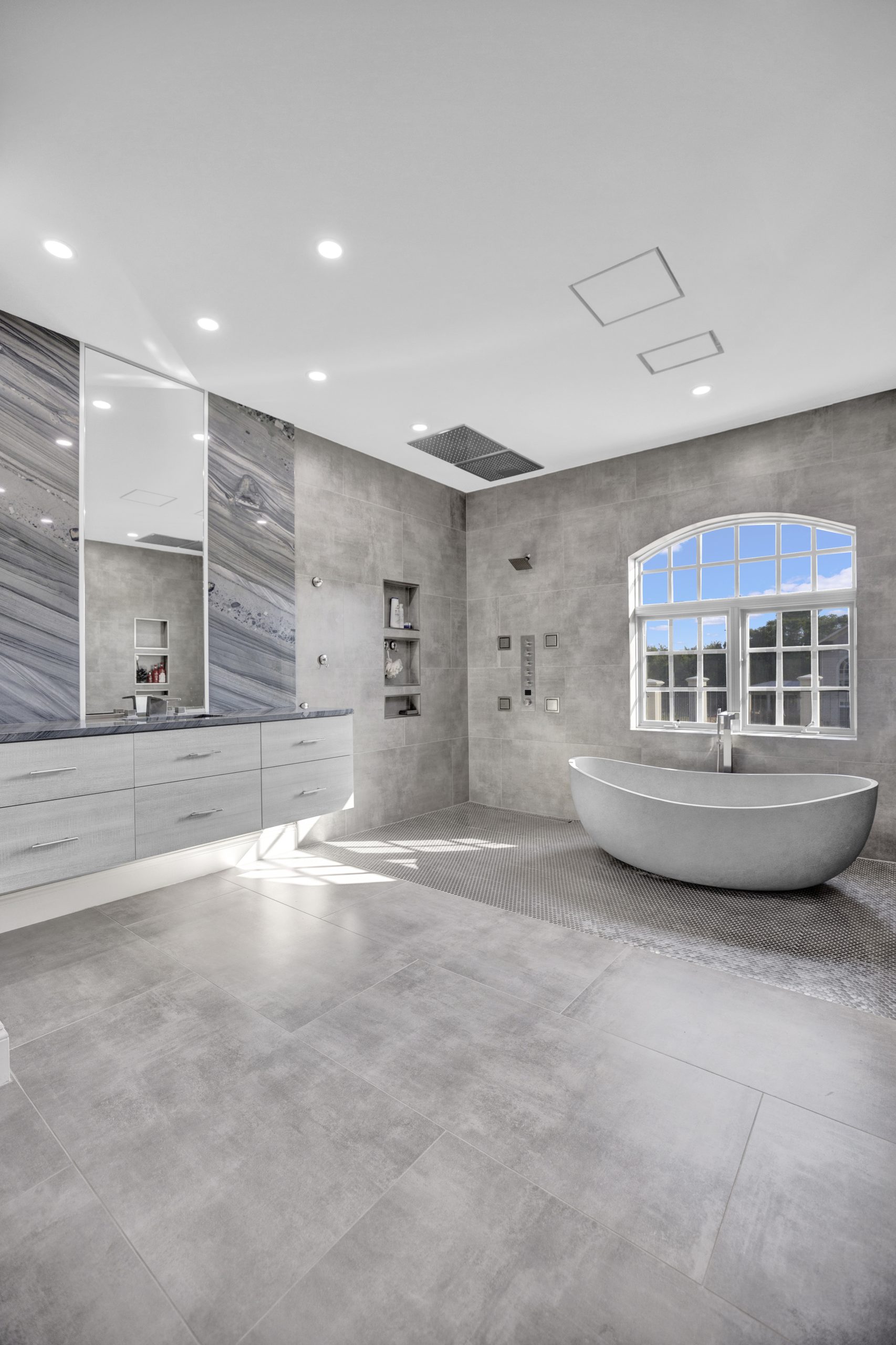
| Luxury primary bathroom | $60,000 to $120,000 | Floor to ceiling tile or stone, a wet room or curbless shower, freestanding tub, double vanity, heated floors, new layout; see the bathroom cost guide |
| Whole home interior remodel | $250,000 to $600,000, larger houses above | Kitchen, baths, floors, lighting, millwork and finishes throughout, with the main floor usually opened up |
| Main level addition | $150,000 to $300,000 | A family room, primary suite or kitchen extension on a new foundation; our home addition cost guide covers the per square foot figures |
| Second story addition | $250,000 to $500,000 | A new floor over the existing house, with the structure and roof reworked |
| High end finished basement | $100,000 and up for 1,000 square feet | A theater, bar, gym, guest suite or wine room at $100 or more per square foot; see the basement cost guide |
| Luxury appliance package | $40,000 to $100,000 and up | Built-in refrigeration columns, a 48 inch range, specialty units; see our appliance brand guide |
| Whole house exterior stone | $75,000 to $200,000 and up | Full bed natural stone on a 1,500 to 3,000 square foot facade; see the exterior stone guide |
Two rules of thumb help with early planning. An addition in this region runs $250 to $450 per square foot, rising past $400 when the new space holds a kitchen or a bathroom, and a whole home interior remodel starts near $250,000 and runs to $600,000 and beyond on the larger houses. Carry a contingency of 10 to 15 percent on top of any figure in this table. Houses built in Fairfax and Loudoun County between 1965 and 1995, which is most of them, hide the things that use it: aluminum wiring, polybutylene supply lines, cast iron drains, undersized electrical panels and framing that was never meant to carry a stone counter.
How Northern Virginia Compares With National Figures
National cost surveys put a luxury home renovation at roughly $120,000 to $250,000, averaging about $150,000, and quote $100 to $210 per square foot. Northern Virginia sits above those figures for the same reasons its houses are worth more: labor rates, permit standards, the size of the homes and the expectations of the buyers who will see the work next. Local firms quote $325 to $500 or more per square foot for luxury work that changes the structure in McLean and Great Falls, which is consistent with the addition figures above. The difference is not a markup; it is the cost of the finish level that makes sense in a house valued where these houses are.
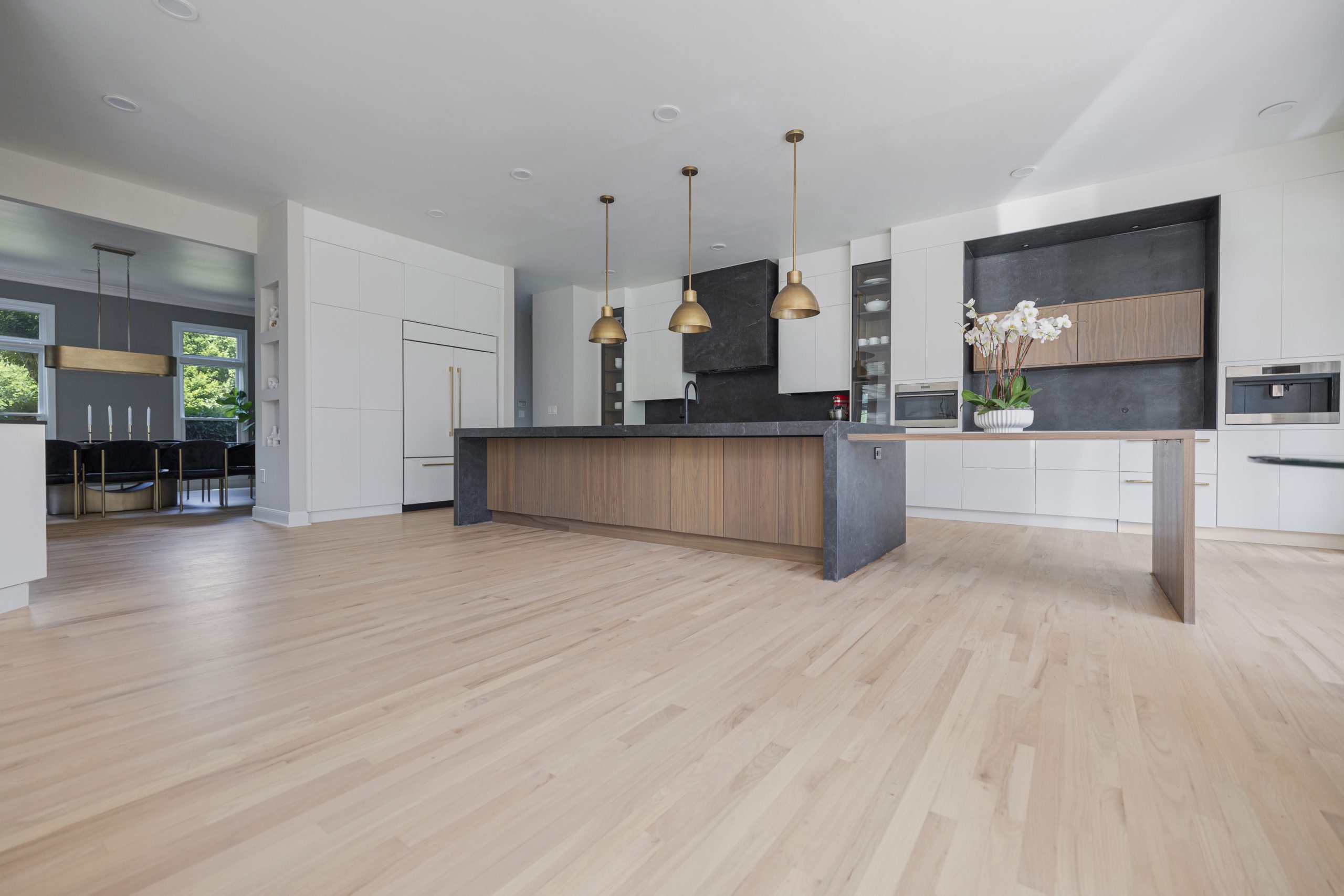
Where the Money Goes in a Luxury Remodel
The gap between a mid range remodel and a luxury one is not spread evenly. It concentrates in a handful of decisions, and knowing which ones lets you spend where it shows.
| Decision | Mid range | Luxury | What the difference buys |
|---|---|---|---|
| Kitchen cabinetry | Semi custom, the largest line in a $60,000 to $100,000 kitchen | Custom or inset, $50,000 to $100,000 and up | Any size, any finish, inset doors, integrated appliances, interiors fitted to what you own |
| Countertops | Quartz, $7,000 to $10,000 in a typical full remodel | Marble at $100 to $250 per square foot installed, quartzite, waterfall edges and slab backsplashes | Natural veining, book matched slabs, a counter carried up the range wall; see our countertop guide |
| Appliances | A premium package, $15,000 to $35,000 | A luxury built-in package, $40,000 to $100,000 and up | Columns, a 48 inch range, panel ready fronts, a second dishwasher, a beverage center |
| Flooring | Luxury vinyl plank, $8,000 to $24,000 for 2,000 square feet | Solid or wide plank engineered hardwood, $16,000 to $50,000, with stone in the wet rooms | Continuous wood through the main floor; see the flooring guide |
| Bathroom surfaces | Porcelain tile | Floor to ceiling stone or large format porcelain slabs, a curbless wet room | The spa bathroom of the timeless bathroom guide |
| Windows and doors | Replacement in the same openings | Larger openings, picture windows, steel or black framed glass, a glass wall to the patio | Light and the view, the two things no finish can supply; see the indoor outdoor guide |
| Lighting | Recessed cans on switches | Layered lighting on scenes, under cabinet and in cabinet light, architectural fixtures | Rooms that change with the time of day |
| Millwork | Trim and crown | Paneled walls, built-ins, a coffered or beamed ceiling, a fluted or slat wall | The detail that photographs as custom |
| Smart home | A thermostat and a doorbell | Structured wiring, lighting, shades, audio and security on one system, $20,000 and up | See our home automation guide |
| Design | Contractor sketches | Full design and documentation, $25,000 to $60,000 for a 3,000 to 4,000 square foot house | Every decision made once, on paper, before it costs money; see whether a designer is worth it |
Finishes earn the attention, but the mechanical work is where luxury projects quietly differ. A proper waterproofing membrane behind the stone, a dedicated circuit for every appliance, a fan sized for a large shower, sound insulation between a theater and the bedrooms above it, and a panel upgrade to carry the load are not visible on the day the project is photographed. They are the reason it still works in year ten.
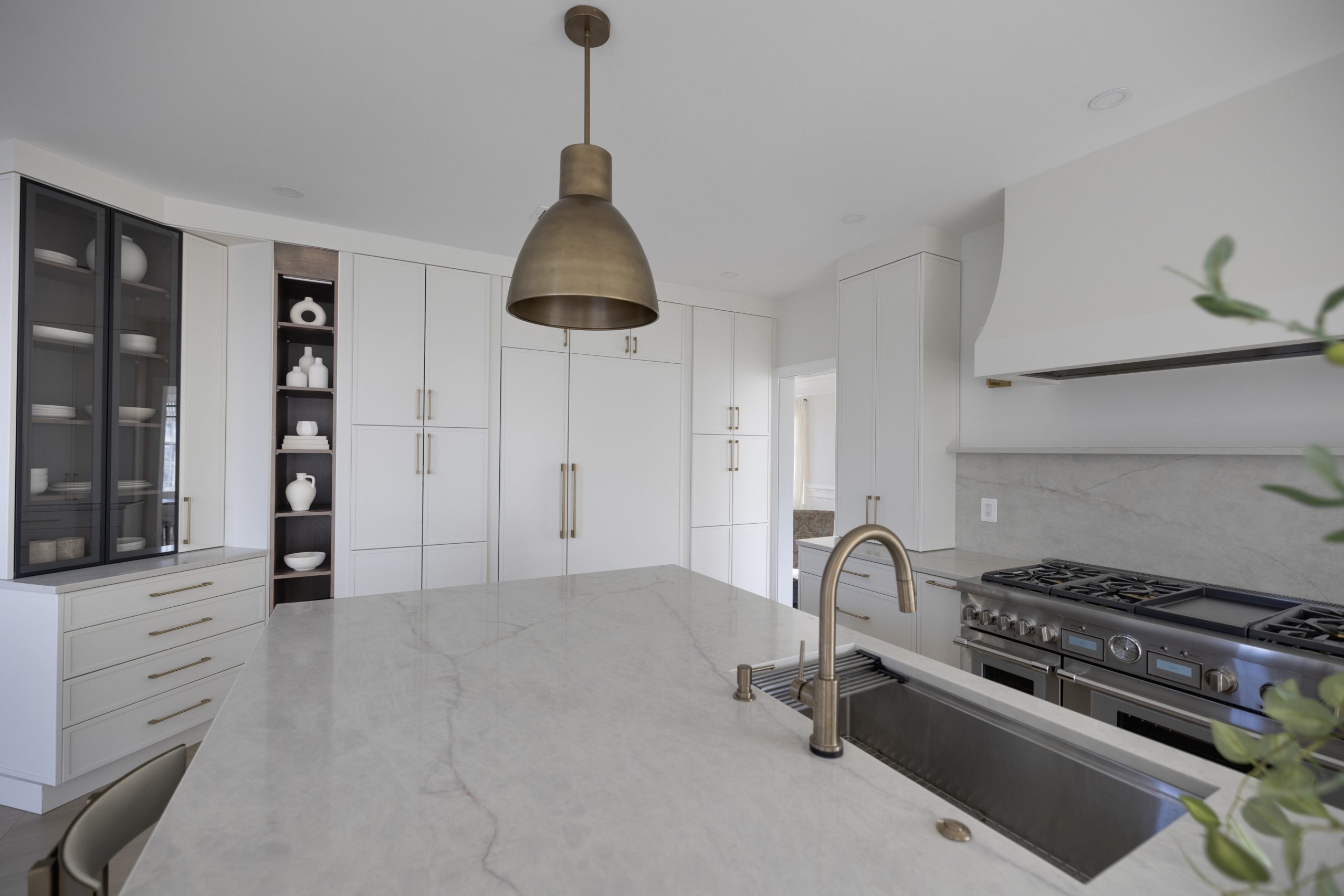
Luxury Kitchen Remodeling
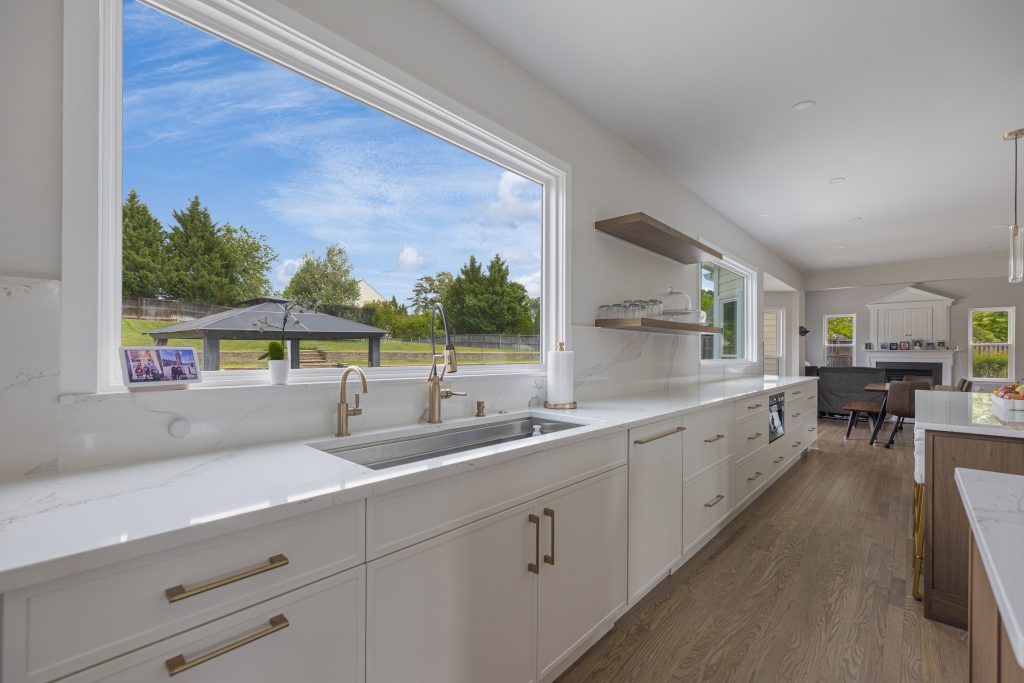
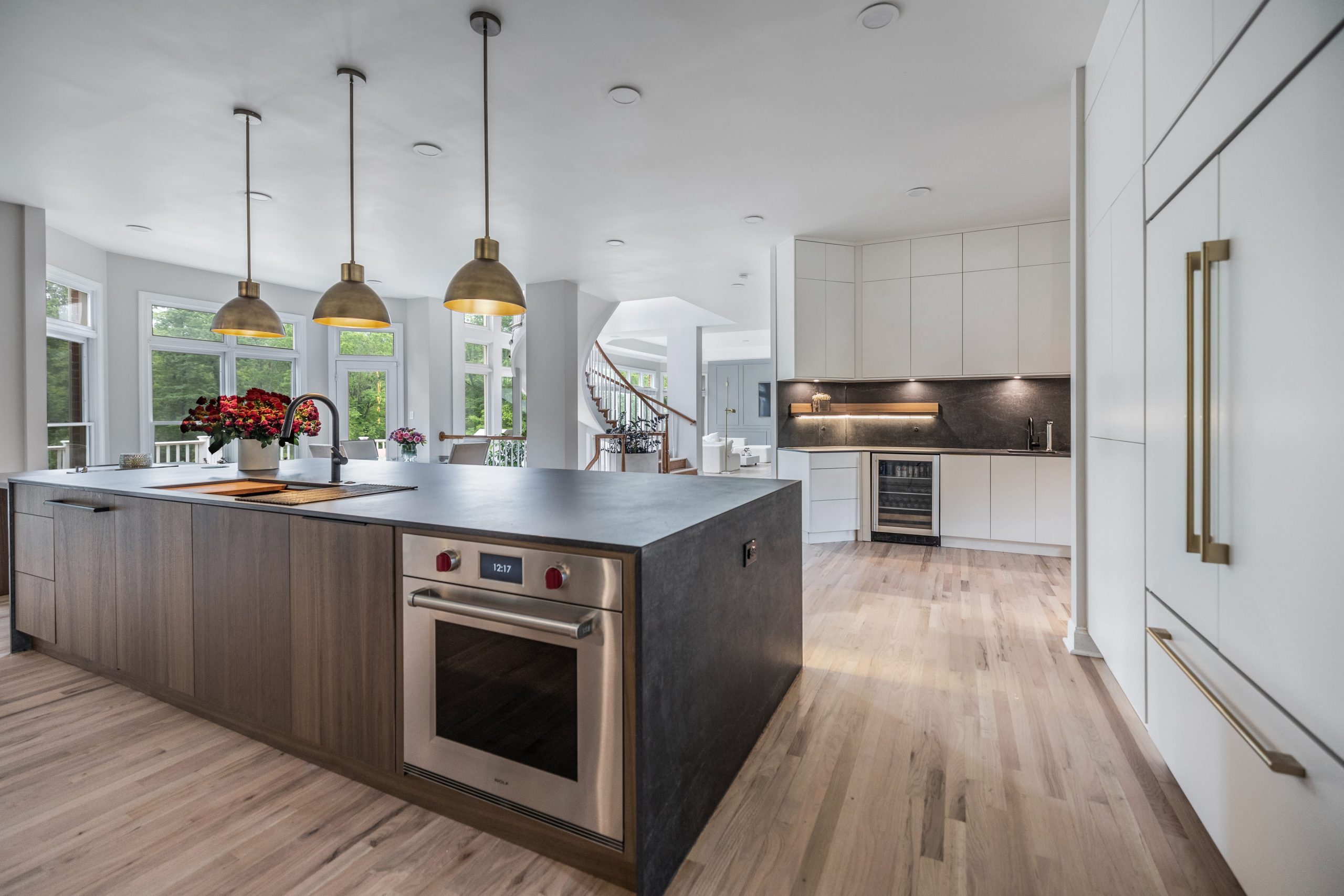
The kitchen is the room where luxury is most often asked for and most easily misunderstood. The version worth $120,000 to $200,000 is not a bigger version of a standard kitchen. It is planned from the window and the island outward, with the cabinetry built to the room rather than the room fitted to stock sizes.
- Layout first: a wall removed to the dining or family room, the sink or the range placed on the view, an island sized to the room (our island guide covers the clearances), and a pantry or scullery that keeps the working kitchen out of sight.
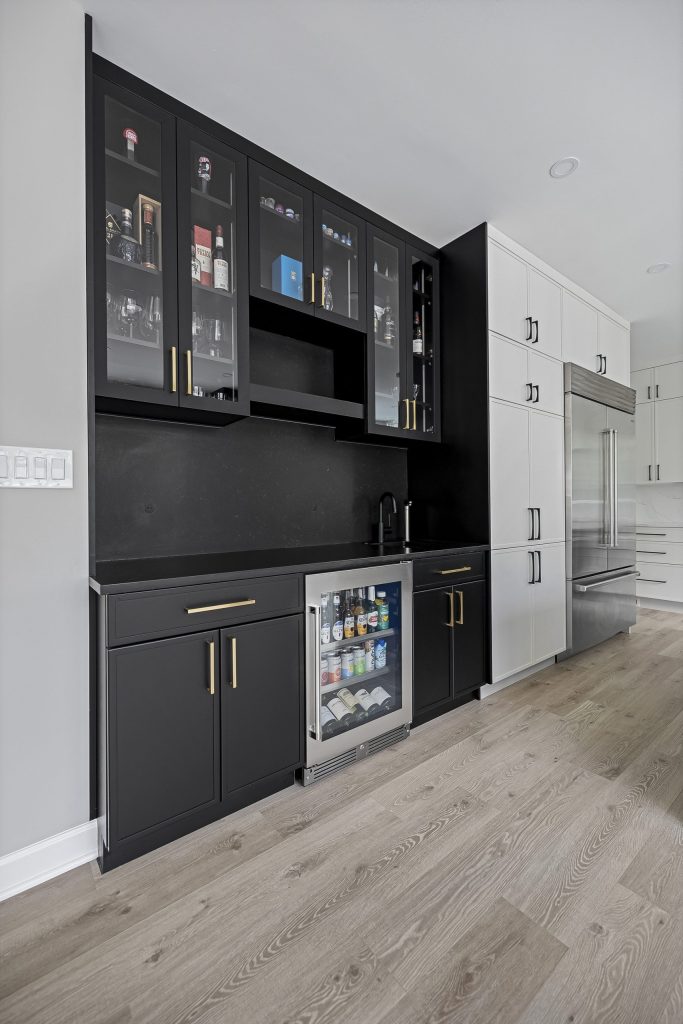
- Cabinetry: custom or inset doors, full height pantry runs, an appliance garage, drawers instead of doors in the lowers, interiors fitted to what you own, and a second finish on the island; our kitchen cabinet ideas guide shows the current pairings.
- Stone: quartzite or marble on the island and the counters, carried up the range wall as a slab backsplash, with the veining book matched across the seams.
- Appliances: a built-in package with refrigeration columns, a 48 inch range or a cooktop with wall ovens, a panel ready dishwasher and a beverage center, chosen before the cabinetry is drawn because the cabinetry is drawn around them.
- Lighting and metal: pendants, under cabinet and in cabinet light on separate scenes, and a finish schedule that holds the metals to two or three; our mixing metals guide is the rule book.
- Floors: wide plank white oak run through the kitchen and the rooms it opens to.
A luxury kitchen takes 8 to 12 weeks of construction and 3 to 5 months in all, because custom cabinetry alone can take up to 12 weeks to arrive; our kitchen timeline guide lays out the sequence. Our kitchen remodeling page shows finished kitchens across Fairfax and Loudoun County.
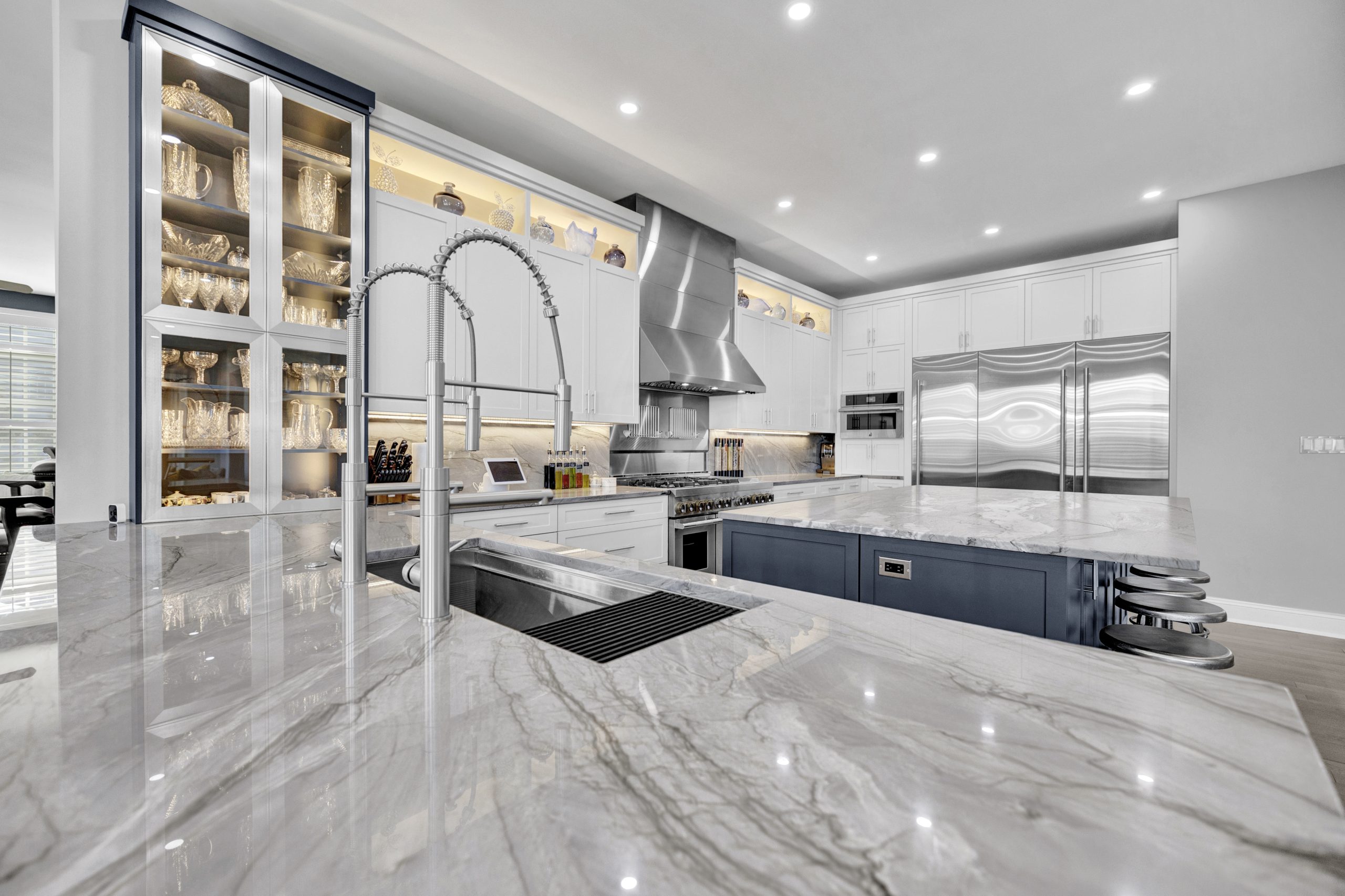
Luxury Bathroom Remodeling
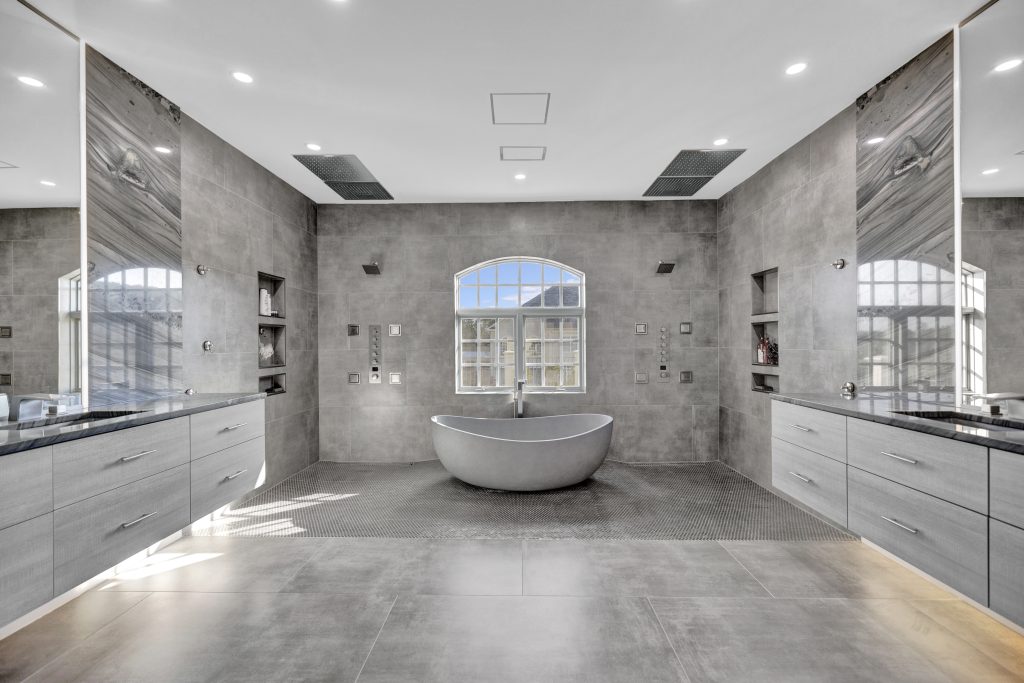
A luxury primary bathroom in Northern Virginia runs $60,000 to $120,000 and is usually a reconfiguration rather than a replacement: the tub nobody used gives way to a wet room, a closet is annexed for a double vanity, and the window grows. The elements that define the category are consistent from one project to the next.
| Element | What luxury means here |
|---|---|
| Shower | A curbless wet room with a linear drain, a bench, a rain head and a handheld, frameless glass or none at all; see the curbless shower guide |
| Tub | Freestanding, placed under the window or in its own alcove, with a floor mounted filler |
| Surfaces | Floor to ceiling stone or large format porcelain, a single slab on the vanity, heated floors throughout |
| Vanity | A furniture piece or a floating double vanity with a stone top, lit mirrors and sconces at face height |
| Fixtures | Thermostatic valves, matching trims, a finish held to one metal with a second as the accent |
| Water closet | A separate room with its own door and a wall hung or smart toilet |
| Closet | A dressing room off the bathroom, often taken from a spare bedroom (see below) |
Construction runs 2 to 4 weeks for most bathrooms and 6 weeks or more for a primary bath with a new layout, inside a project of 6 to 9 weeks from design to completion for the standard version, as our bathroom timeline guide explains. For the owner who wants the look at a smaller budget, our luxury bathroom ideas and spa bathroom guides show where the money shows, and the bathroom remodeling page shows the rooms we have built.

Whole Home Luxury Remodels
The whole home remodel is where luxury remodeling has grown fastest in Northern Virginia, because the alternative, selling a colonial in a neighborhood you like to buy a newer house in one you do not, costs more than the remodel does. A whole home interior remodel starts around $250,000 and most luxury versions land between $250,000 and $600,000, with houses above 5,000 square feet going higher. It takes four to eight months.
The work follows a pattern. The main floor is opened so the kitchen, dining and family rooms share one space and one view. The kitchen is rebuilt to the standard above. The primary suite gains a bathroom and a dressing room. Floors are replaced continuously through the house, lighting is rewired on scenes, the millwork is upgraded, the stairs get new railings, and the basement is finished as the house’s second living level. Our whole home remodeling page covers the scope, our Northern Virginia home remodeling guide the sequencing, and our Fairfax and Loudoun County guides the local specifics.
Additions and Primary Suites
When the house itself is too small, the luxury answer is an addition designed as part of the whole rather than a box attached to the back. A main level addition runs $150,000 to $300,000 and a second story $250,000 to $500,000 in this region. The two most requested are a kitchen and family room extension that puts the main living space where the yard and the light are, and a primary suite with a bathroom and a dressing room that the original house never had. Design and permits take two to three months before construction, and construction two to four months for a room addition and longer for a second story. Our home additions page and the addition cost guide cover the options, and our guide to financing a home addition covers how projects of this size are usually paid for.
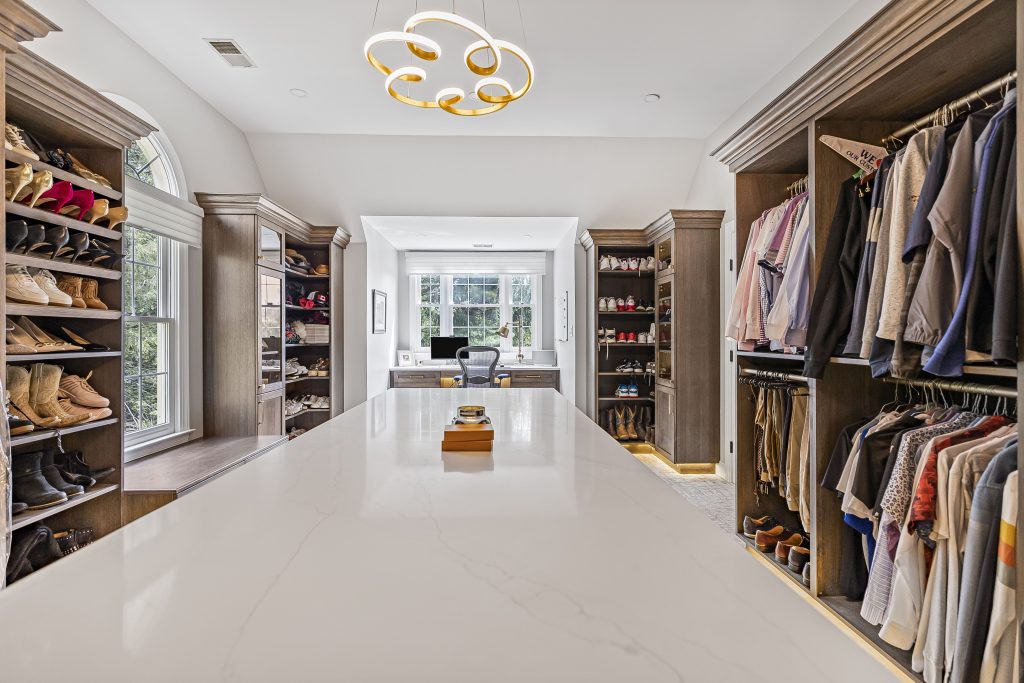
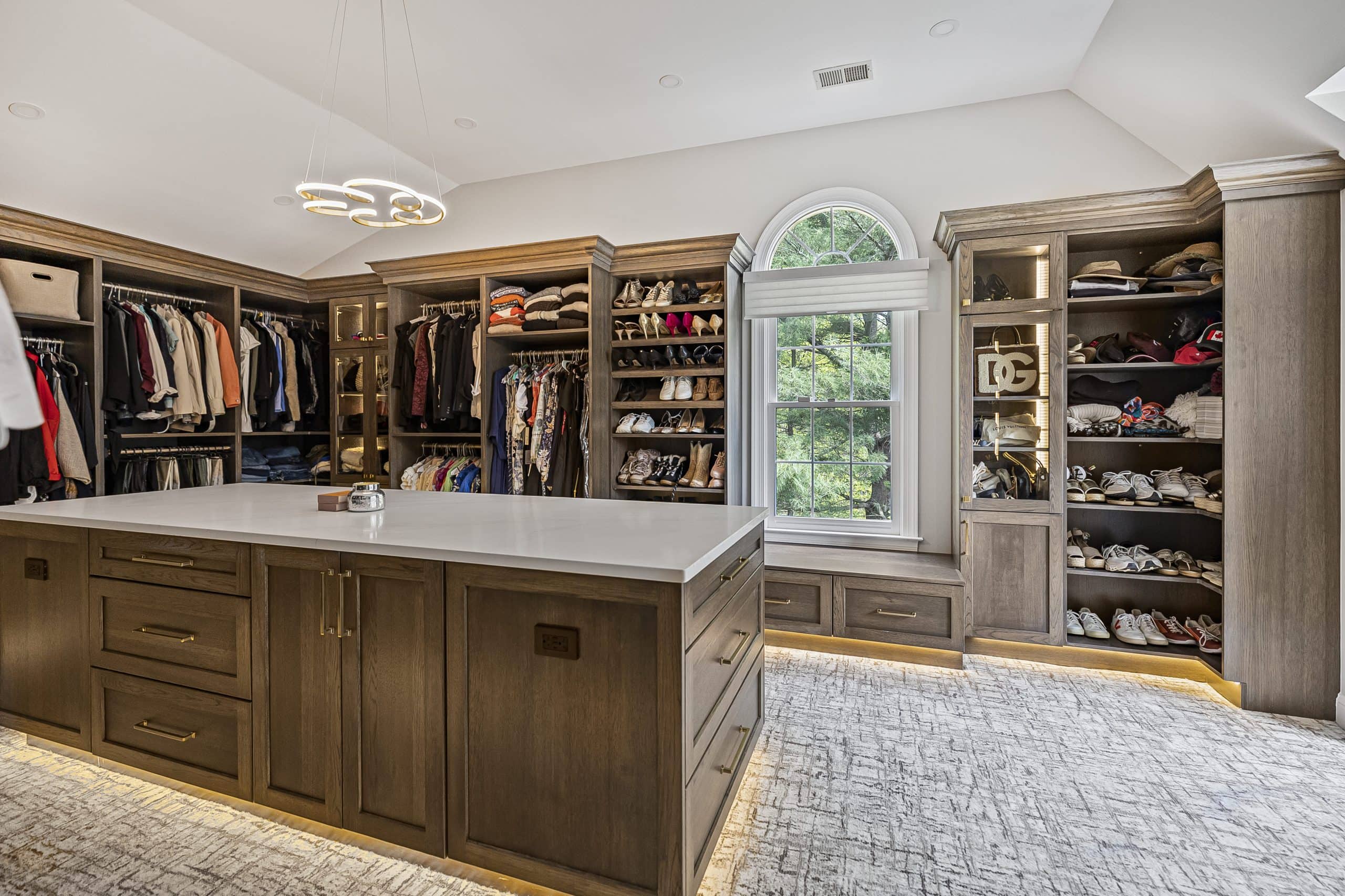
The dressing room deserves its own line because it is now part of nearly every primary suite brief. A spare bedroom beside the primary bedroom, opened through the shared wall, becomes a walk-in closet with an island, lit shelving and a window; our closet conversion guide covers that project at $8,000 to $30,000, and it is the part of a suite remodel owners talk about most afterward.
Luxury Basements and Specialty Rooms
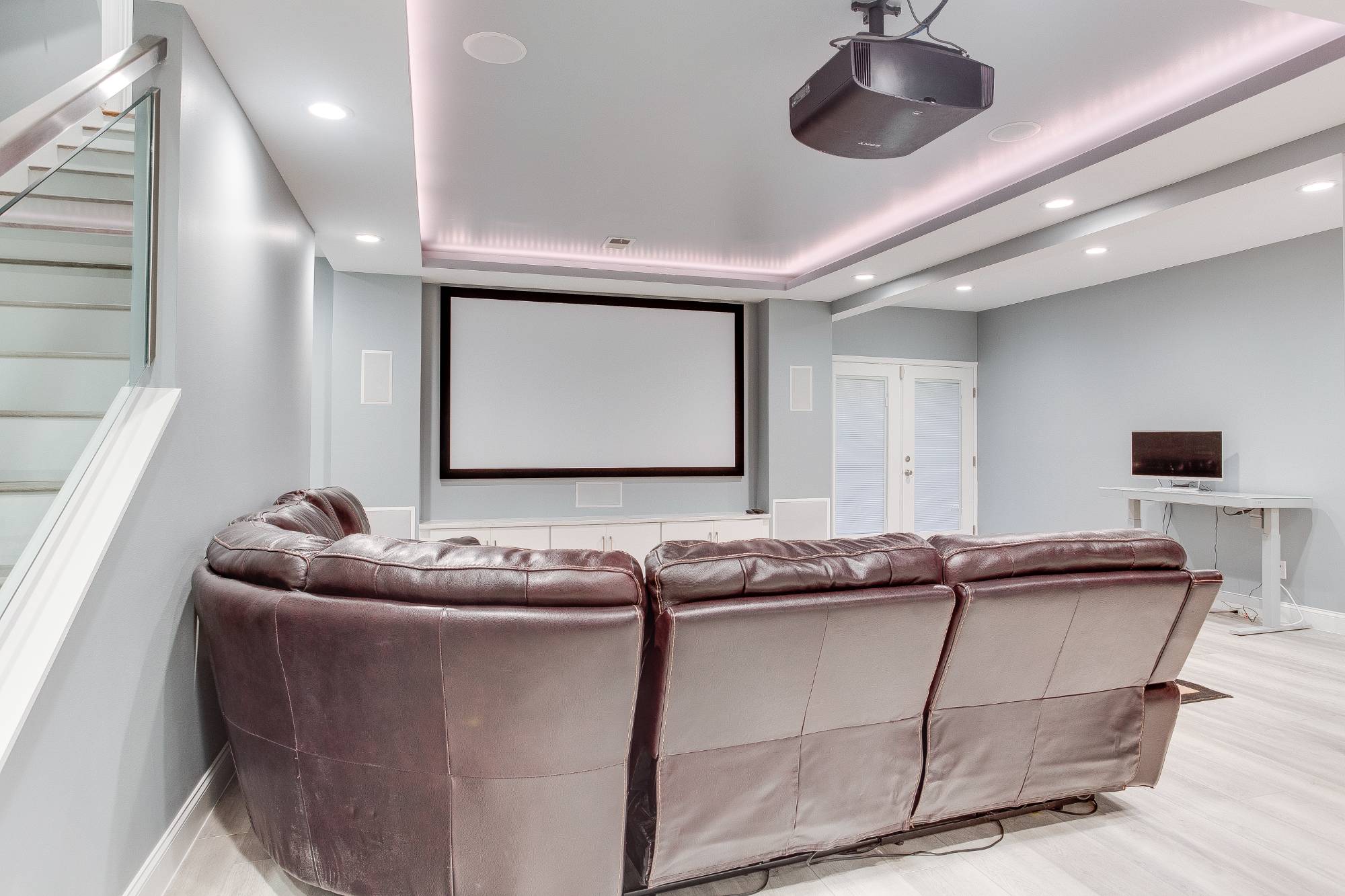
Northern Virginia houses almost all have a full basement, and at the luxury level it becomes the second living floor: a dedicated theater, a bar with a wine room, a gym, a guest suite with its own bath, and a family room with a fireplace. A high end finish runs $100 or more per square foot, so $100,000 and up for a 1,000 square foot level, before the theater equipment or the wine cooling. Our basement remodeling page covers the service, and our media room, home gym and wellness room guides each cover one of the rooms in depth, including what a premium theater or a sauna adds.
20 Luxury Home Renovation Ideas
These are the ideas that come up most on our Northern Virginia projects, in roughly the order owners ask for them.
- Open the kitchen to the family room and put the island on the axis of the best window.
- A picture window or a glass wall to the patio, with the seating turned to face it.
- A scullery or back kitchen behind the show kitchen, so the mess never reaches the island.
- Panel ready refrigeration columns and a 48 inch range with a stone hood surround.
- A quartzite or marble island with a waterfall edge, book matched across the seams.
- A curbless wet room with a linear drain and a freestanding tub in the same glass enclosure.
- A spare bedroom turned dressing room with an island and lit shelving.
- Wide plank white oak floors run continuously through the main level.
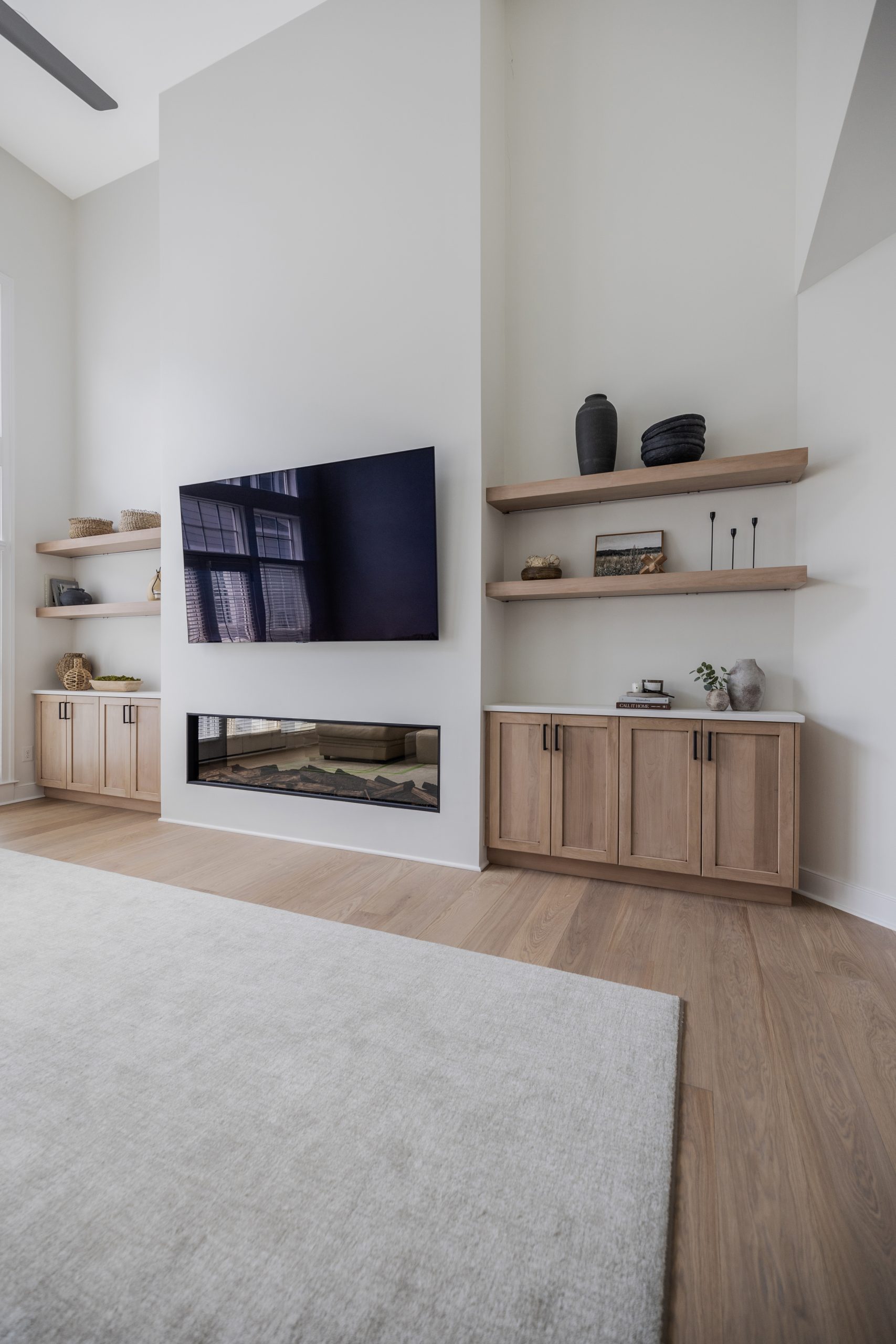
- A fireplace wall in stone or wood with built-ins on both sides of it.
- Paneled walls, a coffered ceiling or a fluted wall in the dining room or study.
- Lighting on scenes throughout, with under cabinet, in cabinet and cove light.
- A new stair railing in iron, brass or glass, the longest line of metal in the house.
- A mudroom with a bench, lockers and a dog wash off the garage.
- A dedicated home theater with a riser, acoustic treatment and a bar behind it.
- A wine room with a glass wall and a cooling system in the basement or off the dining room.
- A home gym with rubber floors, mirrors and a sauna or plunge next door.
- A primary bath skylight or an enlarged window over the tub.
- A covered outdoor living room with a fireplace, a kitchen and heaters for the Virginia shoulder seasons.
- Full bed natural stone on the front facade and a new front door with sidelights.
- A whole house automation system with lighting, shades, audio and security on one app.
Most of these are material and layout decisions that our natural elements guide and our interior design team work through together, because the ideas only read as luxury when they agree with each other.
Design Build or Architect and Contractor? How Luxury Projects Are Run
There are two ways to organize a luxury remodel. The traditional route hires an architect or designer to produce drawings, then bids those drawings to general contractors and manages the two relationships yourself. Design build puts the design, the pricing and the construction under one firm and one contract. Both can produce a beautiful house. They differ in who carries the risk when the drawings and the budget disagree, which on a luxury project they will at some point.
| Design build | Architect plus general contractor | |
|---|---|---|
| Who you hire | One firm, one contract | Two or more firms, two contracts |
| When you know the real cost | As the design develops, priced by the people who will build it | After the drawings are finished and bid, often with a redesign if the bids come in high |
| Who resolves a conflict between the drawings and the site | The same firm, inside its contract | You, between an architect who drew it and a contractor who priced it |
| Design fees | Part of the project, typically credited toward construction | A separate percentage of construction cost; see our architect cost guide |
| Best for | Kitchens, baths, whole home interiors, additions, most projects under about $1 million | Unusual structures, historic work, a design that a specific architect must author |
| The risk | Less independent review of the builder’s work; choose a firm with an in-house design team and a long record | Cost surprises after design, and slower change decisions during construction |
For most luxury remodeling in Northern Virginia, design build is the route that keeps the budget and the design in the same conversation, which is why the region’s established firms, EA Home Design among them, are organized that way. The traditional route earns its place when the architecture itself is the point: a historic house, an unusual structural problem, or a design an owner wants a particular architect to author. Either way, the test is the same: the design is complete and priced before anything is demolished.
How Long Luxury Remodeling Takes
| Project | Design and permits | Construction | In all |
|---|---|---|---|
| Luxury kitchen | 6 to 12 weeks of design and ordering | 8 to 12 weeks | 3 to 5 months |
| Luxury primary bath | 4 to 8 weeks | 4 to 6 weeks or more | 2 to 4 months |
| Main level addition | 2 to 3 months | 2 to 4 months | 5 to 7 months |
| Second story addition | 3 to 4 months | 4 to 6 months | 7 to 10 months |
| Whole home interior | 2 to 4 months | 4 to 8 months | 7 to 12 months |
| High end basement | 4 to 8 weeks | 8 to 16 weeks | 4 to 6 months |
The design months are the ones owners try to shorten and should not. Custom cabinetry can take 12 weeks to arrive, stone has to be seen and reserved, windows are made to order, and the permit review in Fairfax and Loudoun County takes one to three weeks for a kitchen or bath and longer for an addition. A luxury project that starts construction with every material on site runs its weeks back to back; one that starts with decisions open runs them with gaps, and the gaps are where budgets and tempers go.
How to Choose a Luxury Remodeling Company in Northern Virginia
The firms that do this work well share some habits, and the questions below tend to surface them in the first conversation. Our guide to the best remodeling companies in Northern Virginia and our list of hiring pitfalls go further.
- Ask to see a project from three years ago, not last month. Luxury work is judged by how it wears.
- Ask who designs. An in-house design team that produces full drawings and a finish schedule is the difference between design build and a contractor with a showroom.
- Ask how the price is built. A fixed price on a complete set of documents, with allowances listed and a change order process in writing, is the standard. A per square foot estimate on a sketch is a conversation, not a price.
- Check the license. A Virginia Class A contractor license covers projects of any size; EA Home Design holds Class A license 2705157182. Ask for the insurance certificate in the same breath.
- Ask who will be on site. A named project manager, a lead carpenter and in-house trades for the critical work, with a schedule you can read.
- Ask how they handle a surprise behind the wall, because there will be one in a house built in 1978.
- Read the reviews for the complaints, not the praise. How a firm handled the one job that went sideways tells you more than fifty that did not.
- Look at the finish schedules. If a firm cannot show you one page listing every metal, stone and paint in a finished kitchen, it is not working at this level.
Permits, HOAs and the Northern Virginia Specifics
Almost every luxury remodel needs a permit, because almost every one moves plumbing, adds circuits or changes structure. Fairfax County and Loudoun County issue permits for most of the region, with Herndon, the City of Fairfax and Falls Church running their own offices, and the fees are small against the project: roughly $200 to $600 for a bathroom, $200 to $1,500 for a kitchen and $1,000 to $5,000 or more for an addition. What takes time is the review and the inspections, which a firm that works here weekly schedules into the plan. Additions in Loudoun County also meet setback, septic and HOA rules that can decide where the new space can go, and the older neighborhoods of Fairfax County can carry historic overlay review. Our permits and inspections checklist walks through the process county by county.
Is Luxury Remodeling Worth It? Value, Resale and the Northern Virginia Market
In a market where a renovated house in McLean, Vienna or Great Falls sells for a premium over the same house unrenovated, luxury remodeling holds its value better here than almost anywhere, provided it matches the house and the street. The rule is to remodel to the standard of the neighborhood’s best houses and not beyond it. A $200,000 kitchen in a house whose neighbors sell for $900,000 will not come back; the same kitchen in a $2 million house is expected. Kitchens, primary baths and finished basements return the most of their cost; highly personal rooms return the least, and they are worth building anyway if you will use them for a decade. Our guide to remodels that pay off before selling puts numbers on each, and our case studies show finished projects with their scopes and costs.
Luxury Remodeling Mistakes to Avoid
- Buying the finishes before the design. The slab bought on a trip is the wrong size for the island drawn later.
- Treating expensive as luxury. A catalog kitchen in a costly finish is still a catalog kitchen.
- Skipping the mechanical work. New stone over old plumbing and an undersized panel is a repair waiting to happen.
- Starting construction with decisions open. Every open decision becomes a change order and a gap in the schedule.
- Over improving for the street. Remodel to the neighborhood’s best house, not past it.
- Hiring on the lowest of three bids. The lowest luxury bid is the one that left something out.
- Forgetting the light. No finish rescues a dark room; a bigger window does.
- No contingency. Carry 10 to 15 percent, and expect a 1970s house to use some of it.
Frequently Asked Questions
What counts as luxury home remodeling? A remodel designed and documented in full before construction, built with custom cabinetry, natural stone, built-in appliances and quality fixtures, with the mechanical work done to the same standard, and run by one team from design through completion. Price alone does not make a remodel luxury; a catalog kitchen in a costly finish is still a catalog kitchen.
How much does luxury home remodeling cost in Northern Virginia? In 2026, a luxury kitchen runs $120,000 to $200,000, a luxury primary bathroom $60,000 to $120,000, a whole home interior remodel $250,000 to $600,000 with larger houses above, a main level addition $150,000 to $300,000 and a second story $250,000 to $500,000. A high end basement runs $100 or more per square foot.
How much is a luxury home remodel per square foot? Additions in Northern Virginia run $250 to $450 per square foot and more when the new space holds a kitchen or a bathroom, and a high end basement finish runs $100 or more per square foot. National surveys quote $100 to $210 per square foot for luxury renovation, and local quotes of $325 to $500 or more apply to projects that change the structure in the most expensive neighborhoods.
How long does a luxury home remodel take? A luxury kitchen takes 3 to 5 months in all with 8 to 12 weeks of construction, a primary bath 2 to 4 months, a main level addition 5 to 7 months, a whole home interior remodel 7 to 12 months and a second story addition 7 to 10 months. Design and material lead times take up roughly half of each.
What is the difference between design build and hiring an architect and a contractor? Design build puts the design, the pricing and the construction under one firm and one contract, so the budget and the design develop together and one firm resolves conflicts between them. The traditional route hires an architect to draw the project and then bids the drawings to contractors, which gives independent design but often brings cost surprises after the drawings are done.
Is design build better for a luxury remodel? For most kitchens, baths, whole home interiors and additions, yes, because it keeps the cost and the design in the same conversation. The traditional route earns its place when the architecture itself is the point, such as a historic house, an unusual structure or a design a particular architect must author.
What should I look for in a luxury remodeling company? An in-house design team that produces full drawings and a finish schedule, a fixed price on complete documents, a Virginia Class A license and insurance, a named project manager, projects you can see several years after completion, and reviews that show how the firm handled the job that went wrong.
Does luxury remodeling add value to a Northern Virginia home? Yes when it matches the house and the street. Kitchens, primary baths and finished basements return the most; personal rooms return the least. Remodel to the standard of the neighborhood’s best houses rather than beyond it, and a renovated house in McLean, Vienna or Great Falls carries a premium over the same house unrenovated.
Do I need a permit for a luxury remodel in Fairfax or Loudoun County? Almost always, because the work moves plumbing, adds circuits or changes structure. Fees run roughly $200 to $600 for a bathroom, $200 to $1,500 for a kitchen and $1,000 to $5,000 or more for an addition, with reviews of one to three weeks for a kitchen or bath and longer for an addition.
What are the most popular luxury remodeling projects right now? Opening the main floor to the kitchen and the view, a kitchen with custom cabinetry and a stone island, a curbless wet room with a freestanding tub, a primary suite with a dressing room taken from a spare bedroom, wide plank oak floors throughout, a finished basement with a theater and a bar, and a covered outdoor living room.
Planning a Luxury Remodel in Fairfax or Loudoun County
Luxury home remodeling in Northern Virginia comes down to a short list: the design finished and priced before construction, the layout changed to suit the house and the view, materials chosen for twenty years, mechanical work done to the same standard as the finishes, and one team responsible for the whole. EA Home Design is a Class A licensed design build firm that has worked to that list across Fairfax, Loudoun and Arlington for years, and every project begins with a design you can see in 3D before anything is ordered. Book a free in home design consultation or call (703) 687-1818, and bring the house, the wish list and the budget; the first conversation is about matching the three.