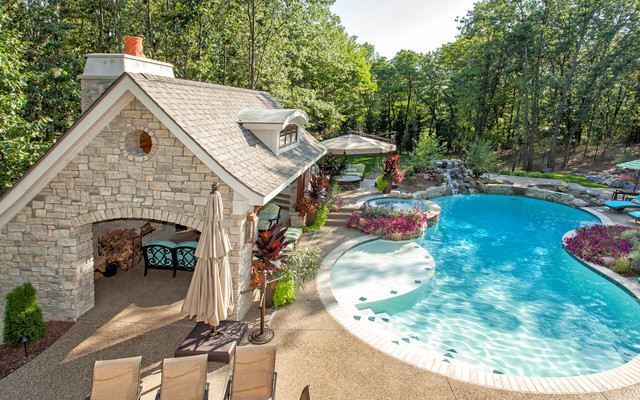
Exterior stone is the one facade material that gets better looking as it ages, and in 2026 it is being asked to do more than decorate: hold up through freeze and thaw, pass an architectural review, and return its cost when the house sells. This guide ranks the 15 best types of exterior house stone, then covers what most stone guides skip: the difference between full-bed stone, thin veneer and manufactured veneer, what each costs installed in 2026, how our Northern Virginia climate and review boards shape the choice, and the installation details that decide whether a stone wall lasts a century or fails in ten years.
Quick answer. For durability in a cold, wet climate, granite, quartzite, basalt and slate lead. For the traditional and estate look that holds value across Northern Virginia, fieldstone, limestone and bluestone are the region’s own materials. For a budget or a wall that cannot carry weight, manufactured veneer gives the look at a third of the cost. Sandstone and travertine belong in dry climates. Installed, natural stone runs $25 to $75 per square foot in 2026 and manufactured veneer $15 to $30.
How to Choose Exterior Stone: Full-Bed, Thin Veneer or Manufactured
Before the type of stone, decide the format, because the format decides the structure, the installer and most of the price. The same granite can arrive as a five inch thick building stone, a one inch sawn veneer, or a concrete casting made to look like it.
| Format | Thickness and weight | What the wall needs | Installed cost per square foot | Expected life |
|---|---|---|---|---|
| Full-bed natural stone | 3 to 5 inches, 40 to 60 pounds per square foot | A footing or a brick ledge, wall ties, a mason | $40 to $75 | 100 years and more |
| Thin natural stone veneer | 3/4 to 1 1/4 inches, 8 to 15 pounds per square foot | Water-resistive barrier, lath, scratch coat; no ledge | $25 to $45 | 50 years and more |
| Manufactured stone veneer | 1 to 2 inches, 8 to 12 pounds per square foot | Same as thin veneer, plus a drainage layer | $15 to $30 | 25 to 50 years; color fades, repairs show |
| Cast stone trim | Sills, quoins, surrounds, caps | Bedded in mortar, anchored | $40 to $90 per linear foot | 75 years and more |
Full-bed stone is the only format that is structural in its own right, which is why it needs a footing and why it belongs on new construction and additions where the foundation can be designed for it. Thin natural veneer is real stone cut thin, and it is the format that goes onto an existing house: a 1980s colonial in Burke or a 1990s builder home in Ashburn can carry it on the existing framing with no new footing. Manufactured veneer is cast concrete with pigment, lighter and cheaper, and perfectly good when it is installed with a drainage plane behind it and kept above grade; most of the failures you read about are water trapped behind veneer, not the veneer itself. When stone goes on an addition it has to read as part of the original house, and our home additions in Northern Virginia page explains how we match an addition’s roofline, siding and brick to what is already there.
What Exterior Stone Costs in 2026
These are the installed ranges we see on Northern Virginia projects in 2026, with labor, scaffolding and the removal of existing siding included. Labor is 50 to 65 percent of a stone job, so the stone you choose moves the price less than the area you cover and how hard the wall is to reach.
| Typical project | Area | Installed cost, 2026 |
|---|---|---|
| Stone water table on a colonial, three feet high across the front | 60 to 100 square feet | $3,000 to $7,000 |
| Foundation skirt on an addition | 80 to 150 square feet | $2,500 to $7,500 |
| Chimney reface | 150 to 250 square feet | $5,000 to $14,000 |
| Entry surround with columns | 40 to 80 square feet plus trim | $3,000 to $9,000 |
| Full front facade, two-story house | 400 to 600 square feet | $12,000 to $40,000 |
| Whole-house full-bed stone, new build or estate remodel | 1,500 to 3,000 square feet | $75,000 to $200,000 and up |
Two costs surprise people. The first is what comes off: removing and disposing of vinyl or hardboard siding and repairing the sheathing underneath runs $2 to $5 per square foot before any stone goes on. The second is the details, because sills, corners, caps, flashing and the transition back to siding are where the hours go. A wall with four windows costs more per square foot than a blank one. If the stone is part of a larger project, our home addition cost guide shows where exterior finishes sit in the total.
The 15 Best Types of Exterior House Stone
1. Granite Exterior Stone
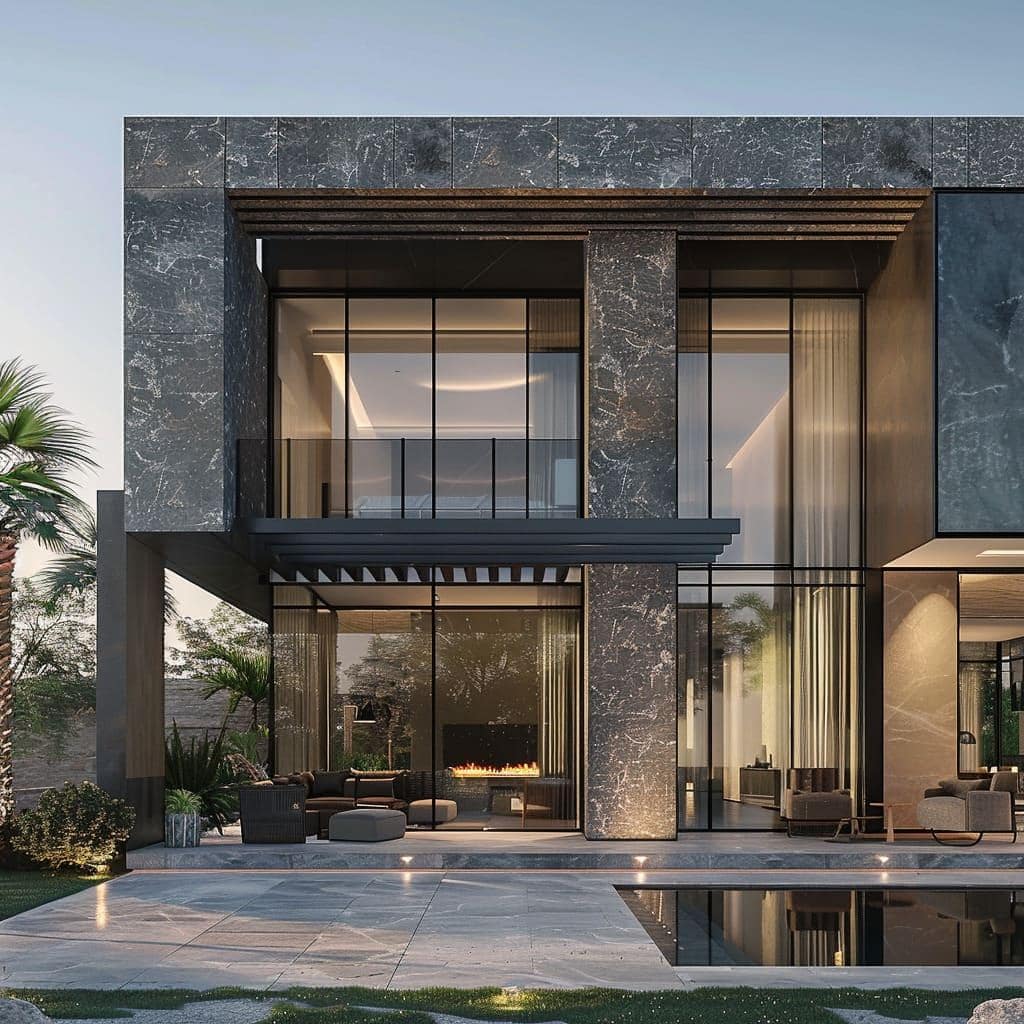
Granite is one of the hardest and most durable natural stones available for exterior use. Formed from cooled magma, it has a dense crystalline structure that makes it extremely resistant to scratches, moisture, heat, and weather changes.
It is commonly used in luxury homes where homeowners want a bold, premium, and long-lasting facade. Granite works exceptionally well in modern architecture because of its clean, uniform texture and ability to take both polished and rough finishes.
Beyond aesthetics, granite requires very little maintenance and can last for decades without fading, making it a high-investment, long-term exterior solution. In Northern Virginia, Virginia Mist granite, quarried in Culpeper County, is the local dark granite and shows up on high-end facades and steps across Fairfax and Loudoun.
2. Limestone Exterior Stone
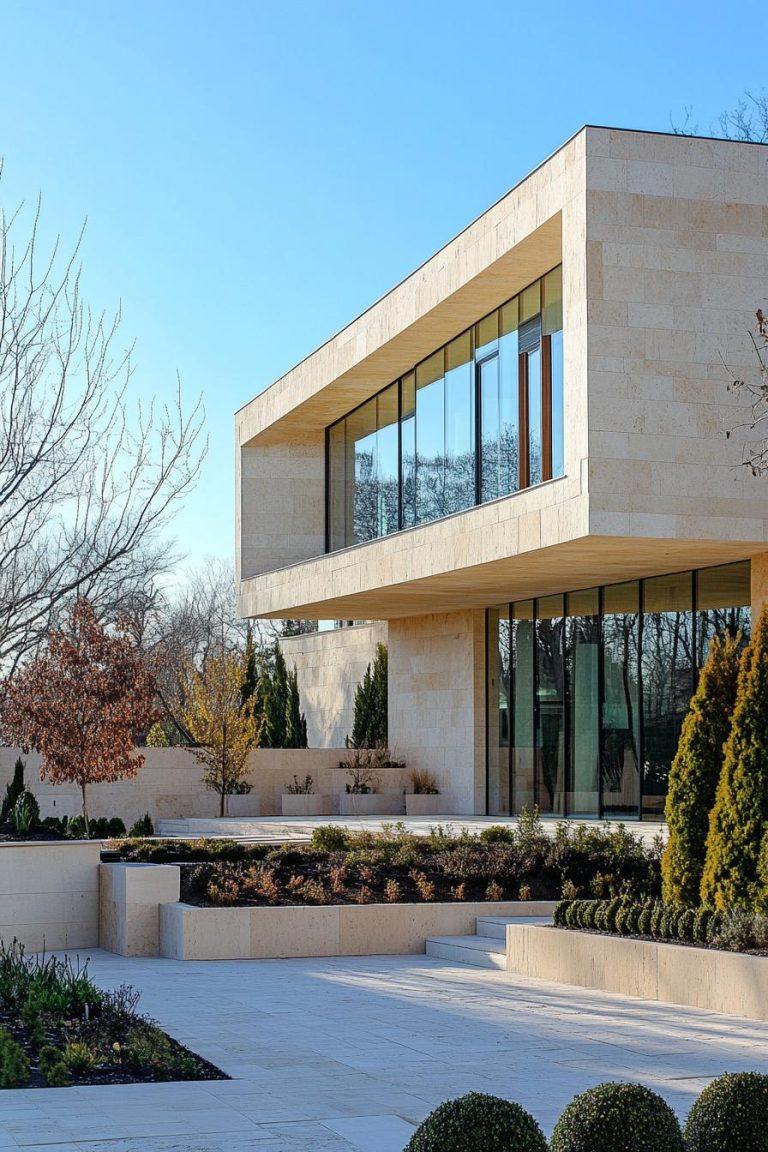
Limestone is a sedimentary stone known for its soft, elegant appearance and warm neutral tones like cream, beige, and light gray. It has been used in classical architecture for centuries, giving homes a timeless and sophisticated look.
Unlike harder stones, limestone has a softer texture, which allows it to be carved into decorative shapes and architectural details. This makes it a favorite for European-style, Mediterranean, and luxury traditional homes.
Limestone is slightly porous, so it may require sealing in areas with heavy rainfall or humidity. Despite that, its aesthetic appeal makes it one of the most visually refined exterior materials. The cream Indiana limestone on the window surrounds, quoins and porticos of Northern Virginia’s brick colonials is the region’s most common use of it, and matching that trim on an addition is a routine job.
3. Sandstone Exterior Stone
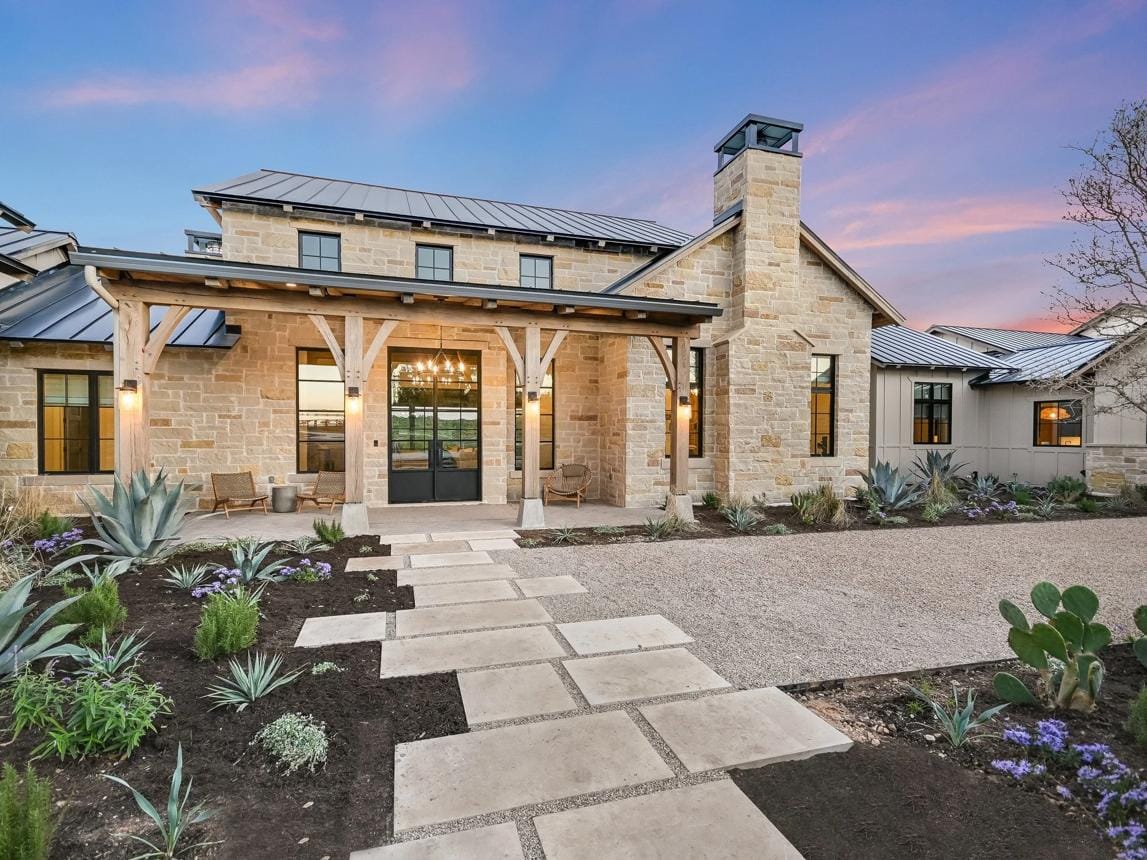
Sandstone is a naturally occurring sedimentary rock made from compressed sand grains. It is highly valued for its earthy tones ranging from golden yellow to reddish brown, giving homes a warm and grounded appearance.
Its slightly rough texture helps it blend seamlessly with natural surroundings, making it ideal for desert homes, rustic villas, and eco-inspired architecture.
Sandstone is moderately durable but performs best in dry climates. It is also easy to shape and cut, making it popular for both structural walls and decorative facades. It is a dry-climate stone. In our freeze-thaw winters sandstone needs to be dense, sealed and kept off the ground, and most local masons steer clients to bluestone instead.
4. Slate Exterior Stone
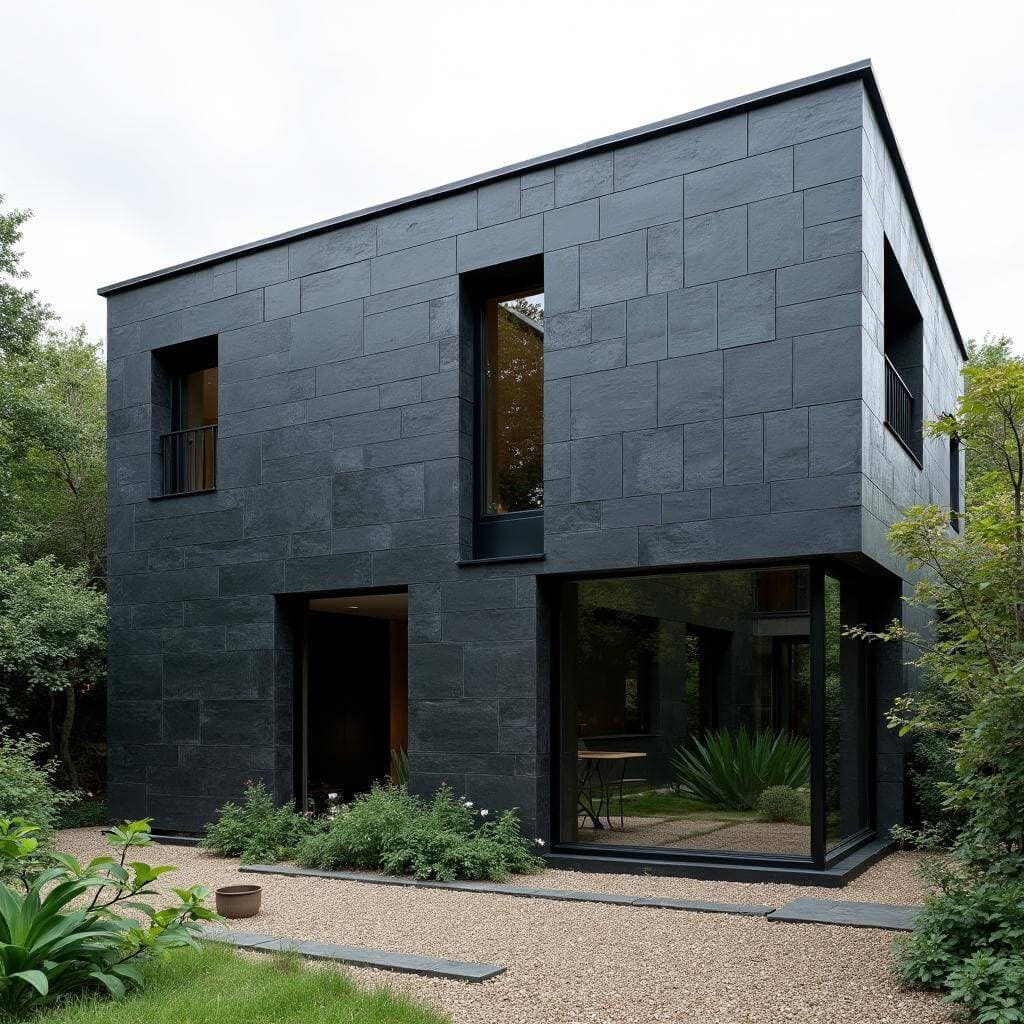
Slate is a fine-grained metamorphic rock known for its deep, dark tones such as charcoal, black, and dark gray. It splits into thin layers, giving it a sleek and structured appearance when used in exterior cladding.
Architects often use slate in modern and industrial-style homes because it creates a strong contrast against glass, steel, or wood elements. It is also highly weather-resistant and performs well in cold and wet climates.
Slate’s natural cleft surface adds depth and texture, making even simple structures look visually striking and high-end. Virginia produces one of the world’s great slates, Buckingham slate from Buckingham County, best known as a roofing slate that lasts a century and a natural pairing with a slate-clad entry or chimney.
5. Quartzite Exterior Stone
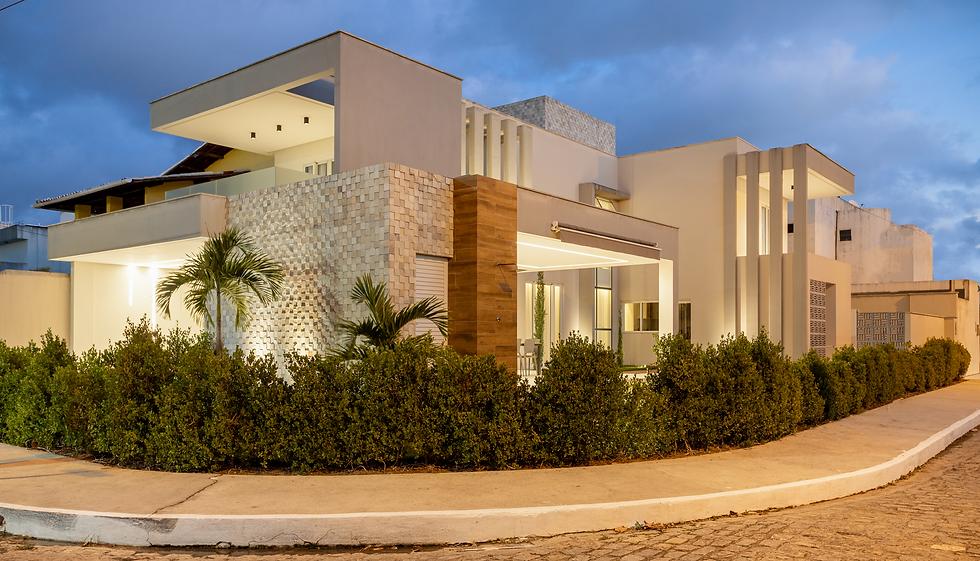
Quartzite is a metamorphic rock formed from sandstone under intense heat and pressure. This process gives it incredible strength while also producing a sparkling, marble-like appearance.
It is one of the most durable decorative stones, often used in luxury homes where homeowners want both elegance and strength. Quartzite is resistant to scratching, UV rays, and extreme weather conditions.
Its natural shimmer makes it especially popular in high-end modern villas and premium architectural projects.
6. Travertine Exterior Stone
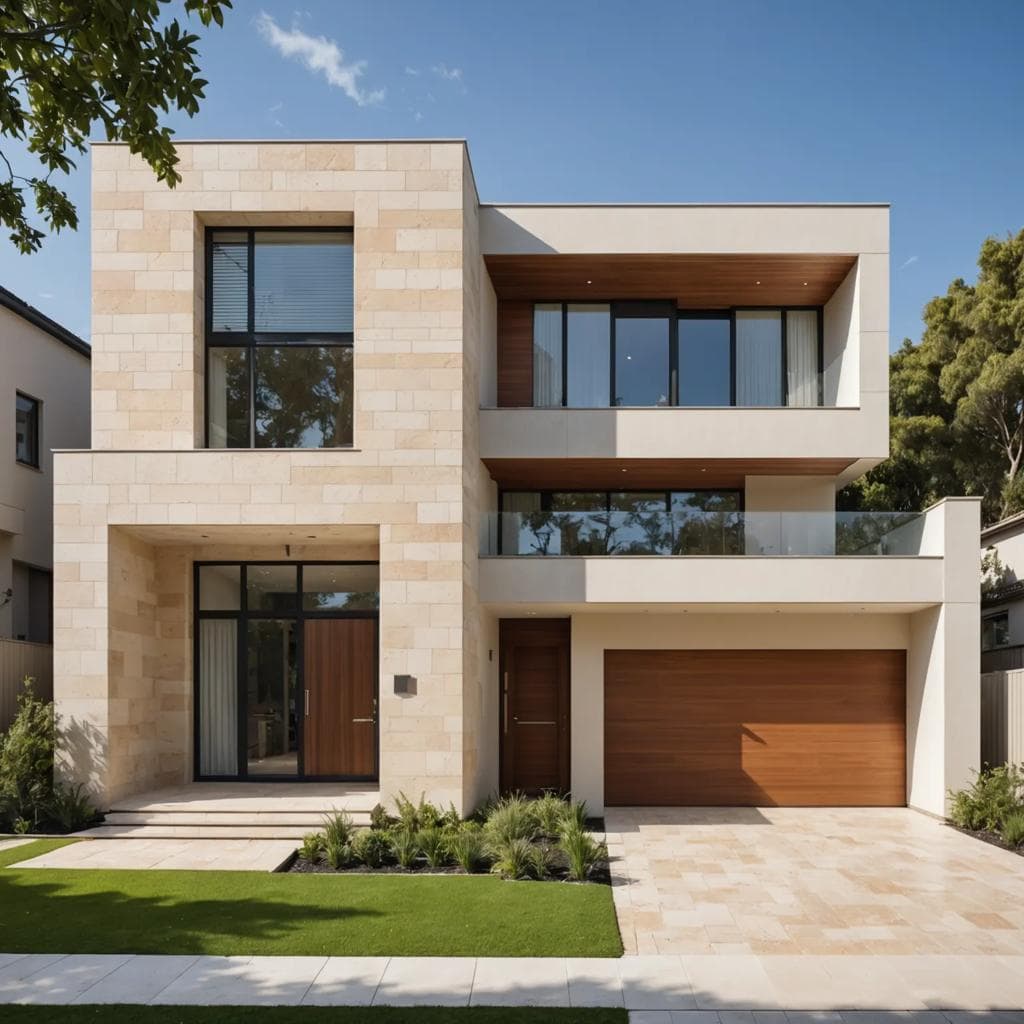
Travertine is a form of limestone formed around mineral spring deposits. It is characterized by its natural holes and porous texture, giving it a distinct rustic yet elegant appearance.
It is widely used in Mediterranean, Italian, and resort-style architecture due to its warm beige and ivory tones. Travertine keeps buildings cooler in hot climates, making it both functional and aesthetic.
When properly sealed, it becomes highly durable and adds a luxurious, vacation-like feel to any home exterior. Travertine is a poor choice for a weather-facing wall in Northern Virginia unless it is dense, filled and sealed; freeze-thaw cycles open its pores. Save it for a covered porch.
7. Fieldstone Exterior Stone
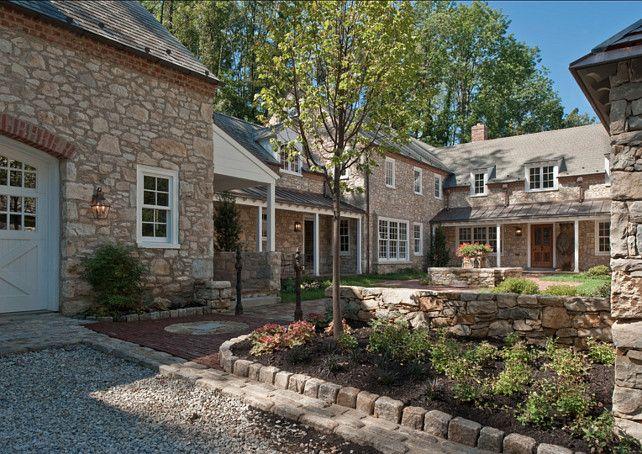
Fieldstone consists of naturally occurring stones collected from fields and landscapes. Because the stones are uncut and irregular, they create a raw, organic, and rustic appearance.
This type of stone is commonly used in farmhouse, country, and cottage-style homes. Each installation is unique because no two stones are identical, giving homes a truly natural identity.
Fieldstone is extremely durable and weather-resistant, making it ideal for long-lasting exterior walls in rural and suburban environments. Fieldstone is the native look of Northern Virginia: the Pennsylvania and Virginia fieldstone on Loudoun’s farmhouses and Great Falls estate walls, and the Potomac-quarried Carderock on houses across the region.
8. River Rock Exterior Stone
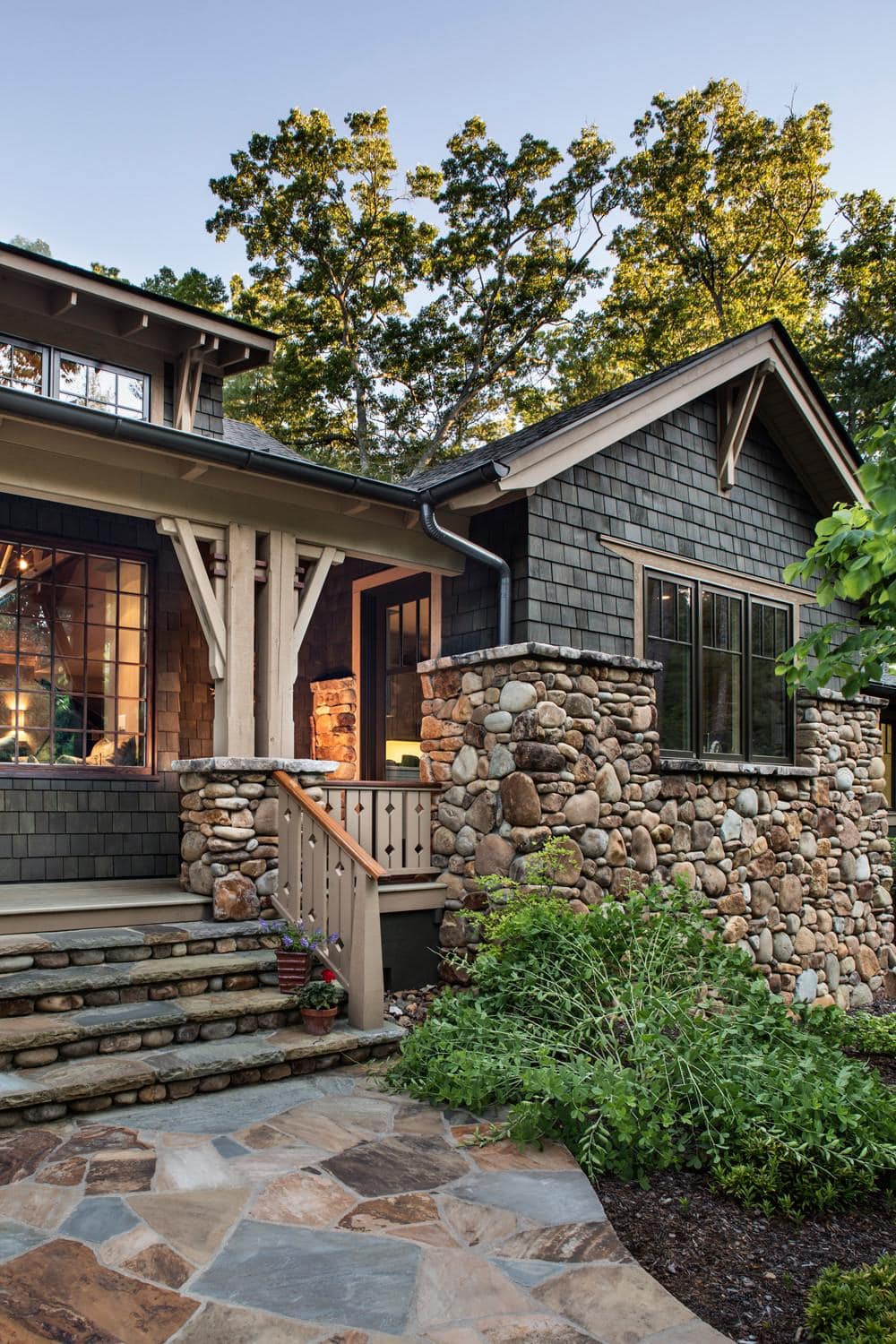
River rock is formed through years of natural water erosion, resulting in smooth, rounded stones. These stones are often used to create soft-textured, organic-looking facades.
It is commonly used for accent walls, foundations, and landscape integration rather than full exteriors. River rock works beautifully in homes that aim to blend architecture with nature. Indoors, the same veneers make a bedroom feature wall; our bedroom accent wall ideas guide covers that use and its cost.
Its varied colors and shapes give every structure a unique artistic character.
9. Ledgestone Exterior Stone
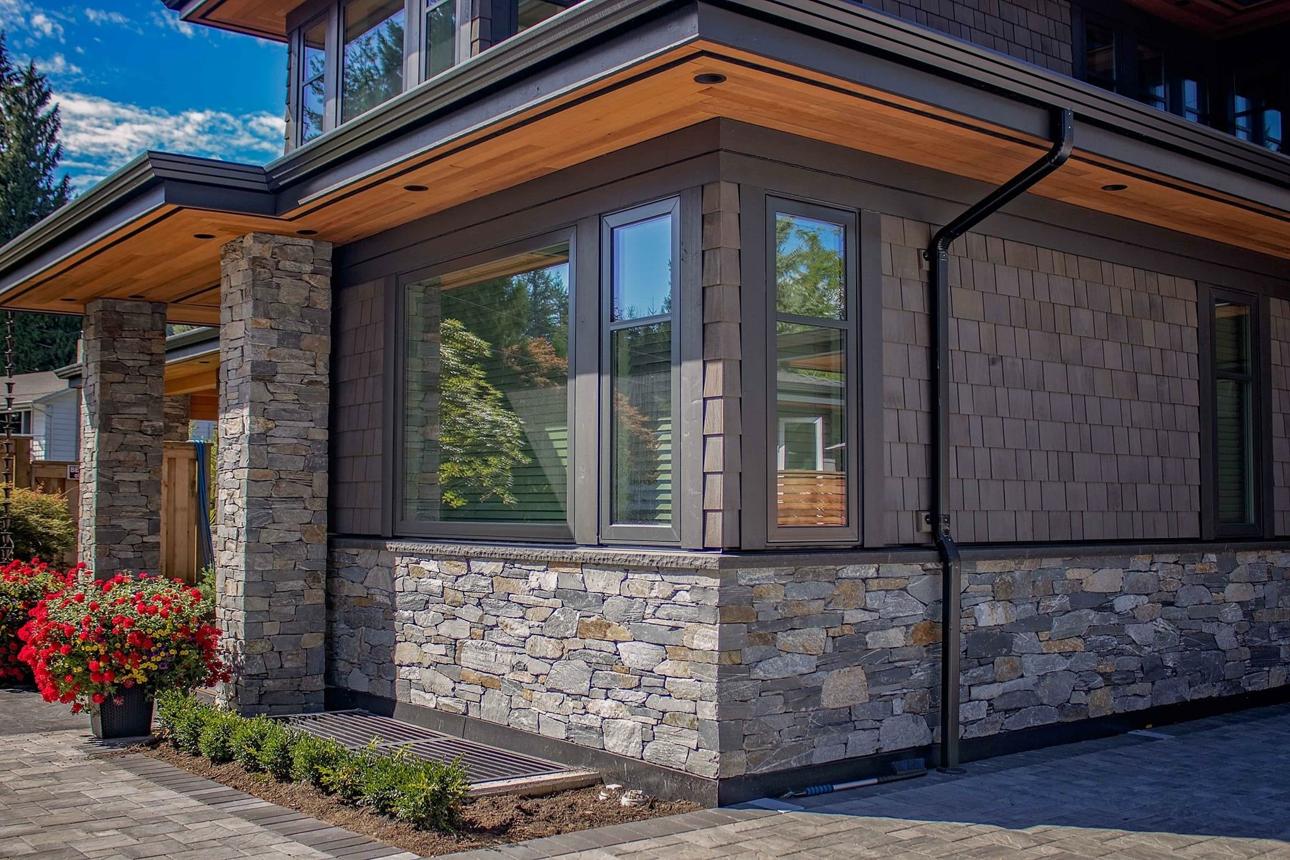
Ledgestone is composed of long, narrow stone pieces stacked horizontally to create a layered effect. This gives walls a strong sense of depth, movement, and texture.
It is often used for accent sections like entryways, columns, and fireplaces. Ledgestone is versatile, fitting both modern and rustic designs depending on color choice.
Its structured layering makes it a favorite for adding architectural dimension to flat surfaces.
10. Manufactured Stone Veneer
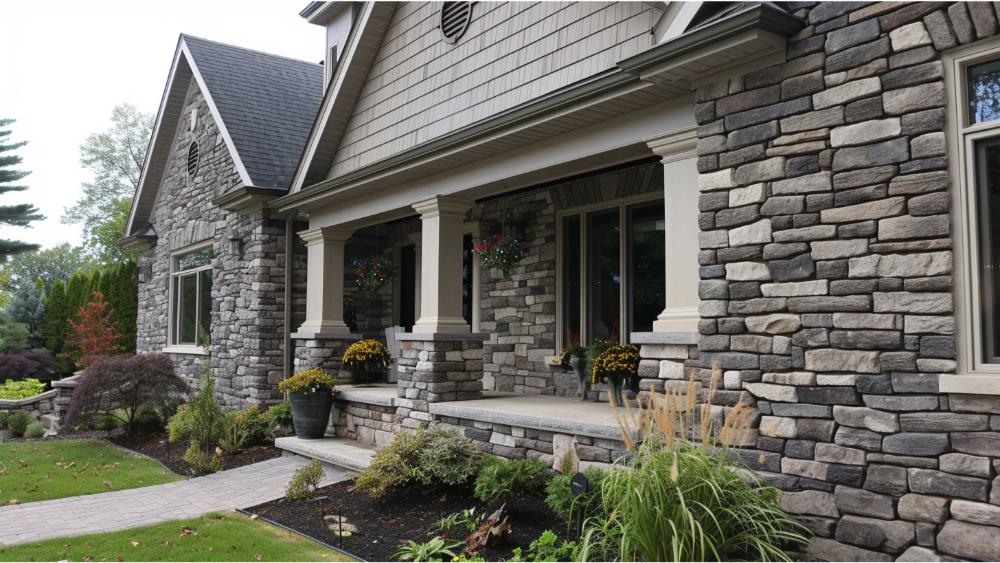
Manufactured stone veneer is a lightweight, engineered product designed to replicate the look of natural stone. It is made using cement, aggregates, and pigments.
This material is widely used because it offers a luxury stone appearance at a much lower cost and weight. It is easier to install and does not require heavy structural support.
Although not natural stone, modern manufacturing techniques make it highly realistic and visually appealing.
11. Basalt Exterior Stone
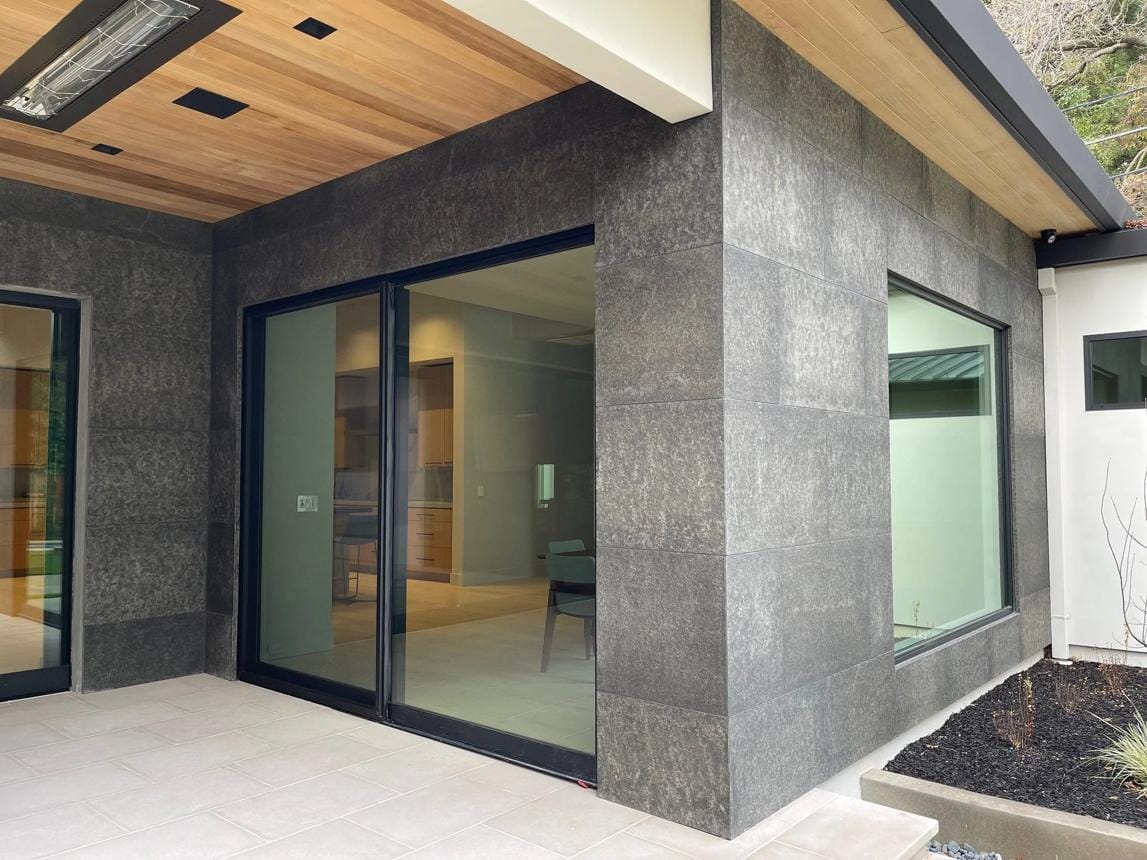
Basalt is a dense volcanic rock formed from rapidly cooled lava, giving it an extremely compact and durable structure. It is typically deep gray to jet black in color, making it one of the most visually striking stones used in modern architecture.
This stone is highly resistant to weathering, moisture, and temperature fluctuations, which makes it ideal for harsh climates. Designers often use basalt in minimalist, industrial, and ultra-modern homes where contrast and bold visual impact are important.
Its fine-grained texture creates a smooth yet powerful appearance, often paired with glass, steel, or concrete for a sleek architectural balance.
12. Bluestone Exterior Stone
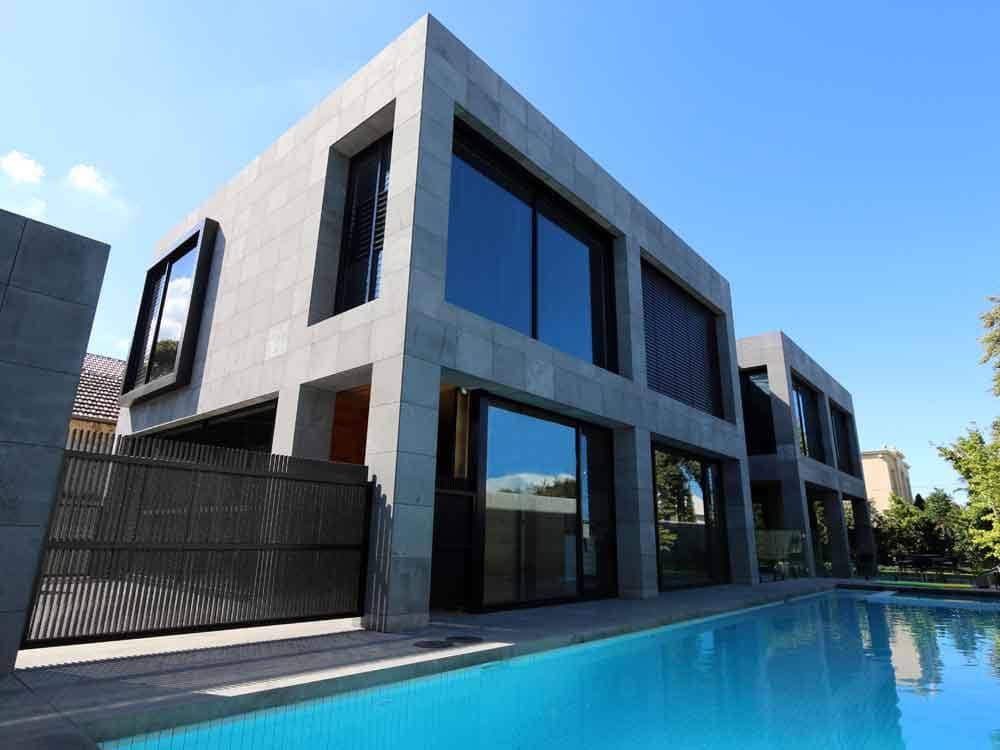
Bluestone is a dense sandstone or limestone variant known for its distinctive blue-gray coloration. It brings a calm, refined, and slightly cool aesthetic to exterior designs.
It is widely used in patios, walkways, and modern facades due to its ability to complement both natural landscapes and contemporary structures. Bluestone also weathers beautifully over time, developing subtle tonal variations that enhance its character.
Its uniform texture and color consistency make it a favorite for architects aiming for a clean, structured, and sophisticated exterior palette. Pennsylvania bluestone is the local standard for steps, walks and caps, and its blue-gray reads well against both red brick and painted siding.
13. Marble Exterior Stone
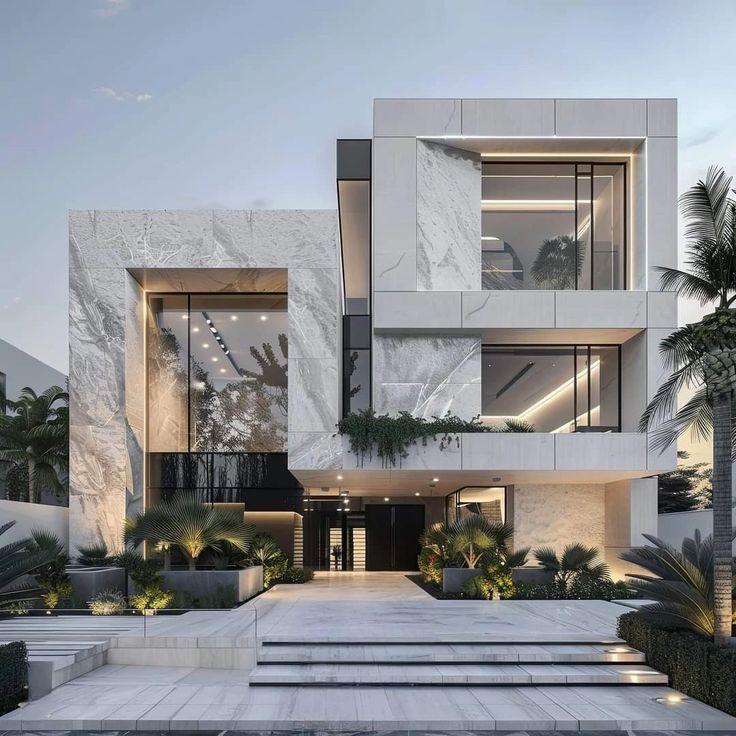
Marble is one of the most luxurious natural stones, formed when limestone undergoes intense heat and pressure. It is recognized for its elegant veining patterns and polished surface, which instantly elevate any architectural design.
While not commonly used for full exterior cladding due to cost and maintenance, marble is often applied in feature walls, entrances, columns, and luxury accents.
It reflects light beautifully, giving homes a bright and prestigious appearance. It requires proper sealing and maintenance to protect it from staining and weather damage. Outdoors in a wet climate marble etches and stains; limit it to a covered entry or a feature wall out of the weather.
14. Cobblestone Exterior Stone
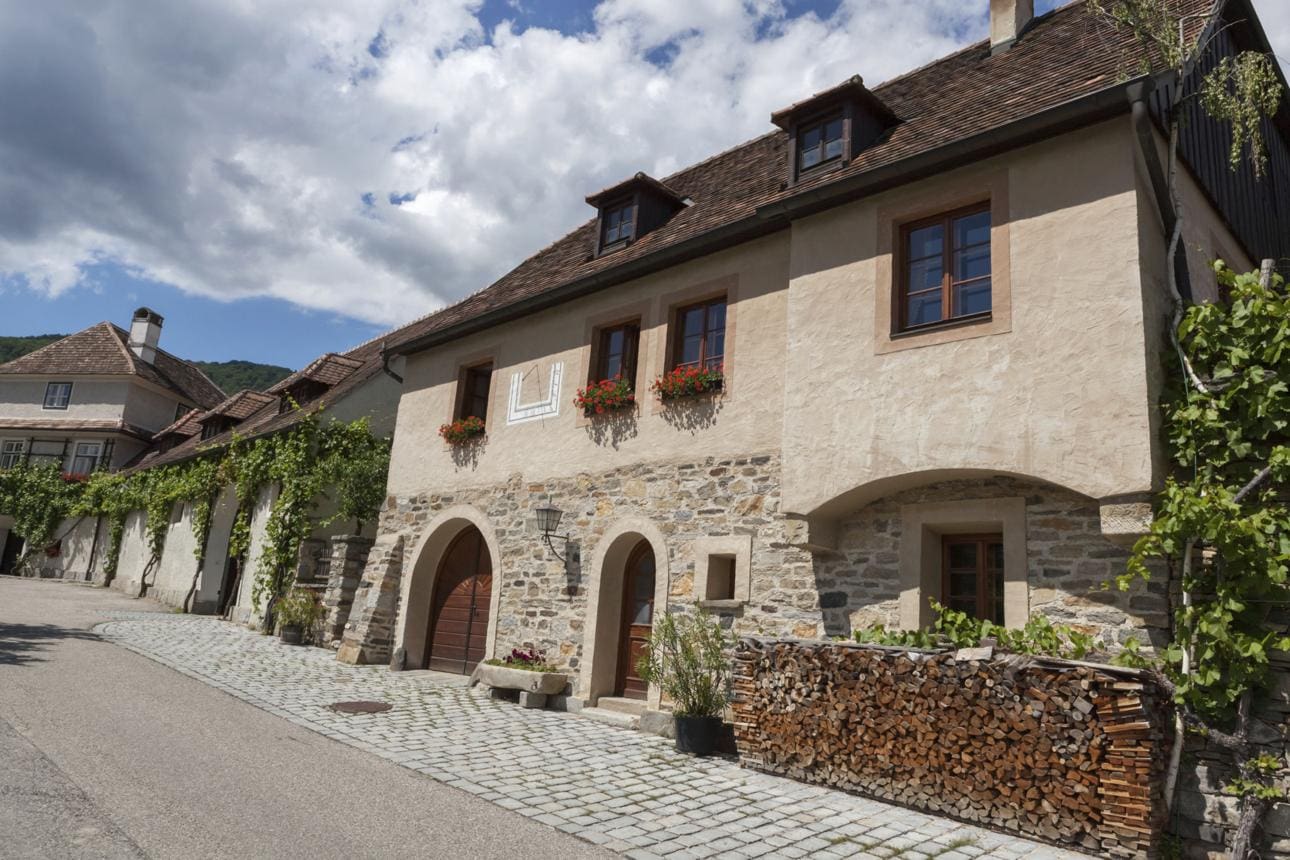
Cobblestone consists of naturally rounded stones traditionally used in historic European streets and buildings. It brings a strong sense of heritage and old-world craftsmanship to modern homes.
Its irregular shapes and earthy tones create a timeless, rustic, and charming aesthetic, often associated with countryside cottages, castles, and vintage architecture.
Cobblestone is extremely durable and long-lasting, but installation is labor-intensive, making it more of a premium artisanal choice today.
15. Cast Stone (Architectural Precast)
Cast stone is a refined concrete mix molded and finished to match natural cut stone, and it is the material behind most of the limestone-looking sills, quoins, keystones, columns and door surrounds on newer traditional homes. It arrives in exact dimensions, takes crisp profiles that would be expensive to carve in real limestone, and costs a fraction of the quarried version. Cast stone is not a wall cladding; it is the trim that finishes a brick, stone or siding elevation. On Northern Virginia colonials it is the usual way to add a portico, a water table cap or window surrounds without waiting on a quarry, and a good product weathers to match the limestone it imitates.
Exterior Stone in Northern Virginia: Local Stone, Climate and Review Boards
The stone that looks right here is the stone that was always here. Fieldstone from Pennsylvania and the Virginia Piedmont, Carderock from the Potomac quarries, Pennsylvania bluestone on the steps and Indiana limestone on the trim: those four account for most of the natural stone on houses from Alexandria to Purcellville, and a stone supplier in the region stocks all of them. Matching them is easier than matching a stone shipped in from the Rockies, and an addition faced in the same stone as the neighborhood reads as original rather than added.
The climate sets the rules. Northern Virginia is USDA zone 7a, with dozens of freeze-thaw cycles each winter, wet springs and humid summers. Water that gets into a porous stone and freezes breaks it, so dense stones (granite, quartzite, basalt, slate, bluestone, most fieldstone) go on weather faces, and porous ones (travertine, soft sandstone, marble) stay under cover or get sealed and inspected. North-facing walls stay damp longest and are where manufactured veneer shows efflorescence when the drainage behind it is wrong. De-icing salt eats soft stone on steps, which is another reason bluestone and granite own the front walk.
The typical project is not a stone house; it is stone added to a house that has none. Across the 1970s to 2000s colonials, split-levels and builder homes of Burke, Herndon, Chantilly, Ashburn and Leesburg, the jobs we see most are a stone water table across the front, a foundation skirt on an addition, a chimney reface, and an entry surround with columns. On the estate lots of Great Falls, Clifton and Middleburg, and in the teardown streets of McLean, full facades and whole-house stone are the norm, and our Fairfax County remodeling guide and Loudoun County remodeling guide cover what those markets expect a remodel to reach.
Then the review. In an HOA community, any change to exterior materials goes to the architectural review committee before work starts; the Reston Association, Burke Centre and the planned communities of eastern Loudoun all review stone the same way they review siding and roofing, usually with a sample and an elevation drawing, and approval takes 30 to 60 days. The City of Fairfax’s Old Town and the Town of Clifton have historic review boards on top of that. Permits depend on the format: thin veneer over an existing wall is usually treated like re-siding, while full-bed stone that needs a new footing or ledge is structural work and needs a building permit. Our Northern Virginia permit checklist lists who to ask in each jurisdiction.
Installation Details That Decide Whether Stone Lasts
Stone rarely fails. The wall behind it does, when water gets in and cannot get out. Every one of these details is cheap on the day of installation and expensive afterward.
- Two layers of water-resistive barrier over the sheathing, lapped like shingles, on every veneer installation
- Galvanized lath fastened into the studs, not just the sheathing, and a full scratch coat before the stone goes on
- A weep screed at the bottom of every veneer wall so water that gets behind it drains out
- A drainage mat or rainscreen gap behind manufactured veneer, which is where trapped water does its damage
- Kick-out flashing where a roof meets a stone wall, the single most common source of rot behind stone
- Clearance: four inches above soil and two inches above paving, with the stone never buried below grade
- Sills that slope and project, and caps on every wall top and water table so rain sheds instead of soaking in
- Mortar matched to the stone: softer lime-based mortar for soft stone so the joints, not the stone, take the movement
- Sealer on porous stone after it has cured, and never on dense stone that does not need it
- A footing or a bearing ledge for full-bed stone, sized by an engineer where it carries any height
Maintenance by Stone Type
- Granite, basalt, quartzite, slate, bluestone: rinse and inspect the joints; no sealer needed
- Fieldstone, ledgestone, river rock, cobblestone: repoint mortar every 20 to 30 years; keep vines off the wall
- Limestone, sandstone, travertine, marble: seal every three to five years and clean with pH-neutral cleaner only
- Manufactured veneer: check for efflorescence and cracked joints yearly, keep sprinklers off it, touch up color where repairs were made
- Cast stone: clean like limestone and re-caulk the joints to adjacent materials as they age
Frequently Asked Questions
What is the best stone for exterior house design in 2026?
It depends on style, climate and budget. Granite and quartzite for durability and a premium look, slate and basalt for modern designs, fieldstone and limestone for traditional and estate homes, and manufactured veneer where weight or budget rules. In a freeze-thaw climate, choose a dense stone for any weather-facing wall.
Which exterior stone is the most durable?
Granite and quartzite, followed closely by basalt and slate. All four are dense, shrug off water and freezing, and do not fade in sun. Well-laid fieldstone and bluestone also last a century or more.
What is the cheapest exterior stone option?
Manufactured stone veneer, at $15 to $30 per square foot installed in 2026, is the least expensive way to get a stone look. Among natural stones, thin fieldstone or ledgestone veneer is usually the most affordable at $25 to $40 per square foot.
Which stone is best for modern house exteriors?
Slate, basalt, bluestone and quartzite. Their tight grain and cool colors suit clean lines and pair well with glass, steel and dark window frames.
Does exterior stone require maintenance?
Dense stones need almost none beyond rinsing and a check of the mortar joints. Porous stones such as limestone, sandstone, travertine and marble need sealing every three to five years. Manufactured veneer needs a yearly look for efflorescence and cracked joints.
Can I mix different types of exterior stones?
Yes. Common pairings are a limestone or cast stone trim with a fieldstone or ledgestone field, bluestone steps against any wall stone, and slate or basalt against wood on modern homes. Keep the mix to two stones and one mortar color.
Which stone is best for hot climates?
Sandstone, travertine and limestone stay cooler and suit dry, warm regions. They are the stones to avoid on weather-facing walls in a climate that freezes.
Is manufactured stone veneer a good choice?
Yes, when it is installed with a water-resistive barrier, a drainage layer and a weep screed, and kept above grade. Installed that way it lasts decades and looks convincing. Installed straight over sheathing with no drainage, it traps water and rots the wall behind it.
How much does exterior stone cost per square foot in Northern Virginia?
Installed in 2026: $15 to $30 for manufactured veneer, $25 to $45 for thin natural veneer, and $40 to $75 for full-bed natural stone, with labor making up half to two thirds of the total. A stone water table across a colonial’s front runs $3,000 to $7,000 and a full two-story front facade $12,000 to $40,000.
Can stone veneer be installed over brick or siding?
Over sound brick or block, yes, with a bonding scratch coat or lath. Over siding, no: the siding comes off, the sheathing is repaired, and the veneer goes on over a water-resistive barrier and lath. Removing siding adds $2 to $5 per square foot.
Do I need approval to add stone to my house?
In an HOA community, yes, from the architectural review committee before work starts, usually with a sample and a drawing. In a historic district, from the review board as well. A building permit is needed when the stone is full-bed and requires a footing or ledge; thin veneer over an existing wall is generally treated like re-siding, but confirm with your county.
Conclusion
Choosing exterior stone in 2026 is a balance of look, durability, climate and budget, and in Northern Virginia the climate settles more of it than people expect. Granite, quartzite, basalt and slate are the long-term investments on any wall that faces the weather. Fieldstone, limestone, bluestone and cast stone are the materials the region’s houses were built with, and the ones that make an addition or a new facade look original. Manufactured veneer gives the look at a third of the price when the wall behind it is built to drain. Get the format and the drainage right, and the stone type becomes a matter of taste that will still look right in fifty years.
Stone reads beautifully from both sides of a glass wall, so it is a natural foundation for blending indoor and outdoor living spaces, it is the material of choice for a stone well house on a well property, and a stone entry is one of the exterior upgrades that pays off before a sale. If you are planning an exterior, an addition or a whole-home project in Northern Virginia, we are a Class A licensed design-build firm in Sterling and the in-home design consultation is free. Book a free in-home design consultation.