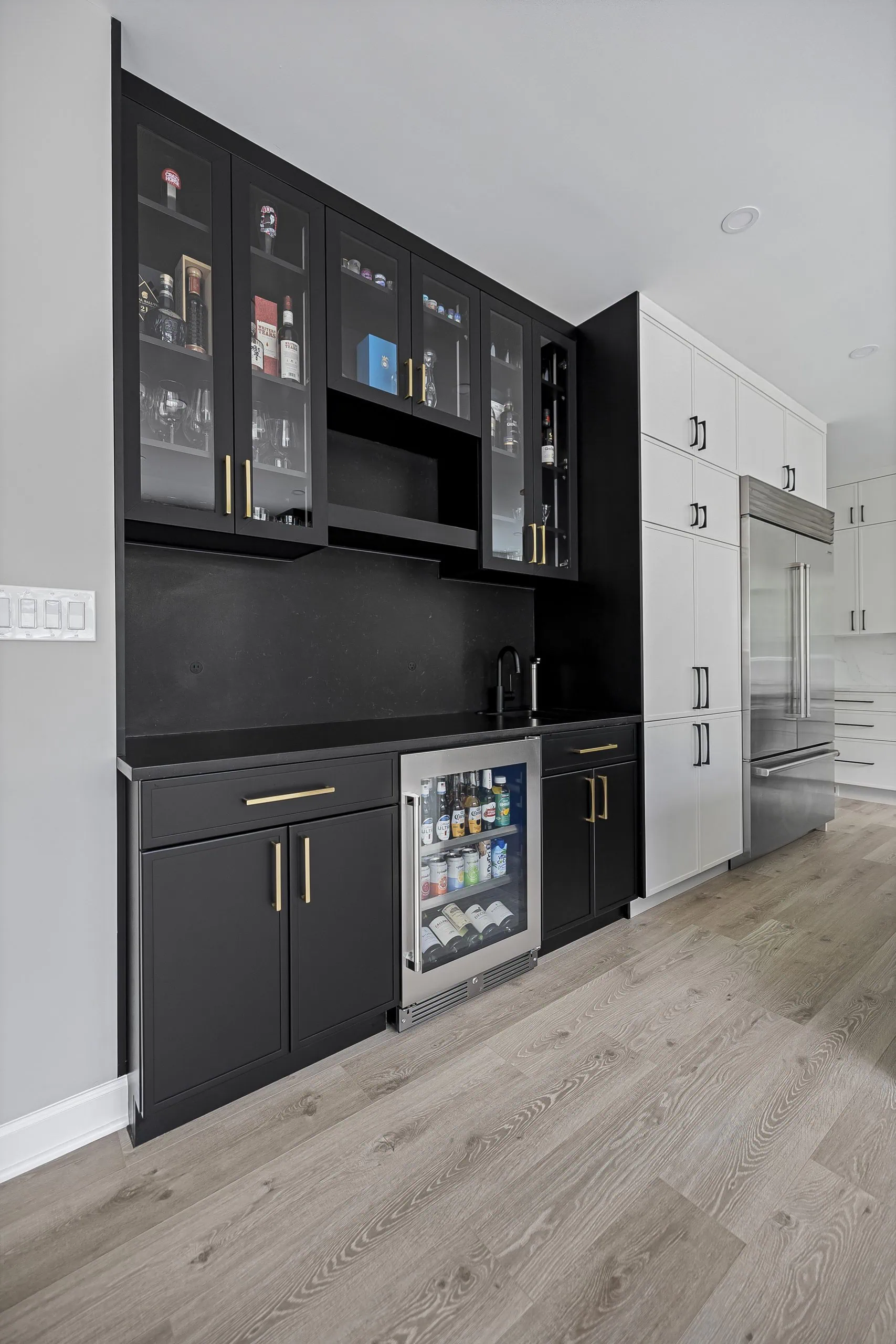
Yes, you can mix metals in interior design, and in 2026 you should: a single matched metal reads as a builder package, while a confident mix reads as designed. The rules that keep it intentional are short. Use two or three metals per room, never more. Make one clearly dominant, roughly the 60/30/10 split decorators use for color. Balance warm against cool, brass or gold against nickel, chrome, or black. Repeat every metal at least twice so nothing looks like a mistake. And treat stainless steel and matte black as neutrals that do not count against your limit. This guide covers the pairings that work, the room by room playbook, and honest answers to the two questions everyone actually searches: whether mixed metals are still in style, and whether brass is over.
Are Mixed Metals in Style in 2026?
Emphatically yes, and more than in style: mixing metals has graduated from trend to standard practice. Open any current design portfolio, ours included, and you will find brass lighting over nickel plumbing, black hardware against stainless appliances, and bronze accents warming chrome bathrooms. The shift happened because matched metal packages began reading as catalog orders rather than design decisions. What has changed for 2026 is the temperature of the mix: warm metals lead, satin and unlacquered brass especially, with cool metals playing support rather than starring. The all chrome kitchen and the all brushed nickel bathroom are not wrong, they are simply the safest possible answer, and safety is not what people renovate for. Our Ashburn whole home case study shows the warm lead in practice, with brass pendants and a brass faucet against black and sage green cabinetry, and our interior design in Fairfax and Loudoun County page covers how we plan finishes like these in 3D before anything is ordered.
Is Brass Out of Style? The Question Behind the Question
No, brass is not out of style, but the brass people fear is not the brass being installed. The shiny lacquered builder brass of the late 1980s and 1990s, thin, yellow, and polished to a mirror, is what dates a home, and it is not coming back. Today’s brass is a different material experience: satin brass with a soft matte glow, unlacquered brass that darkens into a living patina, and antique brass with the warmth built in. These finishes have now held a full decade at the top of the market, which is longer than most trends get, and they have done it by behaving like classics: they flatter wood, stone, and every popular cabinet color. Our honest guidance: satin or unlacquered brass is a safe ten year choice; mirror polished brass everywhere is a costume; and if you still hesitate, use brass in lighting and hardware, the two easiest categories to change, and keep plumbing in nickel.
The Five Rules of Mixing Metals
- Two or three, never four: Two metals is a conversation, three is a composition, four is noise. Count finishes honestly, oil rubbed bronze and matte black are different metals to the eye.
- One metal dominates: Give roughly 60 percent of the visible metal to one finish, 30 to the second, 10 to an accent. Equal splits read as indecision.
- Balance warm and cool: Brass, gold, copper, and bronze are warm; chrome, nickel, and stainless are cool; black is neutral. The classic mixes pair across that line.
- Repeat everything twice: A single brass item is an accident; a brass faucet echoed by brass sconces is a scheme. Repetition is what makes a mix look deliberate.
- Vary the sheen, not just the color: Matte against polished adds depth even within one metal family, and it forgives the small mismatches between manufacturers’ finishes.
A Field Guide to the Finishes
Mixing well starts with knowing what each metal actually does in a room. Satin brass is the modern default warm metal, soft glow, no mirror shine, forgiving of fingerprints. Unlacquered brass is the connoisseur’s version: it starts bright and ages into a darkened, lived in patina that either delights you or drives you to polish, so know yourself before ordering. Polished nickel is the quiet upgrade over chrome, warmer and slightly gray where chrome is blue white and sharp; side by side the difference is obvious, in photos it rarely is, which is why specifying the wrong one is the most common finish schedule error we catch. Brushed nickel is the durable workhorse, and chrome remains the crisp classic that marble bathrooms love. Matte black is graphic punctuation, best in hardware and frames, riskier as every fixture in a hard water house because mineral spots show. Oil rubbed bronze brings depth to traditional and craftsman rooms. Copper is the strongest flavor, wonderful in one gesture, exhausting in five. And stainless steel is not a design decision at all; it is the appliance neutral every kitchen already owns.
The Pairings That Always Work
| Combination | The effect | Where it shines |
|---|---|---|
| Brass + matte black | Warm glamour with graphic edge | Kitchens, powder rooms, offices |
| Brass + polished nickel | Quiet luxury, soft contrast | Transitional kitchens and primary baths |
| Chrome + brass | Fresh, slightly retro sparkle | Bathrooms, especially with marble |
| Bronze + brushed nickel | Earthy warmth, zero glare | Craftsman and rustic homes |
| Copper + iron or black | Industrial warmth | Bar areas, farmhouse kitchens |
| Stainless + anything | The appliance neutral | Every kitchen, it counts as background |
The combinations to avoid are as instructive: two warm metals of similar tone, brass with gold, copper with antique brass, blur together and look like a matching attempt that missed. If you want two warm metals, separate them decisively in tone and sheen, or put black between them.
Mixing Metals in the Kitchen
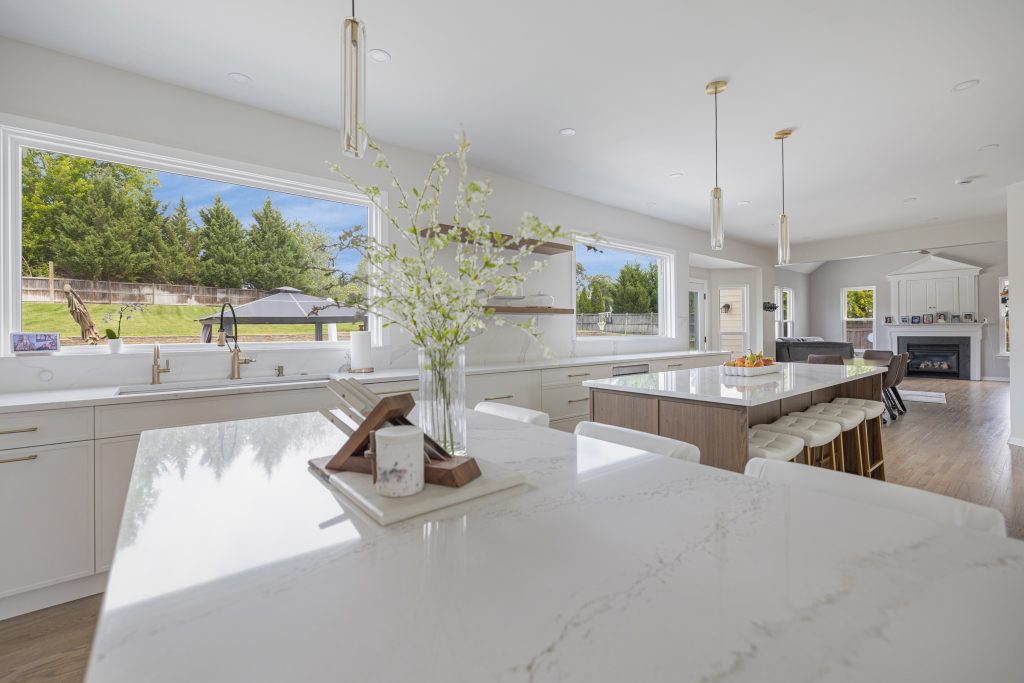
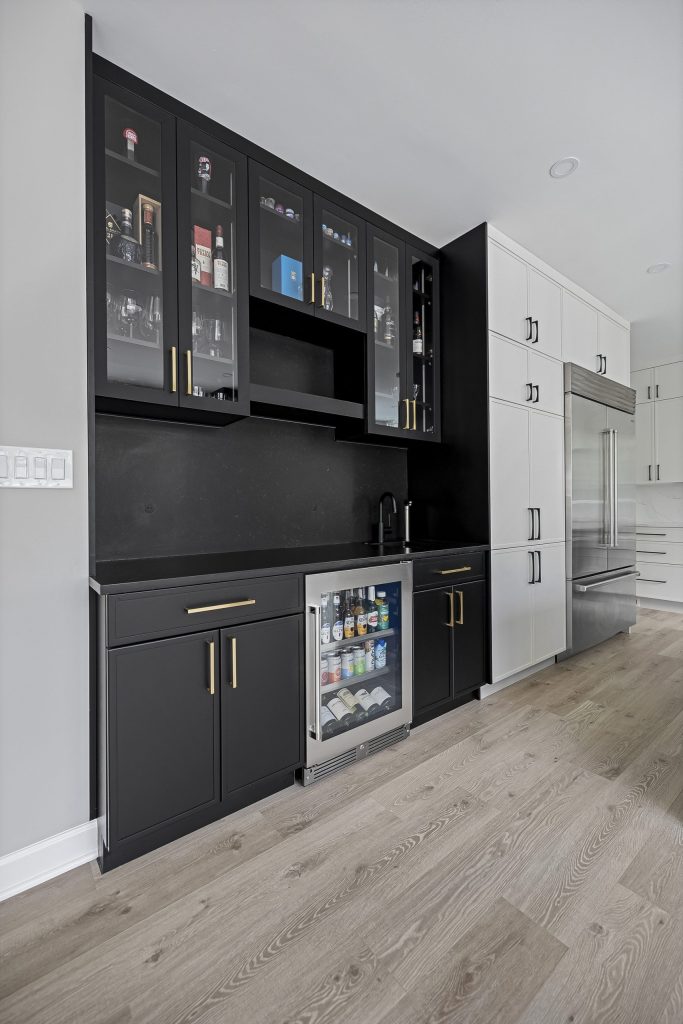
The kitchen is the easiest room to mix metals because stainless appliances force the issue: something already contrasts with your hardware unless you chose stainless pulls, and almost nobody should. The working formula in our Northern Virginia projects: stainless appliances as the neutral, one dominant finish across cabinet hardware and the faucet’s neighborhood, and lighting in the contrast metal. Brass pendants over navy cabinets with nickel plumbing is the proven transitional kitchen mix; black hardware with brass lighting suits warmer wood kitchens. Appliance brands have joined the game, with GE Cafe’s swappable brass and copper handles making the appliance wall itself part of the metal scheme, a point we cover in our appliance brand guide. One kitchen specific caution: the range hood is the largest metal object in the room after the refrigerator, so decide early whether it joins the dominant metal or makes its own statement, because it cannot do both.
Mixing Metals in the Bathroom
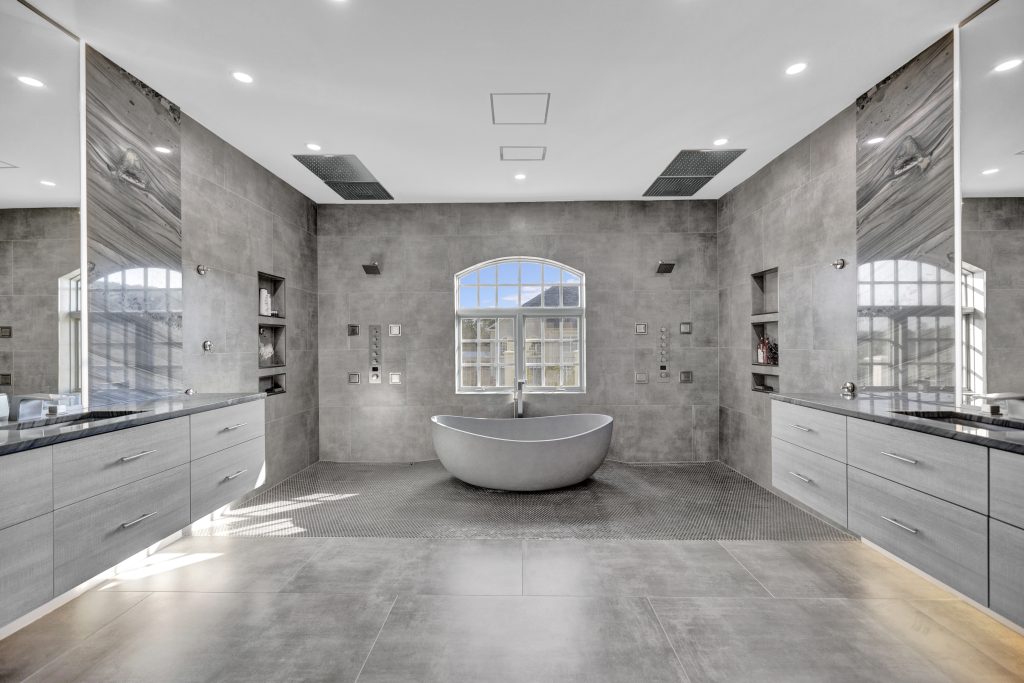
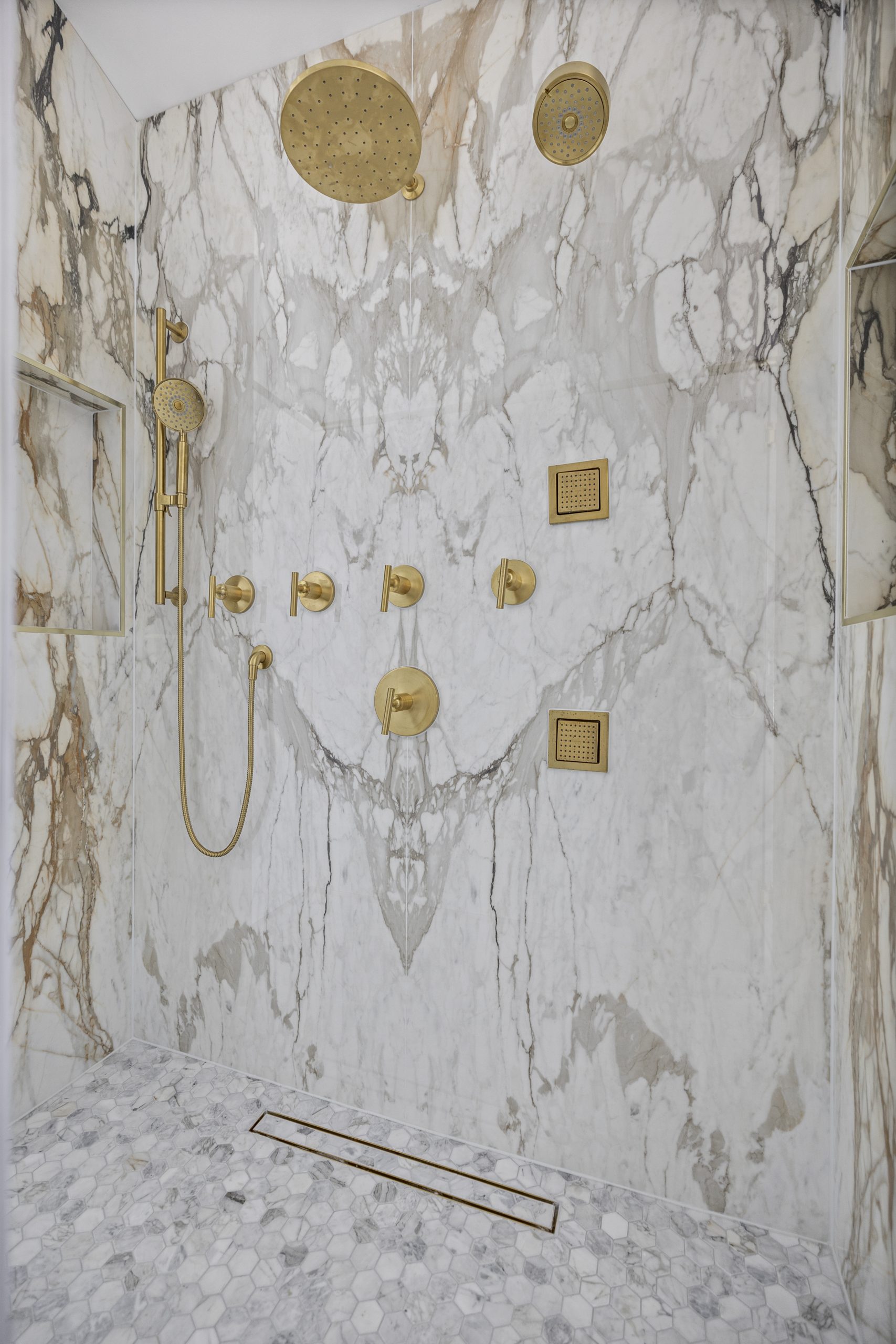
Bathrooms reward the boldest mixes because the metal moments are concentrated: faucet, shower trim, towel bars, mirror, sconces, drain covers, and hardware all sit within a few feet of each other, so a small number of decisions controls the entire effect. The reliable scheme is plumbing in one finish and lighting plus mirror in the second, brass fixtures under black framed mirrors, or nickel plumbing under brass sconces, with towel bars following whichever finish sits closer to them in the room. Marble makes chrome and brass sing together, which is why that pairing owns the classic bathroom category. Keep shower interior trim matched to the faucet family for a clean wet zone, and let accessories carry the accent metal since they change easily. The full framework for baths that never date, metals included, lives in our timeless bathroom design guide.
Mixed Metal Decor in the Living Room
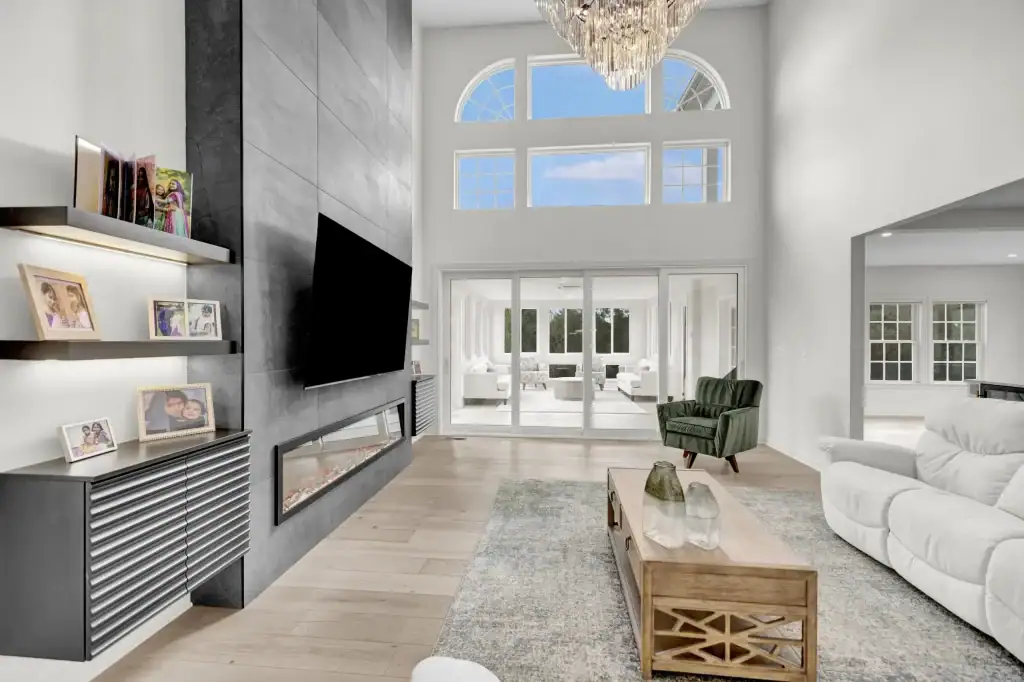
Living rooms mix metals through furniture and decor rather than fixtures, which makes them the lowest risk room to start in. A black metal coffee table base, brass floor lamp, and nickel framed art follow the same 60/30/10 logic as a kitchen, just in movable pieces. Picture frames, candlesticks, planters, and cabinet hardware on built ins are where the accent ten percent lives. The one living room specific rule: tie the metals to the room’s undertones, warm metals with warm woods and creamy walls, cool metals with gray and blue schemes, black with everything. If the room connects openly to the kitchen, borrow at least one metal from the kitchen’s scheme so the sightline reads as one house rather than two ideas.
Matching Metals to Your Color Palette
Metals have undertones, and they behave like paint. Warm metals flatter the current palette leaders: brass against navy is the highest contrast classic, brass with sage and olive green is the 2026 signature, and brass with warm white and wood is the safest luxury look in the market. Cool metals suit gray, blue, and crisp white schemes, which is partly why chrome ruled the gray decade and brass rules the warm one. Black works with everything, which is why it became the default second metal. The test that settles arguments: hold the actual finish sample against the actual cabinet door in daylight, because brass ranges from nearly gold to nearly bronze across manufacturers, and the name on the box promises less than the light will reveal.
Carrying the Mix Through the Whole House
Rooms can vary their mixes, but houses need a thread. The approach that keeps a whole home coherent: choose one metal that appears everywhere, usually the door hardware finish, and let each room build its two or three metal scheme around that constant. An open plan main floor should share one scheme across kitchen, dining, and living sightlines, changing only the accent weights. Private rooms, bedrooms, baths, the basement bar, can be more adventurous because their metals never appear in the same glance as the kitchen’s. This is also the practical answer for phased remodeling: pick the house constant first, and every future project inherits a decision instead of reopening one.
Not Renovating? The Retrofit Mix
If your rooms are currently one matched metal, you can introduce a second without a contractor and for under a few hundred dollars. Start with lighting or cabinet hardware, the two highest visibility, lowest effort swaps, and add the new metal there in one decisive move rather than scattering small pieces. Support it with two or three decor echoes: a mirror frame, a lamp, picture frames. Leave the plumbing alone; a chrome faucet under new brass sconces is a legitimate designed mix, not a compromise. The one retrofit rule is the same as the renovation rule: commit. Four brass items added to a nickel bathroom is a scheme; one is clutter.
Fixed Metals vs Changeable Metals: Where to Take Risks
The smartest mixed metal strategy sorts every decision by how hard it is to undo. Fixed metals, plumbing fixtures, shower trim, door hardware throughout a house, are ten to twenty year commitments: keep them in the proven finishes, polished nickel, chrome, satin brass, matte black. Semi fixed metals, lighting and cabinet hardware, change with a screwdriver and an afternoon: this is where trend energy belongs, and where an accent finish earns its ten percent. Fully changeable metals, decor, frames, stools, faucets in a powder room, can chase any moment freely. Renovating with this hierarchy means the house can follow fashion for decades without ever re plumbing a bathroom, and it is exactly how we structure finish selections in our design build projects.
A Worked Example: One Kitchen, Three Metals, Zero Chaos
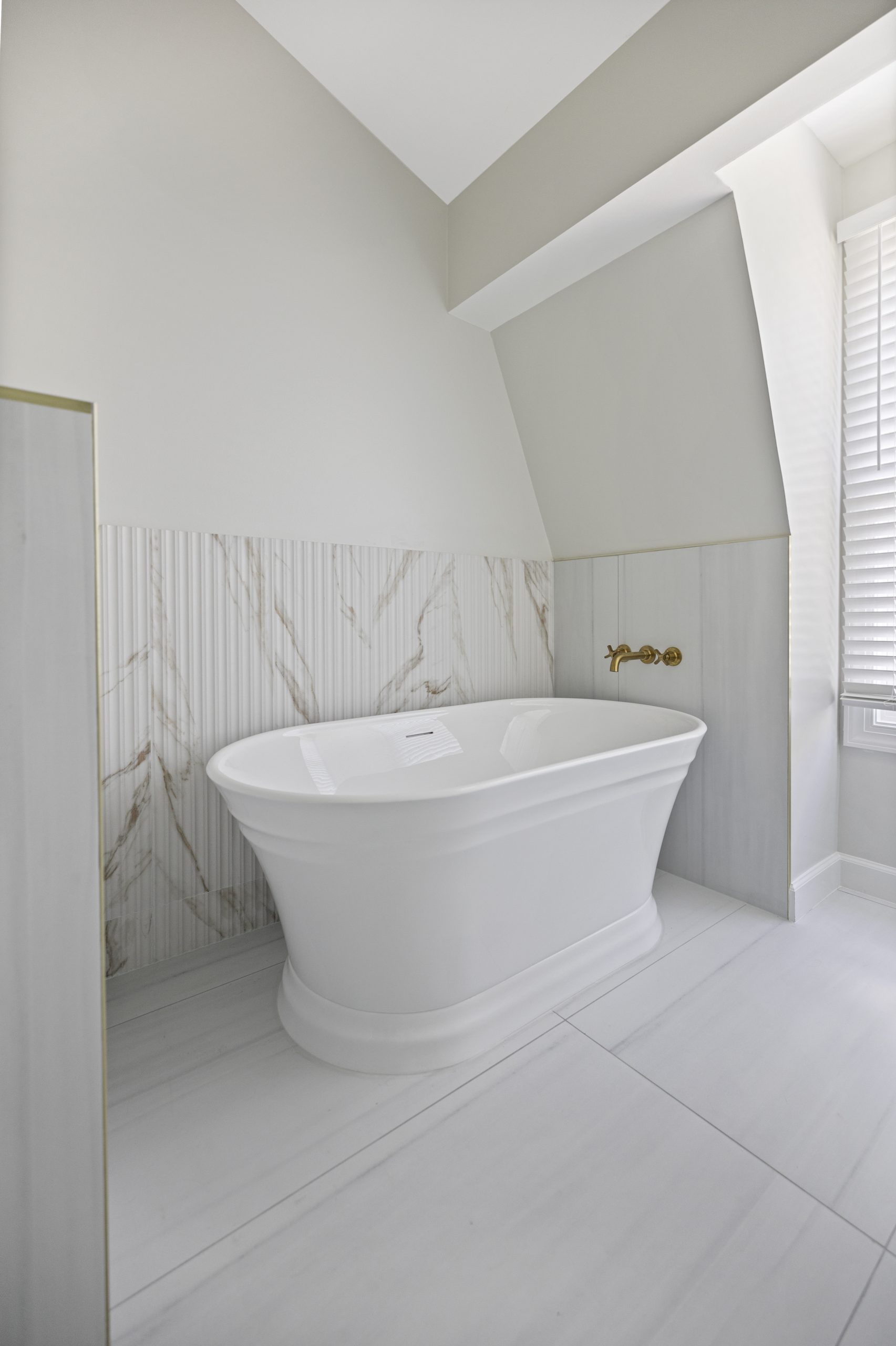
Here is how the rules land in a real project. A recent Fairfax kitchen: warm white perimeter cabinets, a navy island, stainless appliances. The finish schedule ran one page. Dominant metal, satin brass: cabinet hardware throughout, the faucet, and the three island pendants, comfortably past the repeat twice rule. Second metal, matte black: the window frames already in the room, joined by black counter stool legs and the frame of the range wall shelf, so the architecture’s existing metal became part of the scheme instead of an accident beside it. Stainless stayed a neutral on the appliance wall. Accent, polished nickel: cabinet latches on the glass uppers and the pot filler, ten percent, no more. Total metal decisions: eleven. Total finishes: three plus a neutral. The kitchen photographs as curated because every one of those eleven decisions checked against the same page before anything was ordered, which took about twenty minutes of design time. That is the entire secret, written down.
The Mistakes That Make Mixing Look Accidental
After enough projects, the failure patterns are predictable. The fifty fifty split, where two metals appear in equal amounts, reads as a change of mind halfway through the order. The lonely singleton, one black pull in a brass kitchen, looks like a stocking error, which is why repetition is a rule and not a suggestion. Undertone blindness pairs a yellow leaning brass with an orange leaning bronze and wonders why it feels off. Catalog matching buys faucet, lights, and hardware from one collection and achieves the showroom look mixing exists to avoid. And ceiling amnesia forgets that door hinges, HVAC registers, and recessed light trims are metals too; they should quietly join the dominant finish or disappear in white. None of these are expensive mistakes to prevent, all of them are annoying to fix, and a finish schedule written before ordering, one page listing every metal in the room, prevents the lot.
Frequently Asked Questions
Can you mix gold and silver in a room? Yes, warm and cool is the classic mix. Make one dominant, repeat each at least twice, and separate them in sheen, satin gold with polished nickel, so the contrast reads as intended rather than accumulated.
Can you mix chrome and brass? Yes, and beautifully, especially against marble and in bathrooms. Keep chrome on the plumbing and brass on lighting and hardware, or reverse it, but do not split a single category between them.
Is brushed nickel out of style? No. It is the least dramatic finish, which is exactly its job: a cool, fingerprint forgiving workhorse that lets a warm accent metal star. It dates a room only when it is the sole metal everywhere.
How many metals can you mix in one room? Two or three, counting distinct finishes. Stainless appliances and matte black effectively act as neutrals, so a kitchen can carry stainless, black, and brass and still read as a two metal scheme.
Should the faucet match the cabinet hardware? It can, but it does not have to. Faucet matching lighting with contrasting hardware is equally valid. What matters is that whichever pairing you choose repeats somewhere else in the room.
Is mixing metals tacky? Only when it is unintentional. The line between curated and chaotic is the rules above: limited palette, clear hierarchy, warm cool balance, and repetition. Follow them and mixed metals is the most designer looking decision in the room.
Get the Mix Designed, Not Guessed
Metal finishes are chosen in a dozen small decisions across a remodel, faucets one week, lighting another, hardware last, which is exactly how accidental mismatches happen. In our design build projects the finish schedule is written once, at design time, so every later order checks against the same one page plan. EA Home Design is a Class A licensed design build firm serving Fairfax and Loudoun County, and finish selection, metals included, is part of every kitchen and bathroom we design. Schedule a consultation and bring your metal anxieties; resolving them is genuinely one of the fun parts.