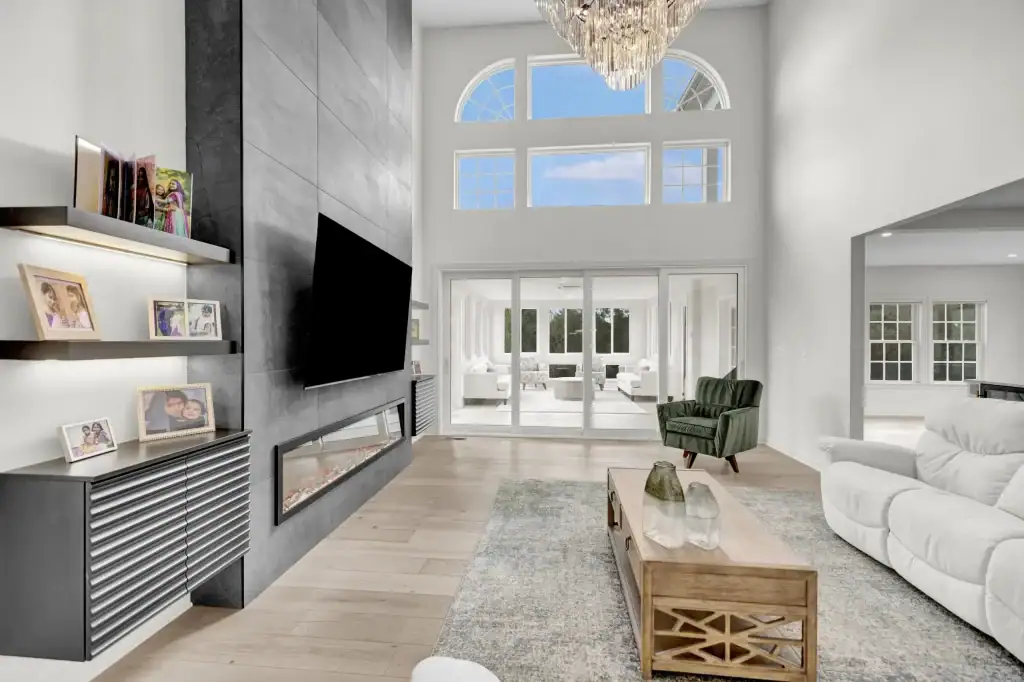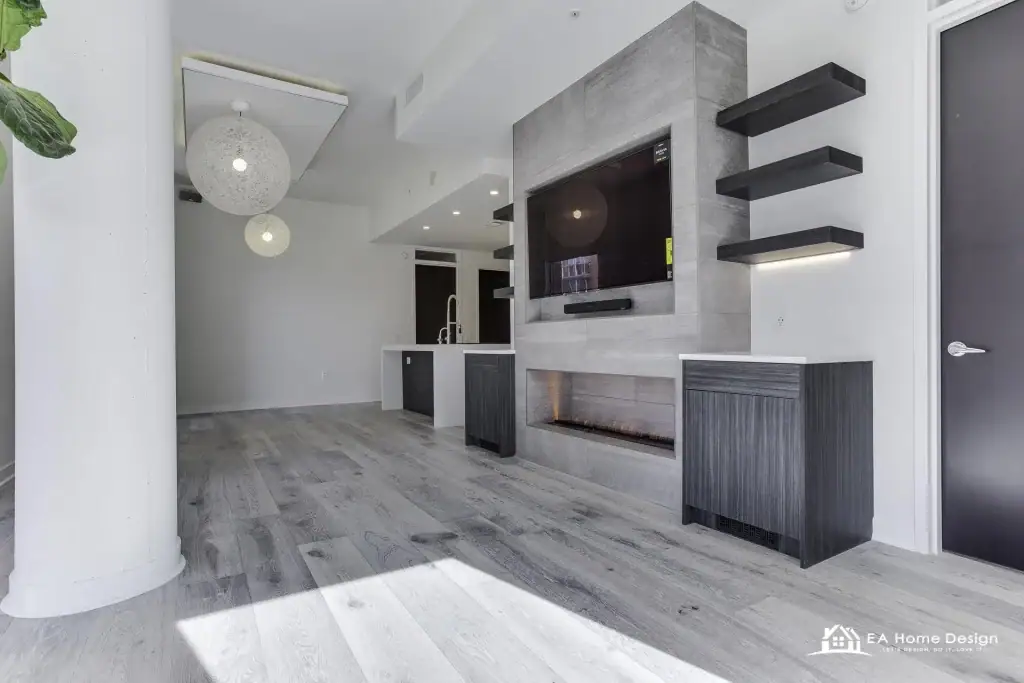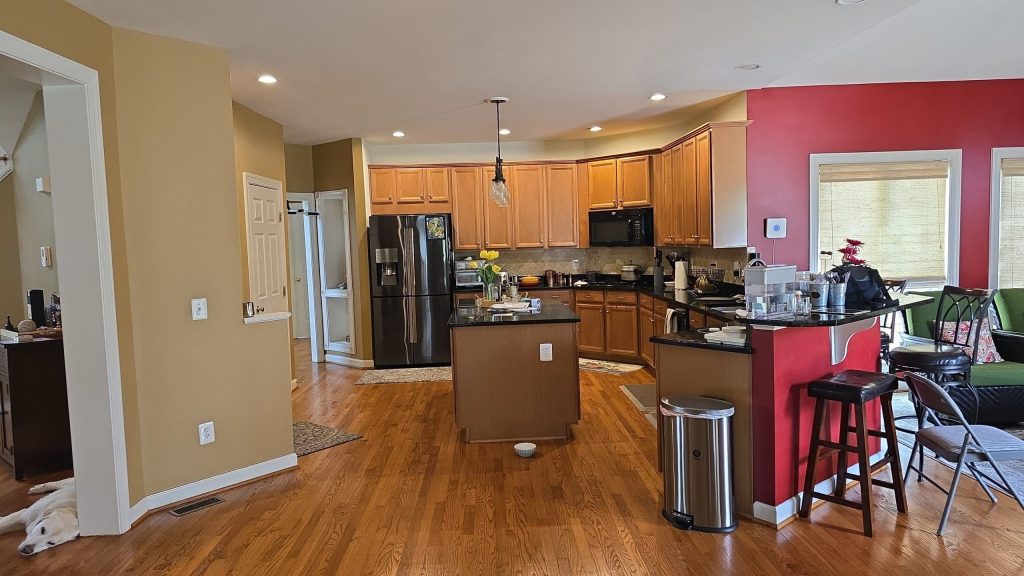
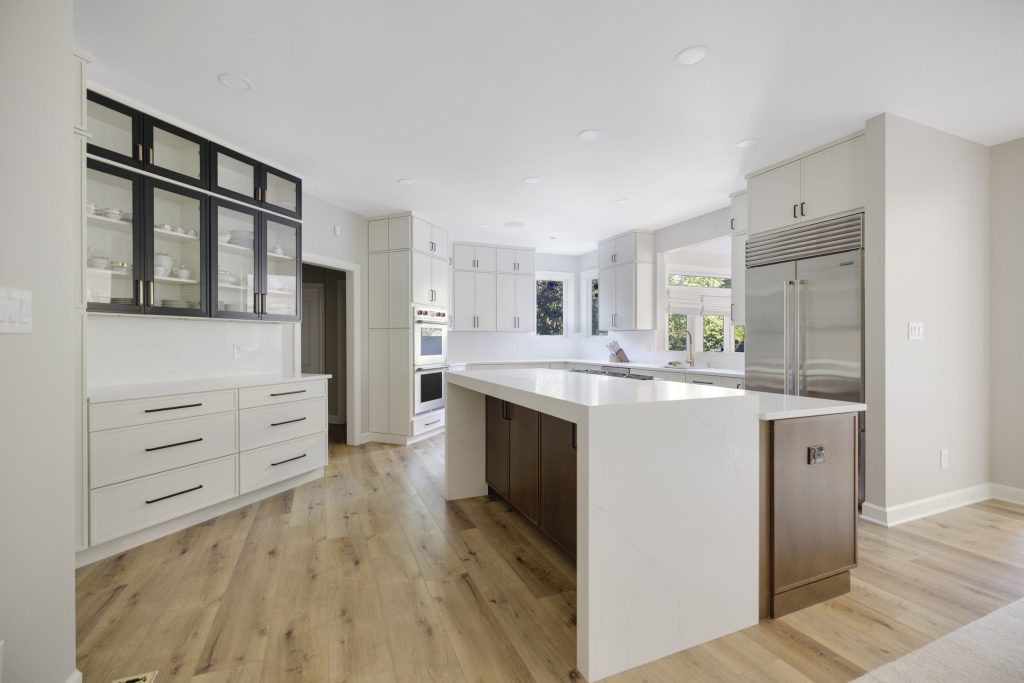
Natural elements in interior design are the materials, light, living things, colors and shapes that come from the natural world: wood, stone, clay and natural fibers; daylight and the view through a window; plants; the earthy palette of soil, foliage, sand and sky; and the curves, grains and patterns that nature makes and factories imitate. Used together they make a room feel calm, warm and settled in a way that synthetic materials cannot, which is why the approach, known as biophilic design, is one of the strongest currents in 2026 interiors. This guide covers each element in turn, with photographs from EA Home Design projects across Fairfax and Loudoun County, a section on natural forms and patterns, twenty ideas, and what the main materials cost here in 2026.
What Natural Elements in Interior Design Means
The phrase gets used loosely, so it helps to be precise. There are six families of natural element, and a room that feels grounded usually carries at least four of them. A single element on its own, a plant on a shelf, reads as decoration; the six together read as a way of building.
| Element | What it is | Where it shows up | The first move |
|---|---|---|---|
| Natural materials | Wood, stone, clay and ceramic, natural fibers, leather, cork and bamboo, in their own grain and color | Floors, counters, cabinetry, feature walls, furniture, rugs and textiles | Choose one real material for the largest surface in the room, usually the floor |
| Natural light | Daylight and the way it moves through the day and the year | Windows, skylights, glass doors, sheer window treatments, mirrors, pale finishes | Take down anything that blocks a window and replace heavy drapes with sheers |
| Plants and greenery | Living things indoors, and the trees and garden seen through the glass | Statement trees, clustered pots, herbs in the kitchen, a living wall, the view itself | Three plants matched to the real light in the room, grouped rather than scattered |
| Earthy color | The palette of soil, bark, stone, foliage, sand and water | Walls, cabinetry, tile, upholstery and textiles | One warm neutral on the walls and one foliage green or clay tone on a cabinet or a wall |
| Natural forms and patterns | Curves, arches and organic shapes, and the patterns nature draws: grain, veining, leaves, branching | An arched opening, a rounded island end, a live edge table, veined stone, botanical prints | Let one surface keep its real pattern, a veined counter or a knotty floor, instead of a uniform print |
| Views, water and sound | The outdoors framed from inside, moving water, birdsong through an open window | Picture windows, glass doors to a patio, a fountain, an open casement | Arrange the main seat in the room to face the best window |
Everything that follows is built on that table: the materials first, because they carry the most weight, then light, plants, color, the forms and patterns that tie the room together, and the views that finish it.
Natural Elements and Biophilic Design: One Idea, Two Names
Biophilic design is the name researchers and architects gave to the practice of connecting buildings to nature, and it rests on a simple finding: people are calmer, sleep better and concentrate more in rooms with daylight, natural materials, plants and a view of something living. Natural elements in interior design are the tools that practice uses. The two phrases describe the same work from different ends, one from the science and one from the material. In a Northern Virginia home, surrounded by trees and four distinct seasons, both come easily; the house only has to stop shutting the outdoors out.
Wood: The Element That Does the Most Work
Wood is the natural element with the widest reach. It can be the floor under everything, the island the family gathers at, a wall of vertical slats that warms a bathroom, or a pair of beams that give a flat ceiling a shape. Its grain is a natural pattern in its own right, and its color shifts the whole mood of a room: pale white oak reads Scandinavian and calm, walnut reads rich and quiet, reclaimed pine reads farmhouse. The rule that keeps wood from tipping into a cabin is restraint of species: one or two woods in a room, repeated, rather than five.
Wood Floors
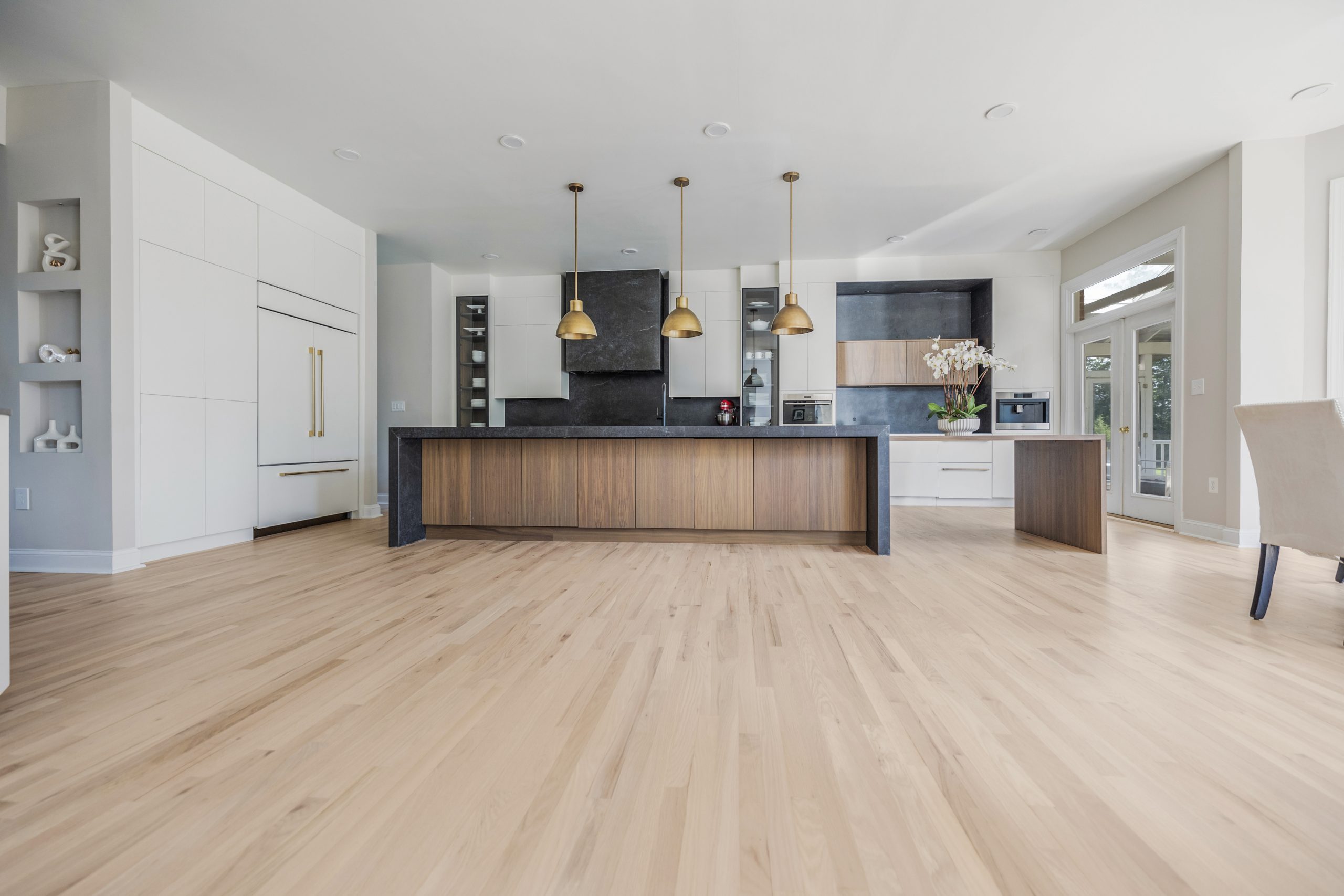
A real wood floor is the single most effective natural element in a house because it is under every other decision. White oak in a matte, low sheen finish is the 2026 default in Northern Virginia: it hides wear, takes a natural or lightly whitened stain well, and suits both traditional colonials and new modern builds. Wide planks, 6 to 8 inches, show more grain and fewer joints. Engineered oak, a real wood wear layer over a plywood core, is the right choice over a slab or in a basement, and it looks identical from standing height. Our flooring comparison sets the species and formats side by side.
Wood in the Kitchen and the Bath
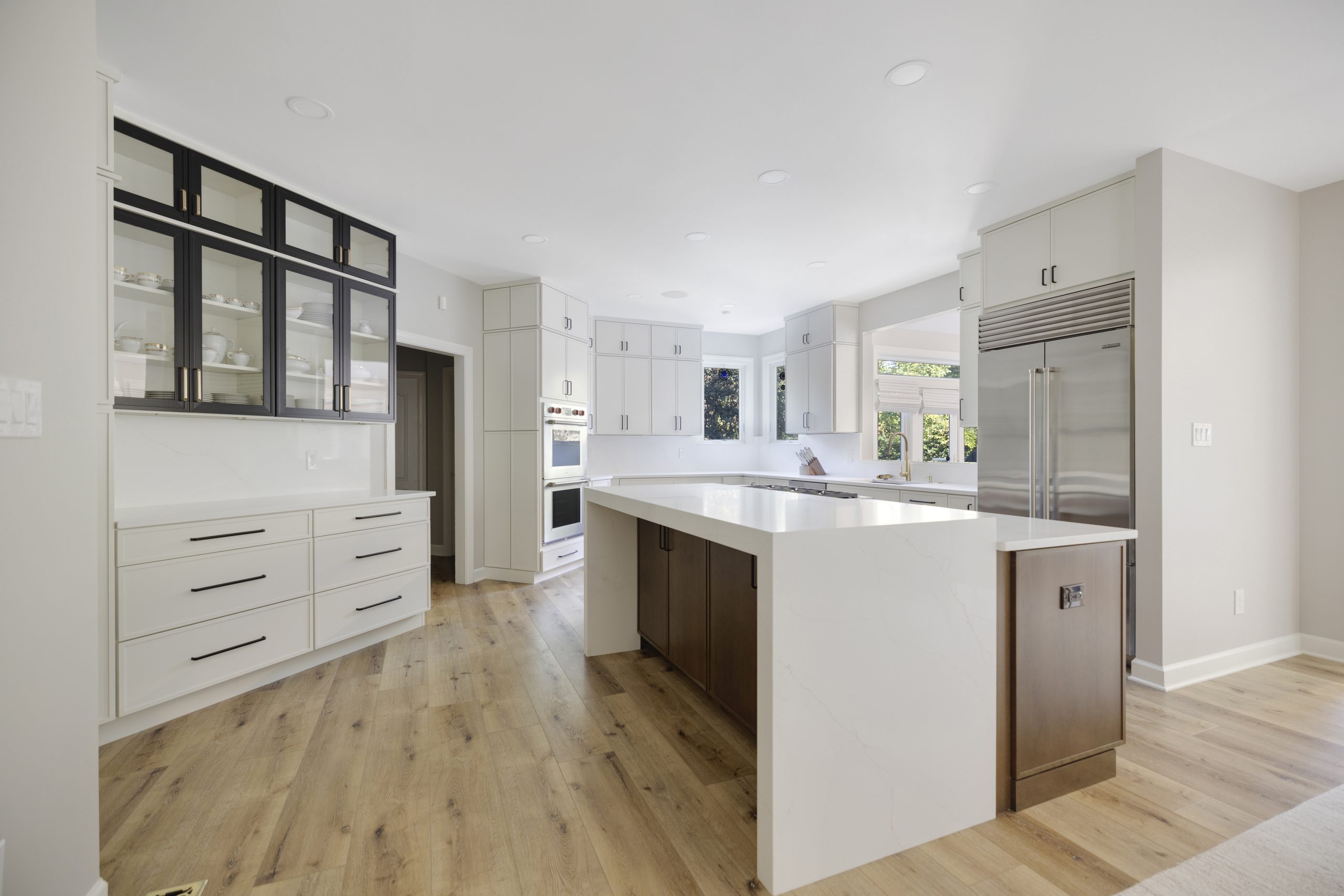
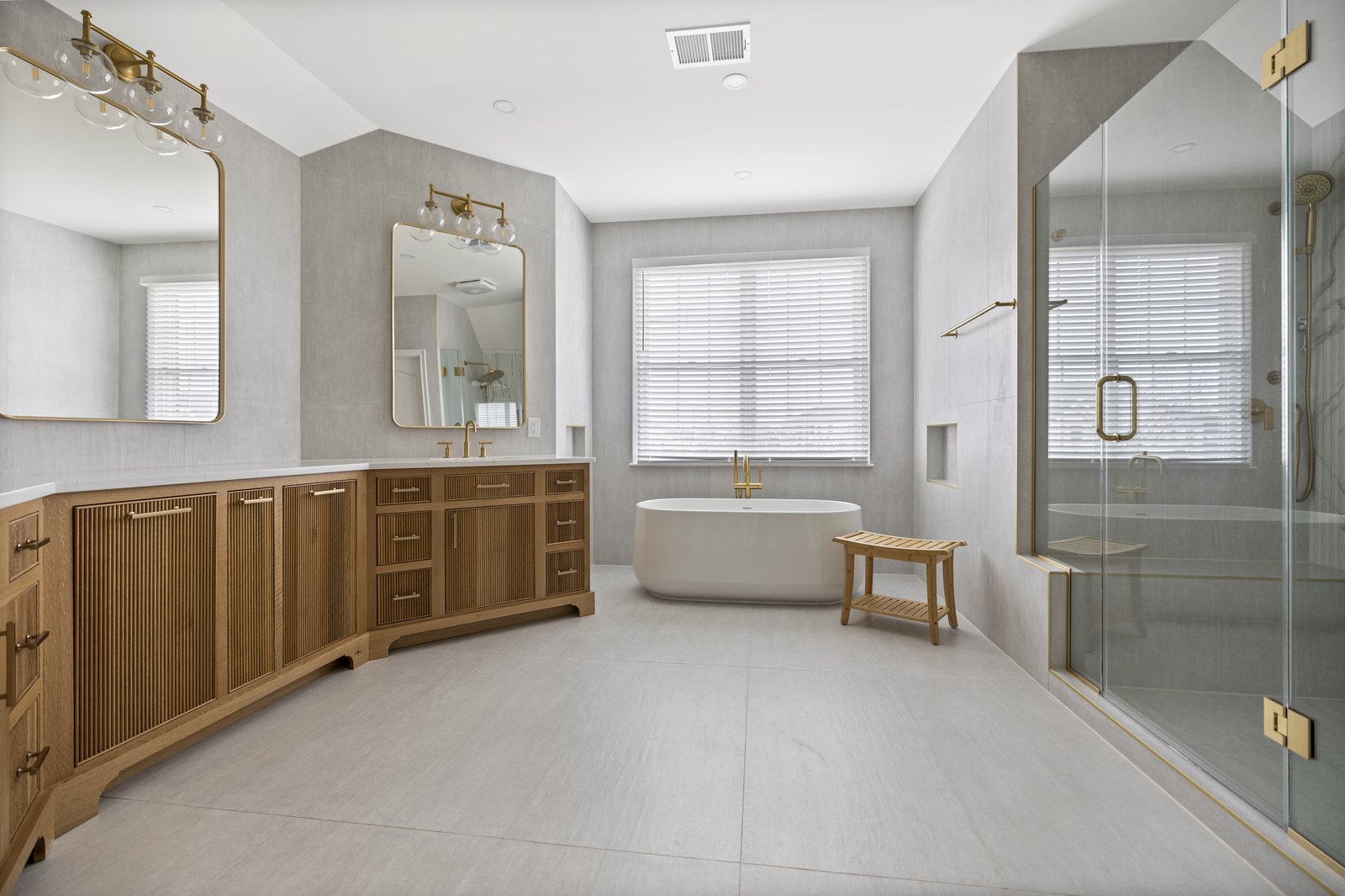
An island in walnut or rift sawn white oak against painted perimeter cabinets is the most repeated natural element move in our kitchens for a reason: it puts real grain at the center of the room without committing every cabinet to it. In bathrooms, a wood vanity, fluted or plain, warms a room that is otherwise all stone and glass; sealed white oak and teak handle the humidity, and a wall hung vanity keeps the wood off the wet floor.
Slat Walls, Panels and Beams
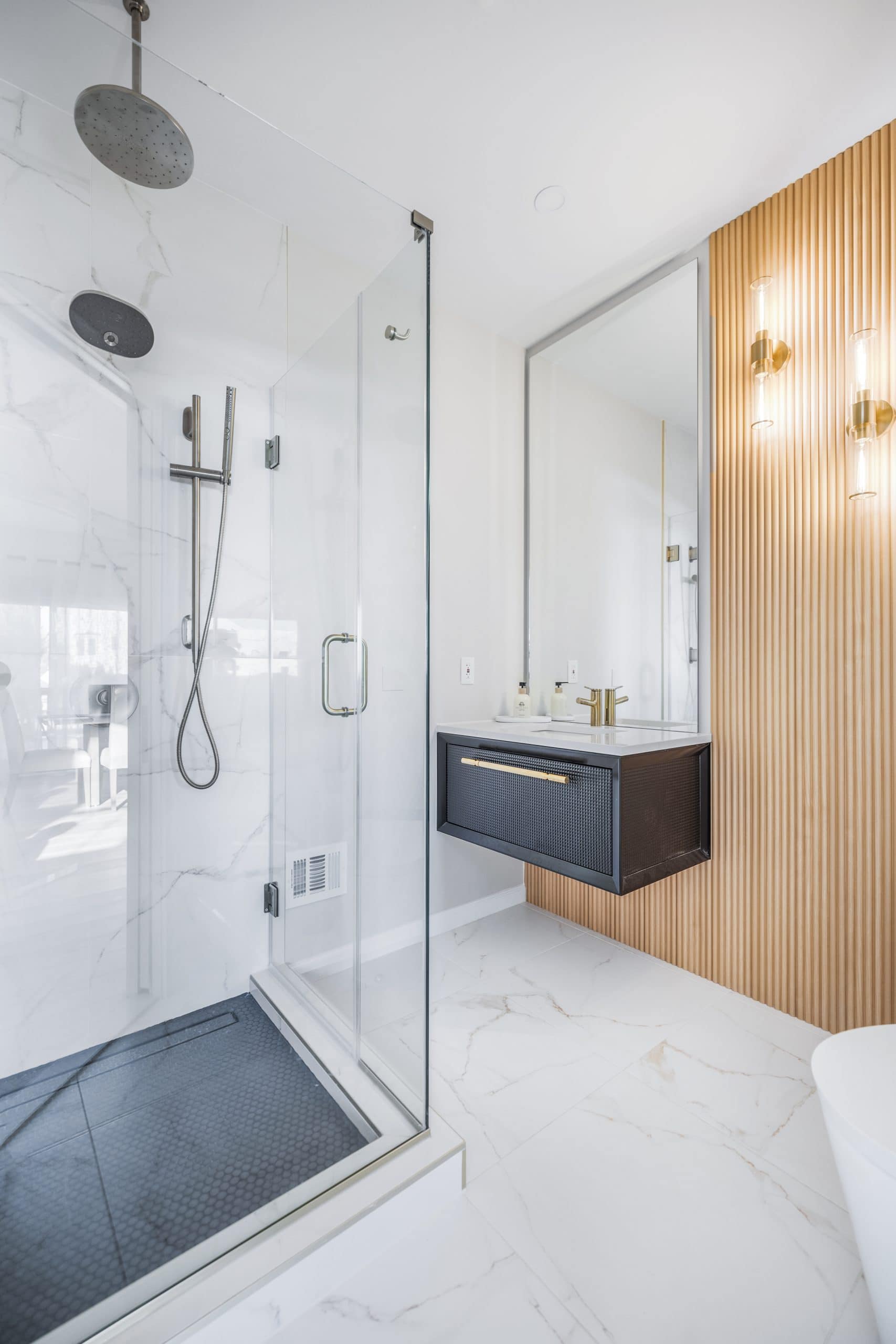
A wall of vertical wood slats is the natural element that has moved fastest from showrooms into Northern Virginia homes, because it adds texture, line and warmth to a single wall without any structural work. In a bathroom it goes behind the vanity or along the shower wall, sealed; in a bedroom, behind the bed; in a hallway, down one side. Ceiling beams, real or boxed, give a flat ceiling a natural rhythm and work best left in their own color rather than painted out. Our accent wall guide prices the slat wall against paint, paper and stone.
Stone: Weight, Veining and Permanence
Stone brings the opposite qualities to wood: coolness, weight and a sense that the room will outlast its owners. It also brings the most dramatic natural pattern available, the veining of marble and quartzite and the strata of slate, which no two slabs repeat. Stone belongs on the surfaces that take the most use and the most looking: counters, a fireplace wall, a shower.
Stone Counters
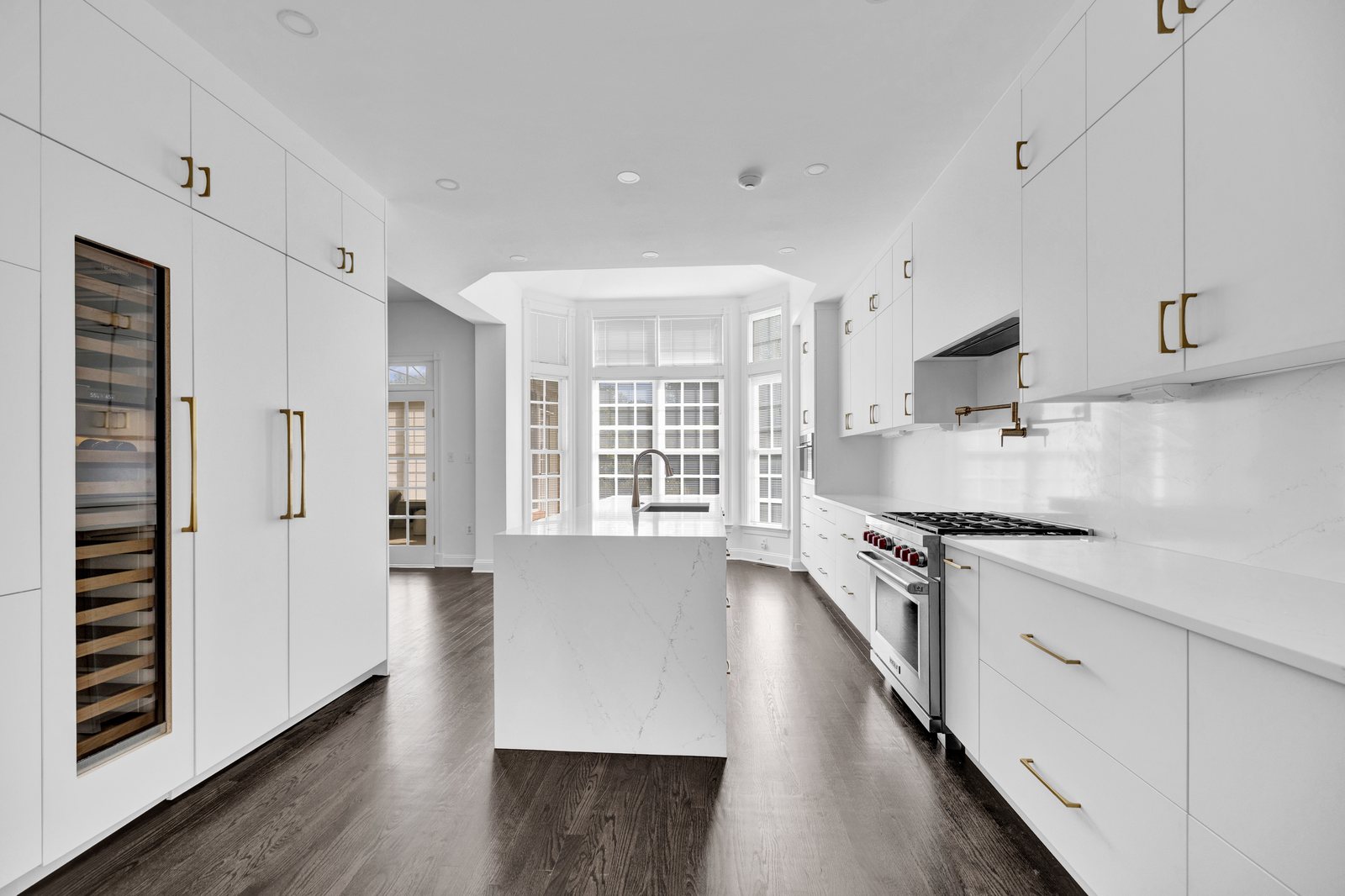
Quartzite is the stone of the moment for a kitchen that wants marble’s veining with granite’s toughness; honed marble is the choice for owners who will accept a patina; soapstone darkens with oil and suits a farmhouse or a traditional kitchen; granite in its quieter colors still has a place. A marble or quartzite range hood surround, carried up from the counter, is the most photographed stone move of the past two years and costs little more than the backsplash it replaces. Our countertop guide compares the stones on cost, durability and care.
Stone Walls and Fireplaces
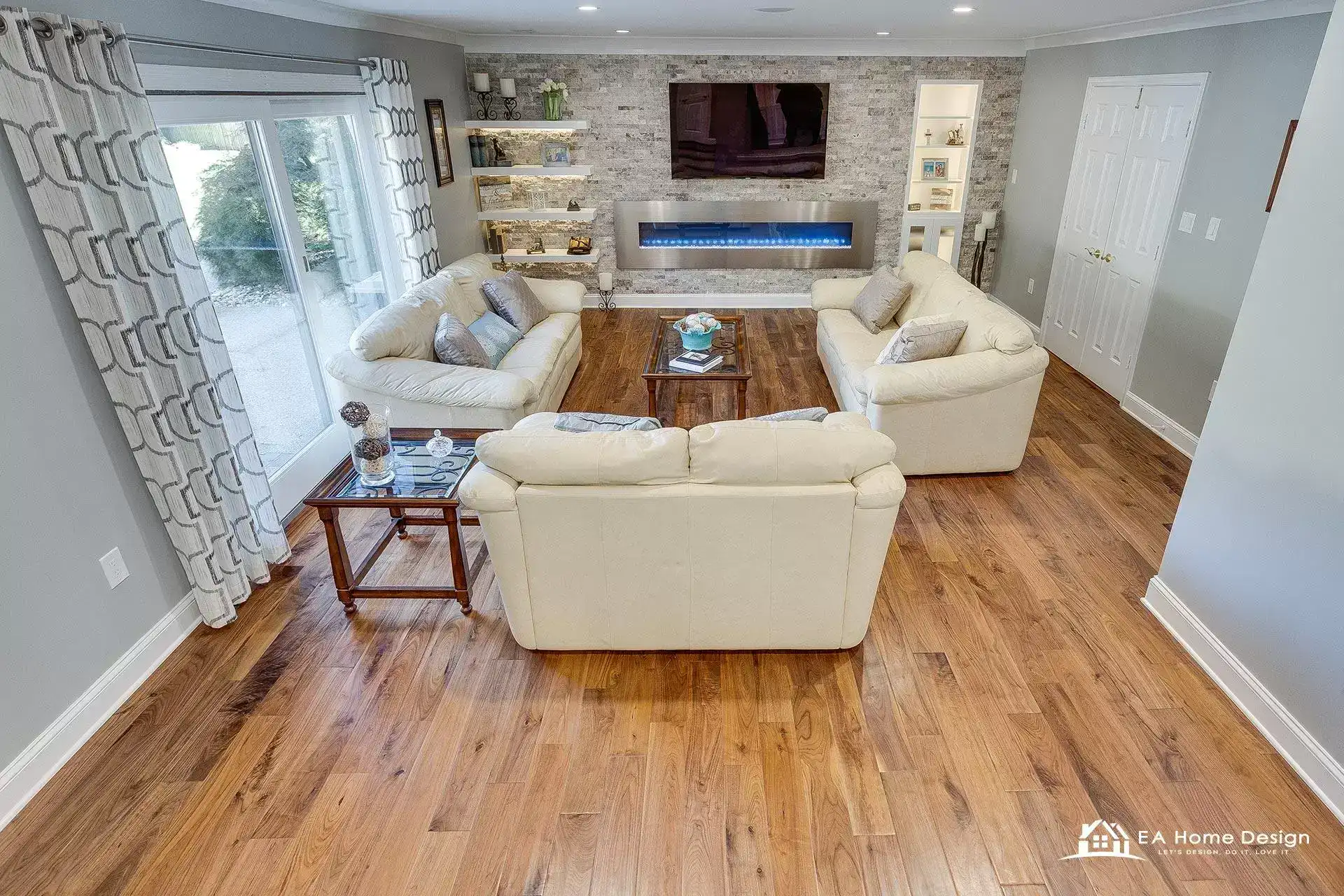
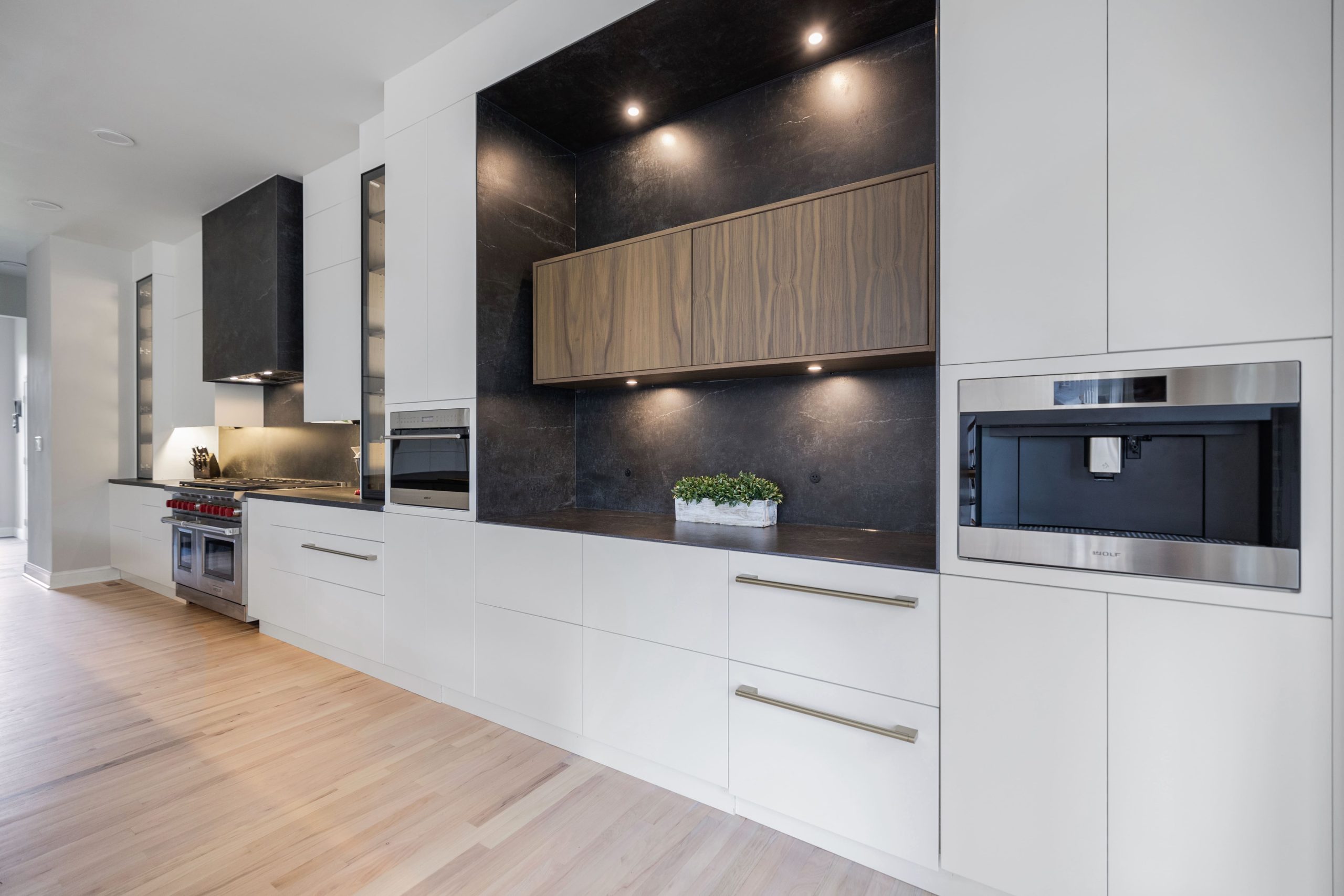
A stone fireplace wall is the heaviest natural element a living room can carry, and the one that most changes how a room feels in winter. Thin natural stone veneer and manufactured veneer both go onto a framed wall without a footing, so the feature wall that once needed a mason’s foundation is now a finish. Stacked ledgestone reads rustic; large format honed limestone or a single slab of veined marble reads modern. A dark stone slab backsplash behind a range, as in the kitchen below, does the same work in a smaller frame. Our guide to house stone covers the stone types and what each costs installed.
Stone and Clay Underfoot and in the Bath
Slate, limestone and travertine floors carry stone into entries and mudrooms, where they also happen to be the most forgiving surface for a Northern Virginia winter. In the bath, large format porcelain that prints a real stone pattern handles the water, and a run of real marble or quartzite at the vanity and in the niche gives the eye the genuine article where it looks. Handmade clay tile, zellige and terracotta, adds the third natural material: imperfect, glossy, warm, and best used in one place such as a backsplash or a shower floor.
Natural Light: The Element That Costs Nothing to Use
Daylight is the natural element most houses already own and most interiors waste. Every decision below is about letting it in and letting it travel. The cheapest moves come first: take down heavy drapes and valances, hang sheers or a simple roller shade, clean the glass, and move the tall furniture off the window wall. Paint the walls and ceiling a warm white or pale neutral so the light bounces instead of dying in a dark corner, and put one large mirror opposite the best window.
The remodel moves are larger. Enlarging a window or adding a picture window to a room that faces the yard changes the room more than any finish. A skylight or a sun tunnel brings daylight into the interior rooms that never had it, a bathroom, a hallway, a closet, and a venting skylight also clears a bathroom’s steam. A sliding or folding glass wall onto a patio turns a dark family room into the brightest in the house. Our indoor outdoor living guide covers the glass walls and what each costs.
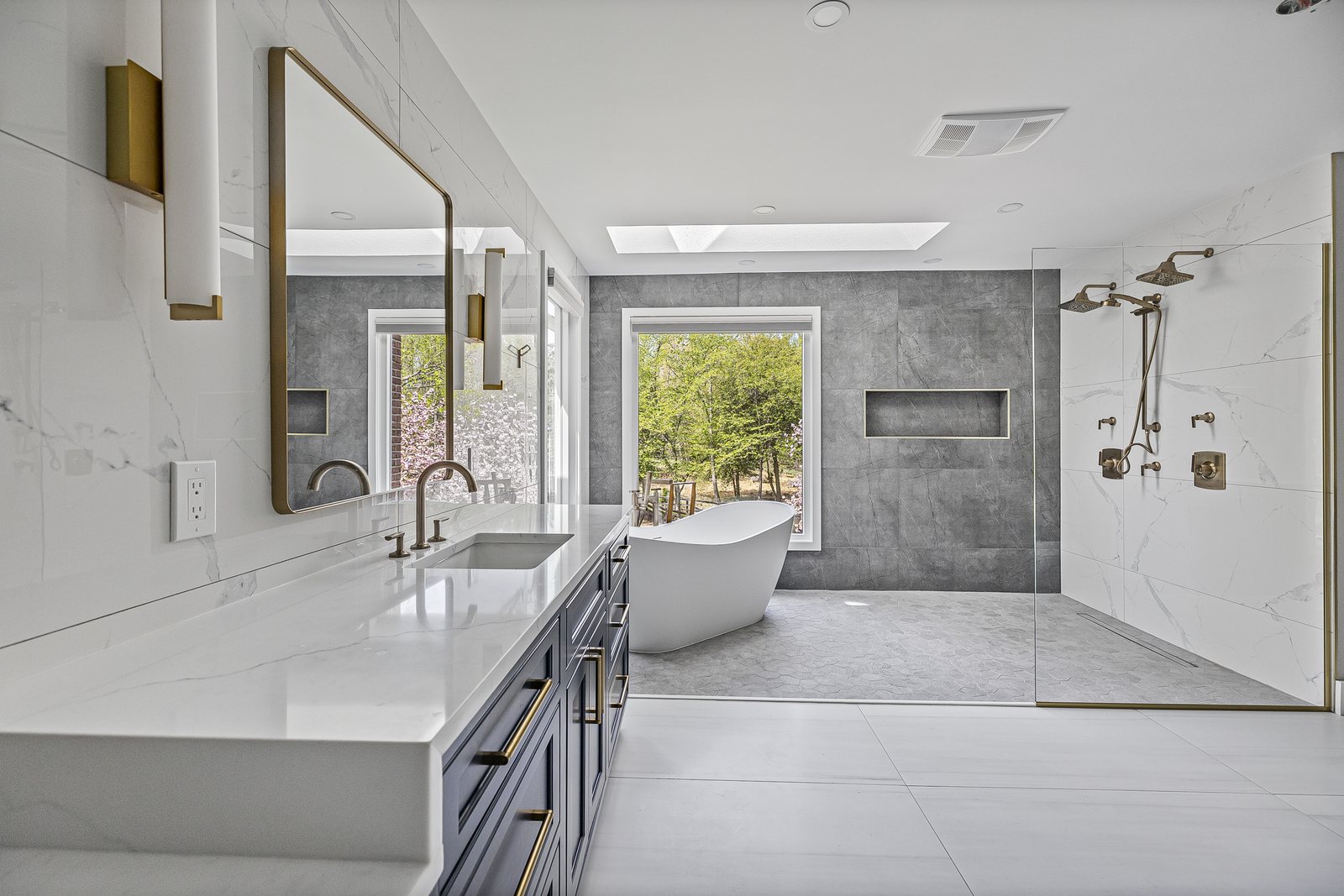
Plants and Greenery
Plants are the natural element with the lowest cost and the fastest effect, and the one most often done badly. The mistake is scattering small pots everywhere; the fix is fewer, larger and grouped. One statement tree in a large planter, an olive, a fiddle leaf fig, a bird of paradise, does more than a dozen succulents, and a cluster of three plants at different heights on one surface reads as a composition.
- Low light, little care: snake plant, ZZ plant, pothos, cast iron plant, peace lily. These are the plants for a north facing room or a basement with one window.
- Bright rooms: fiddle leaf fig, olive tree, monstera, rubber plant, bird of paradise. Give them the window and rotate them a quarter turn a month.
- Kitchens: herbs in a trough on the sill or under a grow bar, which is the one plant arrangement that earns its keep daily.
- Bathrooms: ferns, orchids and pothos, which enjoy the humidity the room produces.
- A living wall: a planted panel on an irrigated frame, the most dramatic version and the one that needs a plan for water and light before it is hung.
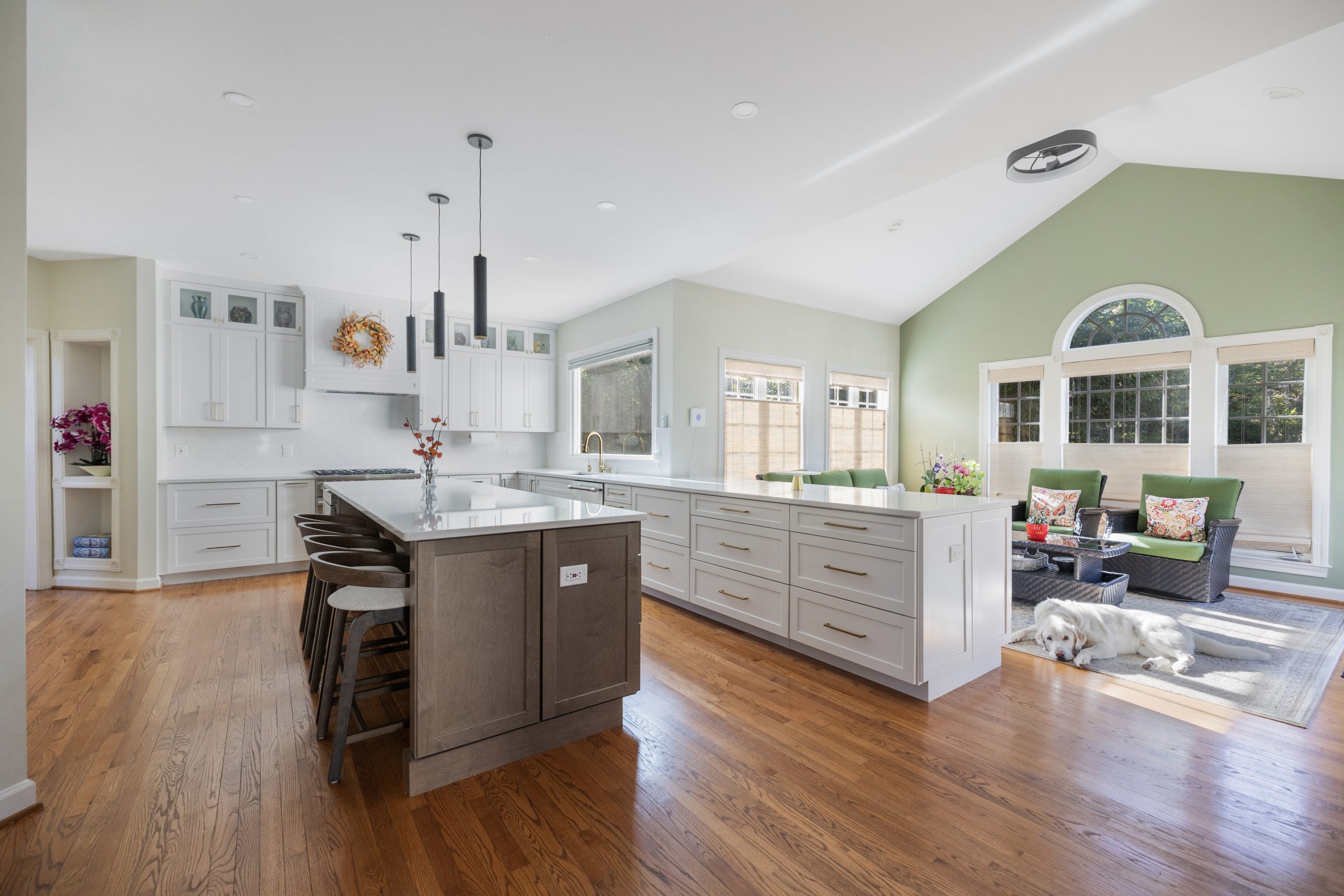
The greenery outside counts too. A kitchen window that frames a stand of trees puts more living green into the room than any plant, and arranging the sink or the island to face it is a design decision, not a landscaping one.
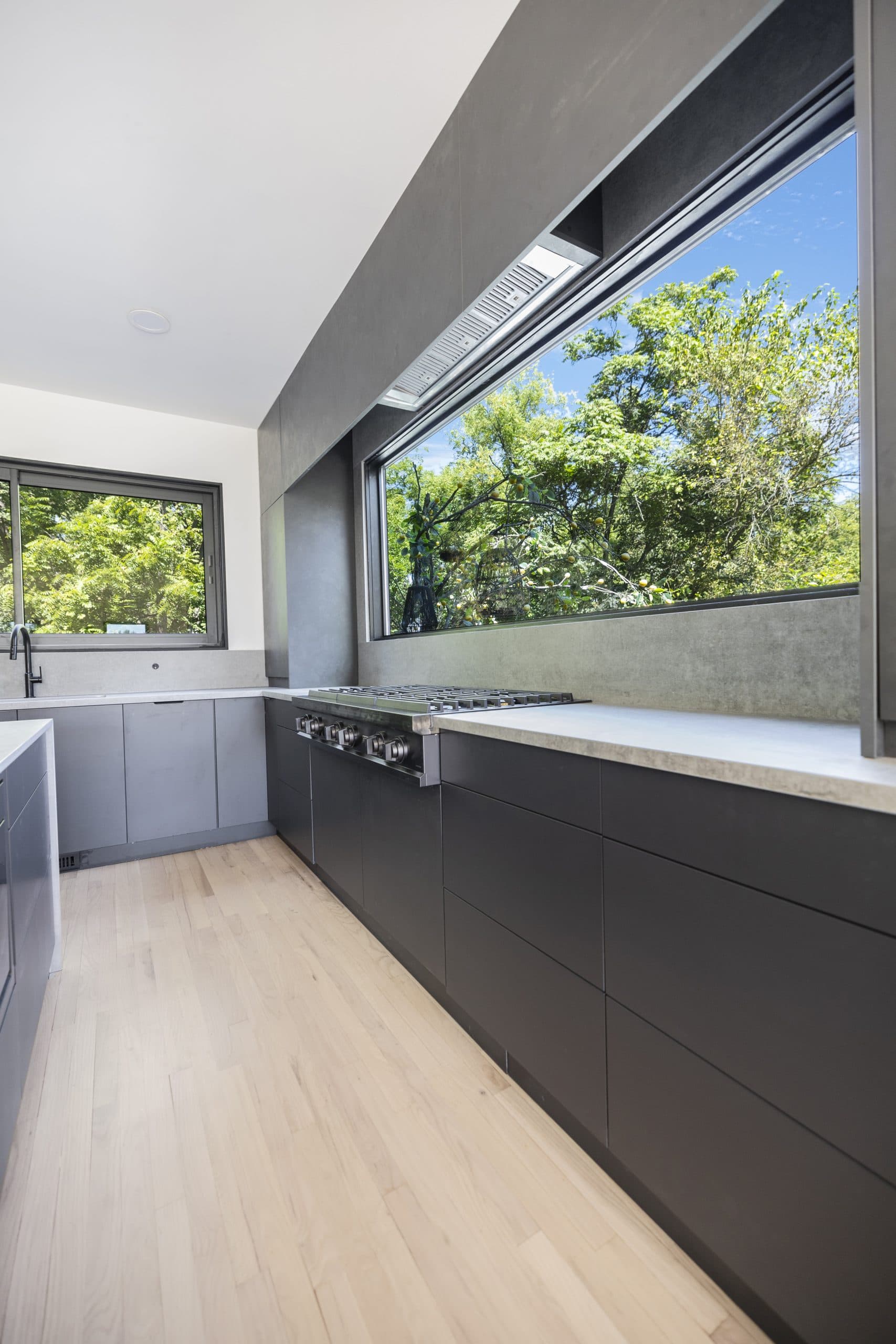
Earthy Color: The Natural Palette
A palette drawn from the ground and the garden is what makes the other elements read as intentional. The 2026 version is warmer than the gray decade that preceded it: warm whites and creams on walls, taupe, mushroom and clay as the mid tones, foliage greens from sage to olive on cabinetry, and blues that come from water and sky rather than from a paint chart. Terracotta, rust and ochre arrive in small doses, in a tile, a lamp or a throw. Black belongs as a line, in a window frame or a faucet, not as a surface.
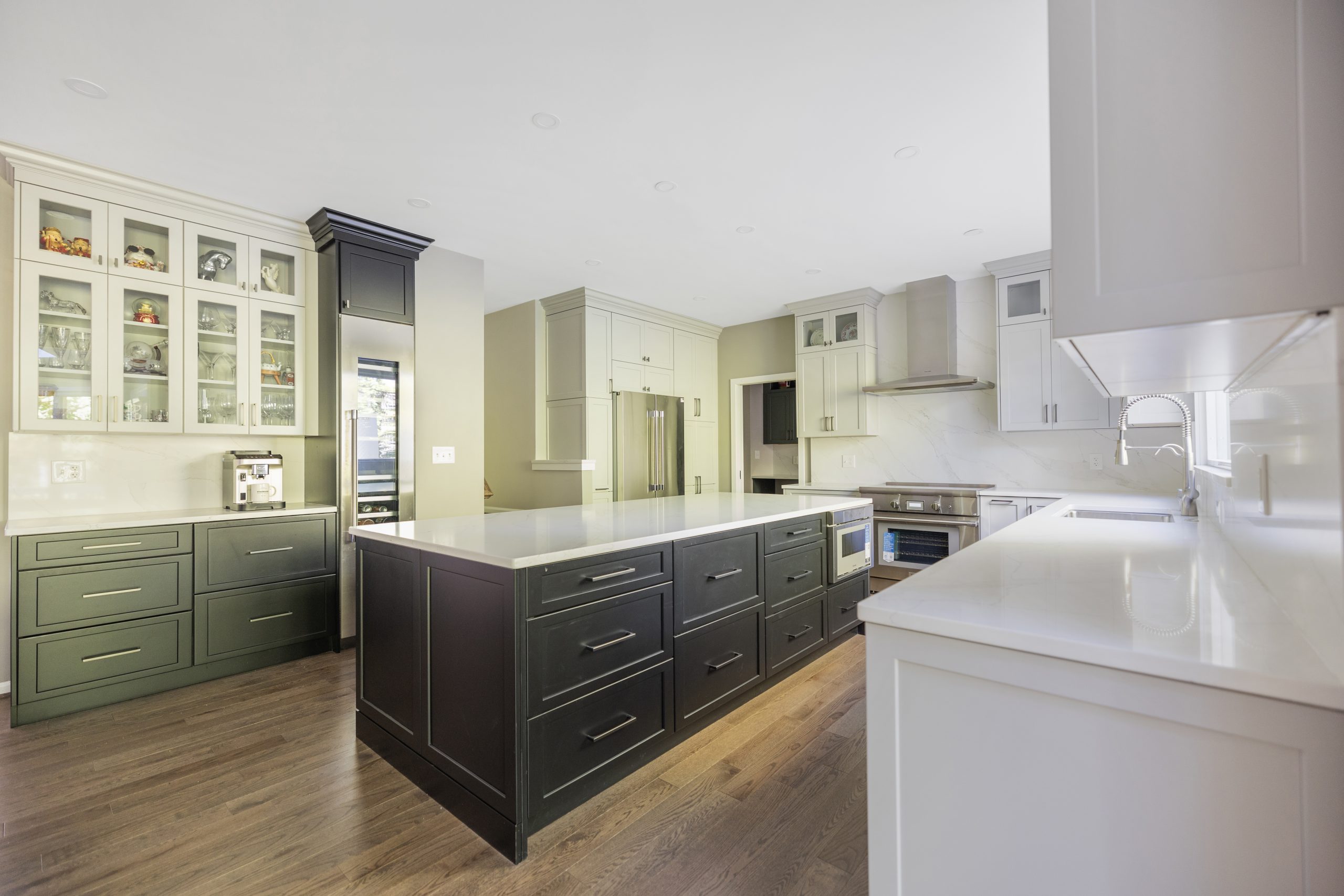
The reliable formula is one warm neutral on the walls, one natural color on the largest piece of cabinetry or one wall, wood and stone in their own colors, and metal in brass or black. Our 2026 design trends guide tracks which of these colors Northern Virginia homeowners are choosing now, and our mixing metals guide covers the hardware that sits best against them.
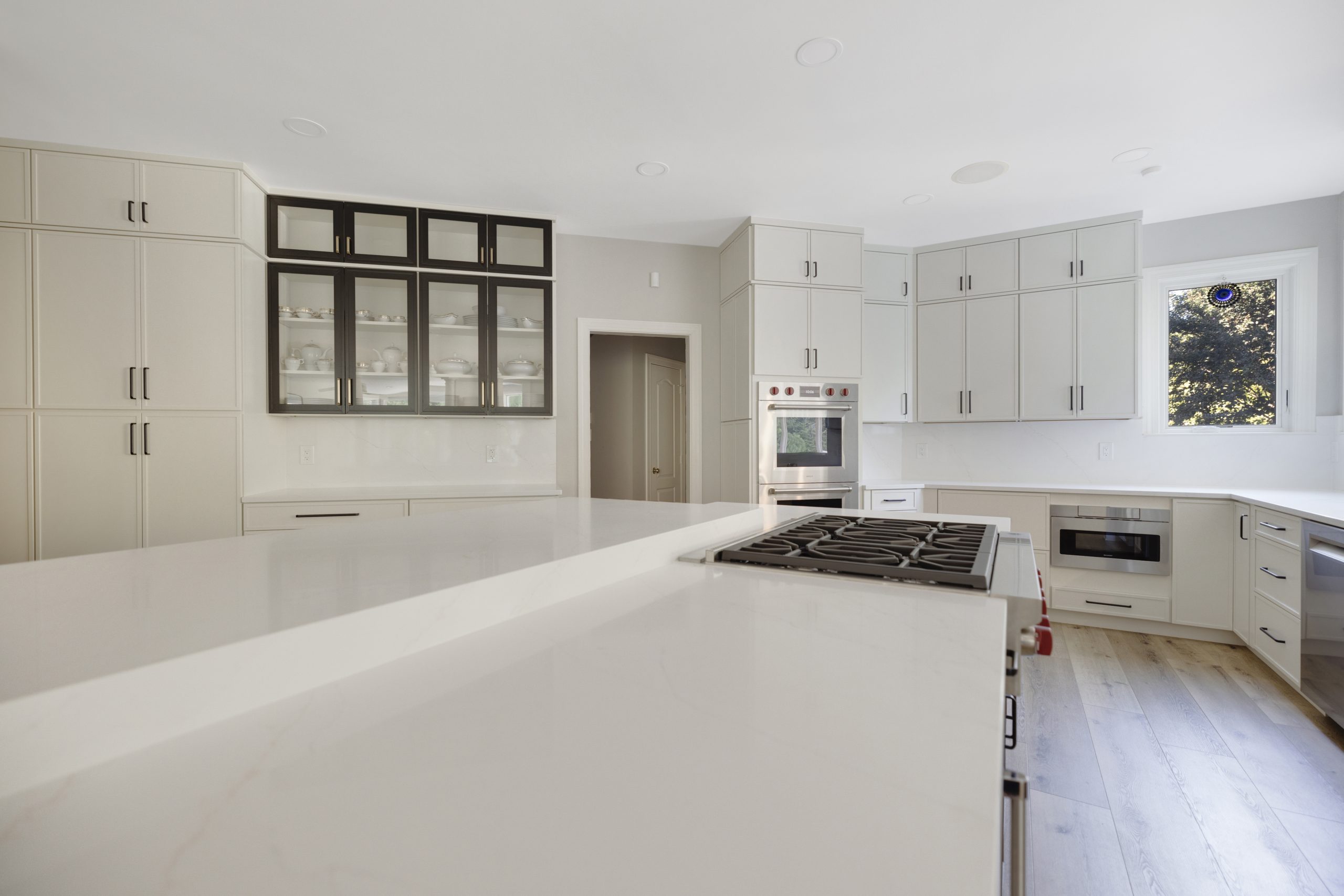
Natural Forms and Patterns in Interior Design
This is the element most guides leave out and the one that separates a room that merely contains natural materials from one that feels natural. Nature does not draw straight lines or repeat a tile. It draws curves, branches, ripples and grains, and a room that borrows those shapes and patterns reads as calm even when every surface in it is new.
What Natural Form Means in Interior Design
Natural form, sometimes called organic form, is shape taken from living things and landscape: the arch, the curve, the rounded corner, the irregular edge. In a room it shows up as an arched doorway or window, a curved sofa or a round dining table, a rounded end on a kitchen island, a live edge slab on a console, a plaster range hood with a soft profile, a pebble floor in a shower. These shapes slow the eye down, where hard right angles speed it up, which is why a single arch in a hallway of square openings changes the feel of the whole floor. The 2026 houses in our residential architecture trends guide use arches and curves more than any year before them.
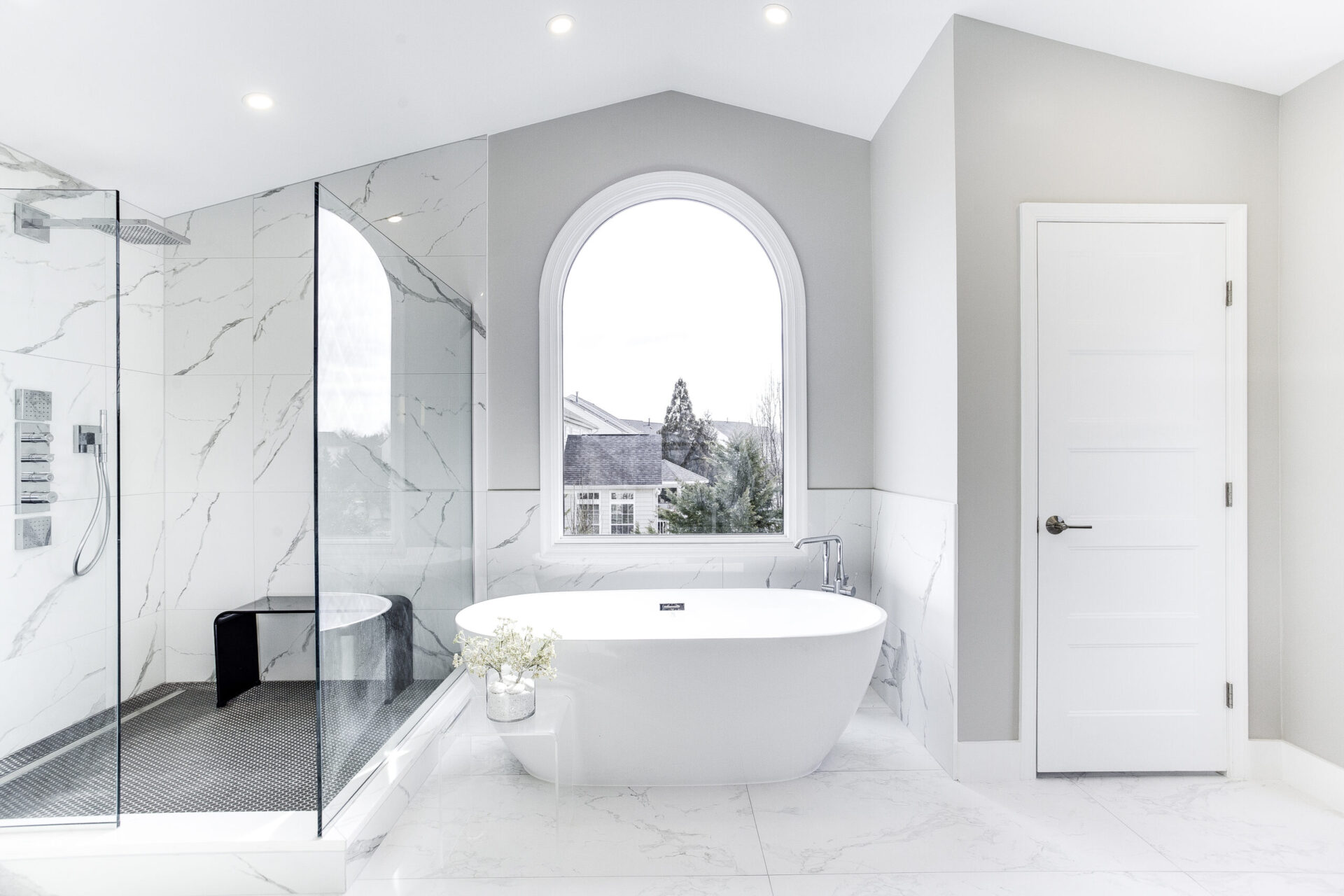
What a Naturalistic Pattern Is
A naturalistic pattern is a surface pattern that comes from nature or imitates it closely: wood grain, stone veining, the strata of slate, the ripple of linen, botanical prints, leaf and branch motifs, the branching and repeating shapes that mathematicians call fractals and that eyes find restful. The best naturalistic patterns in a room are the real ones, a knotty oak floor, a veined quartzite counter, a slab of marble with its own cloud. The printed ones, a botanical wallpaper in a powder room, a leaf patterned fabric on one chair, work when they are used once and large, not repeated on every cushion. Our wallpaper guide shows the botanical and grasscloth papers that bring the pattern in without the plants.
The practical rule: one natural form and one naturalistic pattern per room, both at scale. An arched opening and a veined stone counter. A curved sofa and a grasscloth wall. More than that and the room starts to look themed.
Texture: Layering the Materials
Texture is what the hand reads when the eye has finished, and it is where natural materials beat synthetic ones most clearly. Layer it deliberately: a smooth stone counter against a rough woven basket, a chunky wool throw on a leather chair, a jute rug over a wood floor, linen at the window, a hand thrown ceramic bowl on a lacquered table. Pair smooth with rough and soft with hard, and keep the number of materials in any one view to five or six. Imperfection is part of the point; a hand glazed tile with variation and a wood plank with a knot are what make the room feel made rather than manufactured.
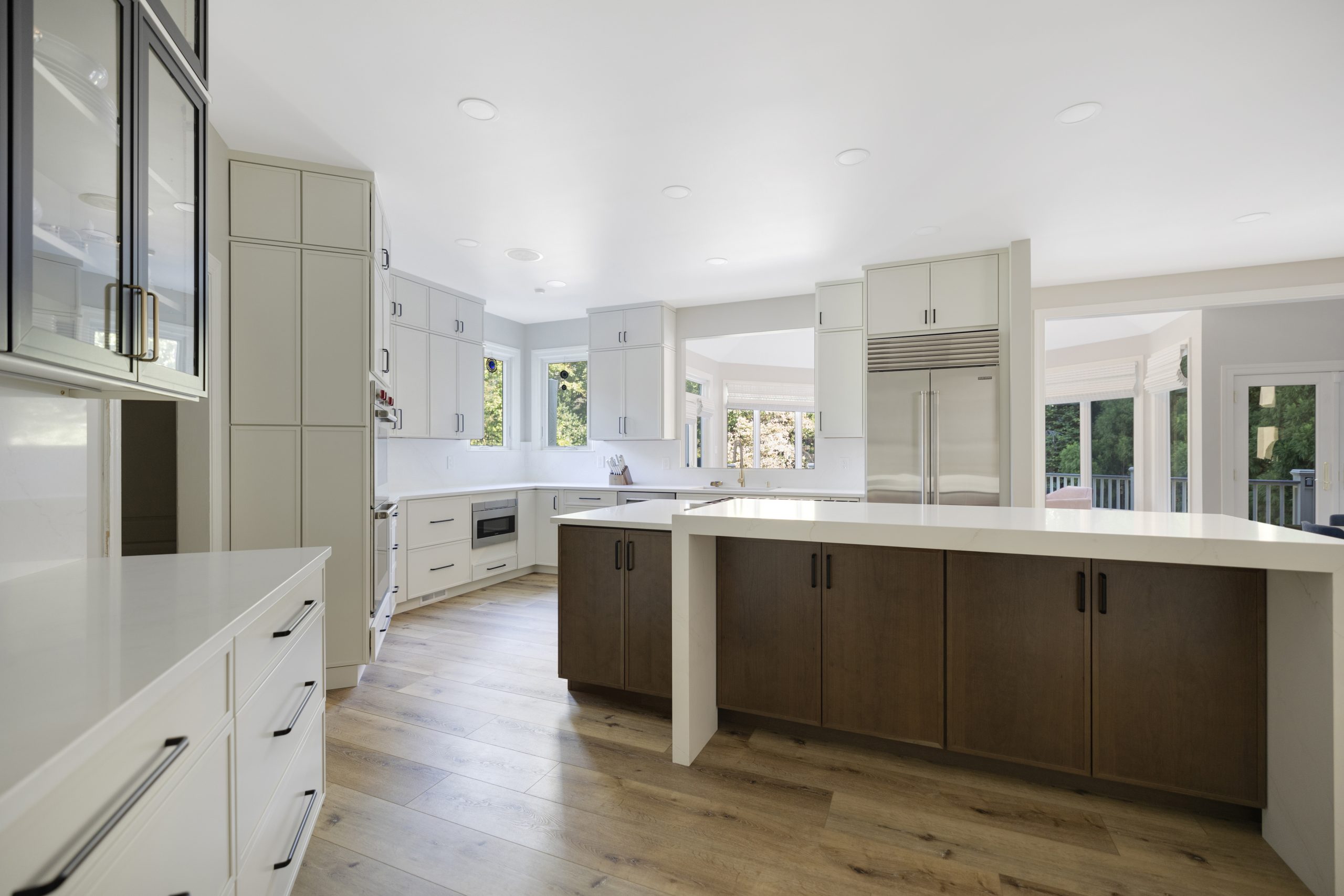
Views, Water and Sound
The last natural element is the one outside the glass. Arrange the main seat in each room to face the best window and keep that window clear; a reading chair by a window onto the yard is the simplest biophilic move in the house. Glass doors to a patio, a screened porch or a deck extend the room into the garden for the warm half of the year, and in Northern Virginia the trees most houses back onto turn the view into a calendar: spring green, summer shade, October color, winter branches. Water adds sound and movement, through a small fountain in an entry, a feature in the garden placed where it can be seen from the kitchen, or simply a casement window opened to the rain. None of it is required, and all of it compounds.
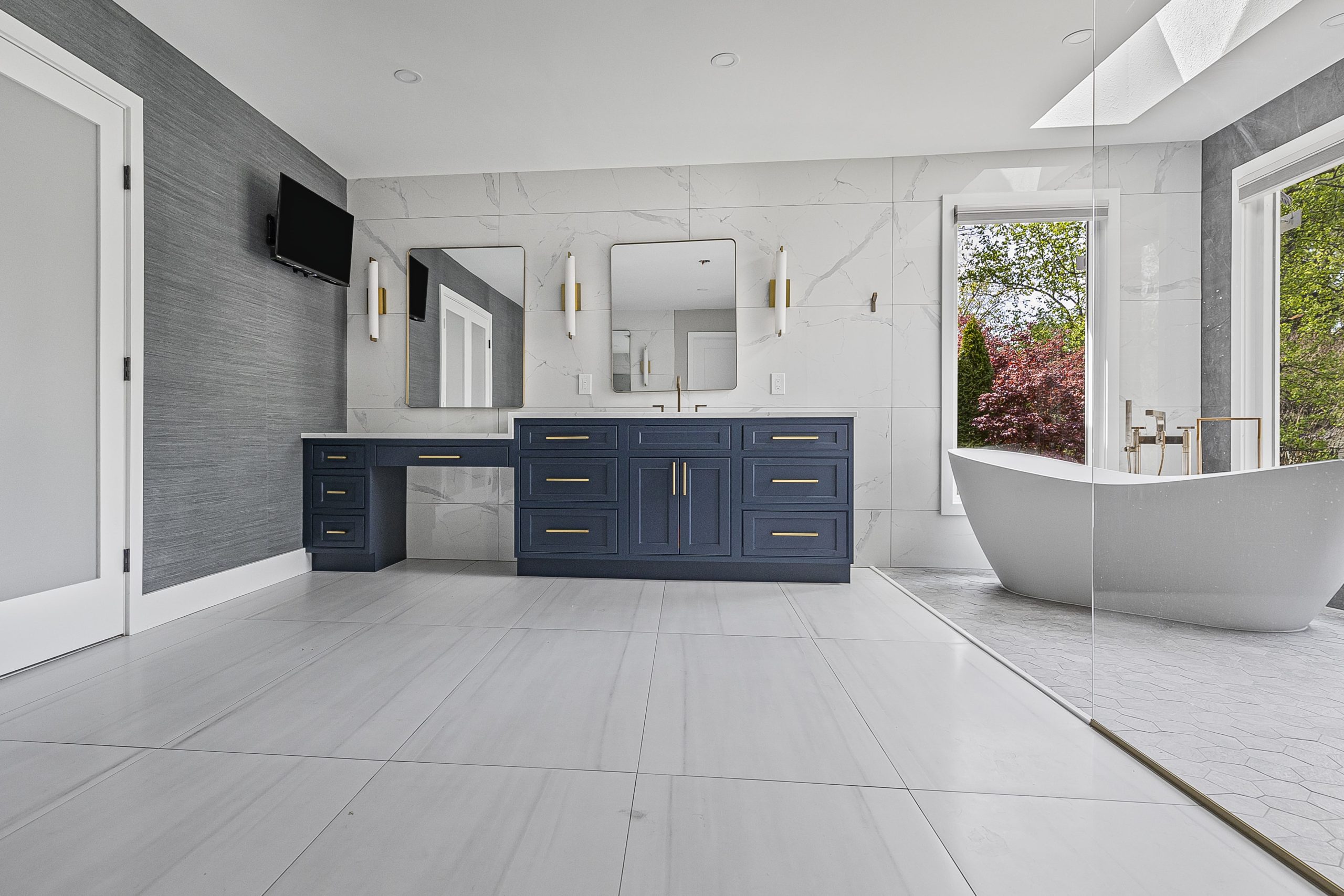
Natural Elements Room by Room
- Kitchen: a wood island against painted perimeter cabinets, a stone counter carried up the hood, oak floors, herbs on the sill, and the sink facing the window. This is where most Northern Virginia homes begin, and our kitchen remodeling projects show the pairings that hold up to daily use.
- Bathroom: marble or quartzite at the vanity and in the shower, a wood vanity, a skylight or an enlarged window, plants that like the steam. A timeless bathroom is a natural one almost by definition, and our bathroom remodeling page shows the finished rooms.
- Living room: a stone fireplace wall, wide plank floors, a wool rug, a curved sofa, one statement tree, and the seating turned to the window.
- Bedroom: linen and cotton bedding, a wood or slat wall behind the bed, an earthy wall color, sheer curtains, and nothing glossy. Our zen den guide takes the same elements further for a room meant for quiet.
- Home office: the desk facing the window, a wood top, a plant at eye level and daylight bulbs for the dark months. Our home office guide covers the layout.
- Entry and hallway: a slate or limestone floor, a wood bench, a mirror opposite the door to double the light, and one arch if the house allows it. Our small hall ideas show the entries that manage it in little space.
- Wellness spaces: a sauna, a plunge, a yoga corner, built almost entirely from the elements in this guide; see our wellness room guide.
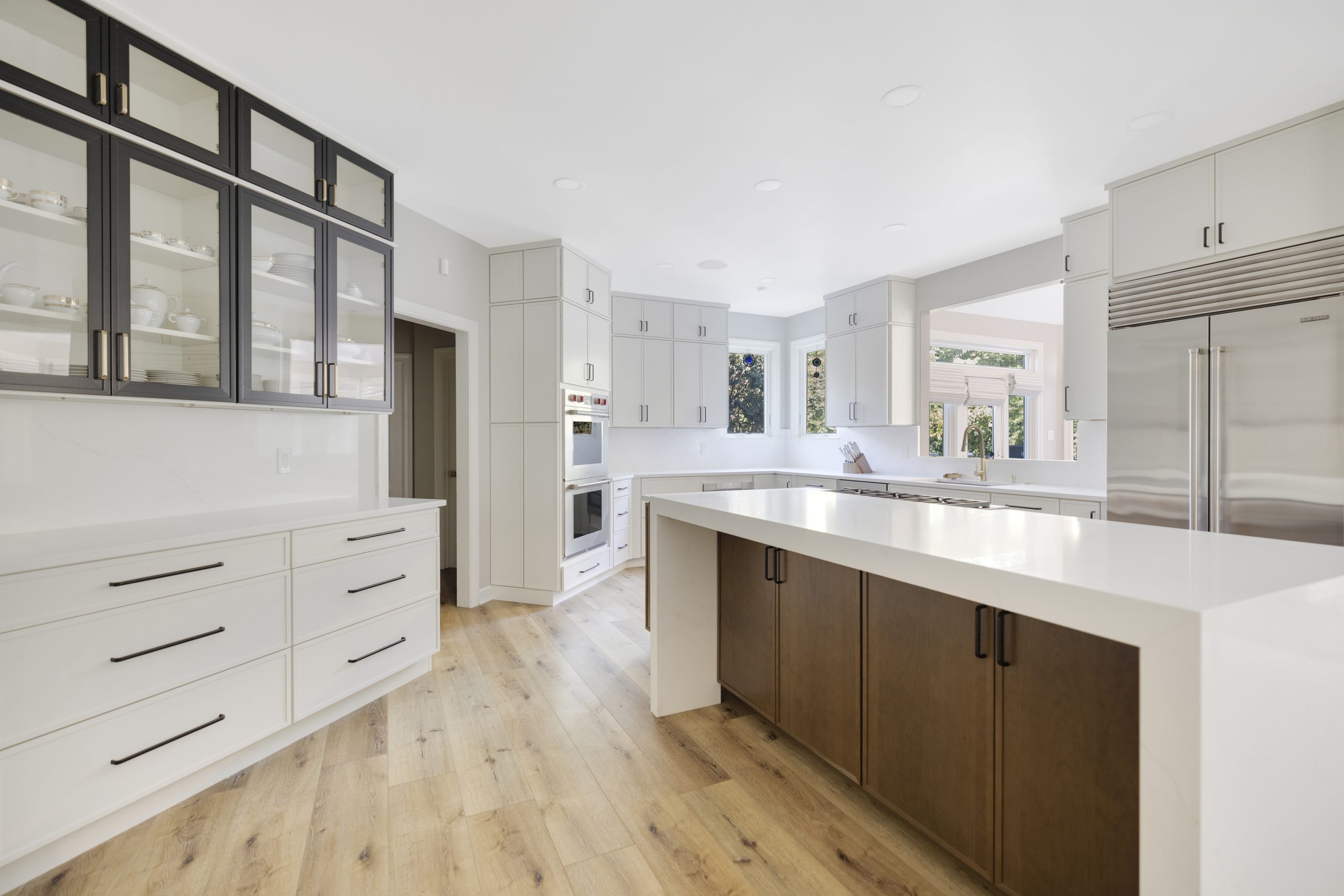
20 Natural Element Ideas You Can Use
- Lay a white oak floor in a matte finish through the main level and let it be the first natural element in every room.
- Put the island in walnut or rift sawn oak and keep the perimeter cabinets painted.
- Carry the counter stone up the range wall as a hood surround instead of a tiled backsplash.
- Build a vertical wood slat wall behind the bed or the vanity, sealed in the bathroom.
- Face a fireplace wall in stacked stone or a single slab of honed limestone.
- Replace heavy drapes with linen sheers and let the window do its job.
- Add a skylight or a sun tunnel to the room with no window, usually the bathroom or the upstairs hall.
- Hang one large mirror opposite the best window.
- Plant one statement tree in a large planter and give it the brightest corner.
- Group three plants at three heights on one surface rather than one plant per room.
- Grow herbs on the kitchen sill or under a grow bar.
- Paint the walls a warm white and one cabinet run a foliage green or a clay tone.
- Arch one opening in a hallway of square ones.
- Choose a round or oval dining table and a sofa with a curve.
- Put a live edge slab on the console or the office desk.
- Use one botanical wallpaper, once, in a powder room or behind open shelves.
- Lay a jute or wool rug over the wood floor and add a wool throw to a leather chair.
- Tile a shower floor in pebbles or a backsplash in handmade zellige.
- Turn the main seat in each room to face the window.
- Open the family room to the patio with a sliding or folding glass wall.
What Natural Materials Cost in Northern Virginia (2026)
Most of the elements in this guide cost little or nothing: light, arrangement, color and plants are weekend money. The materials are where the budget goes, and these are the installed figures we use for Fairfax and Loudoun County in 2026, the same figures as our flooring, countertop, accent wall and stone guides.
| Natural element | Installed cost, Northern Virginia 2026 | Notes |
|---|---|---|
| Solid hardwood floor | $8 to $25 per square foot | White oak in a matte finish is the default; wide planks and custom stains sit at the top of the range |
| Engineered wood floor | $7 to $20 per square foot | The choice over a slab or in a basement; a real wood wear layer, refinishable once or twice |
| Cork floor | $5 to $14 per square foot | Warm and quiet; a natural fit for an office or a play space |
| Butcher block counter | $40 to $100 per square foot | Wood on an island or a baking station; oil it and keep it away from the sink |
| Granite counter | $50 to $200 per square foot | Quieter colors read as natural; the busy 2000s patterns do not |
| Quartzite counter | $75 to $200 per square foot | Marble veining with granite durability; the stone of the moment |
| Marble counter | $100 to $250 per square foot | Honed, and only for owners who will live with a patina |
| Wood slat accent wall, 12 by 9 feet | $1,500 to $3,500 painted poplar or MDF; $3,000 to $7,000 white oak or walnut with a lighting channel | From our accent wall guide; the bathroom version needs sealing |
| Stone feature wall | $15 to $30 per square foot manufactured veneer; $25 to $75 natural thin stone | The same materials as exterior stone, on a framed interior wall with no footing |
| Large sliding glass door, 12 feet | $4,000 to $12,000 | From our indoor outdoor guide; a building permit when the opening is enlarged |
| Skylight, fixed or venting | $1,500 to $4,500 | A sun tunnel for a hallway or closet runs $800 to $2,000 |
| Statement tree in a planter | $150 to $600 | An olive, a fiddle leaf fig or a bird of paradise, planter included |
| Living wall, 4 by 6 feet, planted and irrigated | $3,000 to $8,000 | Plan the water and the light before the frame goes up |
| Painting one 12 by 9 wall an earthy color | $250 to $600 professionally; $50 to $120 yourself | From our accent wall guide; a whole room is three to four walls |
A kitchen or bathroom remodel that uses these elements is priced as a remodel, not as a sum of this table; the figures are for a single element added on its own. For a whole room designed around natural materials, from the floor up, our interior design team works from the palette and the materials first and prices the room once.
Budget Ways to Bring in Nature
If a remodel is not in the plan, the elements still are. Start with plants suited to the light you actually have. Swap synthetic textiles for wool, cotton, linen and jute in rugs, throws and cushions. Bring in wood and woven objects: bowls, trays, baskets, a cutting board that lives on the counter. Repaint one room in a warm neutral or one wall in a foliage green. Take down the heavy drapes, hang sheers and clean the windows. Put stones, driftwood, dried branches or cut flowers where the eye lands. Every one of these is a weekend and a few hundred dollars, and together they carry most of the calming effect of the full remodel.
Sustainable Choices
Natural materials and sustainable ones overlap almost completely. Look for wood certified by the Forest Stewardship Council, or reclaimed wood for character and a smaller footprint. Bamboo and cork regrow in years, not decades. Low VOC paints and finishes keep the indoor air cleaner, which matters in a house built tight for Northern Virginia winters. Solid wood furniture bought secondhand keeps good pieces out of landfills and usually costs less than new veneer. And durable natural materials are replaced less often, which is the quietest form of sustainability there is.
Mistakes to Avoid
- Too much at once: five woods, three stones, a jungle of plants and a botanical print on every cushion read as clutter. Two woods, one stone, one pattern, grouped plants.
- Plants in the wrong light: a fiddle leaf fig in a north facing corner dies slowly and adds stress rather than calm. Match the plant to the light, or choose the low light list above.
- Fakes where the hand lands: plastic plants and photo printed laminate undercut the whole effort. Use the real material at the counter, the floor and the vanity, and save the imitations for the ceiling and the far wall.
- Ignoring maintenance: marble etches, oak scratches, plants need water. Choose the version of each element that fits the time you have.
- A cold palette: gray walls fight every natural material in the room. Warm the neutral first.
- Forgetting the window: the best natural element in the house is often behind a sofa and a pair of drapes.
Why It Matters, and Designing With the Seasons
The case for natural elements is not only visual. Daylight regulates sleep. Plants and a view of green lower measured stress. Natural materials and an earthy palette make a room easier to rest in and, for people working from home, easier to concentrate in. Northern Virginia adds a gift most regions lack: four real seasons, seen through the glass. A home designed around its windows turns spring blossom, summer shade, October color and winter branches into a changing backdrop, and a small seasonal rotation of textiles, linen and fresh flowers in the warm months, wool and dried branches in the cold ones, keeps the interior moving with the year for almost nothing.
Frequently Asked Questions
What are natural elements in interior design? The materials, light, living things, colors and shapes that come from the natural world: wood, stone, clay and natural fibers; daylight and views; plants; an earthy palette; and natural forms and patterns such as arches, curves, grain and veining. Used together they make a room feel calm and grounded.
What is natural form in interior design? Shape borrowed from nature rather than from the drafting table: arches, curves, rounded corners and irregular edges. In a room it appears as an arched opening, a curved sofa, a round table, a rounded island end or a live edge slab, and it reads as restful where hard right angles read as busy.
What is a naturalistic pattern in interior design? A surface pattern that comes from nature or imitates it: wood grain, stone veining, slate strata, botanical prints, leaf and branch motifs and other repeating natural shapes. The real patterns, a veined counter or a knotty floor, work best; the printed ones work when used once and at scale.
What is biophilic design? The practice of connecting a home to nature through natural materials, daylight, plants, earthy colors and views. It rests on research showing people feel calmer and healthier in rooms connected to the natural world, and natural elements are the tools it uses.
How do I bring natural elements into my home on a budget? Start with plants matched to your light, natural fiber textiles, wood and woven objects, an earthy paint color and more daylight from sheers and a mirror. These changes capture most of the calming effect without a remodel.
What colors are used in natural, biophilic design? Warm whites and creams, taupe and mushroom, clay and terracotta, foliage greens from sage to olive, and blues drawn from water and sky. They pair with wood and stone in their own colors and with brass or black metal.
Which natural materials are best for a humid climate like Northern Virginia? Sealed natural stone, porcelain and ceramic tile, quartz and quartzite, engineered wood with a real wear layer, teak and sealed white oak in bathrooms. In damp areas, pair the natural look with the water resistant version of the material.
Can I combine natural design with a modern style? Yes, and the pairing is the strongest version of both. Clean lines, a neutral palette and large windows are the ideal frame for wood, stone, plants and natural texture, and an arch or a curve softens a modern plan without changing it.
What are the easiest natural elements to add first? Light and plants. Take down heavy drapes, hang sheers, clean the glass and add a mirror; then place three plants suited to the room and a statement tree in the brightest corner. Both can be done in a weekend.
How much does it cost to add natural materials in a remodel? Installed in Northern Virginia in 2026: hardwood floors $8 to $25 per square foot, quartzite counters $75 to $200, marble $100 to $250, a wood slat accent wall $1,500 to $7,000, a stone feature wall $15 to $75 per square foot, a skylight $1,500 to $4,500. The cost table above has the full list.
Bring the Outdoors In
A home built from natural elements is not a style so much as a set of decisions: real wood underfoot, real stone where the hands land, the windows uncovered, the plants grouped, the palette warm, one curve and one natural pattern per room, and the best seat turned to the view. Start with the free ones this weekend. When a remodel is on the table, EA Home Design works from the materials and the light first and shows the finished room in a 3D rendering before any work begins. See the case studies for the kitchens and bathrooms built this way across Fairfax and Loudoun County, or talk to our interior design team about yours.