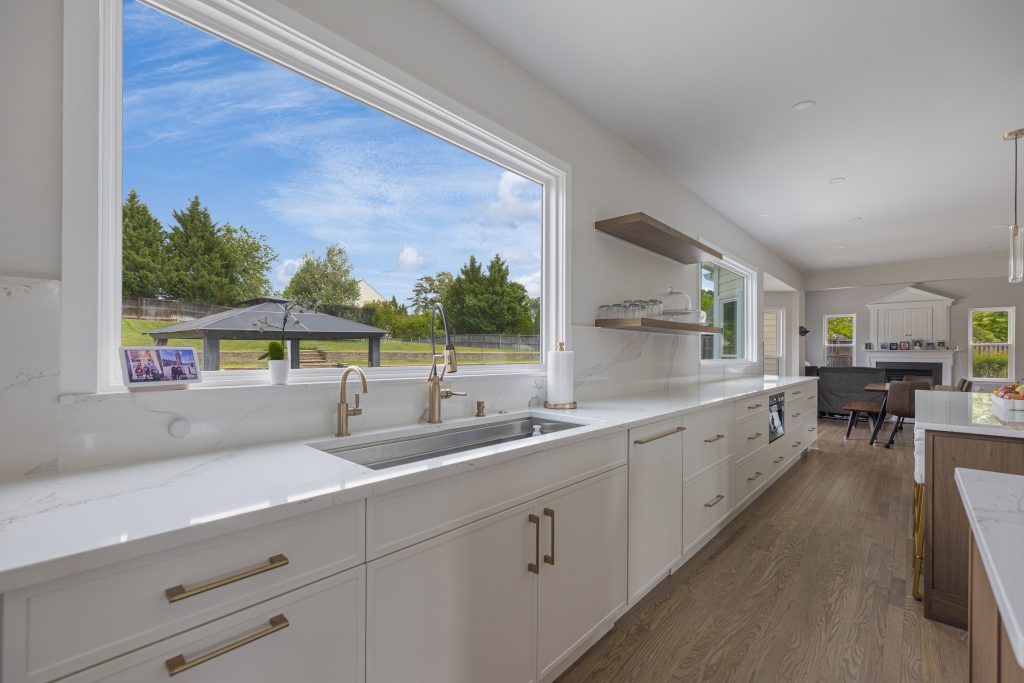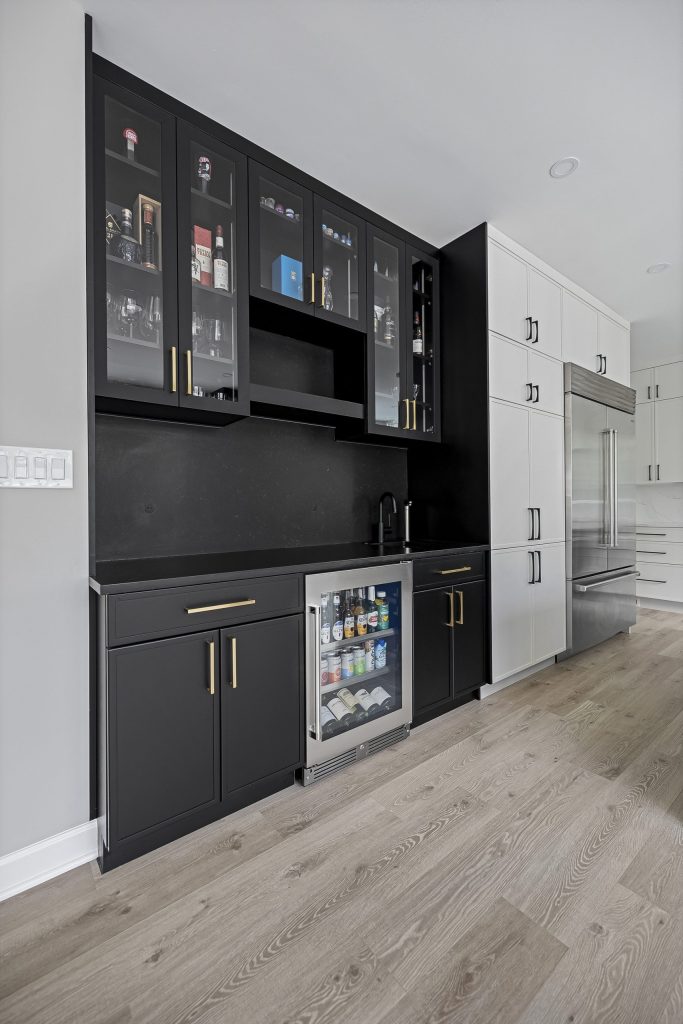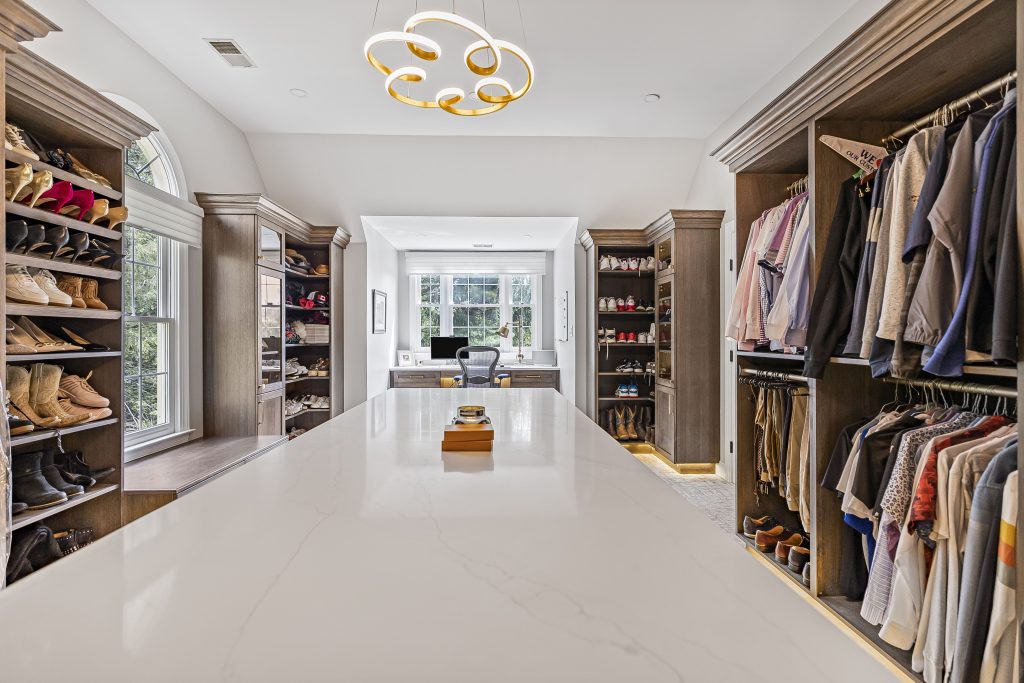
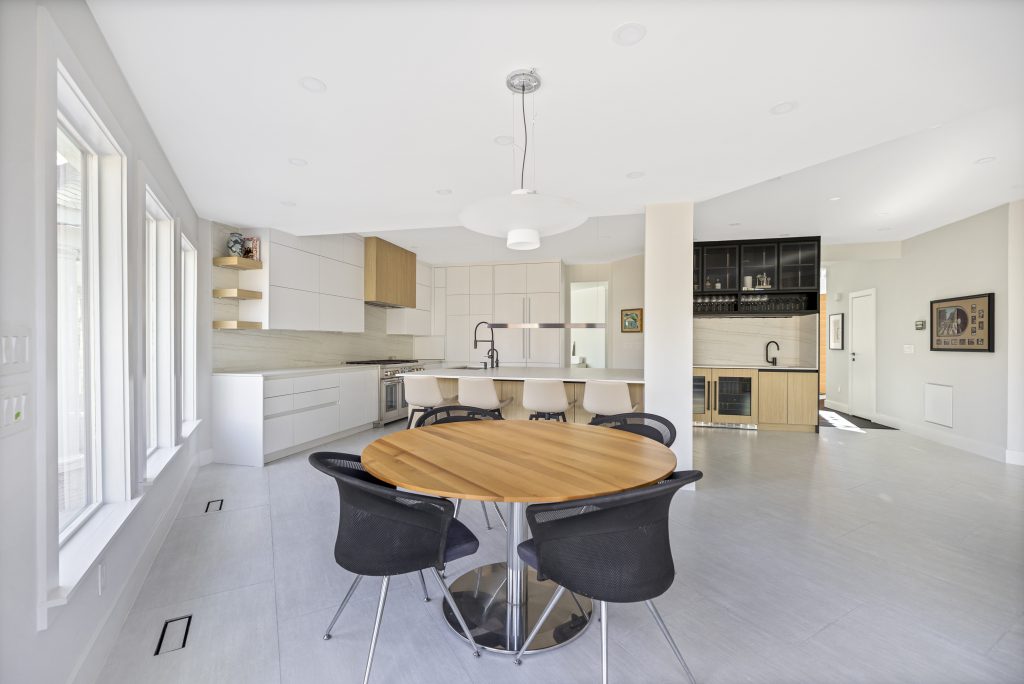
A whole house remodel in Northern Virginia costs $250,000 to $600,000 in 2026 for most houses, and more above 5,000 square feet or at the luxury level. That range covers the interior of the house rebuilt as one project: the kitchen, the bathrooms, the floors, the lighting, the millwork and the finishes everywhere, usually with the main floor opened up, and often with the basement finished as part of it. A cosmetic whole house refresh of paint, floors, lighting and fixtures runs $50,000 to $120,000. A full gut renovation that also replaces the systems and moves structure runs $400,000 to $800,000 and up. This guide puts numbers on each level, breaks them down room by room, explains what the age of the house adds, and shows how design build firms in Fairfax and Loudoun County price and sequence the work. The figures are the ones EA Home Design works to on its own projects, and they match our cost guides for each room.
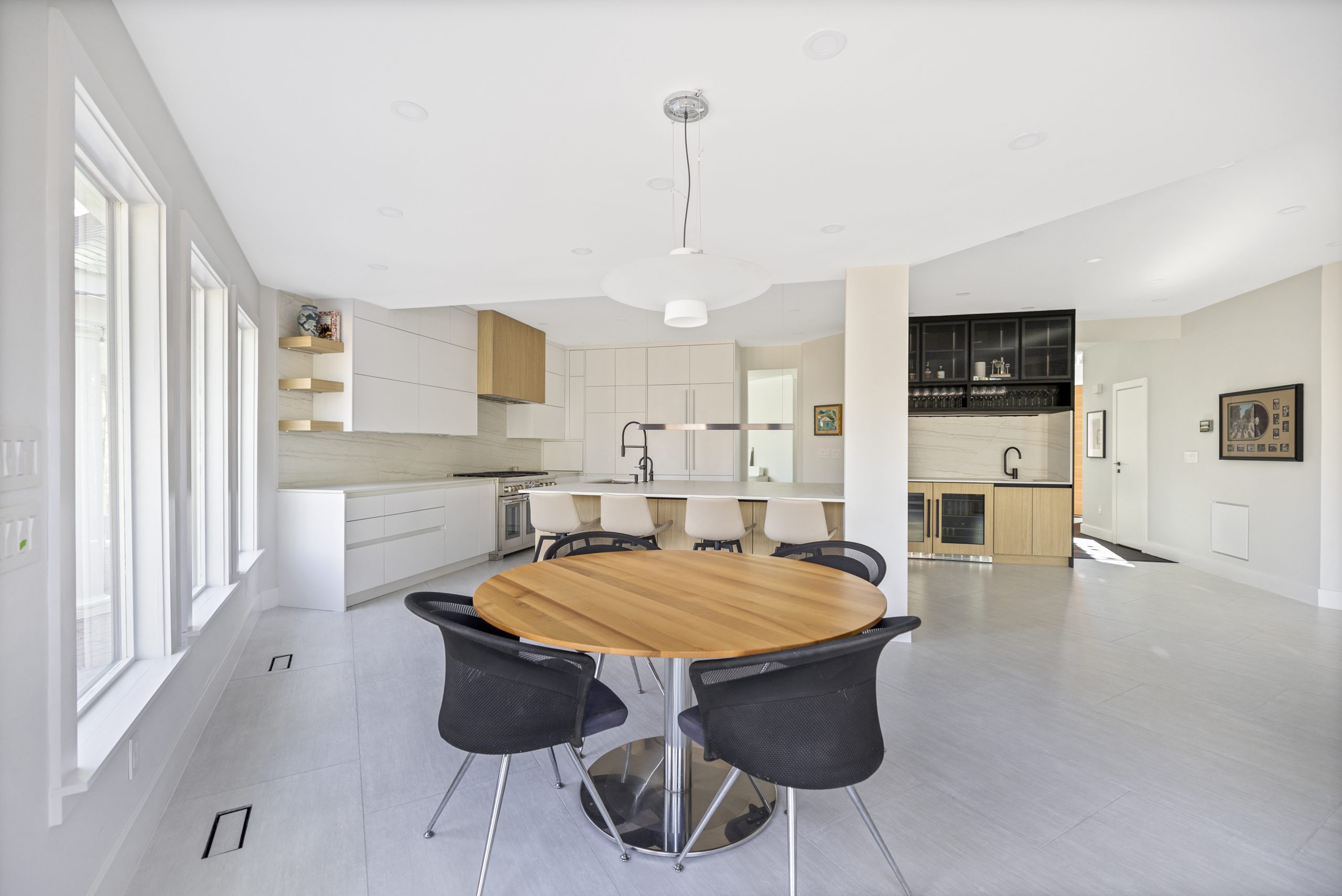
Whole House Remodel Cost at a Glance (2026)
| Scope | Northern Virginia cost, 2026 | Per square foot | Time on site |
|---|---|---|---|
| Cosmetic refresh: paint, floors, lighting, doors and hardware, fixtures | $50,000 to $120,000 | $20 to $50 | 4 to 8 weeks |
| Mid range whole house interior: kitchen and baths in their footprints, floors, lighting, paint, trim | $180,000 to $300,000 | $75 to $125 | 3 to 5 months |
| Full whole house interior: kitchen with walls moved, primary and hall baths with new layouts, floors, lighting, millwork, often the basement | $250,000 to $600,000 | $100 to $200 | 4 to 8 months |
| Gut renovation: everything above plus new electrical, plumbing and HVAC, structural changes, new windows | $400,000 to $800,000 and up | $175 to $300 | 6 to 10 months |
| Whole house plus an addition or second story | $500,000 to $1,000,000 and up | Addition at $250 to $450 per new square foot | 7 to 12 months |
The per square foot column is for the area the project touches, which in a whole house remodel is the whole conditioned area, so a 2,500 square foot colonial at the full interior level lands at $250,000 to $500,000 and a 4,000 square foot house at $400,000 to $800,000. Those rules of thumb are only for the first conversation. The real number comes from a scope, a finish level and the year the house was built, and the rest of this guide is about those three things.
How Northern Virginia Compares With the National Figures
The National Association of Home Builders puts the median cost of a major remodel at about $85 per square foot nationally, which is roughly $212,500 for a 2,500 square foot house, and national guides place a typical whole house remodel between $150,000 and $450,000. Northern Virginia sits 15 to 25 percent above those figures, as our before and after guide explains, because Fairfax and Loudoun County labor, permit standards and the finish level the houses are sold at all run higher. The gap is widest in McLean, Great Falls, north Arlington and the in-town streets of Vienna and Falls Church, where the kitchen that is a $90,000 project in Sterling becomes a $120,000 project to match the houses around it.
What Decides the Price: Scope, Size, Finish Level and the Year the House Was Built
Four things set a whole house remodel budget in this region, and they matter in this order.
- Scope. Whether the kitchen and bathrooms keep their layouts or move, whether walls come out, whether the basement is included, and whether the systems are replaced. Moving plumbing and structure is where the mid range becomes the full level.
- Size. Floors, paint, lighting, trim, doors and windows scale with square footage; kitchens and bathrooms do not. A 2,200 square foot house and a 3,800 square foot house with the same kitchen and baths differ by $60,000 to $120,000 in the rooms between.
- Finish level. Semi custom cabinetry and quartz against custom cabinetry and natural stone, luxury vinyl plank against wide plank white oak, a premium appliance package against a built-in one. The finish level alone moves a whole house budget by 40 to 60 percent; our luxury home remodeling guide covers the top of it.
- The year the house was built. Houses from the 1960s to the 1980s, which is most of Fairfax and eastern Loudoun County, carry a 100 amp panel, aluminum branch wiring, polybutylene or galvanized supply lines, cast iron drains and framing that was never meant to hold a stone counter. Correcting them is not optional once the walls are open, and it is the main reason two identical scopes can differ by $50,000.
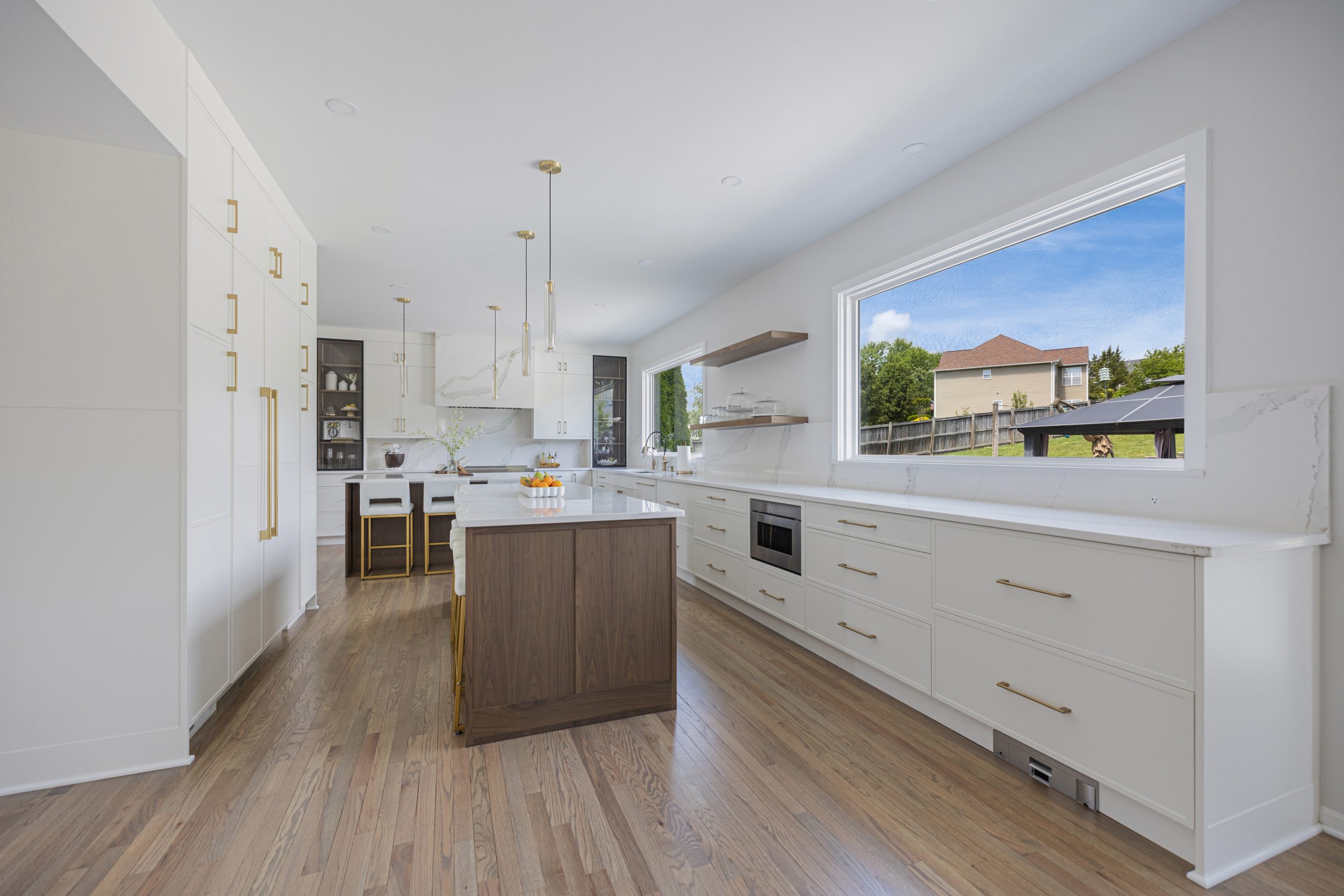
Whole House Remodel Cost Room by Room
A whole house budget is the sum of its rooms, less the savings of doing them at once. These are the 2026 Northern Virginia ranges from our room guides, with the share each usually takes of a full interior remodel.
| Room or system | 2026 Northern Virginia cost | Share of a full whole house budget | Guide |
|---|---|---|---|
| Kitchen | $60,000 to $100,000 in the same footprint; $90,000 to $140,000 with walls or plumbing moved; $120,000 to $200,000 luxury | 25 to 35 percent | kitchen remodel cost guide |
| Primary bathroom | $60,000 to $120,000, the low end in the footprint and the top with a new layout | 12 to 18 percent | bathroom remodel cost guide |
| Hall or guest bathrooms | $30,000 to $55,000 each | 5 to 8 percent each | Same guide |
| Powder room | $10,000 to $20,000 | 2 to 3 percent | Same guide |
| Flooring, 2,000 square feet | $8,000 to $24,000 luxury vinyl plank; $14,000 to $40,000 engineered wood; $16,000 to $50,000 solid hardwood, plus $1 to $3 a square foot of tear out | 6 to 10 percent | flooring guide |
| Interior paint, whole house | $6,000 to $12,000 | 2 to 3 percent | remodels that pay off |
| Lighting and electrical, main rooms | $3,000 to $8,000 for fixtures and recessed lighting; $3,000 to $6,000 more for a panel upgrade | 2 to 4 percent | This guide |
| Trim, doors and millwork | $8,000 to $25,000 for new interior doors, casing and base; $3,000 to $7,000 per paneled or built-in wall | 3 to 6 percent | This guide |
| Stairs and railing | $3,000 to $10,000 for a new railing in iron, brass or glass | 1 to 2 percent | This guide |
| Finished basement | $30,000 to $180,000; $120,000 to $180,000 with a kitchen and a bath | 10 to 25 percent when included | basement remodel cost guide |
| Design, drawings, permits and project management | 8 to 15 percent of construction | Included in the ranges above | whether a designer is worth it |
Add the rooms for a 2,500 square foot colonial at the full interior level and the sum is about $300,000 to $450,000: a kitchen with a wall removed at $110,000, a primary bath with a new layout at $75,000, a hall bath at $40,000, a powder room at $15,000, hardwood through the main floor at $30,000, paint at $9,000, lighting and a panel at $12,000, doors and trim at $15,000, a railing at $6,000 and the design and permits inside each line. A finished basement with a bath adds $90,000 to $150,000 on top. That is the arithmetic behind the $250,000 to $600,000 range, and it is why a whole house remodel is never priced by the square foot alone.

Whole House Remodel Cost by House Size
| House | Cosmetic refresh | Full interior remodel | Gut renovation |
|---|---|---|---|
| 1,500 square foot rambler or townhouse | $40,000 to $75,000 | $180,000 to $320,000 | $280,000 to $450,000 |
| 2,000 square foot split level or 1970s colonial | $50,000 to $90,000 | $220,000 to $400,000 | $350,000 to $600,000 |
| 2,500 square foot colonial | $60,000 to $110,000 | $250,000 to $500,000 | $440,000 to $750,000 |
| 3,500 square foot 1990s colonial | $80,000 to $140,000 | $350,000 to $650,000 | $600,000 to $1,000,000 |
| 5,000 square feet and up | $110,000 to $200,000 | $500,000 to $900,000 and up | $850,000 and up |
Two things to notice. The cosmetic column barely moves with size because paint and floors are cheap per square foot; the kitchen and the bathrooms do not grow with the house. And the gap between the full interior and the gut columns is the systems: the electrical, plumbing and HVAC that a 1970s house needs replaced and a 2005 house usually does not. Our guide to what $50,000 buys explains why that figure covers one room done properly or a whole house refreshed, and not both.
Cost by Finish Level: Mid Range, High End and Luxury
| Decision | Mid range | High end | Luxury |
|---|---|---|---|
| Kitchen cabinetry | Semi custom frameless, the largest line in a $60,000 to $100,000 kitchen | Semi custom with inset or furniture details | Custom or inset, $50,000 to $100,000 and up |
| Counters | Quartz, $7,000 to $10,000 in a typical full remodel | Quartzite or a premium quartz with a waterfall edge | Marble or quartzite at $100 to $250 a square foot, book matched |
| Appliances | Premium mainstream package, $15,000 to $35,000 | Mixed, with one or two built-in pieces | Luxury built-in package, $40,000 to $100,000 and up; see the appliance brand guide |
| Bathrooms | Porcelain tile, standard fixtures, a primary bath at the low end of $60,000 to $120,000 | Large format tile, a curbless shower, heated floor | Floor to ceiling stone, a wet room, a freestanding tub, a primary bath at the top of $60,000 to $120,000 |
| Floors | Luxury vinyl plank, $4 to $12 a square foot installed | Engineered wood, $7 to $20 | Solid or wide plank engineered hardwood, $8 to $25 |
| Lighting | Recessed cans and fixtures | Layered lighting with dimmers | Lighting on scenes, under cabinet and cove light, architectural fixtures |
| Millwork | Trim and new doors | Paneled feature walls, built-ins at the fireplace | Paneling, coffered ceilings and built-ins through the main floor |
| Whole house result, 2,500 square feet | $220,000 to $320,000 | $300,000 to $450,000 | $450,000 to $700,000 and up |
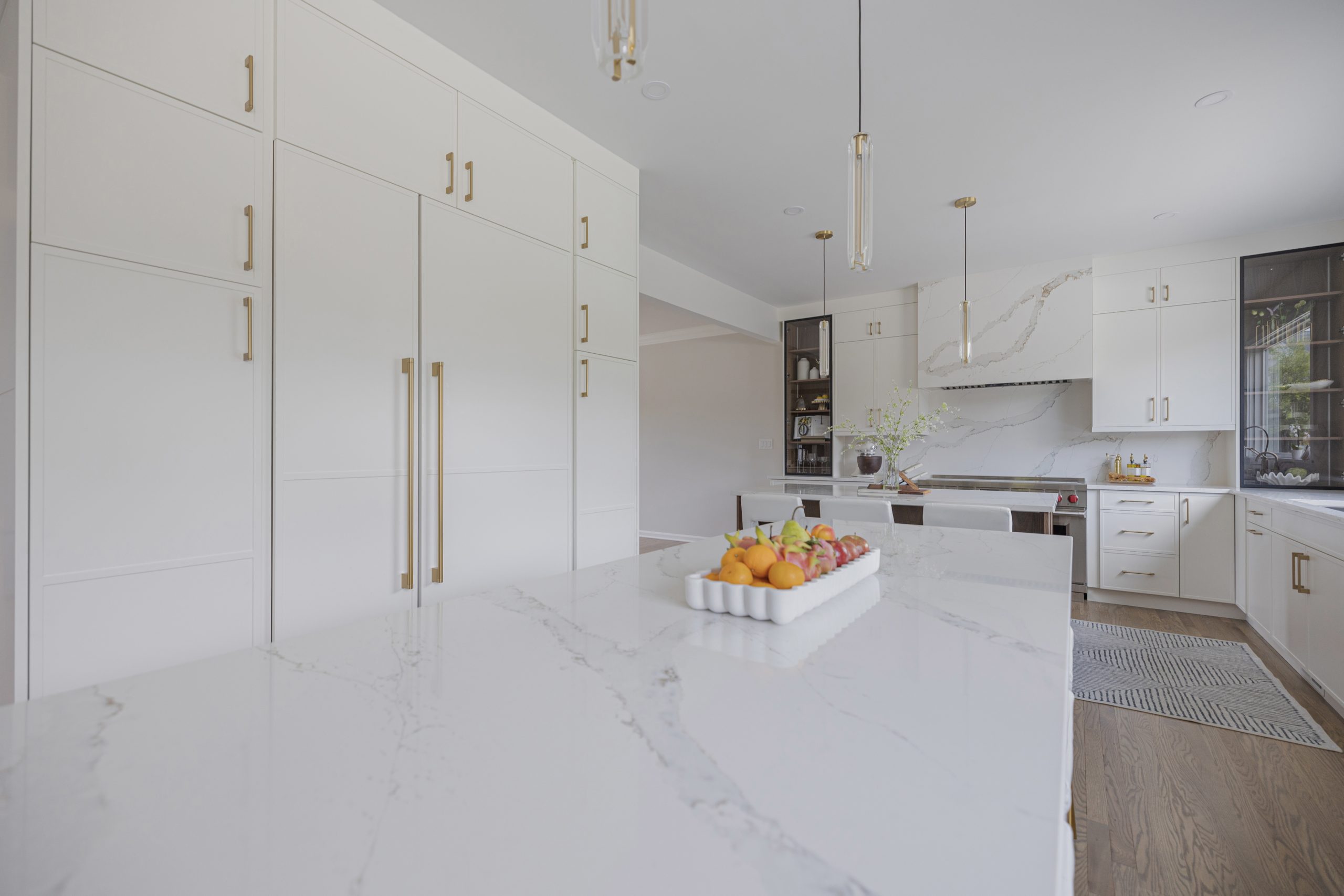
What the House Hides: Systems, Structure and the Contingency
The line items above are the ones you choose. These are the ones the house chooses for you, and in Fairfax and Loudoun County they decide whether a project stays at the full interior level or becomes a gut renovation.
| Hidden item | Houses that usually have it | What it costs to correct |
|---|---|---|
| Electrical panel at 100 amps | Most houses built before 1990 | $3,000 to $6,000 for a 200 amp panel, more if the service drop changes |
| Aluminum branch wiring | Houses wired from the mid 1960s to the early 1970s | $8,000 to $20,000 for remediation at every device, or a rewire inside a gut |
| Polybutylene or galvanized supply lines | 1978 to 1995 for polybutylene; before 1960 for galvanized | $8,000 to $20,000 to repipe a typical house while the walls are open |
| Cast iron drains | Houses before about 1975 | $5,000 to $15,000 to replace the runs the remodel exposes |
| Undersized or aged HVAC | Any system over 15 years, or any house gaining a finished basement or an addition | $12,000 to $30,000 for a new system; $5,000 to $12,000 for a mini split for new space |
| Load bearing wall removal | Every open concept main floor | $15,000 to $25,000 with a single story above, more with two; see the open concept guide |
| Asbestos or lead paint | Flooring, pipe wrap and paint in houses before 1980 | $3,000 to $15,000 for testing and abatement |
| Full systems update in a historic house | Pre 1940 houses with plaster and timber framing | $60,000 to $150,000; see the historic home guide |
Carry a contingency of 10 to 15 percent on a whole house remodel, and 15 to 20 percent on a house built before 1960. A good design build firm will price the items it can see at the design stage, and most of the list above can be seen by opening a few inspection holes and reading the panel, so the contingency is for what remains.
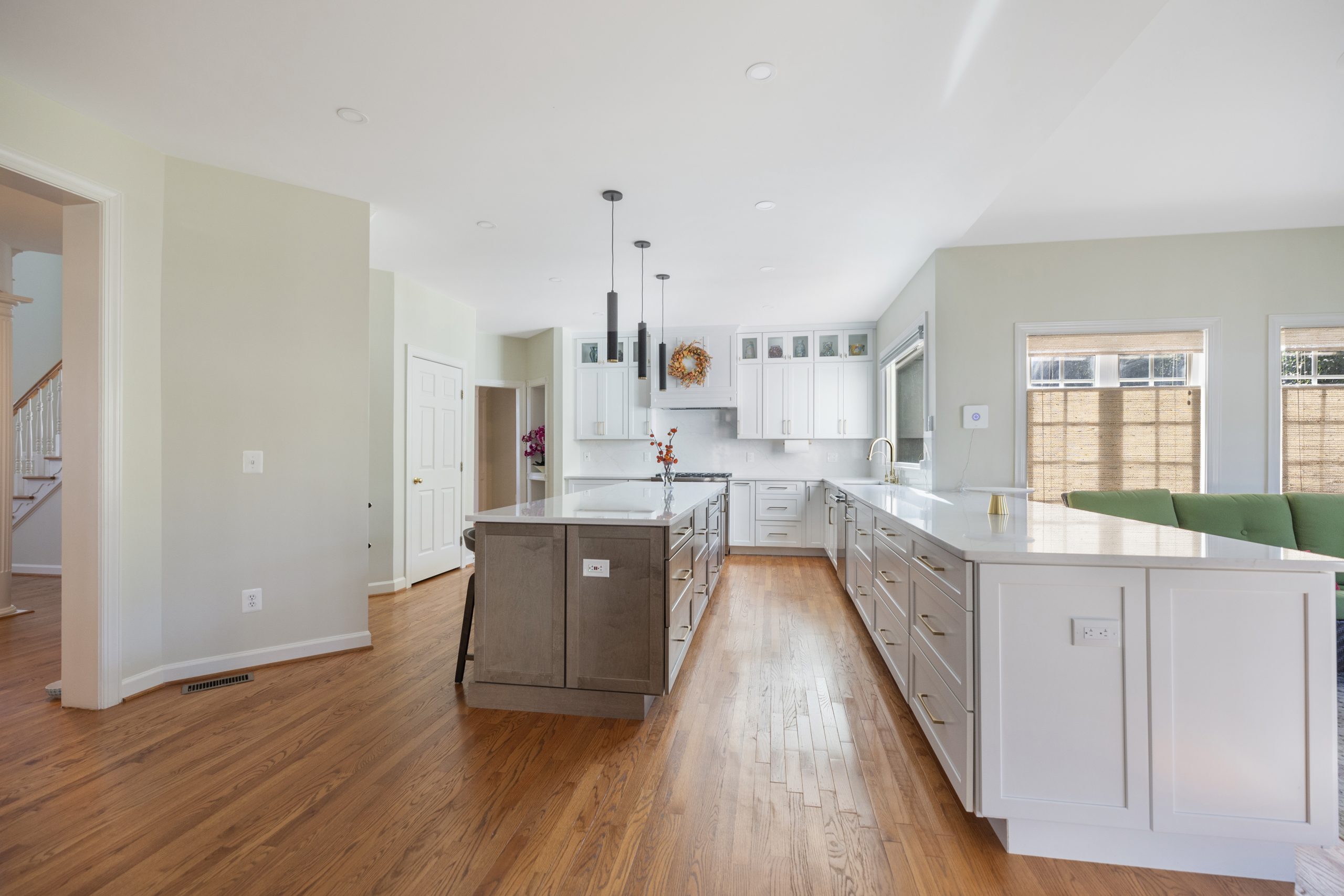
Why a Whole House Remodel Costs Less Than the Rooms Done Separately
Designing the kitchen, the bathrooms and the basement together means one set of drawings, one permit application, one mobilization and one electrical panel upgrade instead of three, which is why the combined price lands 10 to 20 percent below the sum of the parts and why the schedule runs shorter than three separate projects would. Our Loudoun County guide and our Northern Virginia home remodeling guide both make this point, and it is the project our whole home remodeling service is built around. The savings come from a few places.
- One design fee and one permit instead of three, saving $10,000 to $30,000.
- One demolition, one dumpster run, one protection of the rest of the house, one cleanup.
- Trades on site once: the electrician who rewires the kitchen does the bathrooms and the panel in the same weeks.
- Flooring laid continuously through the main floor, instead of patched room by room.
- One disruption. A family moves out once for four to eight months instead of living through three separate projects over three years.
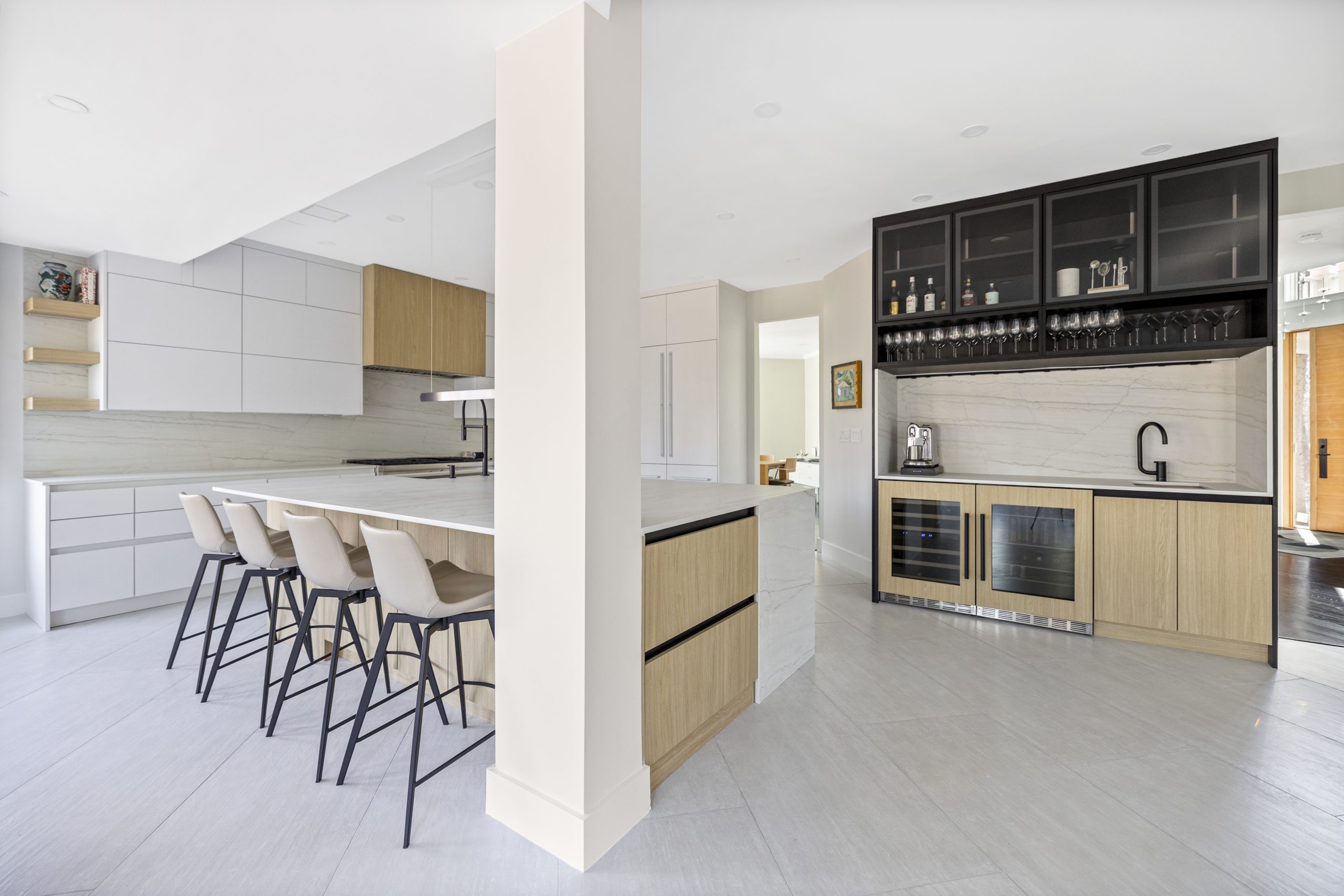
The Order of Operations in a Whole House Remodel
A whole house remodel runs in a sequence, and the sequence is where budgets are kept or lost. This is the order on our projects in Fairfax and Loudoun County.
- Design and selections, 2 to 4 months. Measured drawings, the new layout, the finish schedule for every room, and a fixed price on complete documents. Cabinetry and windows are ordered here, because they take 8 to 12 weeks.
- Permits, 2 to 6 weeks. A single building permit with the electrical, plumbing and mechanical trades under it, from Fairfax County, Loudoun County, or the town or city that has its own office; our permit checklist lists them.
- Demolition and structure, 2 to 3 weeks. Walls out, beams in, the floor opened where plumbing moves.
- Rough mechanical, 3 to 4 weeks. New electrical, plumbing and ductwork, the panel, and the rough inspections.
- Insulation, drywall and the shell of each room, 3 to 4 weeks.
- Finishes, 6 to 10 weeks. Floors, cabinetry, counters, tile, trim, doors, paint, fixtures and lighting, in that order, with the kitchen and the baths running in parallel.
- Final inspections and the punch list, 1 to 2 weeks.
Construction runs 4 to 8 months for a whole house interior, and the whole project from the first design meeting to the final inspection runs 7 to 12 months. A kitchen alone takes 3 to 5 months by the same arithmetic, as our kitchen timeline guide shows, which is another reason the combined project saves time.

Cost by Area: Fairfax, Loudoun, Arlington and the Rest of the Region
Where the house is moves every range, in two ways: the finish level the neighborhood expects, and the age of the housing stock.
| Area | What moves the price | Typical full interior remodel, 2,500 square feet |
|---|---|---|
| McLean, Great Falls, north Arlington, in-town Vienna and Falls Church | The highest finish expectations in the region; teardown markets where a remodel has to reach the standard of the street; postwar houses with mechanical surprises | $350,000 to $600,000 |
| Fairfax, Oakton, Burke, Springfield, Annandale | 1960s to 1980s colonials and split levels; panels, wiring and drains to correct; strong return on opening the main floor | $280,000 to $480,000 |
| Reston, Herndon, Chantilly, Centreville | 1970s to 1990s houses; contemporary layouts in Reston that remodel well; HOA review on exteriors | $260,000 to $450,000 |
| Ashburn, Sterling, Leesburg, South Riding | Newer planned communities where builder grade finishes reward interior quality and most projects keep the footprint; Sterling Park and Sugarland Run older | $230,000 to $420,000 |
| Alexandria, Old Town and Del Ray | Historic and older houses with design review and the systems that go with them | $320,000 to $600,000 |
Our Fairfax County guide and Loudoun County guide walk through the housing eras town by town, and our case studies show finished projects with their scopes and costs, including an Ashburn whole home remodel.
Whole House Remodel or Move? The Northern Virginia Math
Most whole house remodels in this region are an alternative to moving, so the budget is judged against the cost of a move. Selling a $1,000,000 house and buying a $1,400,000 one costs roughly $60,000 to $90,000 in agent fees, closing costs, taxes and moving before the first dollar of the higher mortgage, and the newer house still has somebody else’s kitchen in it. A $350,000 whole house remodel keeps the lot, the school pyramid and the mortgage rate, and in McLean, Vienna, Great Falls and Arlington a renovated house carries a premium over the same house unrenovated. The rule is to remodel to the standard of the neighborhood’s best houses and not past it; our guide to remodels that pay off puts return figures on each room. The case for moving is strongest when the house is too small and an addition cannot fix it, when the lot or the street is the problem, or when the remodel budget would pass what the finished house could sell for.
Whole House Remodel Plus an Addition
When the house is also too small, the whole house remodel is combined with an addition, and the two are designed as one project. A main level addition runs $150,000 to $300,000, a second story $250,000 to $500,000, and an addition is priced at $250 to $450 per new square foot, rising past $400 when the new space holds a kitchen or a bathroom. Combined projects land at $500,000 to $1,000,000 and up and take 7 to 12 months. Our home addition cost guide and additions 101 cover the options, including bump outs, above garage rooms and garage conversions, and our home additions page shows finished work.
How to Pay for a Whole House Remodel
Projects of this size are usually paid for with home equity, and Northern Virginia owners who bought before 2021 often have a great deal of it. A home equity line of credit draws as the milestones come due, which suits a project paid in stages; a cash out refinance makes sense only when the new rate is close to the old one; a renovation loan lends against the finished value when the equity is not there yet; and many owners combine savings for the deposit with a line for the balance. Virginia law caps a contractor’s deposit, and established firms take about 30 percent to begin with the balance on finished milestones. Our guide to financing a home addition covers each option in detail, and the same arithmetic applies to a whole house remodel.
How to Keep a Whole House Remodel on Budget
- Finish the design before demolition. Every open decision becomes a change order and a gap in the schedule.
- Price the hidden items at the design stage. Read the panel, open inspection holes, scope the drains, test for asbestos, so the contingency is for the rest.
- Decide the finish level once and hold it. Upgrading the counters after the cabinets are ordered is how $300,000 becomes $360,000.
- Spend where it shows and where it lasts. The kitchen, the primary bath, the floors and the light; standard fixtures in the hall bath nobody photographs.
- Keep the footprint where you can. Moving the kitchen sink across the room is $10,000 to $20,000 of plumbing and floor before a cabinet is bought.
- Order long lead items early. Cabinetry and windows at 8 to 12 weeks set the schedule; a project that starts with everything on site runs its weeks back to back.
- Get a fixed price on complete documents. A per square foot estimate on a sketch is a conversation, not a price; see our remodeling mistakes guide and the best remodeling companies in Northern Virginia.
- Carry 10 to 15 percent and do not spend it on upgrades.

Frequently Asked Questions
How much does a whole house remodel cost in Northern Virginia? In 2026, a whole house interior remodel in Fairfax and Loudoun County runs $250,000 to $600,000 for most houses: the kitchen, the bathrooms, floors, lighting, millwork and finishes throughout, usually with the main floor opened up. A cosmetic refresh of paint, floors, lighting and fixtures runs $50,000 to $120,000, and a gut renovation that also replaces the systems runs $400,000 to $800,000 and up.
What is the cost per square foot to remodel a whole house? In Northern Virginia, about $20 to $50 per square foot for a cosmetic refresh, $75 to $125 for a mid range interior remodel, $100 to $200 for a full interior remodel and $175 to $300 for a gut renovation, measured on the whole conditioned area. National guides quote $85 per square foot as the median for a major remodel; the region runs 15 to 25 percent above national figures.
How much does it cost to gut and remodel a 2,000 square foot house? In Northern Virginia, $350,000 to $600,000 in 2026. The gut level adds new electrical, plumbing and HVAC, structural changes and often new windows to a full interior remodel, which for a 2,000 square foot house runs $220,000 to $400,000 on its own.
Is it cheaper to remodel the whole house at once or room by room? At once. One design fee, one permit, one mobilization, one panel upgrade and trades on site once put the combined price 10 to 20 percent below the sum of the rooms done separately, and the project finishes in 4 to 8 months of construction instead of several years of separate jobs.
How long does a whole house remodel take? Construction runs 4 to 8 months for a whole house interior in Northern Virginia, and the whole project from the first design meeting to the final inspection runs 7 to 12 months: 2 to 4 months of design and selections, 2 to 6 weeks of permits, then construction. Adding a second story or an addition takes it to 7 to 12 months of construction.
What costs the most in a whole house remodel? The kitchen, at 25 to 35 percent of a full whole house budget, then the primary bathroom at 12 to 18 percent, then the finished basement when it is included. Among the hidden items, the systems cost most: a rewire, a repipe and a new HVAC system together can add $40,000 to $70,000 in a 1970s house.
Is $100,000 enough to remodel a whole house? In Northern Virginia, $100,000 covers a cosmetic whole house refresh of paint, floors, lighting, doors and fixtures, or one kitchen done well, but not a whole house interior remodel with new kitchen and bathrooms, which starts around $250,000.
Does a whole house remodel add value in Northern Virginia? Yes when it matches the house and the street. Kitchens, primary baths, finished basements, hardwood floors and paint return the most, and a renovated house in McLean, Vienna, Great Falls or Arlington carries a premium over the same house unrenovated. Remodel to the standard of the neighborhood’s best houses and not past it.
Do I need a permit for a whole house remodel? Yes. Any work that touches plumbing, electrical, gas, ductwork or structure needs a permit under Virginia’s statewide building code, and a whole house remodel touches all of them. One building permit with the trade permits under it is issued by Fairfax County, Loudoun County, or the town or city with its own office; fees usually run $1,500 to $5,000 for a project of this size.
How do people pay for a whole house remodel? Mostly with home equity: a line of credit drawn as milestones come due, a cash out refinance when the rate works, a renovation loan against the finished value, or savings for the deposit with a line for the balance. Established Northern Virginia firms take about 30 percent to begin and the balance on finished milestones.
Pricing Your Whole House Remodel in Fairfax or Loudoun County
A whole house remodel in Northern Virginia is priced by scope, size, finish level and the year the house was built, and the only reliable number is a fixed price on a complete design. EA Home Design is a Class A licensed design build firm (license 2705157182) that has designed and built whole house remodels across Fairfax, Loudoun and Arlington for years, with the kitchen, the bathrooms, the floors and the basement planned as one project and shown in 3D before anything is ordered. Book a free in home design consultation or call (703) 687-1818, bring the house and the wish list, and the first meeting puts a real range on it.