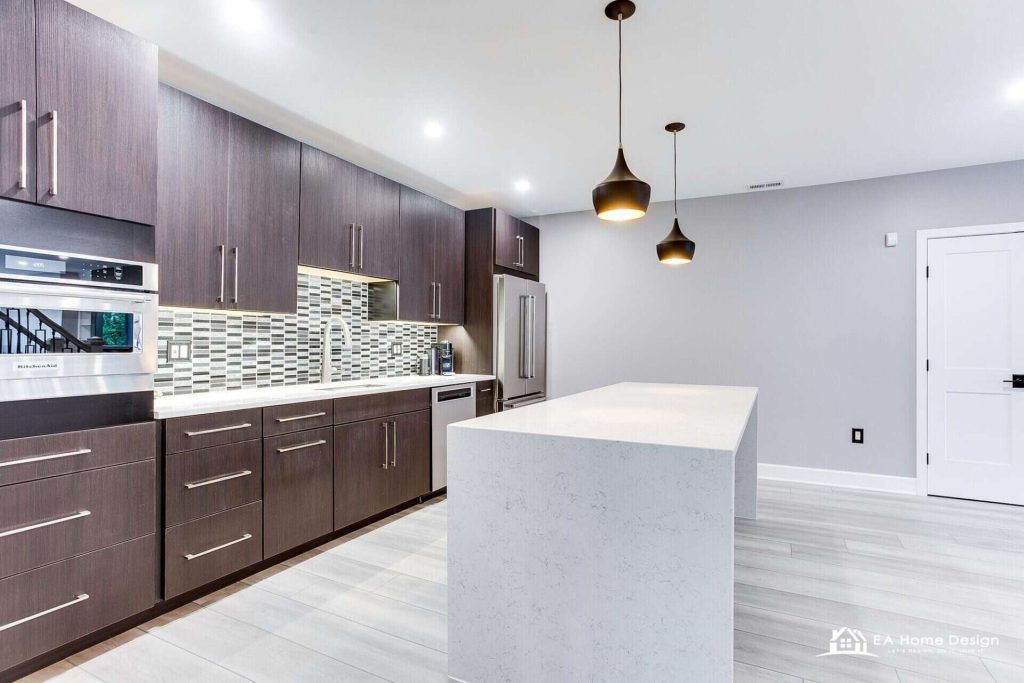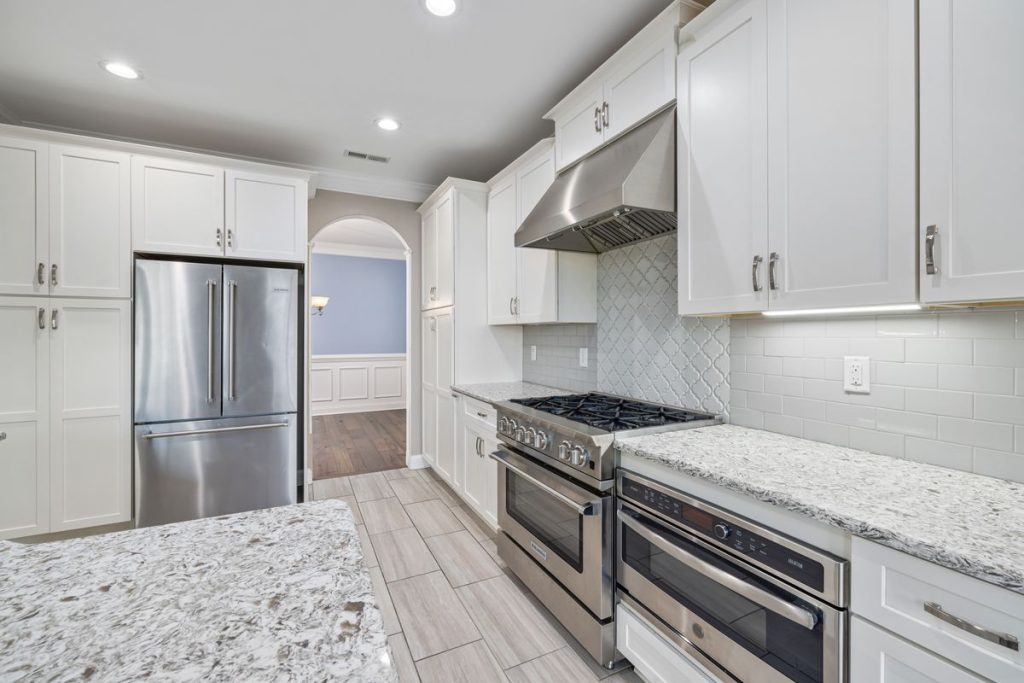
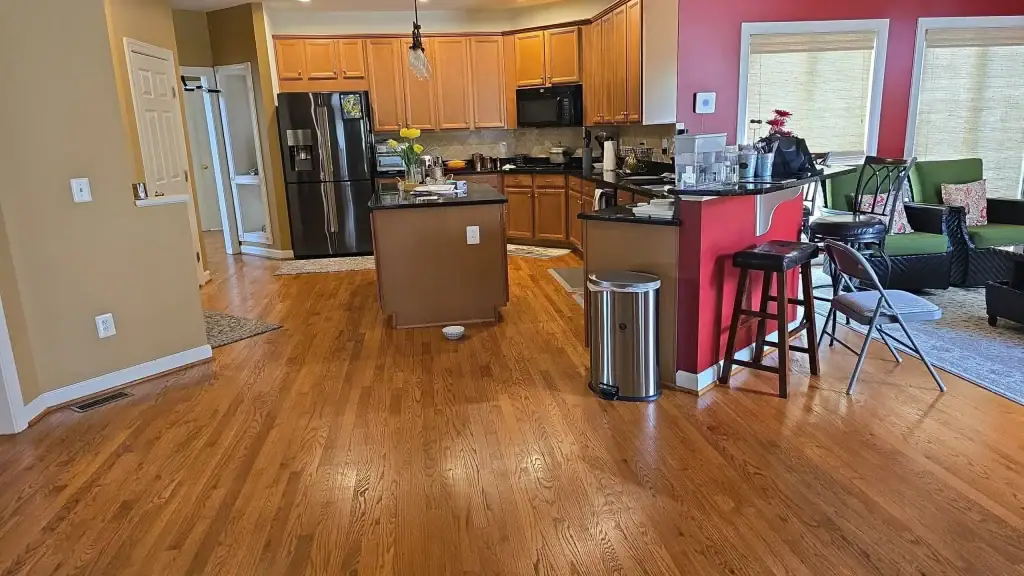
Open concept kitchen remodeling in Northern Virginia means removing the wall between the kitchen and the living or dining space, and the budget swings on one structural question: whether that wall carries the house. A non load bearing wall comes out for $2,500 to $8,000; a load bearing wall needs an engineered beam and runs $15,000 to $40,000 depending on span and what hides inside the wall; and a full open concept kitchen remodel, wall, beam, and a new kitchen built for the open room, typically lands between $90,000 and $200,000 here in 2026. Most Fairfax and Loudoun County homes were built compartmentalized, which is exactly why this is the single most requested structural change we make. This guide covers how to tell what your wall is doing, what every path costs, the permits involved, and the design moves that make one big room actually work. In a galley kitchen the same opening turns the second cabinet run into a peninsula or an island, a case our galley kitchen remodel guide covers with its own costs.
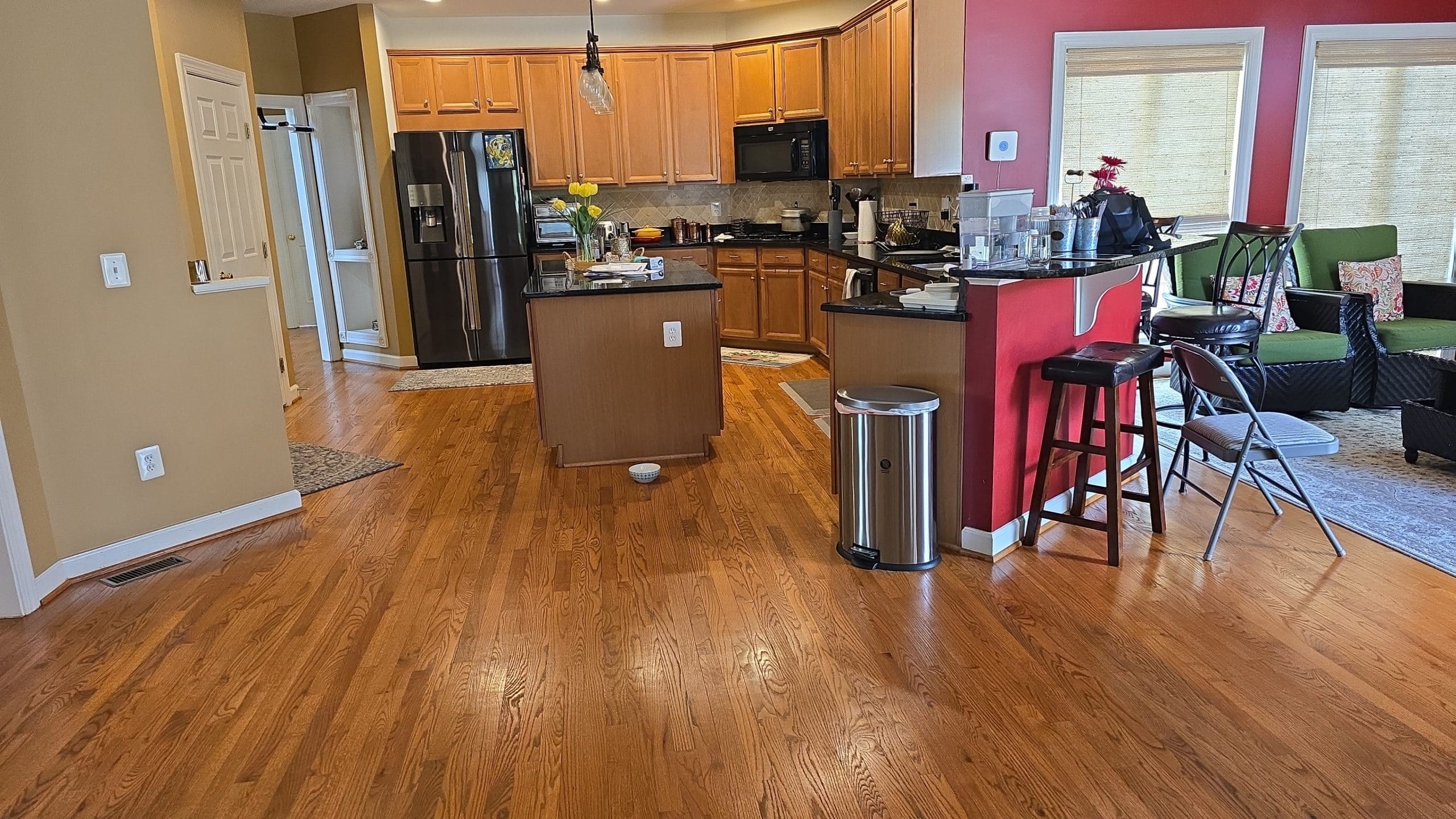
Why Northern Virginia Homes Are the Perfect Candidates
The housing stock explains the demand. The colonials and split levels that fill Fairfax County’s 1960s to 1990s neighborhoods, and many of Loudoun’s older sections, were designed around separated rooms: a closed kitchen, a formal dining room used twice a year, a living room nobody sits in. The way families actually live moved on, and the walls did not. Opening the kitchen to the adjoining space converts three underused rooms into one heavily used one, pulls natural light deep into the middle of the house, and lets the cook stay in the conversation. It is also the change that most transforms how a home shows: the same square footage reads dramatically larger the day the wall comes down.
Can the Wall Come Down? The Load Bearing Question
Every open concept project starts with the same investigation. Walls running perpendicular to the floor joists above, walls sitting mid house parallel to the ridge, and walls stacking with walls or beams below are the usual load carriers; walls running parallel to joists with nothing stacked above are often partition walls. Those are clues, not verdicts, and the verdict comes from opening the structure or a structural engineer’s assessment, which costs a few hundred dollars and is the best early money in the entire project. Two more things live inside kitchen walls that decide budgets: plumbing stacks and HVAC ducts. A wall full of pipes serving the bathroom above is removable, but rerouting is real money, and finding that out on paper beats finding it out on demolition day.
When the wall is load bearing, the load moves into a beam. The choice between an LVL beam, steel, and a flush versus dropped installation shapes both cost and ceiling: a dropped beam is cheaper and leaves a visual divide overhead; a flush beam recessed into the ceiling framing costs more and makes the two rooms read as one uninterrupted space. For most open concept kitchens we build, the flush beam is worth its premium, because the whole point of the project is erasing the boundary.
What Open Concept Kitchen Remodeling Costs in 2026
| Scope | Northern Virginia range | What is included |
|---|---|---|
| Non load bearing wall removal | $2,500 to $8,000 | Demo, patching floors, walls, ceiling, paint |
| Load bearing removal, single story above | $15,000 to $25,000 | Engineering, permit, LVL beam, posts, finishes |
| Load bearing removal, two stories above or long span | $25,000 to $40,000+ | Steel or deep LVL, footing work, rerouted utilities |
| Wall removal plus kitchen refresh | $60,000 to $100,000 | Structure plus cabinets, counters, appliances in existing layout |
| Full open concept kitchen remodel | $90,000 to $200,000 | Structure plus a new kitchen designed for the open room, island, lighting, flooring tied through |
The honest budgeting note: very few projects stop at the wall. Once the rooms merge, the old kitchen faces the living space and its age shows from the sofa, the flooring changes lines mid room, and the lighting plan built for a closed kitchen makes no sense. Plan the full picture even if you phase the work, and our kitchen remodel cost guide covers the kitchen half of that math in detail.
Permits and Structural Review in Fairfax and Loudoun County
Removing any load bearing element requires a building permit with stamped structural drawings in both counties, and even non structural removals typically need permits once electrical or plumbing moves, which in a kitchen wall it nearly always does. Plan review wants the beam calculations, the post locations, and how loads reach the foundation. This is paperwork worth loving rather than dodging: an unpermitted beam is one of the few remodeling shortcuts that can genuinely block a future sale, because no appraiser or buyer’s inspector ignores a missing wall. Timelines, inspection sequences, and the full checklist live in our Northern Virginia permit guide. Build four to eight weeks of design and approval time into the calendar before demolition, and see the full construction arc in our kitchen remodel timeline.
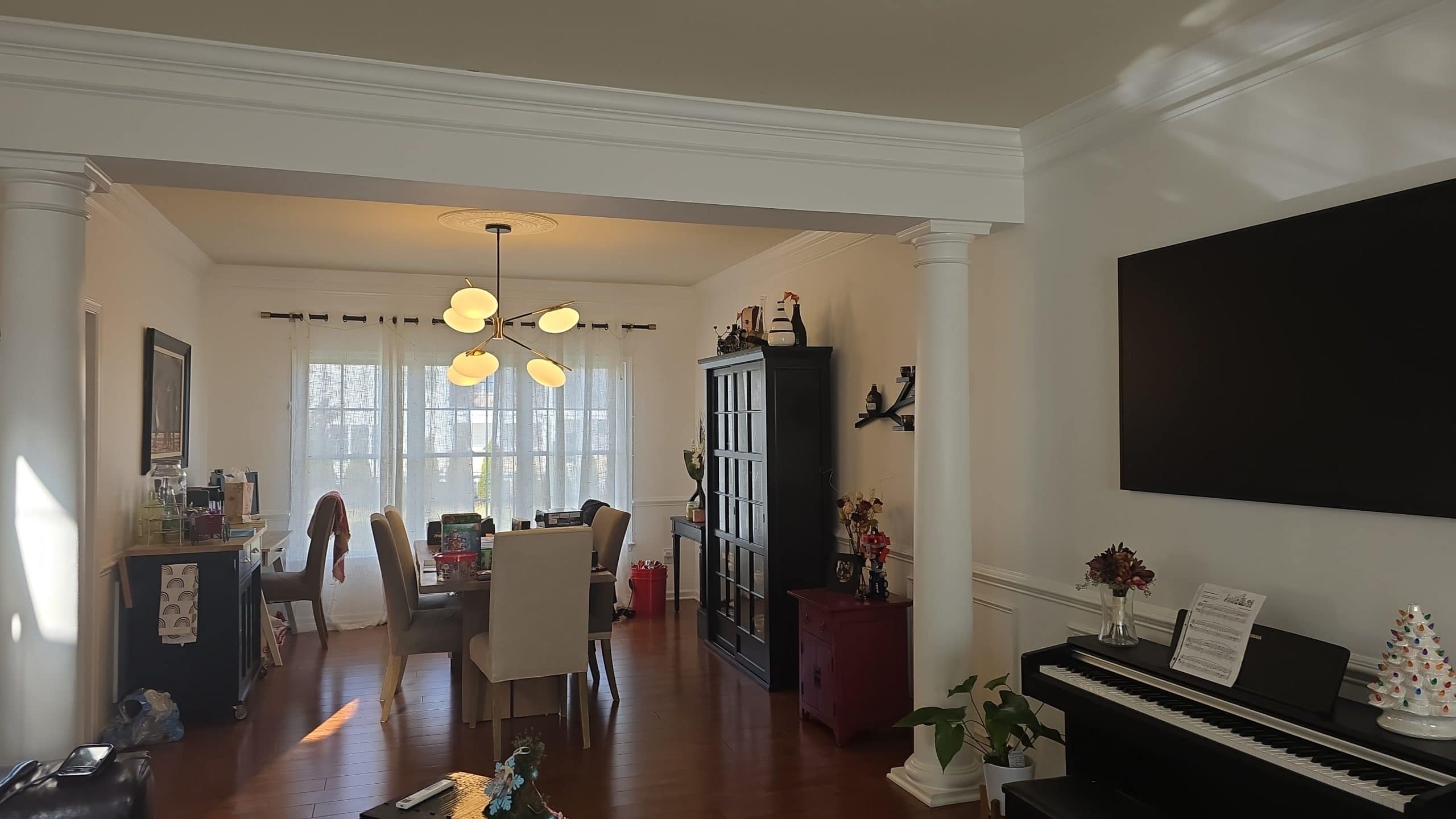
Designing One Room That Does Three Jobs
The structural work makes the space possible; the design work makes it good. Five moves separate the open concept kitchens that work from the ones that just feel like a kitchen in the living room:
- The island anchors everything: It replaces the lost wall as the boundary between cooking and living, carries the seating, and hides the kitchen’s working mess from the sofa. Size and placement rules are in our kitchen island guide.
- One floor, wall to wall: Nothing reveals a removed wall like a flooring seam. Run one material through the whole space, and if the existing hardwood cannot be matched, weaving or full replacement belongs in the budget. Options are compared in our flooring guide.
- Zone the lighting, not the room: Recessed cans on separate dimmers per zone, pendants marking the island, and a fixture defining the dining area let one room shift moods without walls.
- Repeat the palette across zones: The kitchen’s metals and colors need echoes in the living area, the discipline covered in our mixed metals guide, or the two halves read as strangers.
- Plan the quiet infrastructure: A more powerful, quieter range hood matters when cooking smells reach the sofa, HVAC returns sized for one large room, and outlets where furniture will float. These are design decisions, and retrofitting them is expensive.
Sightlines: Designing What the Sofa Sees
The most overlooked discipline in open concept kitchen remodeling is deciding, on the plan, exactly what becomes visible from the living area, because the wall that came down was doing a lot of polite concealment. The working triangle of sink, range, and prep mess now performs for an audience. The fixes are all layout: face the sink toward the room from the island so the cook looks outward and the dish pile hides behind the raised counter or a low appliance garage; keep the refrigerator and pantry on the perimeter where their traffic does not cross the living zone; give the range wall the beauty treatment, a proper hood, a tiled or slab feature, because it is now effectively living room wall art. And check the front door line: in many colonials, opening the kitchen exposes it straight down the entry hall, which is worth knowing before the drywall comes down rather than at the housewarming.
The Storage Problem Nobody Mentions
Every removed wall removes cabinets, and the upper cabinets on a shared kitchen wall are usually the kitchen’s densest storage. The successful projects replace that capacity deliberately: a larger island with deep drawers, a full height pantry cabinet run on a remaining wall, or the increasingly popular walk in or butler’s pantry carved from adjacent space, which keeps small appliances and clutter out of a kitchen that is now permanently on display. This is also why open concept kitchens push toward the storage ideas in our cabinet guide: appliance garages and paneled appliances exist precisely because open rooms punish visual mess.
The Partial Opening: Open Concept Without Full Commitment
The fastest growing version of this project is not the full removal at all. A partial opening, a wide cased passage, a half wall topped with a serving counter, an interior window over the sink wall, or a pair of columns framing the gap, delivers most of the light and connection for $4,000 to $15,000, often without touching the beam question at all when enough wall remains to carry the load. Partial openings keep upper cabinet storage on the remaining wall sections, preserve a place for furniture to land in the living room, and give the kitchen somewhere to hide its dishes during a dinner party. They also suit the housing stock: in a center hall colonial, a generous cased opening respects the architecture in a way a total removal sometimes does not. We sketch both versions for nearly every client who asks for open concept, and roughly a third choose the partial once they see what it saves and what it keeps.
The Surprises Behind the Wall
Beyond the beam, four discoveries drive change orders on wall removal projects, and all four can be scouted in advance. HVAC: closed rooms had their own supply and return balance, and one large room usually needs return air rethought, plus any ducts running through the doomed wall rerouted. Electrical: the wall’s switches and outlets must land somewhere, and code requires the new open space to meet current outlet spacing, which can mean island and floor outlets. Ceilings and floors: the patch where the wall stood never matches perfectly on its own, so budget to refinish the ceiling plane and sand or replace flooring across the entire combined space rather than dreaming of an invisible strip repair. And in homes older than the 1970s, the wall may hide the panel feeder, a plumbing vent, or plaster construction that changes demolition entirely. A design build process surfaces all of this before the contract, which is the difference between a fixed price and an archaeology project billed hourly.
When Not to Open the Wall
Honesty earns trust, so here is ours. Skip the project when the wall carries plumbing stacks that would cost five figures to reroute for a marginal spatial gain. Think twice in smaller homes where the kitchen’s working mess has nowhere to hide and the walls being removed are the only ones holding bookshelves and furniture. And know that the market has matured: after two decades of open everything, some buyers now ask for a separated kitchen again, which is why partial openings, wide cased openings, interior windows, and half walls with counters, have become our fastest growing request. They deliver light and connection while keeping some separation and more storage. The full decision framework, including who should choose which, is in our companion guide to open concept vs traditional kitchen layouts.

What the Project Actually Looks Like, Start to Finish
A typical open concept kitchen remodel in our Fairfax and Loudoun projects runs this sequence. Design and engineering, two to four weeks: measure, model the new space in 3D, engineer the beam, choose finishes. Permits, two to six weeks depending on county queue. Construction, eight to fourteen weeks for the full scope: temporary shoring goes up, the wall comes out, the beam goes in and is inspected, then rough utilities, drywall, flooring through the whole space, cabinets, counters, and finishes. The dramatic moment is genuinely dramatic, the day the shoring drops and the house has a new room it never had, and it is also the most dangerous moment for unmanaged projects, because everything from that hour forward depends on the beam being right. This is not the project for the cheapest bid; it is the one where you check the license, the engineering relationship, and the before and after portfolio hardest.
Living in the House While the Wall Comes Down
Families almost always stay in the house through these projects, and the difference between miserable and manageable is preparation. A temporary kitchen, the old refrigerator, a microwave, and a folding table in the dining room or garage, goes up before demolition. Plastic dust barriers with zipper doors seal the work zone, and floor protection runs along every trade path. The loudest, dustiest stretch is mercifully short: demolition and beam installation typically span one to two weeks, after which the work becomes ordinary kitchen construction behind barriers. Plan takeout generously for weeks one and two, and plan the project itself for a season when the grill can carry some cooking, which in Northern Virginia makes spring and fall starts the comfortable favorites. If you plan to handle the non structural strip out yourself first, our demolition safety guide covers the boundaries and the gear.
Frequently Asked Questions
How much does it cost to remove a wall between the kitchen and living room? In Northern Virginia: $2,500 to $8,000 for a non load bearing wall, $15,000 to $40,000 for a load bearing wall including engineering, permit, and beam, with the top of the range for long spans, two stories above, or steel.
How do I know if my kitchen wall is load bearing? Direction of the joists above, what stacks over and under the wall, and its position in the house are the clues, but only a structural engineer’s assessment or opening the structure gives a reliable answer. Never rely on a contractor’s glance for a wall you are about to remove.
Do I need a permit to remove a kitchen wall in Fairfax or Loudoun County? Yes for any load bearing removal, with stamped structural drawings, and almost always for non structural removals too once wiring or plumbing in the wall moves. The inspections protect the single most consequential element of the project.
Does an open concept kitchen add value? In this market, consistently: it modernizes the floor plan buyers compare against new construction, and listings photograph dramatically better. The caveat is execution, since a visibly dropped beam and mismatched flooring give back much of the premium.
How long does an open concept kitchen remodel take? Twelve to twenty four weeks door to door: two to four for design and engineering, two to six for permits, and eight to fourteen for construction depending on the kitchen scope attached to the wall work.
Can you remove a load bearing wall in a two story house? Yes, routinely. The beam simply gets larger, often steel, and its posts must carry loads down through the first floor to footings, occasionally requiring new footing work in the basement. Expect the upper half of the cost range and no shortcuts on engineering.
Can I leave part of the wall? Yes, and it is often the smartest version: a wide cased opening, a half wall with a counter, or columns flanking the opening reduce structural cost, keep some storage, and preserve definition between spaces while still transforming light and flow.
Open the Wall Once, Correctly
Open concept kitchen remodeling is the highest leverage structural change in Northern Virginia’s housing stock, and the least forgiving of shortcuts. EA Home Design is a Class A licensed design build firm serving Fairfax and Loudoun County: our team handles the engineering coordination, the county permits, and the design that makes the new room feel inevitable rather than improvised. Schedule a consultation and we will tell you, honestly, what your wall is doing and what freeing the space would take.