The best flooring for your home depends on the room, your budget, and how much traffic and moisture it faces. Hardwood offers timeless value, luxury vinyl plank handles moisture and busy households, tile is nearly indestructible in kitchens and baths, and carpet adds warmth in bedrooms. There is no single winner in the flooring showdown, only the right material for each space and lifestyle. This guide compares the seven most popular flooring types by cost, durability, moisture resistance, and best use, so Northern Virginia homeowners can choose confidently for a kitchen, bathroom, basement, bedroom, or whole-home remodel in Fairfax or Loudoun County, and it covers the trends, care, and installation tips that matter most.
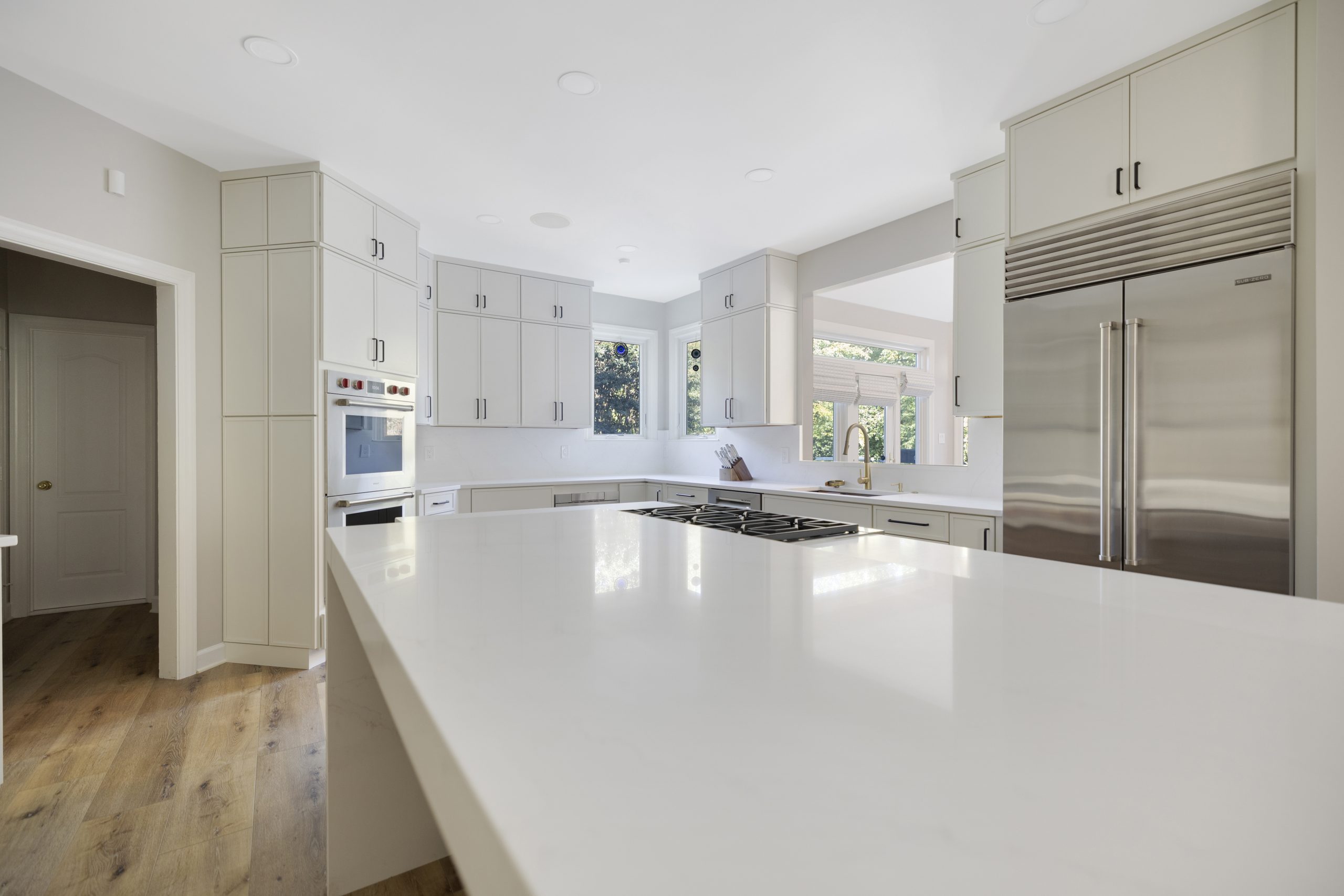
Quick Comparison: 7 Flooring Types
Here is how the most popular flooring materials stack up in the Northern Virginia market. Prices are installed, per square foot.
| Material | Cost (installed, per sq ft) | Durability | Moisture | Best for |
|---|---|---|---|---|
| Hardwood | $8 to $25 | Excellent (refinishable) | Poor | Living areas, bedrooms |
| Luxury Vinyl Plank | $4 to $12 | Very good | Excellent | Kitchens, basements, whole home |
| Laminate | $3 to $10 | Good | Fair | Budget living areas |
| Tile | $7 to $20 | Excellent | Excellent | Bathrooms, kitchens, entries |
| Carpet | $3 to $11 | Fair | Poor | Bedrooms, cozy spaces |
| Cork | $5 to $14 | Good | Fair | Comfort, eco-friendly rooms |
| Concrete | $3 to $15 | Excellent | Very good | Modern, industrial, basements |
Hardwood: Timeless Elegance
Hardwood is the classic, most sought after flooring for its warmth, beauty, and lasting value. It suits almost any style and can be refinished multiple times over decades, which is why it remains a favorite in Northern Virginia homes. Solid hardwood costs $8 to $25 per square foot installed, and it adds strong resale appeal.
- Pros: Timeless look, refinishable, long lasting, excellent resale value, adds warmth to any room.
- Cons: Sensitive to moisture and scratches, higher cost, not ideal for bathrooms or below grade basements.
- Best for: Living rooms, dining rooms, hallways, and bedrooms in above grade spaces.
Luxury Vinyl Plank: The Modern All-Rounder
Luxury vinyl plank, or LVP, has become the most popular flooring for busy households, and for good reason. It convincingly mimics hardwood, is fully waterproof, feels warm underfoot, and stands up to kids, pets, and heavy traffic. At $4 to $12 per square foot installed, it delivers the wood look at a lower price and with far less maintenance.
- Pros: Waterproof, durable, comfortable, affordable, easy to clean, realistic wood and stone looks.
- Cons: Cannot be refinished, lower resale prestige than real hardwood, quality varies by brand.
- Best for: Kitchens, basements, mudrooms, and whole-home installs in busy households.
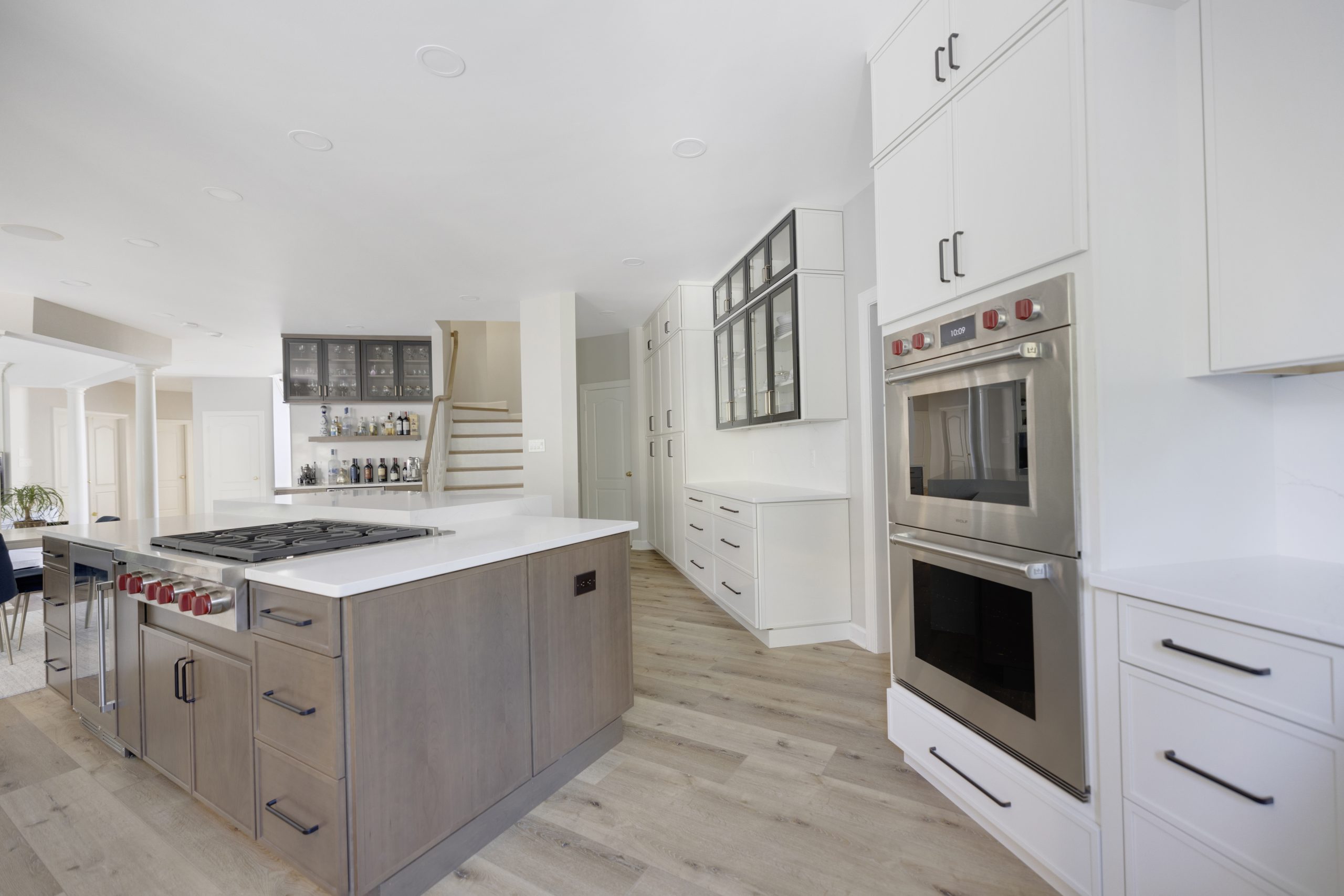
Laminate: Durability Meets Affordability
Laminate offers a wood or stone look at one of the lowest price points, making it a favorite for budget conscious remodels. It is scratch resistant and easy to install, though it is less water resistant than LVP and cannot be refinished. Laminate runs $3 to $10 per square foot installed.
- Pros: Very affordable, scratch and fade resistant, easy to install, wide range of looks.
- Cons: Not fully waterproof, cannot be refinished, can feel hollow or sound loud underfoot.
- Best for: Living areas and bedrooms on a budget, in low moisture spaces.
Tile: Versatile and Nearly Indestructible
Porcelain and ceramic tile are the most durable and water resistant flooring you can buy, which makes them the top choice for bathrooms, kitchens, and entryways. Tile handles moisture, spills, and heavy traffic with ease and comes in endless styles, including convincing wood and stone looks. Installed cost for ceramic tile flooring in Northern Virginia runs $7 to $20 per square foot, with ceramic tile installation itself accounting for roughly half of that in this labor market.
- Pros: Extremely durable, fully waterproof, low maintenance, huge design variety, works with radiant heat.
- Cons: Hard and cold underfoot, grout needs occasional sealing, professional installation recommended.
- Best for: Bathrooms, kitchens, entryways, laundry rooms, and any high moisture area.
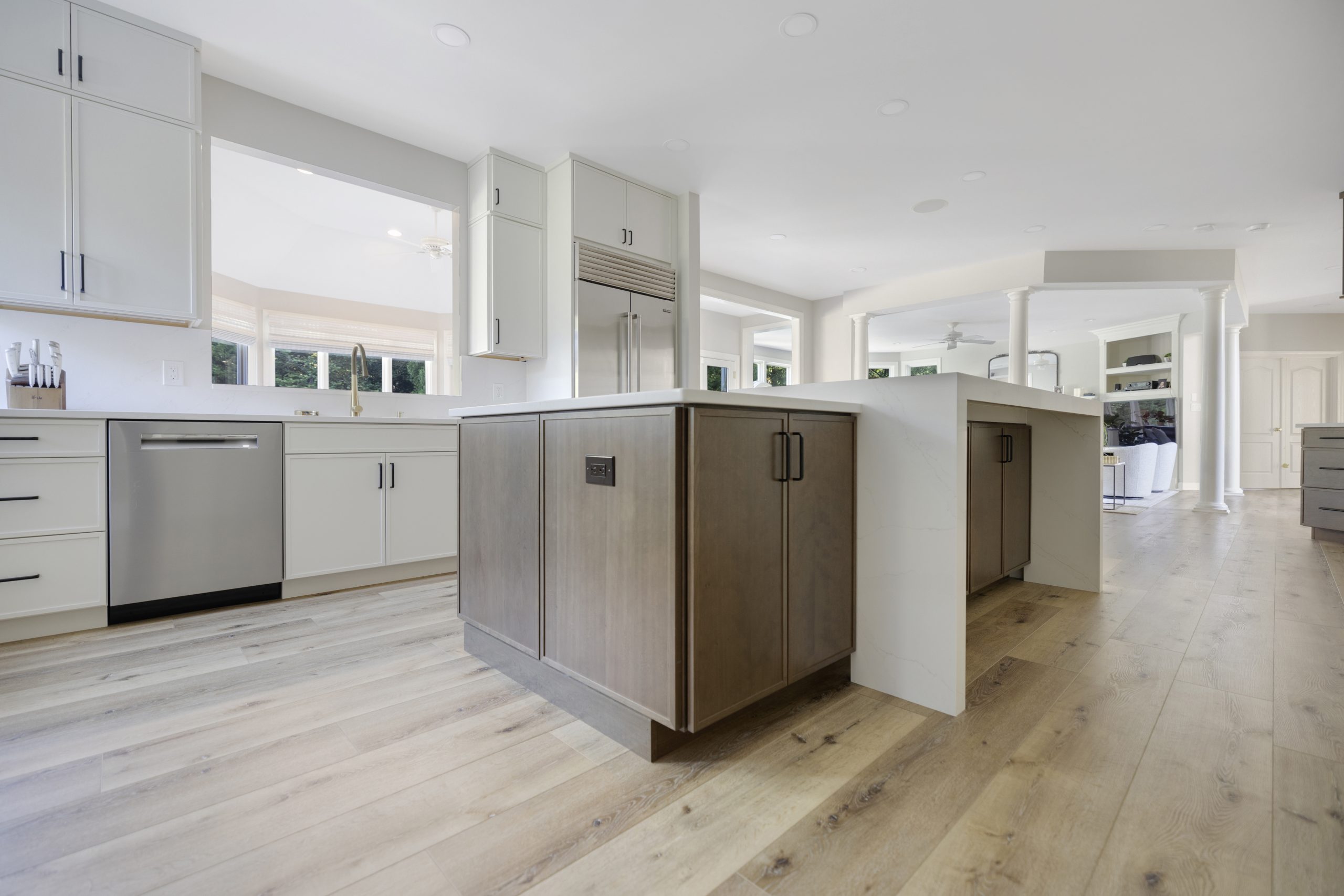
Carpet: Cozy and Quiet
Carpet remains the go-to for warmth, comfort, and sound absorption, especially in bedrooms and family spaces. It is soft underfoot, helps insulate a room, and is the most affordable option to install. Carpeting in Northern Virginia costs $3 to $11 per square foot installed depending on the fiber and pile.
- Pros: Warm and soft, quiet and sound absorbing, affordable, comfortable and safe for kids.
- Cons: Stains and wears faster, traps allergens, not suited to moisture or high traffic entries.
- Best for: Bedrooms, cozy family rooms, and finished basement lounges.
Cork: Eco-Friendly and Comfortable
Cork is a sustainable, comfortable flooring made from renewable harvested bark, prized for its soft, cushioned feel and natural sound and thermal insulation. It is warm underfoot, quiet, and naturally resistant to mold and mildew. Cork runs $5 to $14 per square foot installed and appeals to eco-minded homeowners.
- Pros: Eco-friendly and renewable, soft and comfortable, warm, quiet, naturally antimicrobial.
- Cons: Can dent and scratch, needs sealing, sensitive to standing water and strong sunlight.
- Best for: Kitchens where you stand a lot, playrooms, offices, and eco-conscious spaces.
Concrete: Industrial Chic
Polished or stained concrete has moved from garages into stylish living spaces, offering a sleek, modern, and extremely durable floor. It can be tinted, stained, or scored for a custom look and pairs perfectly with contemporary design. Concrete runs $3 to $15 per square foot depending on the finish, and it is a natural fit for basements.
- Pros: Extremely durable, low maintenance, custom colors and finishes, works with radiant heat, great for basements.
- Cons: Hard and cold underfoot, can crack over time, needs sealing, not cozy without rugs.
- Best for: Modern living spaces, basements, and industrial style homes.
How Do You Choose the Right Flooring for Each Room?
The smartest approach is to match the flooring to each room’s demands rather than using one material everywhere. Different rooms face different challenges, so choose accordingly:
- Kitchen: Luxury vinyl plank or tile handle spills and traffic best. Both are waterproof and easy to clean.
- Bathroom: Tile is the gold standard for its waterproofing and durability, with LVP as a warmer, softer alternative.
- Basement: Choose moisture resistant LVP, tile, or sealed concrete, since basements are prone to dampness.
- Bedrooms: Carpet for warmth and comfort, or hardwood for a timeless, allergy friendly look.
- Living areas: Hardwood for value and beauty, or LVP for durability in busy households.
Matching flooring to each room’s needs gives you the best performance and value throughout the home, and it prevents the common and costly mistake of installing a beautiful material in a room it simply cannot handle. For a deeper look at the top three options, see our guide to flooring choices for Northern Virginia: hardwood vs tile vs LVP.
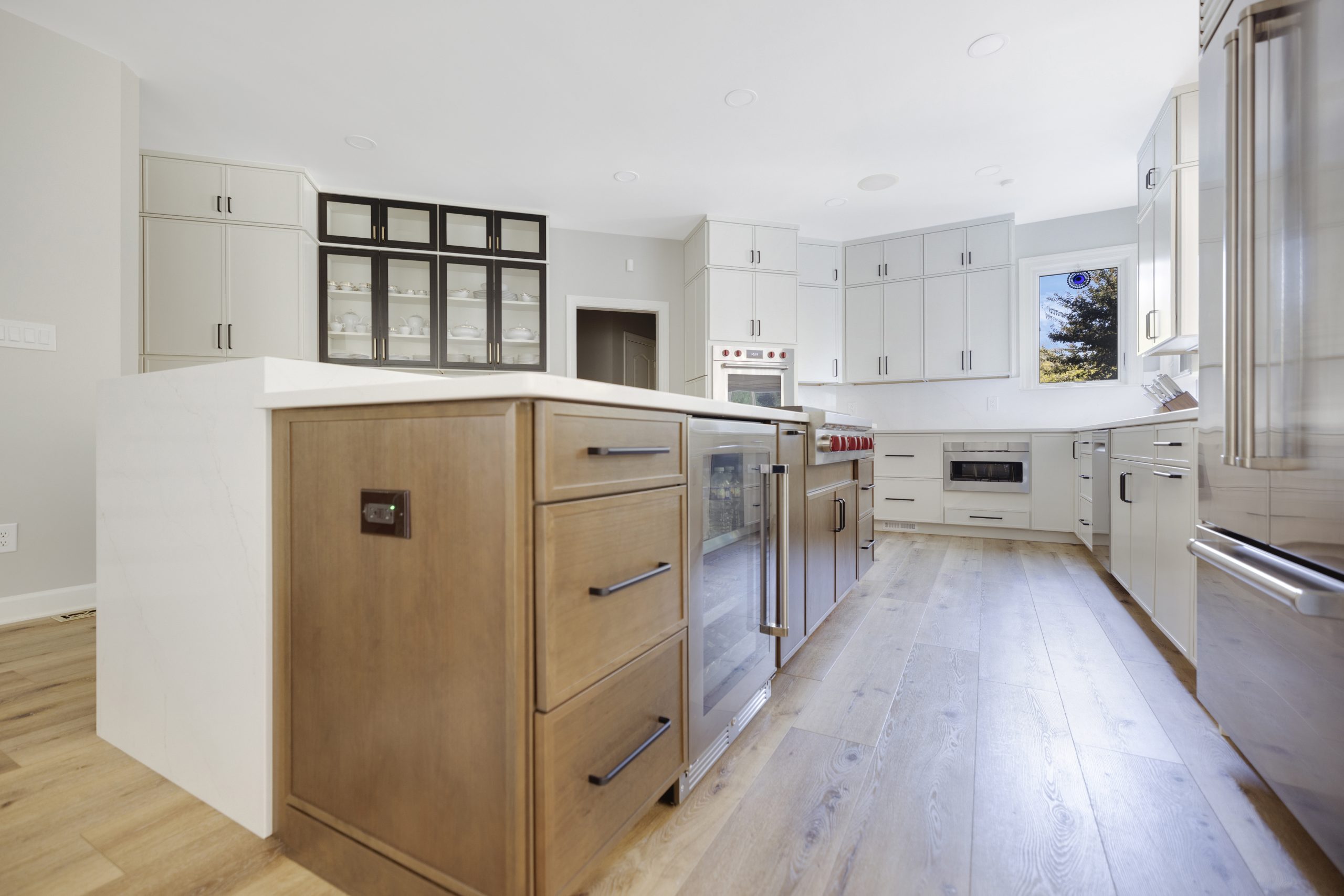
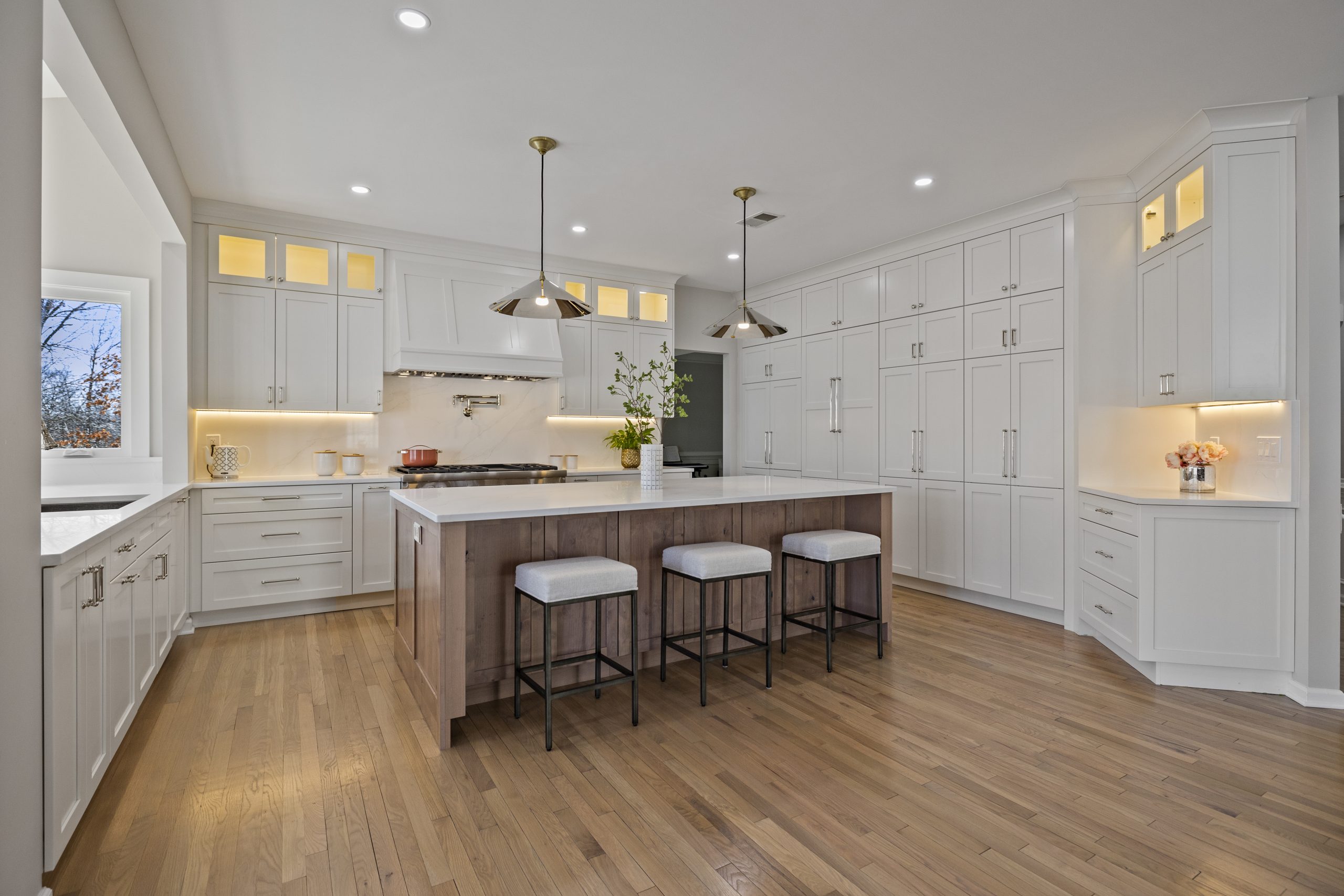
Kitchen: Wood Look That Survives the Sink
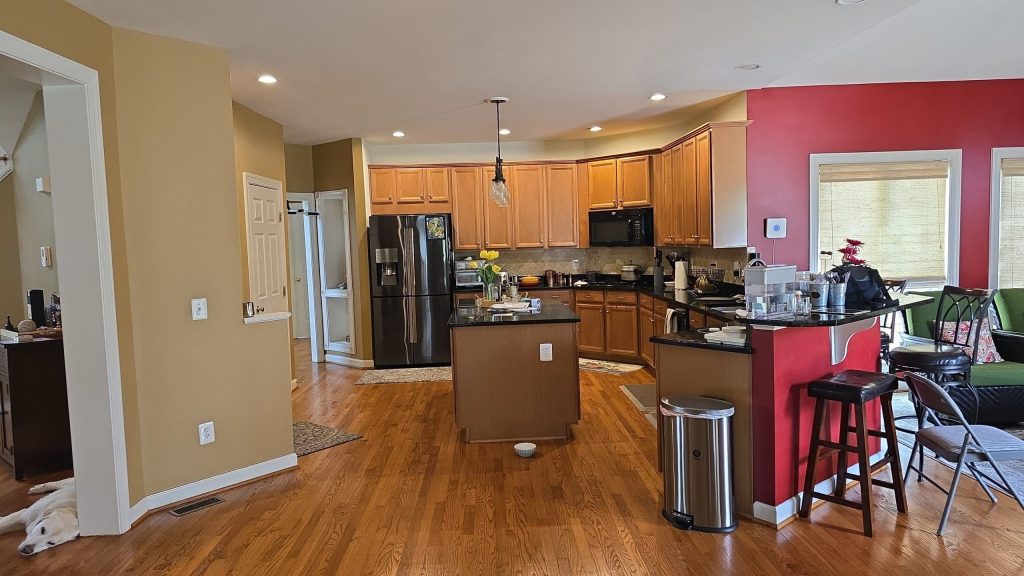
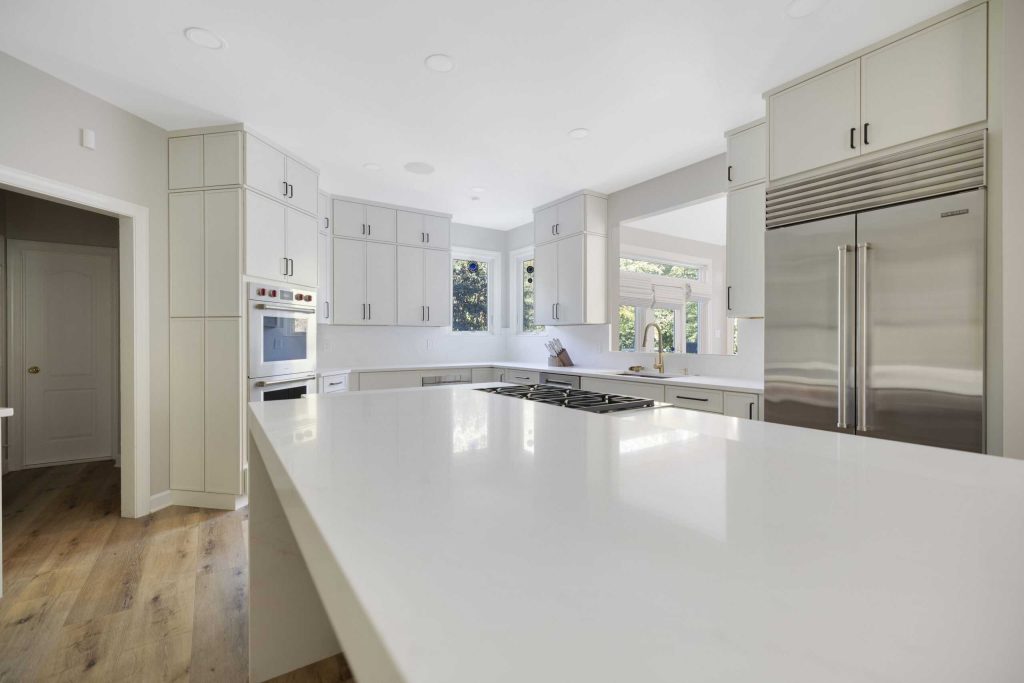
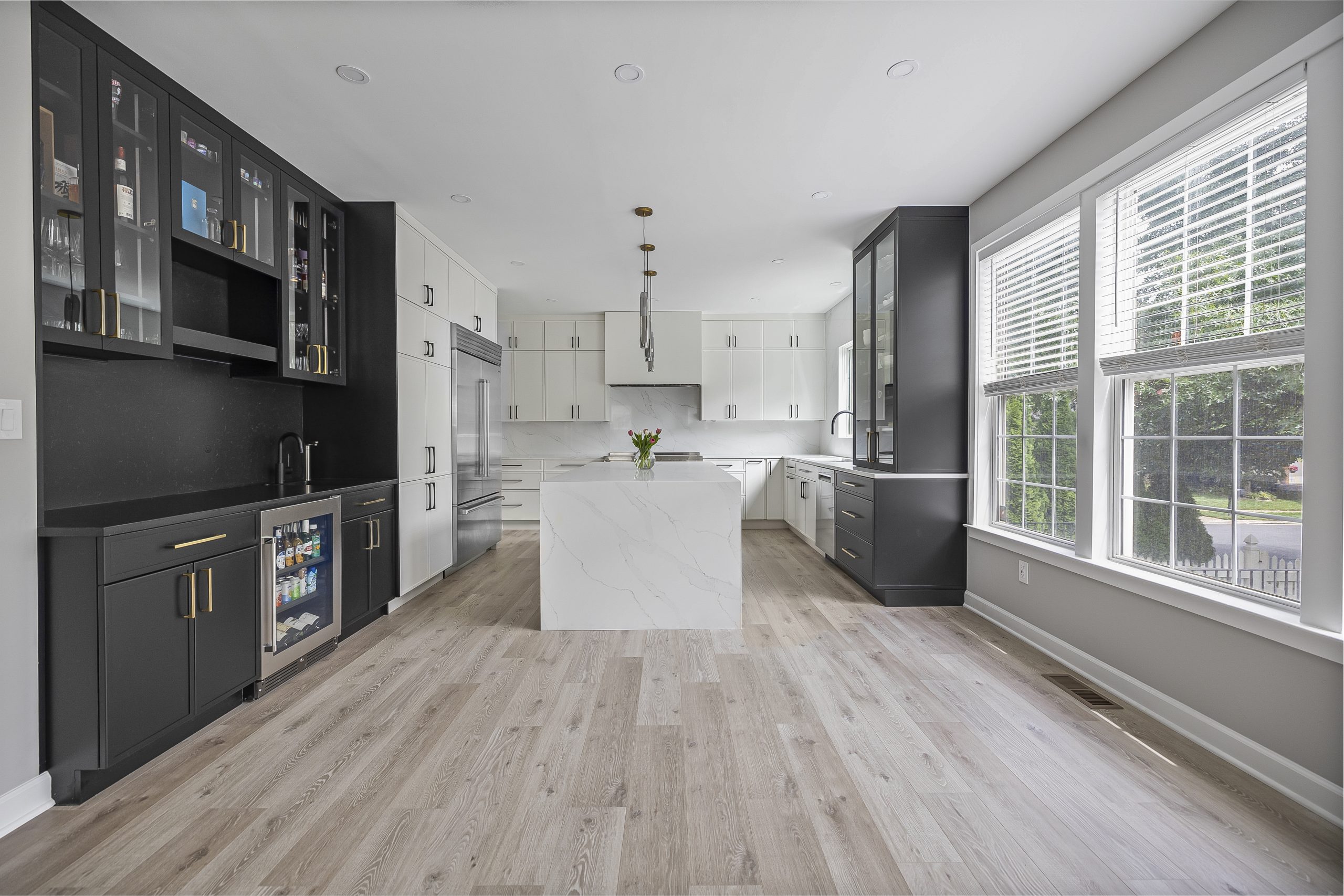
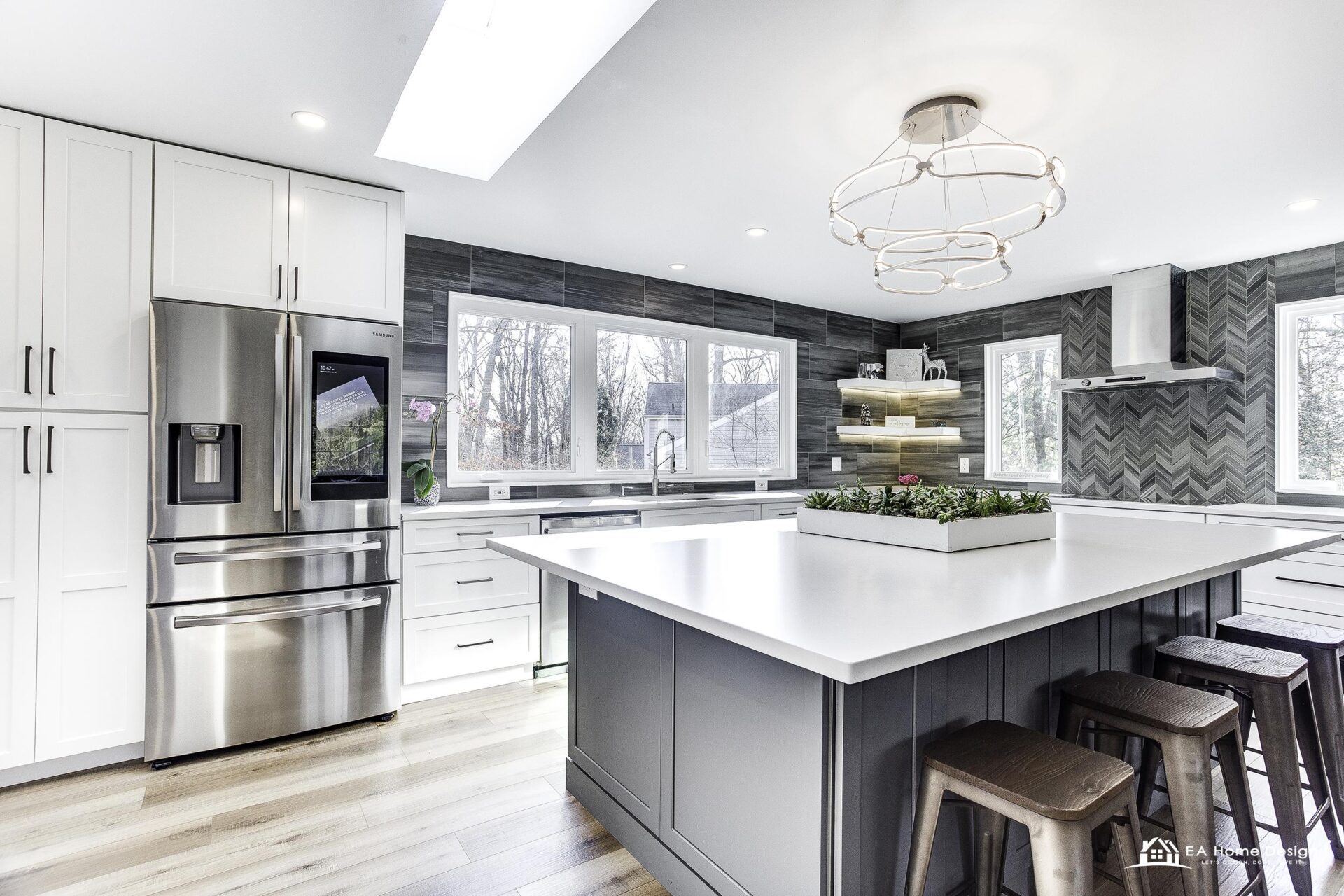
The Northern Virginia kitchen of 2026 wants a wood floor that runs through from the family room, and the honest choice depends on how the kitchen is used. Engineered white oak in a matte finish gives the real thing with a stable core, and a good finish shrugs off the daily wipe down; a rigid core luxury vinyl plank in a 7 to 9 inch width gives the same look, is waterproof at the dishwasher and the sink, and costs a third less installed. Large format porcelain is the choice for a kitchen that cooks hard and hosts often. Match the floor to the counter: a warm oak under white quartz, a pale plank under a dark stone. Our countertop guide pairs the two, and the kitchens on our kitchen remodeling page show the combinations that hold up.
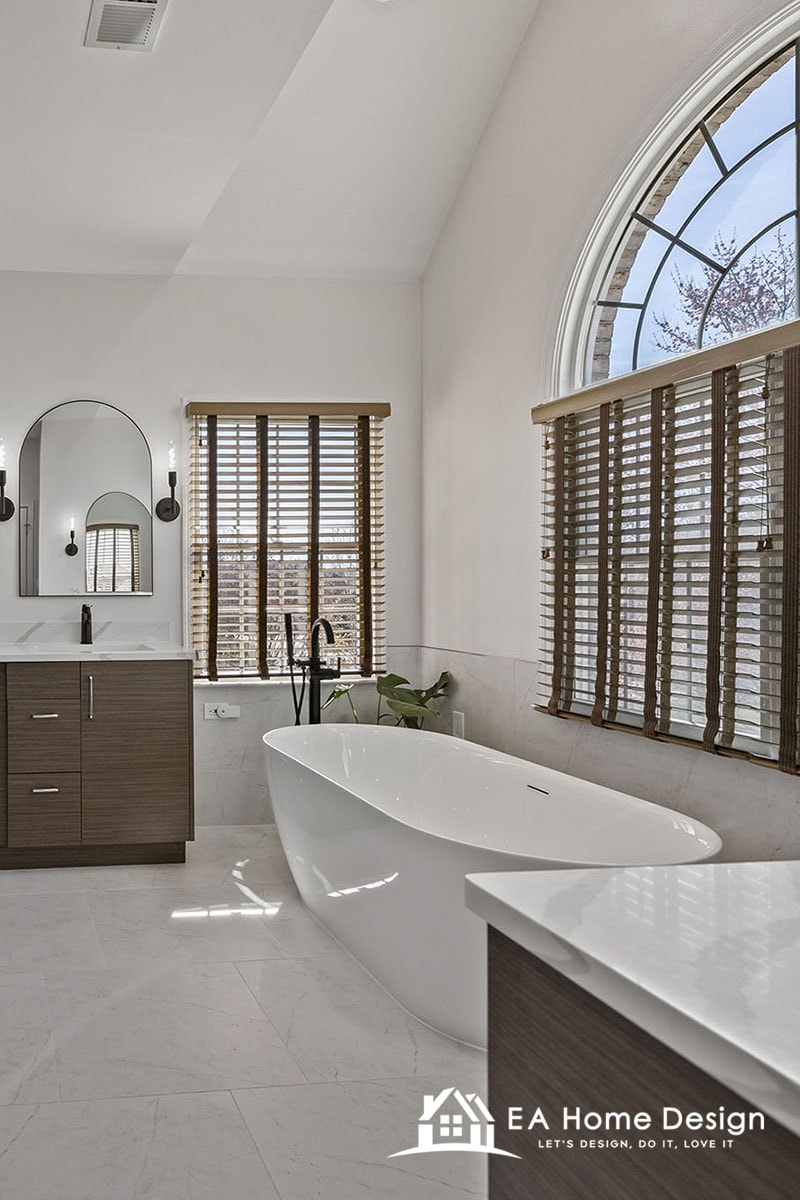
Bathroom: Tile First, With Two Exceptions
Porcelain tile wins the bathroom on water, durability and radiant heat, and the 2026 version is large format, 24 by 24 or 24 by 48 inches, in a honed stone look with grout lines the eye skips over. The two exceptions: a powder room, which sees no shower and can take a real wood or a patterned encaustic look tile for character, and a primary bath where the owner wants warmth underfoot without heat, where a stone look luxury vinyl plank on a waterproof core is a quieter, softer floor than tile at half the price. Keep the shower floor in a small mosaic for grip. A timeless bathroom is built on this floor, and our bathroom remodeling projects show the tile that lasts.
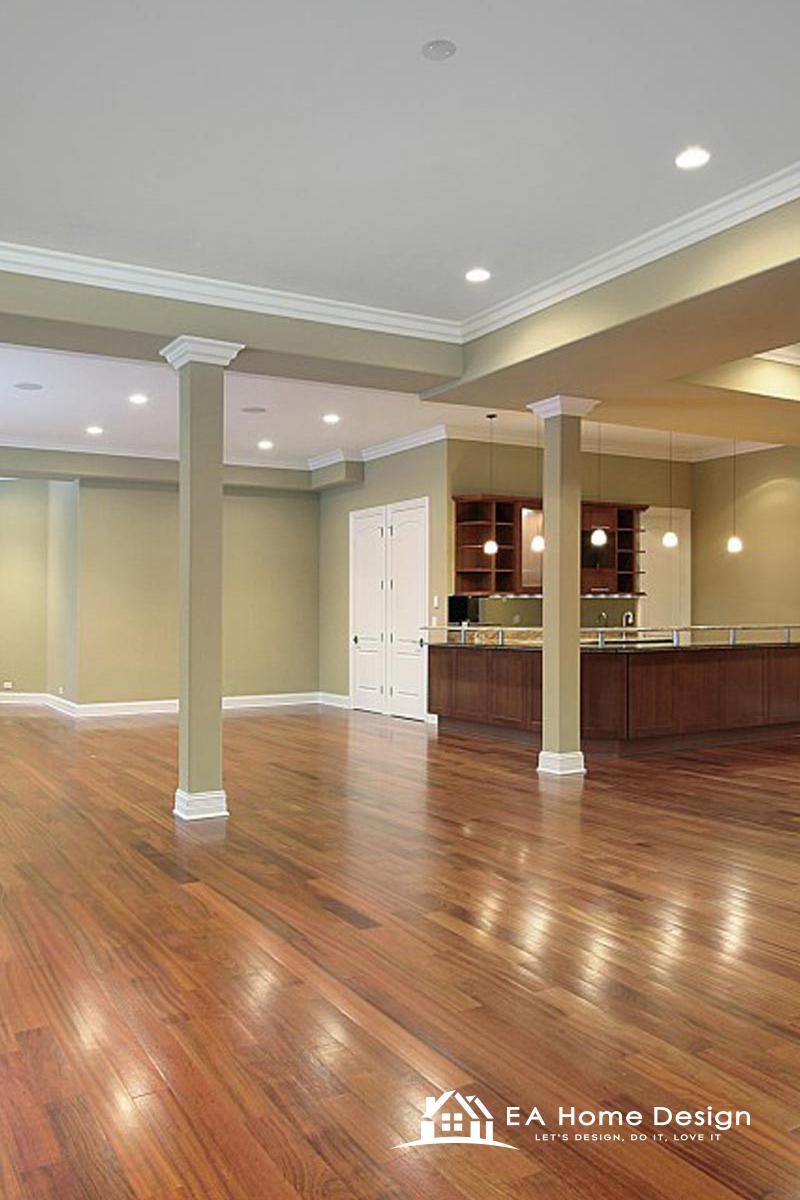
Basement: Waterproof or Nothing
Everything below grade in Fairfax and Loudoun County sits on a slab that breathes moisture, so the basement floor is chosen by water first and look second. Luxury vinyl plank with a rigid core is the default: waterproof, warm enough, and laid straight over a dry, flat slab. Engineered wood goes in a basement only when the slab has tested dry and a vapor barrier goes under it, and solid hardwood never does. Tile and sealed concrete suit a gym, a laundry or a workshop zone; carpet tiles suit a playroom or a bedroom where warmth matters and a wet tile can be lifted and replaced. Our finished basement ideas on a budget guide prices the floor inside a finish, and our basement remodeling page shows the finished rooms.
Bedrooms: Warm Underfoot, Quiet Overhead
The best flooring for bedrooms is the one that is warm at six in the morning and quiet for the room below. Carpet still wins on both counts and costs the least, and a low pile wool or a solution dyed nylon in a warm neutral is the version that wears well. Hardwood or engineered wood with a large rug is the choice for allergy sufferers and for resale, and it is what most Northern Virginia primary bedrooms are getting in 2026 so the floor runs from the hallway without a transition. Luxury vinyl plank with an underlayment is the quiet, warm, budget version of the same look. Skip tile and concrete here unless the bedroom has radiant heat.
Living and Dining Rooms: Where Hardwood Earns Its Price
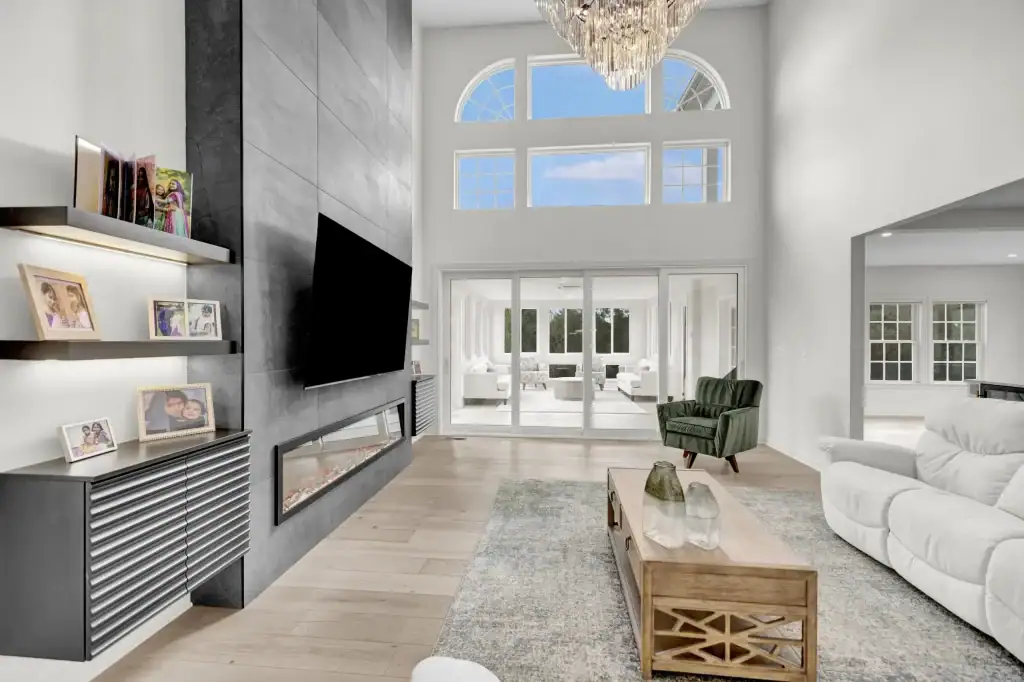
These are the rooms where real wood pays back at resale and in daily use, and where the extra cost over vinyl is smallest as a share of the project. Solid or engineered white oak, 5 to 8 inches wide, in a matte natural or lightly whitened finish is the 2026 Northern Virginia floor; walnut and hickory for owners who want more figure; herringbone or chevron in a dining room or an entry for a room that wants to be noticed. Run one floor through the connected living, dining and kitchen spaces and the house reads larger. Our natural elements guide covers what the species and finishes do to a room.
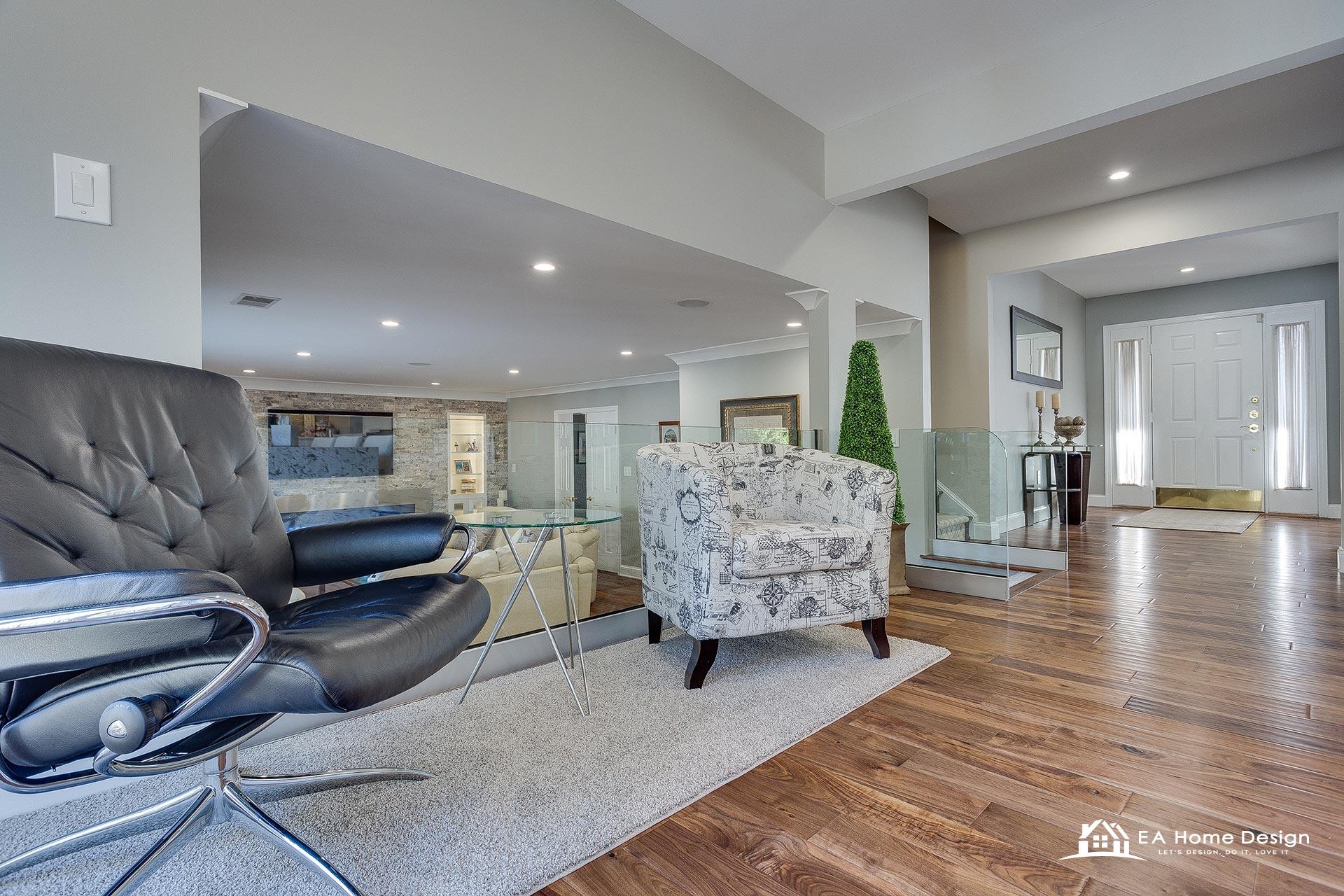
Entry, Mudroom and Laundry: The Floors That Take the Weather
Salt, snowmelt, wet dogs and dropped bags end up here, so these floors are chosen for abuse. Porcelain tile in a slate or stone look, or real slate for an older house, is the entry floor that lasts; luxury vinyl plank is the mudroom and laundry floor that costs less and is softer to stand on at the washer. Put a drain in a true mudroom if the plumbing allows. Our small hall ideas show what an entry can carry in a few square feet.
Stairs and Hallways
Stairs take more wear per square foot than any floor in the house. Hardwood treads with a painted riser are the durable, resale friendly answer; a carpet runner over them adds quiet and grip for children and older adults; fully carpeted stairs are the budget and the safety choice and wear out first. Hallways follow the adjoining rooms so there is no transition strip at every door.
Home Office and Gym
An office wants a quiet, warm floor that a chair can roll on: engineered wood or luxury vinyl plank with a chair mat, or cork, which is the softest and quietest of the hard floors. A gym wants rubber tiles over whatever is there, or sealed concrete in a basement, and nothing that a dropped weight will chip.
Luxury Flooring in Northern Virginia: What the High End Looks Like in 2026
Luxury in flooring no longer means the shiniest surface. In the Fairfax and Loudoun County houses we remodel it means width, quiet finishes, real material where the hand and the eye land, and pattern used once. These are the floors going into the upper end of the market now, with what each costs installed.
| Luxury option | What it is | Installed cost, Northern Virginia 2026 | Where it belongs |
|---|---|---|---|
| Wide plank white oak | 7 to 9 inch planks, rift and quartered or live sawn, matte natural or lightly whitened finish | $14 to $25 per square foot | Main living areas, primary bedrooms, through the kitchen |
| Herringbone or chevron | White oak or walnut laid in a pattern, bordered or running wall to wall | $18 to $30 per square foot | An entry, a dining room, one feature room |
| Walnut or hickory plank | Darker figure and more movement than oak, in the same widths | $12 to $25 per square foot | A study, a dining room, a house with traditional trim |
| Large format porcelain | 24 by 48 or 48 by 48 inch tile in a honed stone look, rectified edges, tight grout | $12 to $20 per square foot | Kitchens that cook hard, primary baths, mudrooms |
| Natural stone | Limestone, marble or slate in large tiles or a running bond | $15 to $40 per square foot | An entry, a primary bath, a powder room |
| Premium luxury vinyl plank | Rigid core, 20 mil or thicker wear layer, 7 to 9 inch planks, embossed in register with the grain | $8 to $12 per square foot | Basements, whole home installs, rentals and busy family homes |
| Radiant heat under tile or stone | Electric mats or hydronic tubing under the floor | $10 to $20 per square foot added | Bathrooms, mudrooms, a kitchen on a slab |
The luxury vinyl plank row is the one that surprises people. At the top of its range the material is a different product from the builder grade planks of ten years ago: thicker, quieter, waterproof, and embossed so the texture follows the printed grain. It is the right high end floor for a basement and a sensible one for a whole house with children and dogs. Where it is not the right choice is a formal living room or a primary bedroom in a house priced for real wood, where buyers still look down and know the difference.
Flooring and the Northern Virginia Climate
Northern Virginia’s humid summers and cold winters put real demands on flooring, so climate matters in your choice. Solid hardwood expands and contracts with humidity, which can cause gaps or cupping if not properly acclimated and controlled, so many homeowners choose engineered wood or LVP for better stability. In moisture prone basements, waterproof LVP, tile, or sealed concrete are the safe choices, since dampness quickly ruins hardwood and carpet. Radiant floor heating, increasingly popular for our winters, pairs best with tile and concrete, which conduct heat well. Choosing flooring with the local climate in mind prevents costly problems and keeps your floors looking great for years, which is why local experience is so valuable in a remodel. A contractor who knows Northern Virginia will steer you toward materials that hold up here rather than ones that look good in a showroom but fail in our conditions.
Engineered Wood vs Solid Hardwood
If you love the look of hardwood, it helps to understand the two types before you choose. Solid hardwood is milled from a single piece of wood and can be sanded and refinished many times over its life, which is why it lasts for generations. Engineered wood has a real wood veneer over a stable plywood core, which makes it far more resistant to humidity and temperature swings. For engineered wood flooring in Northern Virginia’s humid climate, the engineered construction is often the smarter choice, since it is less likely to gap, cup, or warp, and some versions can go over concrete or in below grade spaces where solid hardwood cannot. Solid hardwood still wins on longevity and refinishing potential. If you want real wood in a kitchen, basement, or over radiant heat, engineered wood is usually the better performer, while solid hardwood shines in traditional living areas and bedrooms.
Flooring for Homes With Kids and Pets
Busy households with children and pets need flooring that can take a beating without showing it, so durability and easy cleaning lead the priorities. Luxury vinyl plank is the top pick for families because it is waterproof, scratch resistant, and simple to wipe clean, and it handles spills, muddy paws, and dropped toys with ease. Tile is another excellent choice for its near indestructibility, especially in entries and kitchens. Both stand up to accidents far better than hardwood or carpet. If you prefer wood, choose a tough finish and expect some wear over time, which many families embrace as character. Avoid delicate materials and light, stain prone carpet in high traffic family zones. Choosing pet and kid friendly flooring from the start saves you the frustration and expense of watching a beautiful new floor wear out far too soon under everyday family life.
What a Remodeler Checks Before the Floor Goes In
Most floors that fail in Northern Virginia did not fail as a material. They failed because of what was under them or around them. These are the checks we make on every flooring job in Fairfax and Loudoun County before a plank or a tile is opened.
- Moisture in the slab. A basement or a slab on grade main level is tested with a calcium chloride or a relative humidity probe before anything goes down. A reading over the manufacturer’s limit means a vapor barrier, a sealer or a different floor, not a hope.
- The subfloor. Squeaks, soft spots and a plywood subfloor under three quarters of an inch are fixed first. Tile wants a stiff floor; a bouncy one cracks grout within a year.
- Flatness. Wide planks and large format tile show every hump and dip. A slab or a subfloor is leveled to within an eighth of an inch over ten feet, with self leveling compound where it is out.
- Acclimation. Solid and engineered wood sit in the house, at living temperature and humidity, for several days before installation. In a Northern Virginia August that step is the difference between a flat floor and a cupped one.
- Transitions and heights. A new floor changes the finished height at every doorway, stair nosing and appliance. The plan sets where each transition falls and how the dishwasher comes out later.
- Radiant heat. If heat is going in, it goes in now, and the floor above it is one rated for it: tile, stone, most engineered wood and some vinyl planks, never solid hardwood over three inches wide.
- Sound. In a townhouse or a condo, the association usually sets a sound rating for a hard floor; the underlayment is chosen to meet it before the floor is chosen for looks.
Tear out and disposal of the old floor runs $1 to $3 per square foot and subfloor leveling $2 to $5 where it is needed; both belong in the estimate, not in a change order. Our carpet and flooring team runs these checks as part of every quote.
Caring for Your Floors
The right care keeps any floor looking new and protects your investment, and each material has its own needs. Sweep or vacuum regularly to keep grit from scratching the surface, whatever the material. Wipe spills promptly, especially on hardwood, laminate, and cork, which are sensitive to moisture. Use the cleaner recommended for your specific floor, since harsh or overly wet cleaning can damage finishes and seals. Add felt pads under furniture legs and rugs in high traffic areas to prevent scratches and wear. Reseal natural materials like tile grout, cork, and concrete on the schedule your installer recommends. A little routine maintenance goes a long way, and it is the difference between floors that look tired and worn in just a few years and floors that stay beautiful and functional for decades.
How Much Does New Flooring Cost?
Flooring costs vary widely by material, from around $3 per square foot for basic carpet or laminate to $25 or more for premium hardwood, all installed. For a typical room, most homeowners spend a few hundred to a few thousand dollars, while whole-home flooring can run five figures depending on the material and square footage. Beyond the material, installation complexity, subfloor prep, and removing old flooring affect the final price. The most cost effective approach is often to use a premium material like hardwood in the main living areas where it adds the most value and gets the most attention, and a durable, budget friendly option like LVP or carpet in bedrooms, basements, and back-of-house spaces. For how flooring fits into a larger project, see our kitchen remodel cost guide.
What Flooring Costs by Room and by House in Northern Virginia (2026)
These are the installed ranges from the comparison table applied to the areas Northern Virginia homeowners most often floor at once. Tear out, subfloor repair and stairs sit on top.
| Area | Luxury vinyl plank, $4 to $12 | Engineered wood, $7 to $20 | Solid hardwood, $8 to $25 | Porcelain tile, $7 to $20 |
|---|---|---|---|---|
| Bedroom, 200 square feet | $800 to $2,400 | $1,400 to $4,000 | $1,600 to $5,000 | $1,400 to $4,000 |
| Kitchen, 300 square feet | $1,200 to $3,600 | $2,100 to $6,000 | $2,400 to $7,500 | $2,100 to $6,000 |
| Primary bathroom, 120 square feet | $480 to $1,440 | Not recommended | Not recommended | $840 to $2,400 |
| Finished basement, 800 square feet | $3,200 to $9,600 | $5,600 to $16,000 over a tested slab | Not recommended | $5,600 to $16,000 |
| Main level, 1,500 square feet | $6,000 to $18,000 | $10,500 to $30,000 | $12,000 to $37,500 | $10,500 to $30,000 |
| Whole house, 2,500 square feet | $10,000 to $30,000 | $17,500 to $50,000 | $20,000 to $62,500 | $17,500 to $50,000 |
A whole house in luxury vinyl plank and a main level in engineered white oak land in the same place, which is why so many Northern Virginia remodels pair them: real wood on the main level, vinyl plank below grade and in the bedrooms. For how the floor fits inside a larger project, our basement cost guide and bathroom cost guide carry the floor as a line item.
Flooring Trends for 2026
Flooring styles evolve, and a few clear trends define 2026 in Northern Virginia homes. Warm, natural wood tones are replacing the cool grays that dominated the last decade, with honey, oak, and warm brown finishes leading the way. Wide planks continue to grow in popularity for a clean, spacious look. Realistic luxury vinyl and porcelain that convincingly mimic wood and natural stone are better than ever and increasingly hard to distinguish from the real thing. Matte and low-sheen finishes are favored over high gloss, since they hide scratches and feel more natural. Larger format tiles with minimal grout lines create a seamless, modern look in kitchens and baths. The overall direction is warm, natural, and low maintenance, with materials that look high end while standing up to real life.
Installation: DIY or Hire a Pro?
Some flooring is genuinely DIY friendly, while other types are best left to professionals, and choosing right protects your investment. Floating floors like many LVP and laminate products click together and can be a reasonable DIY project for a confident homeowner. Carpet tiles and some cork are also approachable. On the other hand, hardwood, tile, and poured or polished concrete really call for a professional, since proper subfloor prep, moisture barriers, precise cuts, and finishing make a huge difference in how the floor looks and lasts. A poor tile job with uneven grout or a hardwood floor that was not acclimated can fail quickly and cost more to fix than it saved. When in doubt, especially for expensive materials or large areas, professional installation protects your investment and delivers a result that looks right and lasts.
Frequently Asked Questions
What is the best flooring for a whole house? Luxury vinyl plank is the most popular whole-home choice because it is waterproof, durable, comfortable, and affordable, and it works in nearly every room. Many homeowners pair it with tile in bathrooms and carpet in bedrooms.
What is the most durable flooring? Tile and concrete are the most durable, followed by luxury vinyl plank. Tile and concrete resist water, scratches, and heavy traffic, making them ideal for high use and high moisture areas.
What flooring adds the most home value? Hardwood adds the most resale value in most markets, since buyers consistently prefer it. Quality luxury vinyl plank is a strong, cost effective alternative that also appeals to buyers.
What is the best flooring for a basement? Waterproof luxury vinyl plank, tile, or sealed concrete are best for basements because they resist the moisture common below grade. Avoid solid hardwood and wall-to-wall carpet in damp basements.
Is luxury vinyl plank better than laminate? For most homes, yes. LVP is fully waterproof and more durable, while laminate is only water resistant and can swell if water seeps in. Laminate can be slightly cheaper, but LVP is the better long term value in most rooms.
Can I put the same flooring throughout my house? Yes, and luxury vinyl plank is the most common whole-home choice because it works in nearly every room. Many homeowners still switch to tile in bathrooms and add carpet in bedrooms for comfort.
What flooring works with radiant heat? Tile and concrete are the best partners for radiant floor heating because they conduct and hold heat efficiently. Some engineered wood and LVP products are also rated for radiant heat, so always check the manufacturer’s specifications.
Related guides: small hall and entryway design ideas. Explore our flooring services or browse our project gallery.
What is the best flooring for bedrooms? Carpet for warmth and quiet at the lowest cost, or hardwood and engineered wood with a rug for allergies and resale, which is what most Northern Virginia primary bedrooms are getting in 2026 so the floor runs from the hallway without a transition. Luxury vinyl plank over an underlayment is the warm, quiet budget version.
Is luxury vinyl plank a good choice for a Northern Virginia basement? It is the default. A rigid core plank is waterproof, warm enough and lays straight over a dry, flat slab. Test the slab for moisture first, level it where it is out, and keep solid hardwood out of the basement altogether.
How much does it cost to put new flooring in a 2,000 square foot house? In Northern Virginia in 2026, about $8,000 to $24,000 in luxury vinyl plank, $14,000 to $40,000 in engineered wood and $16,000 to $50,000 in solid hardwood, installed, before tear out at $1 to $3 per square foot and any subfloor work. Most houses mix materials by room, which lands between those figures.
Conclusion: The Right Floor for Every Room
There is no single best flooring for a whole house, only the best material for each room, budget, and lifestyle. Hardwood brings timeless value to living spaces, luxury vinyl plank handles busy and moisture prone areas with ease, tile rules bathrooms and kitchens, and carpet keeps bedrooms warm and cozy. Match the material to the room’s demands, your household, your budget, and the Northern Virginia climate, and you will get floors that look great and perform beautifully for many years to come. If you are planning a flooring or full remodel in Fairfax or Loudoun County, EA Home Design can help you choose the right materials and show you the finished look in a full 3D rendering before any work begins. Explore our remodeling services in Virginia to get started.