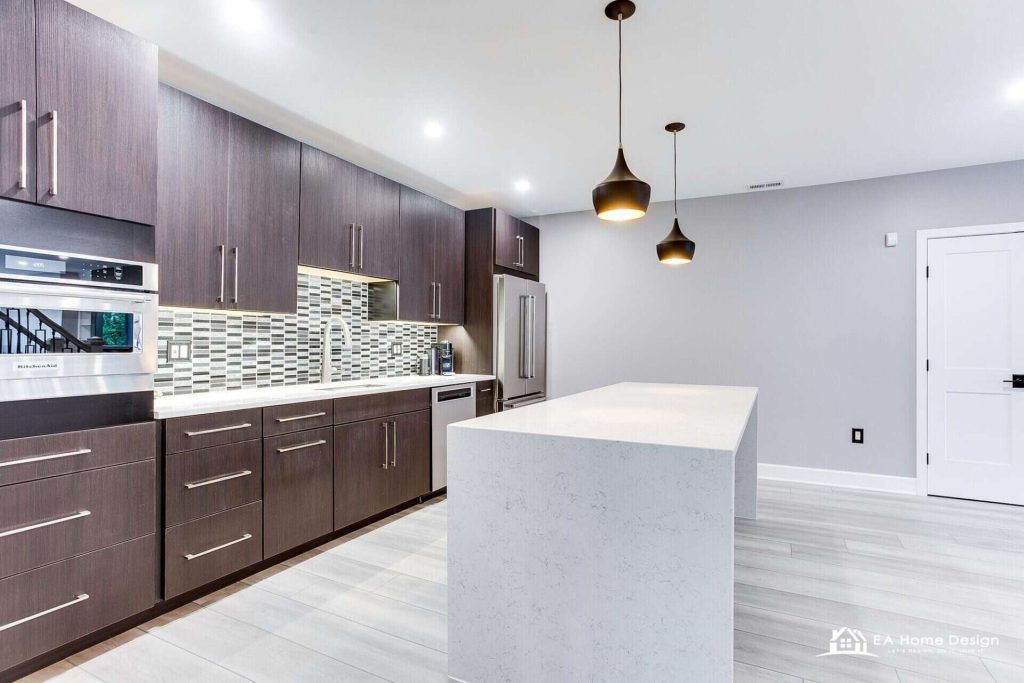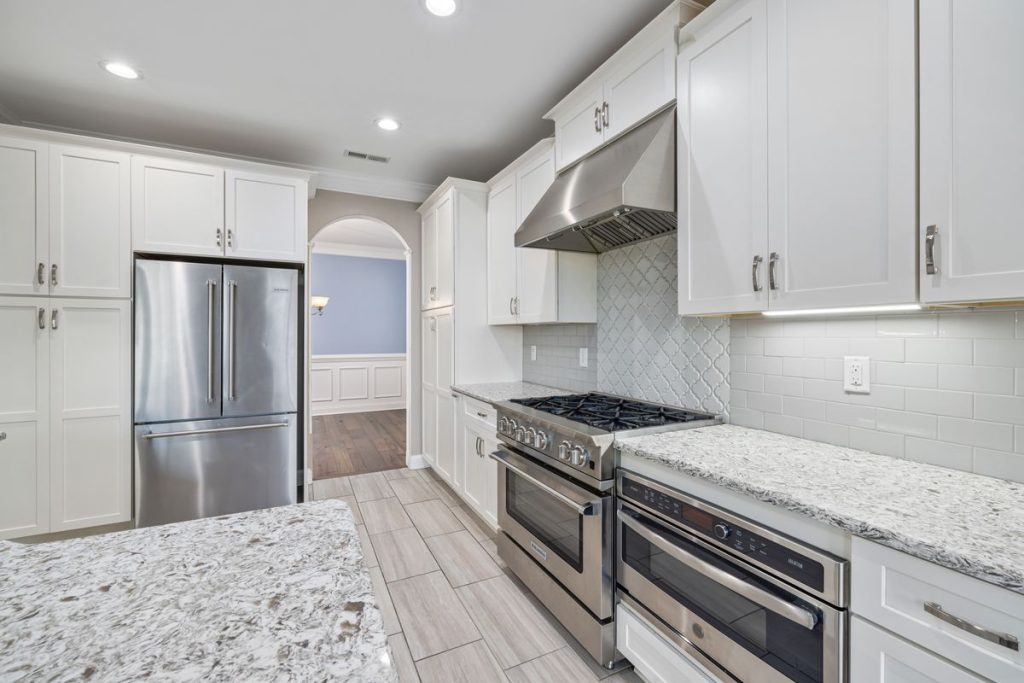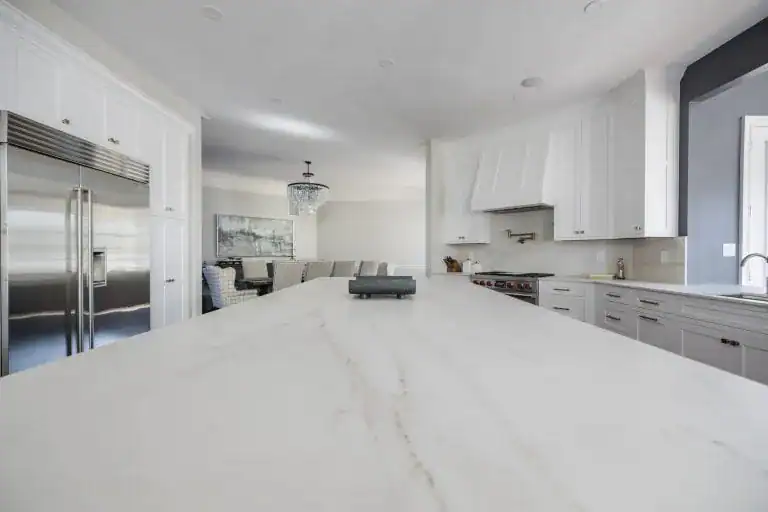

The best kitchen countertops for most Northern Virginia homes are quartz and granite. Quartz wins on low maintenance and consistent looks, while granite offers natural, one of a kind stone at a similar price. If budget is tight, laminate and butcher block deliver style for less. If you want true luxury, marble and porcelain slab raise the bar. This guide compares the 10 best countertop materials by cost, durability, and upkeep, so you can choose the right surface for your Fairfax or Loudoun County kitchen.
Your countertop is the hardest working surface in your kitchen and one of the biggest design decisions you will make. It sets the tone for the whole room and, on average, takes up a meaningful slice of any kitchen remodel budget in Northern Virginia. Below, we break down each material so you can match the right one to your lifestyle, your kitchen, and your budget.
Quick Comparison: 10 Best Kitchen Countertops
Here is how the top materials stack up on cost and upkeep in the Northern Virginia market. Prices are installed, per square foot.
| Material | Cost (installed, per sq ft) | Durability | Maintenance | Best for |
|---|---|---|---|---|
| Quartz | $60 to $150 | Excellent | Very low | Busy family kitchens |
| Granite | $50 to $200 | Excellent | Moderate (sealing) | Natural stone lovers |
| Marble | $100 to $250 | Good | High | Luxury, baking |
| Porcelain Slab | $60 to $120 | Excellent | Very low | Modern, outdoor kitchens |
| Butcher Block | $40 to $100 | Moderate | Moderate (oiling) | Warm, farmhouse looks |
| Solid Wood | $40 to $100 | Moderate | Moderate | Islands, accents |
| Concrete | $65 to $135 | Good | Moderate (sealing) | Custom industrial style |
| Stainless Steel | $75 to $200 | Excellent | Low (shows fingerprints) | Pro style, sleek kitchens |
| Ceramic Tile | $10 to $40 | Good | Moderate (grout) | Budget, DIY, backsplashes |
| Laminate | $15 to $40 | Moderate | Very low | Tight budgets, rentals |
Durability Scorecard: Heat, Scratches, Stains, Chips, Water and Sun
The quick table ranks the ten materials on cost and upkeep. This one ranks them on the six things that actually damage a kitchen counter, because “durable” means something different for each. Quartz is nearly stainproof and scorches; granite laughs at a hot pan and drinks red wine if the sealer has lapsed; wood dents and sands back to new. Read across the row for the material you are considering, then down the column for the hazard your kitchen produces most.
| Material | Heat | Scratches | Stains | Chips and cracks | Water | Sun (UV) | Sealing |
|---|---|---|---|---|---|---|---|
| Quartz | Fair: trivets always; the resin scorches above about 300 degrees | Excellent | Excellent: non porous | Good: edge chips repairable, color match is hard | Excellent | Poor: yellows outdoors or in a sunroom | Never |
| Granite | Excellent: takes a pan from the burner | Excellent | Good when sealed; light stones absorb oil if neglected | Good: chips filled invisibly, natural fissures are normal | Good when sealed | Excellent | Every 1 to 3 years; dense dark stones rarely |
| Marble | Good | Fair: scratches and etches | Poor: acids etch the polish within minutes | Fair | Fair | Excellent | Twice a year, and it still etches |
| Porcelain slab | Excellent | Excellent | Excellent | Fair: edges and corners chip if struck; hard to repair | Excellent | Excellent | Never |
| Butcher block | Poor: scorches | Poor, but sands out | Fair: oil finish stains, film finish does not | Dents rather than chips | Poor at the sink unless sealed and kept dry | Fair: darkens or fades | Oil monthly for a year, then quarterly |
| Solid wood plank | Poor | Poor, sands out | Fair | Dents; can crack across the grain if it dries | Poor near water | Fair | Oil or a film finish renewed yearly |
| Concrete | Good | Fair | Fair: seal well or it drinks everything | Fair: hairline cracks are expected and cosmetic | Good when sealed | Excellent | Seal yearly, wax between |
| Stainless steel | Excellent | Poor: scratches from day one and settles into a patina | Excellent | Dents rather than chips | Excellent | Excellent | Never |
| Ceramic tile | Excellent | Good | Fair: the grout stains, the tile does not | Fair: a cracked tile is replaceable | Good when the grout is sealed | Excellent | Grout yearly |
| Laminate | Poor: scorches and the seams lift | Fair | Good | Fair: edges chip and peel | Poor at seams and around the sink | Fair | Never |
1. Quartz Countertops
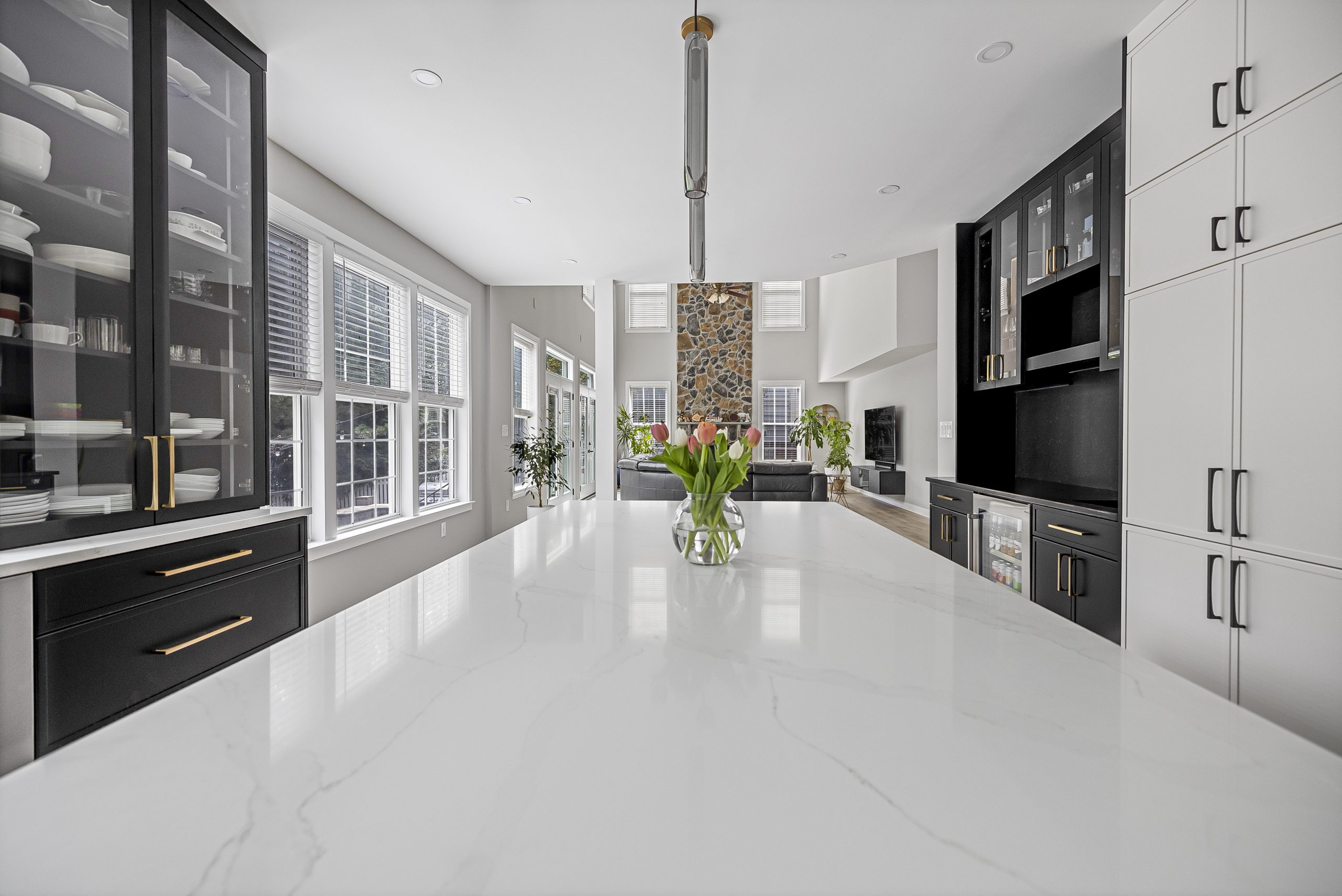
Quartz is the most popular countertop choice in Northern Virginia, and it is the surface we recommend most often. It is engineered from roughly 90 percent ground natural quartz mixed with resins, which makes it non porous, stain resistant, and free of the sealing that natural stone needs. Expect to pay $60 to $150 per square foot installed.
- Pros: Extremely durable, non porous, no sealing, huge range of colors and patterns including marble looks.
- Cons: Can be damaged by high heat, so always use trivets. Not quite the look of real stone up close.
- Best for: Busy family kitchens that want low maintenance and a consistent, modern look.

2. Granite Countertops
Granite is the classic natural stone countertop, and no two slabs are exactly alike. Each one brings unique veining and movement that engineered surfaces cannot fully copy. Granite is heat resistant and very hard, which makes it ideal for serious cooks. It costs $50 to $200 per square foot installed, depending on the rarity of the slab.
- Pros: Natural, one of a kind appearance, excellent heat and scratch resistance, adds resale appeal.
- Cons: Needs periodic sealing to stay stain resistant. Color and pattern vary slab to slab, so see your actual slab before buying.
- Best for: Homeowners who want genuine natural stone and a timeless look.
3. Marble Countertops
Marble is the height of countertop luxury, prized for its bright white base and soft gray veining. It stays naturally cool, which bakers love for rolling dough. The trade off is that marble is softer and more porous than granite or quartz, so it scratches and stains more easily. Pricing runs $100 to $250 per square foot installed.
- Pros: Stunning, high end appearance, naturally cool surface, adds real luxury value.
- Cons: Etches from acids like lemon and wine, stains easily, needs careful sealing and upkeep.
- Best for: Luxury kitchens, baking stations, and islands where beauty leads.

4. Porcelain Slab Countertops
Porcelain slab is one of the fastest growing countertop trends in 2026. These large format slabs are extremely hard, UV stable, heat resistant, and non porous, and they can convincingly mimic marble or concrete. Because porcelain resists fading, it also works for outdoor kitchens. Expect $60 to $120 per square foot installed.
- Pros: Scratch, heat, stain, and UV resistant, very thin and lightweight, great marble look options.
- Cons: Edges can chip if struck hard, fewer experienced fabricators, patterns are surface deep.
- Best for: Modern kitchens, outdoor kitchens, and anyone wanting a marble look without the upkeep.
5. Butcher Block Countertops
Butcher block brings warmth that stone cannot match, made from thick strips of hardwood like maple, walnut, or oak bonded together. It is comfortable to work on and can be sanded and refinished over the years. Butcher block runs $40 to $100 per square foot installed and pairs beautifully with both farmhouse and modern kitchens.
- Pros: Warm, inviting look, gentle on knives, repairable by sanding, mid range cost.
- Cons: Needs regular oiling, can scratch, dent, and stain, sensitive to standing water near sinks.
- Best for: Islands, prep zones, and warm farmhouse or transitional kitchens.

6. Solid Wood Countertops
Solid wood countertops use wide planks rather than the bonded strips of butcher block, showing off longer grain and a more refined look. They share wood’s warmth and repairability, and they make a striking statement on an island or coffee bar. Cost is similar to butcher block, around $40 to $100 per square foot installed.
- Pros: Beautiful grain, warm feel, can be refinished, works as an accent surface.
- Cons: Same water and scratch sensitivity as butcher block, needs sealing and oiling.
- Best for: Statement islands, accent runs, and warm, characterful kitchens.

7. Concrete Countertops
Concrete countertops deliver a custom, industrial look that you cannot get off the shelf. They are cast to fit your exact kitchen and can be tinted any color or embedded with glass, stone, or metal. Concrete is heat resistant and very durable, though it must be sealed to resist stains. Pricing runs $65 to $135 per square foot installed.
- Pros: Fully custom shapes and colors, heat resistant, distinctive modern look.
- Cons: Needs sealing, can develop hairline cracks over time, heavy and best installed by pros.
- Best for: Industrial, modern, and one of a kind custom kitchens.

8. Stainless Steel Countertops
Stainless steel is the surface professional kitchens trust, and it brings that sleek, restaurant grade look home. It is heat resistant, non porous, naturally hygienic, and nearly impossible to stain. The main downsides are that it shows fingerprints and can scratch and dent. Expect $75 to $200 per square foot installed.
- Pros: Heat resistant, hygienic, non porous, modern professional look.
- Cons: Shows fingerprints and smudges, can scratch and dent, can feel cold and clinical.
- Best for: Serious home cooks and sleek, modern or industrial kitchens.

9. Ceramic Tile Countertops
Ceramic tile is the most budget friendly way to get a heat and scratch resistant surface, and it is one of the few materials a confident DIYer can install. Tile comes in endless colors and patterns. The catch is the grout lines, which can stain and need sealing. Installed cost is just $10 to $40 per square foot.
- Pros: Very affordable, heat and scratch resistant, huge design variety, DIY friendly.
- Cons: Grout lines stain and need upkeep, tiles can crack, uneven surface for some tasks.
- Best for: Tight budgets, backsplashes, and colorful, eclectic kitchens.

10. Laminate Countertops
Laminate has come a long way and now convincingly mimics stone and wood at a fraction of the price. It is made from layers of paper and resin bonded to particleboard, which keeps it light, low maintenance, and easy to clean. At $15 to $40 per square foot installed, it is the most affordable option on this list.
- Pros: Lowest cost, very low maintenance, modern stone and wood look options, easy to clean.
- Cons: Not heat resistant, can scratch and chip, damaged edges cannot be repaired, lower resale appeal.
- Best for: Tight budgets, rentals, laundry rooms, and short term updates.

The Best Countertop for Your Kitchen and the Way You Cook
Nobody buys the best countertop in the abstract; they buy the best one for a particular household. These are the answers we give in design meetings in Fairfax and Loudoun County, by situation, with the runner up when the first choice is out of budget or out of stock.
| Your kitchen | First choice | Runner up | Why |
|---|---|---|---|
| A busy family kitchen with children | Quartz | Porcelain slab | Non porous, no sealing, no stains from juice or markers, consistent across a long island |
| A serious cook who sets hot pans down | Granite | Porcelain slab | Takes direct heat; the dark honed and leathered granites hide everything |
| A baker | Marble pastry station inset into quartz | Full marble, eyes open | Marble stays cool for dough; an inset gives the surface without the whole counter etching |
| A budget refresh under $2,500 | Laminate | Ceramic tile | Modern laminates carry convincing stone prints and a clean square edge |
| A flip or a sale within two years | Entry quartz in white or light gray | Level 1 granite | What buyers in this market read as done, at the lowest cost that still reads as stone |
| An outdoor kitchen | Granite | Porcelain slab | Unaffected by sun and frost; quartz yellows outdoors |
| A rental or an in law suite | Laminate or entry quartz | Level 1 granite | Durability per dollar; nothing a tenant can ruin cheaply |
| A modern, minimal kitchen | Porcelain slab or solid color quartz | Stainless steel | Thin profiles, no veining, full height slab backsplashes |
| A farmhouse or warm transitional kitchen | Quartz perimeter with a butcher block island | Soapstone look quartz | The wood warms the room; the quartz does the work at the sink and range |
| A statement island | Quartzite or an exotic granite | Bookmatched veined quartz with a waterfall | One slab no one else has, or a pattern laid out on purpose |
| A small galley kitchen | One light quartz in a single run | Light porcelain | Continuous light counters make a narrow kitchen read wider; our galley guide covers the rest |
| Allergies or a hygiene focus | Quartz or stainless steel | Porcelain slab | No pores, no grout, nothing to seal |
Mixing Countertop Materials
The most common way our clients resolve a countertop decision is not to make one. The perimeter takes the workhorse, usually quartz, where the sink, the dishwasher and the range live; the island takes the piece with character, a quartzite, a leathered granite, a slab of walnut butcher block, or a bookmatched veined quartz with a waterfall. The rule that keeps it from looking like two kitchens: one of the two surfaces is quiet. A veined island over a solid perimeter works; two veined stones fight. Thickness should match unless the island is deliberately a furniture piece, in which case a thicker mitered edge on the island is the point. The island cost guide has the numbers for an island top and a waterfall edge.
Countertops for Outdoor Kitchens
Northern Virginia’s outdoor kitchens live through 95 degree July afternoons and January freezes, and the material has to take both. Granite is the standard answer: it does not fade, crack from frost if it is properly supported, or mind a grill lid dropped on it. Porcelain slab is the modern one, thinner, lighter and equally indifferent to sun and water. Concrete works when it is sealed and the slab is reinforced. Quartz does not belong outside; its resin yellows and its warranty ends at the door. Stainless steel is right beside a grill and nowhere else, because it is hot to the touch by noon. Our indoor outdoor living guide covers the rest of the space, and our exterior stone guide covers the stone around it.
How Do You Choose the Right Kitchen Countertop?
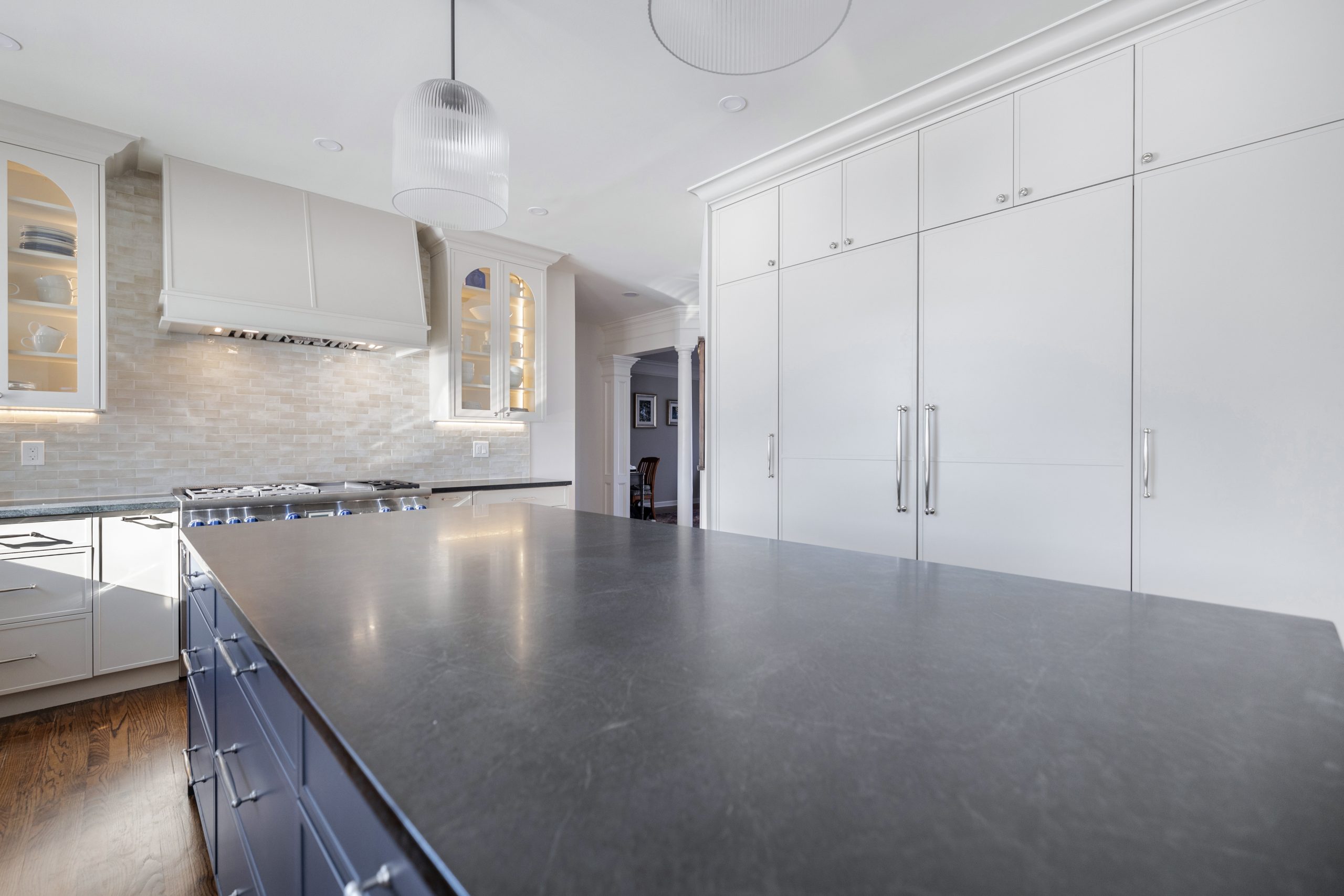
Choose your countertop by matching the material to how you actually use your kitchen, then to your budget and style. Run through these five factors before you decide:
- Lifestyle: Cook a lot or have young kids? Lean toward quartz, granite, or porcelain for durability and easy cleanup.
- Maintenance: Want zero upkeep? Quartz, porcelain, and laminate need no sealing. Granite, marble, concrete, and wood all need periodic care.
- Budget: Laminate and ceramic tile stretch a tight budget. Quartz and granite sit in the middle. Marble and high end stone top the range.
- Style: Match the surface to your kitchen. Marble and quartz suit luxury and modern looks, butcher block and wood suit farmhouse, concrete and steel suit industrial.
- Resale: In the Northern Virginia market, quartz and granite have the broadest buyer appeal and protect resale value best.
It also helps to plan your countertop alongside the rest of the room. If an island is part of your plan, our kitchen island guide covers ideal dimensions and how to mix countertop materials. For material choices beyond counters, see our guide to the best kitchen materials for Loudoun County homes.
How Much Do Kitchen Countertops Cost in Northern Virginia?
Most Northern Virginia homeowners spend $3,000 to $8,000 on countertops for a typical kitchen of 50 to 60 square feet, with quartz landing at $5,000 to $8,000 of that span, and luxury stone or a large island with a waterfall edge pushes the number well past $10,000. Countertops typically account for a notable share of a full kitchen budget. For a complete breakdown of where your money goes across cabinets, counters, appliances, and labor, see our 2026 kitchen remodel cost guide and our kitchen remodeling budget guide.
Three things drive the final price: the material you pick, the square footage of your counters, and the complexity of the install, including edge profiles, cutouts, and seams. Getting an exact measurement and a single fabricated quote is the only way to know your real number.
The per square foot figures become a budget only once they meet a kitchen. These are three Northern Virginia kitchens priced across the materials, installed, with the standard edge and cutouts and no backsplash; the widest ranges belong to the natural stones, where the slab you choose at the yard sets the price.
| Material | 10 by 10 kitchen, about 35 square feet | Typical kitchen, 55 square feet | Large kitchen with island, 90 square feet |
|---|---|---|---|
| Laminate | $525 to $1,400 | $825 to $2,200 | $1,350 to $3,600 |
| Ceramic tile | $350 to $1,400 | $550 to $2,200 | $900 to $3,600 |
| Butcher block or solid wood | $1,400 to $3,500 | $2,200 to $5,500 | $3,600 to $9,000 |
| Porcelain slab | $2,100 to $4,200 | $3,300 to $6,600 | $5,400 to $10,800 |
| Quartz | $2,100 to $5,250, most at $2,500 to $4,500 | $3,300 to $8,250, most at $5,000 to $8,000 | $5,400 to $13,500 |
| Granite | $1,750 to $7,000 | $2,750 to $11,000, most at $4,000 to $9,000 | $4,500 to $18,000 |
| Concrete | $2,300 to $4,700 | $3,600 to $7,400 | $5,900 to $12,200 |
| Stainless steel | $2,600 to $7,000 | $4,100 to $11,000 | $6,800 to $18,000 |
| Marble | $3,500 to $8,750 | $5,500 to $13,750 | $9,000 to $22,500 |
On top of the slab: a mitered waterfall edge adds $2,500 to $6,000 per side in quartz and more in natural stone; a full height slab backsplash behind the range runs $1,500 to $4,000 at slab prices; an upgraded edge profile is billed per linear foot; a farmhouse sink cutout and polish costs more than an undermount; and removing and disposing of the old tops is a few hundred dollars that big box quotes leave out. Countertops replaced on existing cabinets with the sink and cooktop in the same places need no permit in Fairfax or Loudoun County; a new circuit for a new cooktop or a sink in a new place does, as our kitchen permit guide explains. The 10 by 10 kitchen cost guide and the full kitchen cost guide put the counter inside the whole budget.
How EA Home Design Helps You Choose the Best Countertops
EA Home Design helps Fairfax and Loudoun County homeowners pick, source, and install the right countertop for their kitchen and budget. The team brings three things to the table: honest material guidance based on how you live, access to quality slabs and fabricators across Northern Virginia, and skilled installation that gets the seams, edges, and overhangs right the first time. You also get a full 3D rendering, so you can see your chosen countertop in your actual kitchen before anything is cut. Explore our kitchen remodeling services in Virginia to start.
Quartz vs Granite vs Marble: Which Is Right for You?
These three are the surfaces homeowners compare most, so here is the short version. Pick quartz if you want the lowest maintenance and a consistent, modern look with no sealing. Pick granite if you want genuine natural stone with unique veining and strong heat resistance, and you do not mind sealing it once a year. Pick marble if luxury and a bright, classic look matter more to you than easy upkeep, and you accept that it will etch and patina over time. The full head to head, with 2026 costs by tier, heat, stains, sealing, resale and a decision table, is our quartz vs granite countertops guide.
For a typical Northern Virginia family kitchen, quartz is the safe, low stress winner. For a serious home cook who loves natural materials, granite is hard to beat. For a statement island or a baking zone in a luxury kitchen, marble earns its place. Many of our clients combine them, using quartz on the main runs and marble or a bold granite on the island.
Countertop Edge Profiles and Finishes
The edge profile is a small detail that changes the whole feel of your counters. A square or eased edge reads modern and clean. A bullnose or rounded edge is softer and family friendly. An ogee or beveled edge adds a traditional, dressed up look. Thicker mitered edges create a bold, substantial slab look that suits luxury kitchens.
Finish matters too. A polished finish is glossy and reflective and shows off stone veining. A honed or matte finish is understated and hides fingerprints, which is popular for marble and dark granite. A leathered finish adds subtle texture and is excellent at hiding smudges and water spots on darker stones.
Thickness, Seams, Overhangs, Sinks and Backsplashes
Five decisions that are made at the fabricator rather than the showroom, and that decide how the counter looks and lasts.
| Decision | What the options are | What we usually do |
|---|---|---|
| Thickness | 2 centimeter (3/4 inch) stone needs a plywood sub top and a laminated edge to look thicker; 3 centimeter (1 1/4 inch) sits on the cabinets as it is | 3 centimeter, which is the Northern Virginia standard in stone and quartz; 2 centimeter only for porcelain, which is engineered thin |
| Seams | Set by slab size: quartz jumbo slabs are about 126 by 63 inches, granite 110 to 130 by 65 to 75, porcelain up to 126 by 63; an L shaped run or a long island usually takes one seam | Seams away from the sink and the cooktop and out of the sight line from the door; a jumbo slab to remove one entirely |
| Overhangs | 3 centimeter quartz cantilevers 12 to 14 inches unsupported, granite about 10, porcelain less; beyond that, steel brackets let into the cabinet tops | Seating overhangs at 12 to 15 inches with hidden brackets; 18 inches for a true dining counter, always braced |
| Sinks | Undermount in stone, quartz and porcelain; drop in for laminate and tile; farmhouse apron fronts in any material with a cabinet built to carry them | Undermount single bowl in stainless or composite; our kitchen sink guide compares them |
| Backsplash | A 4 inch strip of the counter material, tile, or a full height slab of the same material behind the range or the whole run | Tile or a full height slab; the 4 inch strip dates a kitchen faster than any other detail |
Kitchen Countertop Trends in Northern Virginia for 2026
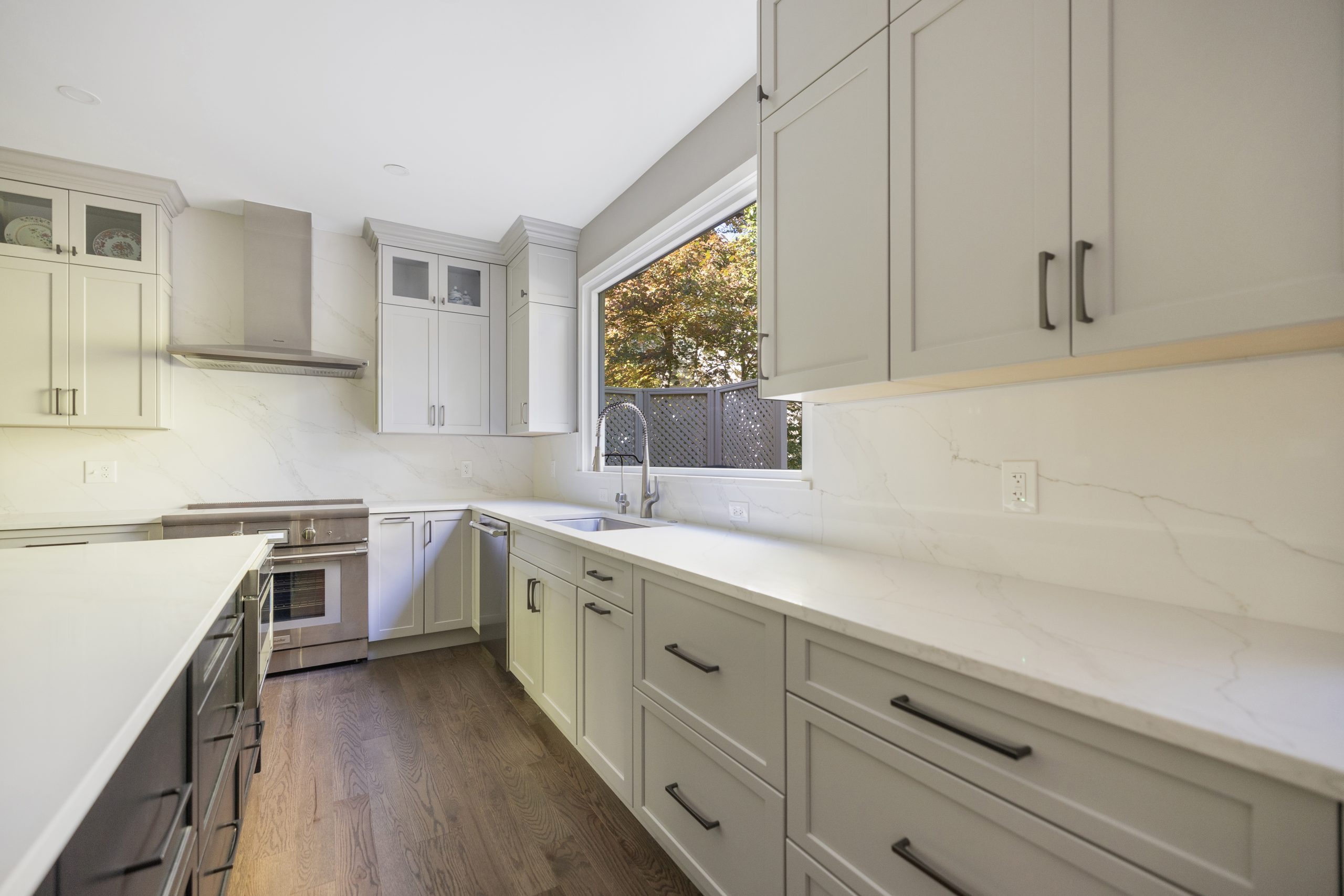
The biggest 2026 countertop trends in Fairfax and Loudoun County kitchens are waterfall edges, where the counter runs vertically down the sides of an island, and thick mitered slabs that look solid and substantial. Warm and earthy tones are replacing cool grays, with creamy whites, soft beiges, and warm veining leading the way. Marble look quartz and porcelain remain in high demand because they deliver the high end look without the upkeep. Matte and leathered finishes are also growing fast as homeowners move away from high gloss.
How to Care for Your Kitchen Countertops
Good habits keep any countertop looking new for years. Wipe spills quickly, especially acidic ones like wine, citrus, and tomato, which can etch marble and stain unsealed stone. Always use a cutting board, since even hard surfaces dull knives and can scratch. Use trivets under hot pots on quartz and laminate, which are not fully heat proof. Seal natural stone like granite, marble, and concrete on the schedule your fabricator recommends, usually once a year. For daily cleaning, mild soap and water is safest, since harsh or abrasive cleaners can damage seals and finishes.
How Countertop Installation Works
The sequence is the same for every slab material and it sits in the middle of a kitchen remodel’s schedule, which is why counters are the step homeowners most often forget to plan for.
- Selection. Quartz and porcelain from a sample and, for veined patterns, a layout drawing; granite, quartzite and marble by tagging the actual slabs at the yard, which for most of Northern Virginia means a trip up the Route 28 corridor.
- Template. The fabricator measures off the installed cabinets, with the sink, the cooktop and the faucet on site, because a drawing is never accurate to the eighth of an inch a counter needs. Cabinets must be set, level and screwed down first.
- Fabrication. Seven to fourteen days. The slab is cut, the cutouts made, the edges profiled and polished, and on veined material the pieces are laid out so the pattern runs through a seam.
- Installation. One day. The pieces are set on the cabinets, seams filled with color matched epoxy, the sink clipped and sealed underneath, and the dishwasher anchored to the cabinets or a mounting kit, never to the stone.
- Plumbing and the first day of use. The sink and faucet are reconnected the next day, after the silicone cures, and the counter is in service that evening. Tile backsplash follows the counter, never the other way round.
- In the kitchen schedule. The one to two week gap between cabinets and counters is the pause in every kitchen remodel; our kitchen remodel timeline shows where it falls and what the crew does in the meantime.
Health and Environmental Notes
Three questions come up more every year, and each has a short honest answer. Engineered quartz is more than 90 percent crystalline silica, and the dust from cutting it dry has caused serious lung disease among fabrication workers, severe enough that Australia banned the material in 2024; the hazard is in the shop, not in the kitchen, and the practical step for a homeowner is to choose a fabricator who cuts wet with ventilation and never to allow quartz to be cut dry on site. Granite contains trace uranium and can emit small amounts of radon; the Environmental Protection Agency’s position is that a countertop’s contribution is very small compared with the soil under the house, and Northern Virginia is a moderate to high radon zone, so test the home as a whole. Both points are covered in more depth in our quartz vs granite guide. On the environmental side, the lowest impact countertop is the one that lasts: stone, quartz and porcelain at 25 years and more beat any material replaced twice. Recycled glass and paper composite counters exist in the mid quartz price band and suit a client who wants the story; wood from certified forests is the renewable choice; and every sealer and finish used indoors should be a low VOC product, which the good fabricators now use by default.
Frequently Asked Questions About Kitchen Countertops
What is the most popular kitchen countertop in 2026?
Quartz, by a wide margin in Northern Virginia, for its durability, its lack of maintenance and the marble look patterns that give the light, calm kitchen most clients want without marble’s etching. Granite remains second for homeowners who want natural stone, and porcelain slab is the material gaining fastest in modern kitchens and outdoor ones.
What is the most durable kitchen countertop?
It depends on the hazard. Against stains, quartz and porcelain, because they have no pores. Against heat, granite and porcelain, which take a pan from the burner. Against scratches, quartz, granite and porcelain are all harder than a knife. Against chips, granite, because a chip is filled invisibly. Across all four at once, porcelain slab and dark granite score highest, with quartz a close third that loses only on heat.
What is the best budget countertop?
Laminate, at $15 to $40 per square foot installed, or $825 to $2,200 for a typical 55 square foot kitchen; modern laminates carry convincing stone prints with a clean square edge. Ceramic tile is the other low cost option and the only one a homeowner can install well. Entry level quartz and level 1 granite start around $50 to $60 per square foot and are the cheapest surfaces that read as stone.
Which countertop adds the most resale value?
In Northern Virginia, quartz in white or light gray, because it is what buyers read as a finished kitchen and it photographs well in a listing. Granite in a current honed or leathered finish holds value in the custom market; the speckled granite of the 2000s now reads as a kitchen to redo. No countertop recovers its cost on its own; it removes the kitchen from the negotiation.
Do quartz countertops need sealing?
No. Quartz is engineered and non porous, so it never needs sealing and cleans with soap and water. Granite needs sealing every one to three years, marble twice a year, concrete yearly, butcher block oiling monthly for the first year, and tile grout yearly. Porcelain and stainless steel never need it.
How long do kitchen countertops last?
Stone, quartz and porcelain last 25 years and more and usually outlive the cabinets. Laminate lasts 10 to 20 years, longer if the seams stay dry. Butcher block and solid wood last indefinitely if they are oiled and sanded, because the surface renews. Concrete lasts decades with its hairline cracks. Stainless steel is permanent and simply patinas.
Is porcelain slab better than quartz?
For heat, sun and outdoor use, yes: porcelain takes a hot pan, ignores UV and costs $60 to $120 per square foot installed. For pattern depth, warmth and edge durability, quartz: its veining runs through the slab rather than printed on the surface, and its edges chip less. Indoors, either is an excellent low maintenance choice; outdoors and beside a range, porcelain.
What is the difference between quartz and quartzite?
Quartz countertops are engineered from ground quartz mineral and resin; quartzite is a natural metamorphic stone. Quartzite takes heat and resists scratches better than granite, needs sealing like granite, and costs like premium granite and above, typically $80 to $200 per square foot installed. It is the natural choice for a veined white look; quartz is the manufactured one and the lower maintenance one.
Which countertops can you put hot pans on?
Granite, porcelain slab, stainless steel, ceramic tile and concrete take a pan straight from the burner, though thermal shock can still crack any stone at a thin point beside a cooktop cutout. Quartz, laminate and wood cannot: quartz resin scorches above about 300 degrees, laminate lifts at the seams, and wood burns. Use trivets on those three without exception.
What is the lowest maintenance kitchen countertop?
Quartz and porcelain slab: wipe with soap and water, never seal, never oil. Stainless steel is equally easy to keep clean but shows scratches. Granite is low maintenance once a year’s sealing is accepted. Marble, concrete and wood are the high maintenance surfaces, chosen for how they look and age rather than for ease.
What is the best countertop for a small kitchen?
One light, low pattern surface run continuously, which makes a narrow kitchen read wider: a white or pale gray quartz or porcelain with an eased edge and the same material on a full height backsplash. Avoid heavy veining, dark colors and 4 inch strips in a small room. The galley kitchen guide covers the layout side.
How much do new kitchen countertops cost in Northern Virginia?
Most kitchens spend $3,000 to $8,000 on counters installed for 50 to 60 square feet, with quartz at $5,000 to $8,000 and granite at $4,000 to $9,000 depending on the level. A 10 by 10 kitchen runs $2,100 to $5,250 in quartz; a large kitchen with an island $5,400 to $13,500. A waterfall edge adds $2,500 to $6,000 per side and a full height slab backsplash $1,500 to $4,000.
Conclusion: Pick the Countertop That Fits Your Kitchen
The best kitchen countertop is the one that matches how you cook, clean, and live, not just the one that looks best in a showroom. For most Northern Virginia homeowners, quartz and granite hit the sweet spot of durability, beauty, and value. If you want luxury, reach for marble or porcelain slab. If you want warmth or savings, butcher block, tile, and laminate all deliver. When you are ready to choose and install with confidence, EA Home Design can guide you from slab selection to a flawless finished kitchen.