

The six pitfalls that sink remodeling projects in Fairfax County are predictable: a lowball quote that grows once walls open, cash only payment terms, choosing the cheapest of three bids, timelines that quietly double, communication that stops when problems start, and contractors carrying no real insurance. Every one of them is avoidable before you sign anything, and the checks take an afternoon. We are a Class A licensed design build remodeler (VA #2705157182) that has worked in Fairfax County since 2009, and this guide covers each pitfall, the Virginia specific license and insurance checks most homeowners skip, what a protective contract actually contains, and what recourse exists if a project goes wrong anyway.
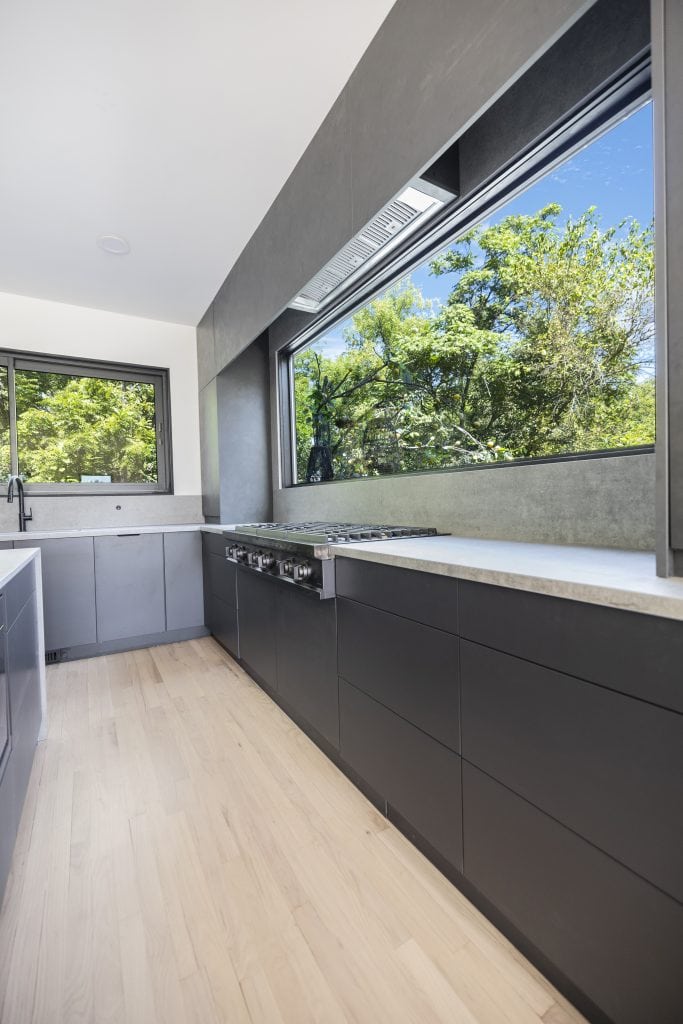
The Budget Trap: Why a Vague Quote Means Nothing
That initial estimate looks reasonable. Maybe even competitive. But a one page quote with a single number at the bottom is not a price; it is an opening position. The most dangerous phrase in remodeling is “we found something behind the walls,” and in a county where much of the housing stock dates to the 1960s through the 1990s, contractors know the walls will provide. A vague quote lets every discovery become a change order priced under pressure, after demolition, when you have no leverage and no appetite to start over.
The protection is specificity. A real proposal itemizes scope room by room, names the materials and fixture allowances in dollars, and states what is excluded. Allowances deserve special attention: a bid can be made to look cheap by carrying $2,000 for cabinets no one could actually buy at that number, so compare the allowance lines across bids, not just the totals. And insist the proposal address the predictable unknowns in writing: what happens if subfloor rot, aluminum wiring, or galvanized plumbing turns up, and how such work will be priced. A contractor who resists putting discovery pricing in writing is telling you how the project will go.
The Cash Only Red Flag That Screams Trouble
If a contractor only accepts cash and does not provide receipts, walk away. This is not about convenience; it is about accountability. Cash leaves no paper trail: no proof of what you paid, when you paid it, or what the payment was supposed to buy. If the relationship sours, you have nothing to show a lawyer, a judge, or the state board. Legitimate remodelers in Fairfax County accept checks and cards, invoice against a written payment schedule, and provide receipts without being asked, because their books are clean and their pricing survives daylight. A cash discount offered with a wink usually means no license, no insurance, no permits, or all three.
Why the Lowest Bid Usually Costs the Most
When three bids arrive and one sits far below the others, the cheap bid is not a bargain; it is a different project wearing the same name. It carries thinner allowances, excludes work the others included, assumes nothing goes wrong in a house where something always does, or comes from a contractor who plans to make up the margin in change orders. Industry guidance says to hold ten to fifteen percent of any remodeling budget in reserve for genuine surprises; a contractor who prices as if surprises do not exist has simply moved that reserve into your future change orders. Compare bids line by line, ask each contractor to explain what the others might have missed, and treat a dramatic outlier as information, not luck. The bid that is honest about your house’s age and condition is the one written by the person who intends to finish the job at the quoted price.
Timeline Disasters: When Six Weeks Becomes Six Months
Every homeowner has heard a version of the story: the project that started in spring and was still a plywood floor at Thanksgiving. Chronic delay has causes you can screen for. Some contractors run too many jobs at once, so your project stalls whenever another client shouts louder. Some quote fantasy schedules to win work, knowing the real calendar will be revealed too late to matter. And some simply do not manage the two things that actually drive remodeling timelines: material lead times, which for cabinets, windows, and specialty fixtures can run eight to twelve weeks, and inspection scheduling with the county.
Screen with three questions. How many projects will your crew be running while mine is open? Who orders materials, and when, relative to the start date? A professional orders long lead items before demolition, not after. And what does the schedule look like week by week? A contractor who cannot produce a written schedule with milestones has never had one hold. Realistic Fairfax County ranges for well run work: a bathroom in three to five weeks of construction, a kitchen in six to ten, a whole home renovation in three to six months, plus design and permitting in front. Anyone promising dramatically better is quoting the calendar they wish existed.
The Communication Breakdown That Costs You Money
Communication failures rarely announce themselves at the estimate stage, when everyone answers the phone quickly. They surface in week four, when a question about tile placement goes unanswered for days, work proceeds on a guess, and the wrong guess costs a rework. Before signing, establish who your single point of contact is, how often you will get progress updates, and in what form decisions will be recorded. The professional standard is simple: one named project lead, a scheduled weekly update, and every decision confirmed in writing, even if only by text or email. A contractor who bristles at that structure during the honeymoon phase will vanish entirely when the project hits its first real problem.
The Insurance Gap That Could Cost You Your House
Two policies matter, and they protect against different disasters. General liability covers damage the contractor does to your property: the cut water line that floods the finished basement, the fire started by a soldering torch. Workers compensation covers injuries to the people on your property; without it, a worker hurt in your home can pursue you, and homeowner policies are not written to absorb construction site injuries. Do not accept “we’re fully insured” as a sentence. Ask for certificates of insurance naming the carriers, and for anything beyond a small job, ask to be listed as an additional insured for the project’s duration. A legitimate contractor’s office produces these documents routinely; hesitation is the tell.

The License Check Most Fairfax County Homeowners Skip
Virginia licenses contractors through the Department of Professional and Occupational Regulation, and the license class defines how big a project the state trusts them to run. Class C covers small jobs, Class B covers mid size work up to set contract limits, and Class A carries no limit on project size. A serious kitchen, bathroom, addition, or whole home renovation in Fairfax County belongs with a Class A or appropriately sized Class B contractor, and the class should be printed on the proposal. Checking takes two minutes: the DPOR license lookup is public, free, and shows the license class, its status, and any disciplinary history. Run every finalist through it, and run the business name and the individual’s name both.
Beyond the state license, confirm the basics that separate a business from a truck with a magnet sign: a physical business address you could visit, a local business license, and years in operation you can verify rather than take on faith. Fairfax County work also means familiarity with county plan review and inspection practice, which a contractor based here demonstrates by talking specifics rather than generalities.
The license check has a second, less obvious payoff. Virginia maintains a Contractor Transaction Recovery Fund that can compensate homeowners who suffer losses from the improper conduct of a licensed contractor when a judgment cannot be collected. Hire unlicensed, and that safety net does not exist for you at all. The permit question follows the same logic: a proper contractor pulls the building permits under their own license. A contractor who asks you to pull an owner’s permit for their work is shifting code responsibility onto you, and it is among the clearest warning signs in the entire industry.
The Contract That Actually Protects You
A protective remodeling contract is not long because lawyers like length; every section exists because some homeowner once needed it. Before signing, confirm yours contains these, in writing:
- A complete scope of work, room by room, with materials and model numbers where they are known and dollar allowances where they are not.
- A payment schedule tied to completed milestones, not the calendar. A modest deposit is normal; payments after that should follow finished work such as demolition complete, rough inspections passed, cabinets installed. Never let payments run far ahead of progress, because a contractor paid for work not yet done has your leverage in their pocket.
- A written change order process: no extra work proceeds without a signed description and price. This single clause prevents most budget disasters.
- Start and substantial completion dates, with the schedule attached as an exhibit.
- Lien protections: in Virginia, subcontractors and suppliers who go unpaid can place a mechanics lien on your home even if you paid the general contractor in full. Require lien waivers with payments so money you release actually clears the people who worked on your house.
- Warranty terms stating what is covered, for how long, and who answers the phone after the final payment.
If It Goes Wrong Anyway: Your Recourse in Virginia
Even careful homeowners occasionally end up in a failed project, and Virginia provides a ladder of recourse. Start with a written demand letter describing the failure and the remedy you expect, because boards and courts both look for it. A complaint to DPOR can trigger investigation and discipline against the license, which gets the attention of any contractor who intends to keep working. Small disputes fit in General District Court without heavy legal costs. And when a licensed contractor’s misconduct leaves you with an uncollectable judgment, the Recovery Fund exists precisely for that scenario. The pattern worth noticing: every rung of that ladder works better, or exists at all, because you hired licensed, verified with DPOR, paid by check against milestones, and kept everything in writing. The protections are built for the homeowner who did the checks in this guide.
How to Choose a Fairfax County Remodeler You Can Trust
Flip the pitfalls and the hiring checklist writes itself. Verify the DPOR license class and history. See proof of both insurance policies. Read the proposal for itemized scope and honest allowances, and treat vagueness as a preview. Ask for references from projects like yours completed in the last two years, and actually call them, asking specifically how the contractor handled the first problem that arose, because every project has one. Look at finished work, not just photographs. Confirm who will run your job day to day and how decisions get recorded. And weigh how the contractor behaves during the sales process, when they are on best behavior: slow answers, pressure tactics, and reluctance to put things in writing never improve after the deposit clears.
Your renovation should be handled by a partner, not policed like an adversary. When you find a contractor who combines verified credentials with transparent pricing and structured communication, the project changes character: problems get surfaced early instead of hidden, decisions get made once instead of relitigated, and the finished space arrives close to the schedule and the number you agreed to. We at EA Home Design have been helping Fairfax County homeowners avoid these pitfalls since 2009, delivering award winning results through transparent communication and proven project management.
Hiring a Remodeler in Fairfax County: FAQs
How do I verify a contractor’s license in Virginia?
Use the DPOR license lookup on the Virginia Department of Professional and Occupational Regulation website. Search the company name exactly as it appears on the proposal, confirm the license is active, note the class, and read any disciplinary history. Then cross check that the name on the license, the name on the contract, and the name on the insurance certificates all match. Mismatched names are how homeowners end up contracting with an unlicensed entity that borrowed a license holder’s credentials for the sales meeting.
How much deposit is normal for a remodeling project?
A modest deposit at signing is standard practice; it reserves your place on the schedule and covers early design and ordering work. What should worry you is proportion and pace: a contractor asking for half the project up front, or one whose payment schedule runs well ahead of completed work, is financing other jobs with your money. Structure payments against milestones you can see with your own eyes, and keep the final payment large enough to matter, because the punch list gets finished quickly when real money still depends on it.
Who should pull the permit, me or the contractor?
The contractor, always, under their own license. Permits pulled by the contractor put code responsibility where it belongs: on the professional doing the work. When a contractor asks you to pull an owner’s permit, they are usually avoiding county scrutiny of their license status, and every inspection failure becomes legally your problem. Treat the request as a disqualifier, not a negotiation.
How many bids should I get, and are they comparable?
Three serious bids is the practical number: enough to see the market, few enough that each contractor invests real effort. But bids are only useful if they price the same project, so give every bidder an identical written scope, then compare allowances and exclusions line by line rather than glancing at totals. When one bid is dramatically lower, ask that contractor to walk you through the lines where they differ from the others. How they answer tells you more than the number does.
What should I actually ask a contractor’s references?
Skip the questions that invite polite praise and ask about the machinery: Did the project finish at the contracted price, and if not, what drove the change orders? How was the first problem handled, and who told you about it, the contractor or your own eyes? How often did you hear from the project lead without prompting? Would you hire them again for a bigger project? References from two years ago are worth more than last month’s, because warranty behavior and callback responsiveness have had time to show themselves.
Are online reviews enough to vet a remodeler?
Reviews are a screen, not a verification. They surface patterns worth asking about, chronic delay complaints, communication problems, disputes over final bills, but they cannot confirm a license, an insurance certificate, or a contract’s quality, and glowing reviews are the easiest credential to manufacture. Use reviews to build your question list, then do the checks in this guide. Twenty minutes with DPOR and two insurance certificates outweigh two hundred five star ratings.
Related guides: hiring is only half the battle. If the project is a kitchen, start with our walkthrough of Fairfax County kitchen remodel permits, timeline, and financing. See the 10 remodel planning mistakes to avoid and the questions to ask a kitchen remodeler before you sign. Related guides: what an interior designer costs and when it is worth it and best remodeling companies in Northern Virginia. Explore our remodeling services or read our remodel case studies. For what each project should cost before you compare bids, see our guide to home remodeling in Fairfax County.