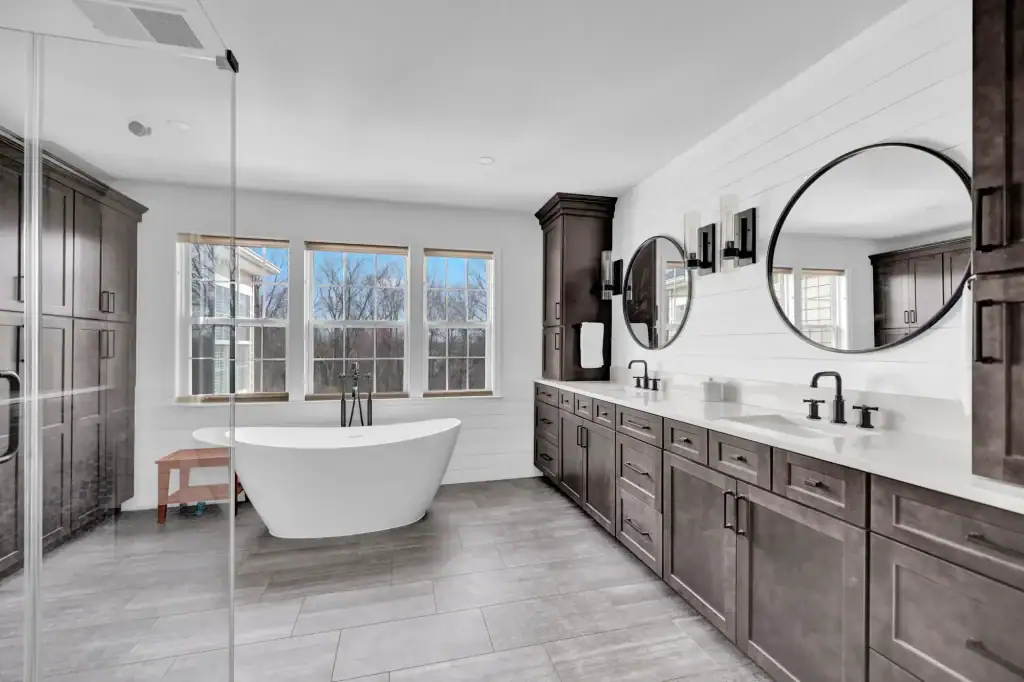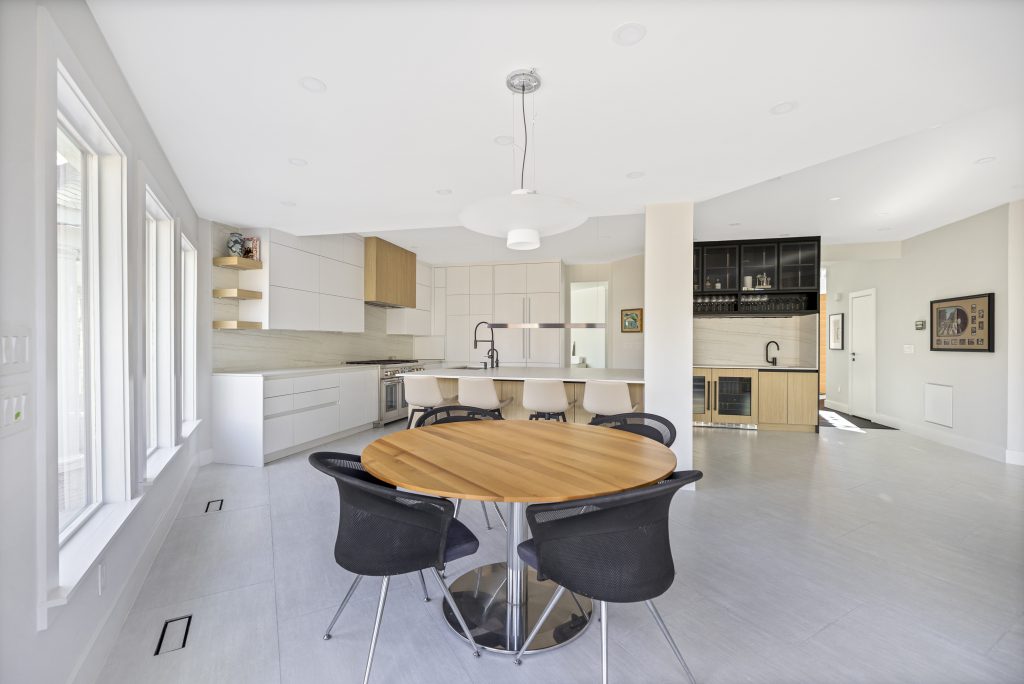
A shower remodel in Northern Virginia costs $12,000 to $25,000 in 2026 for a custom tiled shower with frameless glass, and that is also the price of the most requested version of it, a tub to shower conversion. A curbless shower with blocking and grab bars runs $15,000 to $25,000, a steam shower conversion adds $10,000 to $20,000, and a wet room that puts the shower and a freestanding tub on one waterproofed floor runs $25,000 to $45,000. Swapping one prefabricated acrylic unit for another costs less, about $4,000 to $9,000, and so does a one day acrylic liner system. This guide prices each kind of shower remodel line by line, explains what moves a quote from the bottom of the range to the top, and covers the timeline, the permits and the question of whether to remove the tub at all. The tiled shower figures are the ones EA Home Design works to on its own projects in Fairfax and Loudoun County, and they match our bathroom remodel cost guide.

Want a price for your own shower?
The only reliable number is a fixed price on a finished design. We start with a free in-home consultation. See our bathroom remodeling in Northern Virginia page.
Shower Remodel Cost at a Glance (2026)
| Type of shower remodel | Northern Virginia cost, 2026 | What it includes | Time on site |
|---|---|---|---|
| Prefabricated acrylic or fiberglass unit replaced with a new one | $4,000 to $9,000 | Old unit out, a new pan and wall panels, a new valve and trim, a framed or sliding door | 2 to 4 days |
| One day acrylic liner or wall system | $7,000 to $15,000 | Sold by bath liner companies: acrylic panels fitted over or in place of the old surfaces, a low threshold pan, a new valve | 1 to 2 days |
| Existing tiled shower rebuilt in the same footprint | $12,000 to $25,000 | Down to the studs: new pan and membrane, new valve, tile to the ceiling, a niche, frameless glass | 2 to 3 weeks |
| Tub to tiled walk-in shower with a curb and frameless glass | $12,000 to $25,000 | Tub out, drain upsized, new pan, tile and glass; the most requested single change in bathroom remodeling | 2 to 3 weeks |
| Tub to curbless shower with blocking and grab bars | $15,000 to $25,000 | The accessible version: a recessed floor, a linear drain and waterproofing carried into the room | 3 to 4 weeks |
| Steam shower conversion | $10,000 to $20,000 on top of the shower | Generator, an enclosure sealed to the ceiling, vapor proofing and a dedicated circuit | Adds about a week |
| Wet room zone: shower and freestanding tub on one floor | $25,000 to $45,000 | The waterproofed, sloped zone inside a primary bathroom remodel | Part of a primary bath project |
| Hall bathroom rebuilt around the new shower | $30,000 to $55,000 | The whole room: shower, vanity, toilet, floor tile, lighting and fan in the same layout | 2 to 4 weeks |
The first two rows are not work a design build firm does. They are here because most owners get a quote for one of them before they call a remodeler, and the comparison further down explains what each price does and does not buy. Every other row is a tiled shower built from the studs out.
Why National Averages Look Lower
National cost guides put the average shower remodel near $7,000 and a tub to walk-in shower conversion at $6,000 to $12,000. Those averages are real, but they are not pricing the same shower. They include prefabricated units and liner systems, they often leave the glass out, and they are national, while Fairfax and Loudoun County labor and permit costs run 15 to 25 percent above the national average. A tiled shower with a bonded waterproofing membrane, a flood tested pan, a 2 inch drain, a thermostatic valve and frameless glass is a different product from an acrylic insert, and it is the one that makes sense in a house in this market.
Tub to Shower Conversion Cost: $12,000 to $25,000
Removing a rarely used tub for a generous walk-in shower is the single most requested change in bathroom remodeling, and in Northern Virginia it costs $12,000 to $25,000 depending on the tile, the glass and whether the drain relocates. A bathtub to shower conversion is not a swap of one fixture for another. The alcove is taken back to the studs and rebuilt as a shower, and the price covers all of it.
- Demolition: the tub, the surround and the wallboard come out to the studs and the subfloor, and the debris is hauled away.
- Plumbing: the 1 1/2 inch tub drain becomes a 2 inch shower drain, moved to the center or replaced by a linear drain, and a new valve goes in at standing height with new supply lines as far as the wall is open.
- Framing and blocking: the niche and the bench are framed, and blocking goes in for the glass and for grab bars, now or later.
- Pan and waterproofing: a sloped pan, a bonded membrane over the pan and the walls as one system, and a 24 hour flood test before any tile is set.
- Tile: the floor, the walls to the ceiling, the niche and the curb.
- Glass: a frameless panel or enclosure, measured after the tile is grouted.
- Fixtures and finish: the head, the handheld, the trim, the fan if it is undersized, and the paint and patching around the opening.
A standard tub alcove is 5 feet wide and 30 to 32 inches deep, so a conversion gives a 60 by 30 to 32 inch shower without moving a wall. That is a comfortable shower for one person. Where the room allows, moving the front edge out to 36 or 42 inches makes it a much better one, and the best time to do that is while the floor is open.

What Moves a Conversion From $12,000 to $25,000
| Decision | Bottom of the range | Top of the range |
|---|---|---|
| Tile | White subway at $15 to $28 per square foot installed, or marble look porcelain at $18 to $35 | Real marble slab at $50 to $110 per square foot |
| Drain | Stays where the tub drain was | Moved, or changed to a linear drain; moving a fixture runs $1,500 to $5,000 |
| Glass | A fixed frameless panel, $1,000 to $2,500 | A full frameless enclosure with a door, $2,000 to $5,000 |
| Entry | A tiled curb | Curbless, which adds $2,500 to $6,000 |
| Extras | One niche | A bench and a second niche at $300 to $800 each, a second head, a heated bathroom floor at $2,000 to $4,500 |
| Size | The alcove as it stands | A wall moved to gain depth |
| The house | A wood framed floor in good order | A slab cut for the drain, $1,000 to $2,500, or old galvanized and cast iron lines to correct |
Where the Money Goes: A Shower Remodel Line by Line
This is how a typical $18,000 tub to shower conversion divides. Labor across the trades is 40 to 50 percent of the total, spread through every line.
| Line item | Share | On an $18,000 conversion |
|---|---|---|
| Tile, materials and setting | 33 percent | $5,950 |
| Plumbing: drain, valve and supply lines | 15 percent | $2,700 |
| Frameless glass | 15 percent | $2,700 |
| Pan, membrane and flood test | 12 percent | $2,150 |
| Fixtures and trim | 7 percent | $1,250 |
| Demolition, disposal and protecting the house | 6 percent | $1,100 |
| Framing, blocking, niche and bench | 5 percent | $900 |
| Electrical, fan, paint and patching | 4 percent | $700 |
| Design, permit and project management | 3 percent | $550 |
Two lines deserve a second look. The pan and the membrane are 12 percent of the price and the entire reason the shower lasts, so that is the last place to save. And the tile is a third of the price but most of what you see, so the choice between porcelain and stone moves the total more than any other single decision.

Walk-In Shower Cost by Size
| Shower size | Where it fits | Typical cost, tiled with frameless glass |
|---|---|---|
| 60 by 30 to 32 inches | The footprint a tub leaves in a hall bath | $12,000 to $17,000 |
| 36 by 48 inches | The smallest shower that feels generous | $13,000 to $18,000 |
| 42 by 60 inches | A hall or primary bath with room for a bench | $15,000 to $21,000 |
| 48 by 72 inches and larger | A primary bath: two heads, a bench, often no door | $19,000 to $25,000 and up |
| 60 by 60 inches, curbless | Room for a wheelchair to turn or a caregiver to help | $18,000 to $25,000 |
How much a walk-in shower costs depends less on its square footage than this table suggests, because the valve, the drain, the glass and the mobilization cost the same in a small shower as in a large one. What grows with size is tile and waterproofing. A doorless walk-in shower needs length, about 60 inches, so the spray dies before it reaches the opening; a fixed glass panel 30 to 36 inches wide on the head side, leaving a 30 to 36 inch opening, does the rest.
Curbless and Accessible Shower Cost
A curbless shower costs $2,500 to $6,000 more than the same shower with a curb. The premium is the floor: recessed floor framing at $800 to $2,500, a linear drain assembly at $500 to $1,500, waterproofing extended at least 3 feet into the bathroom at $500 to $1,500, and the extra labor. On a slab or in a basement, cutting the concrete for the recess adds $1,000 to $2,500; our basement remodel cost guide prices a basement bathroom. A tub to curbless shower conversion with blocking and grab bars runs $15,000 to $25,000, a hall bath made accessible throughout around a curbless shower $35,000 to $50,000, and a primary bath $50,000 to $75,000.
Two things change the math. The Virginia Livable Home Tax Credit returns 50 percent of qualifying accessibility retrofit costs, up to $6,500, on your state income tax, and a curbless shower is one of the named qualifying features. And the premium is smallest when the bathroom is being gutted anyway, because the floor is already open. Our curbless shower guide covers the construction in detail, and our universal design and aging in place guide covers the rest of an accessible bathroom.
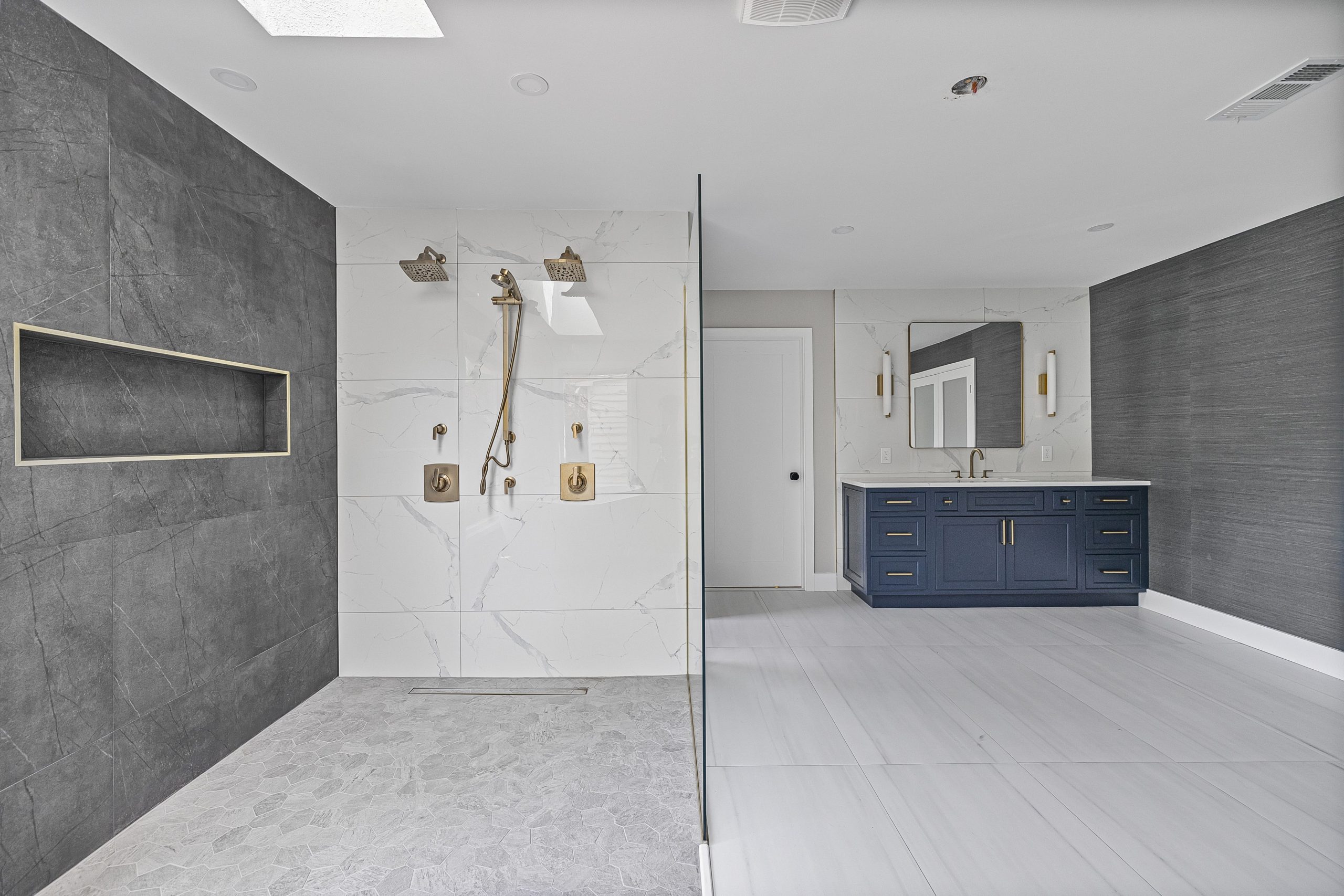
Shower Glass and Shower Door Installation Cost
| Glass | Installed cost | Notes |
|---|---|---|
| Fixed frameless panel | $1,000 to $2,500 | One sheet of heavy glass on the head side; nothing to swing, nothing to clean around |
| Full frameless enclosure with a door | $2,000 to $5,000 | Panel and a swinging door on heavy hinges; the standard for a curbed primary shower |
| Framed or semi frameless sliding door | $900 to $2,000 | The usual door on a prefabricated unit and in tight hall baths where a door cannot swing |
| Enclosure sealed to the ceiling | Top of the frameless range and above | Needed for a steam shower, with a transom that opens |
| No glass at all | $0 | Only in a shower long enough, or a wet room, where the water has somewhere to go |
Frameless glass is measured from the finished, grouted tile, not from the drawings, and fabrication takes 10 to 14 days from that measurement. The shower is usable with a temporary curtain in the meantime, so the door trailing the rest of the bathroom by two weeks is normal and not a delay.

Shower Bench, Niche, Valves and Heads: What the Extras Cost
- Shower bench: $300 to $800 built in during construction. Set it 17 to 19 inches high and about 15 inches deep, slope the top slightly toward the drain, and put the handheld within reach of it. A floating bench or a fold down teak seat does the same job in a smaller shower.
- Shower niche: $300 to $800. A niche fits between the studs, about 12 inches wide and as tall as the bottles need, set at about 48 inches, on an interior wall rather than an outside one, with the sill sloped so it drains. A full width niche across the back wall costs the same and reads as a design decision; our bathroom storage guide covers the rest of the room.
- Valve: a pressure balance valve holds the temperature when a toilet flushes and is the standard. A thermostatic valve sets the temperature and the volume separately, can run two outlets at once, and has its maximum set at 120 degrees; it is the right choice with a rain head and a handheld.
- Heads: a wall head aimed at a wall, never at the opening; a rain head that throws little water sideways; and a handheld on a slide bar with a 60 inch hose, which is also what cleans the shower.
- Light and air: a wet rated recessed light over the shower, and a fan sized for the room and ducted outside.
- Heated floor: $2,000 to $4,500 for the bathroom floor, the upgrade owners most often say they would never give up.
A bench and a niche are only possible during construction. After the tile is up, neither can be added without taking the wall apart, which is why both belong in the first drawing.

Tiled Shower, Prefabricated Unit or One Day Liner System?
| Custom tiled shower | Prefabricated acrylic or fiberglass unit | One day acrylic liner system | |
|---|---|---|---|
| Cost in Northern Virginia | $12,000 to $25,000 | $4,000 to $9,000 | $7,000 to $15,000 |
| Time on site | 2 to 3 weeks, plus the glass | 2 to 4 days | 1 to 2 days |
| Size and shape | Any | Stock sizes | Panels made to fit the existing alcove |
| What happens behind the wall | New pan, new membrane, new valve, framing seen and corrected | New pan; the walls may or may not be opened | Often the old walls and sometimes the old plumbing stay |
| How it reads at resale | As a remodeled bathroom | As a replacement | As a cover |
| Best for | A primary bath, a long stay, a house sold in this market | A rental, a basement or a secondary bath | A fast safety fix where time matters more than finish |
We build tiled showers, so read that table knowing where it comes from; the figures for the other two columns are general market prices in this region, not ours. The honest case for each is simple. A prefabricated unit is a sound, inexpensive answer in a bathroom nobody photographs. A liner system is fast, and for an owner who needs a low threshold shower next week that matters. The caution is the same for both: neither one shows you what is behind the wall, and a liner fitted over a slow leak hides it rather than fixing it. A tiled shower costs more because the alcove is opened, inspected and rebuilt.

Repair or Remodel? When a Smaller Job Is Enough
| Smaller job | Typical cost | When it is enough |
|---|---|---|
| Regrout and recaulk | $400 to $1,200 | Sound tile and a dry wall behind it; the grout is stained or the caulk has failed |
| Shower valve replacement | $500 to $1,500 | A valve that drips or will not hold temperature, with tile worth keeping |
| New glass door or enclosure | $900 to $5,000 | A good shower behind a dated framed door |
| Shower pan replacement | $2,500 to $6,000 | A cracked or leaking pan under wall tile that can be saved above the first courses |
| Retile the walls over a sound pan | $5,000 to $10,000 | Rarely the right call; see below |
The one saving we will talk an owner out of is reusing a fifteen year old shower pan under new tile, which is how a bathroom gets a $12,000 leak repair in year three, plus the ceiling below. If the floor is soft at the curb, if there is a stain on the ceiling under the bathroom, if tile is cracked along the bottom course, or if the mold behind the caulk comes back every few months, the pan and the membrane have failed and the shower needs rebuilding rather than repairing. Our guide to bathroom remodel mistakes covers the waterproofing errors behind most of those calls.
Steam Showers and Wet Rooms
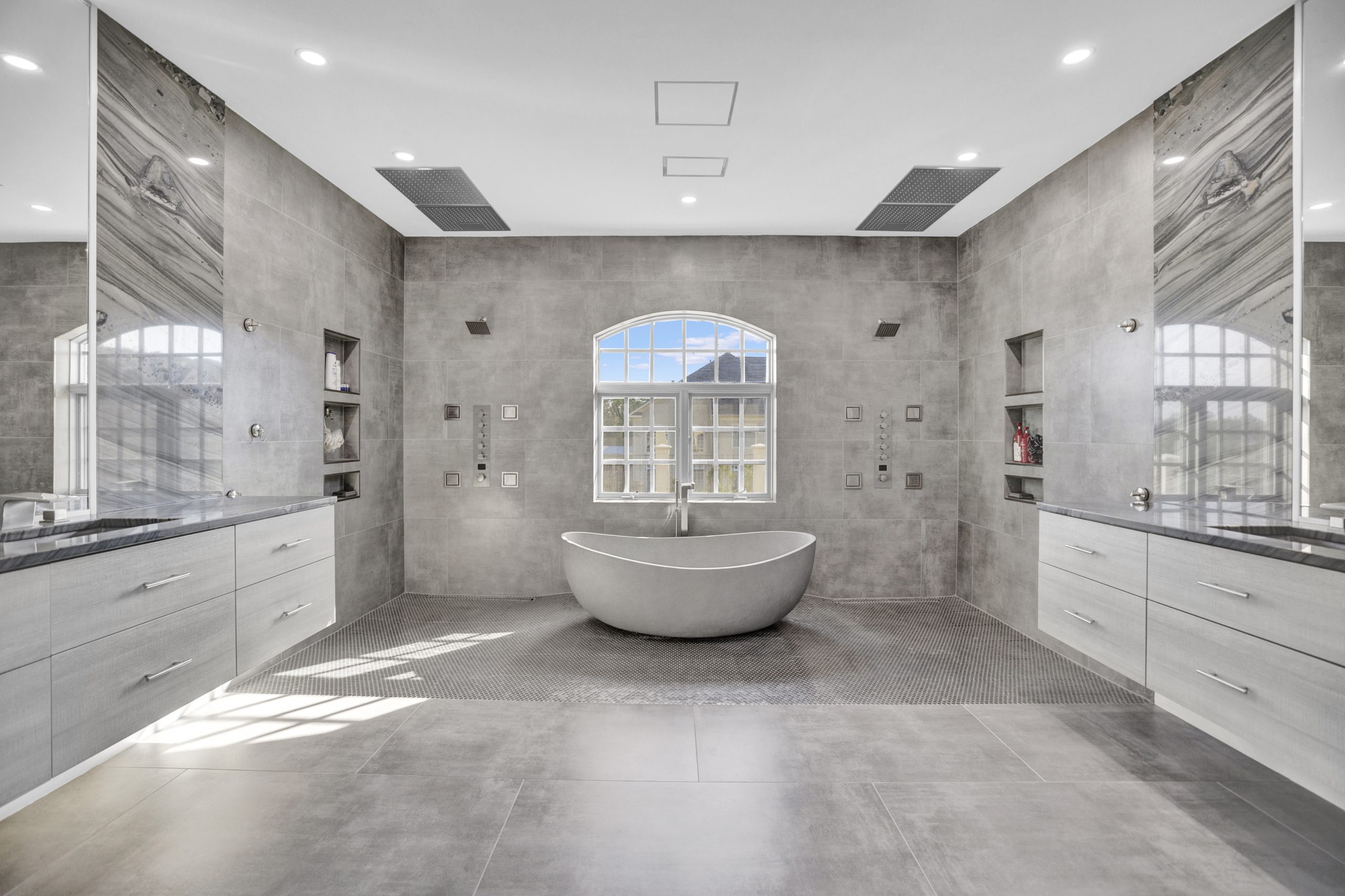
A steam shower conversion runs $10,000 to $20,000 on top of the shower itself. The money goes to the generator and its dedicated circuit, an enclosure sealed to the ceiling with a transom, a vapor proof membrane on every surface including the ceiling, and a ceiling sloped so condensation runs off rather than dripping. A wet room goes the other way and opens everything up: the shower and a freestanding tub share one waterproofed, sloped floor, at $25,000 to $45,000 for the zone inside a primary bathroom remodel of $60,000 to $120,000. Our luxury bathroom ideas and timeless bathroom guide show both, our spa bathroom guide covers the version on a smaller budget, and our bathroom trends guide covers what owners are asking for now.
How Long a Shower Remodel Takes
- Design and selections, 1 to 3 weeks. The tile, the valve and the trim are chosen and ordered before demolition, so nothing waits on a delivery.
- Demolition and plumbing rough, days 1 to 3. The tub or old shower comes out, the drain and the valve go in.
- Rough inspection, day 3 or 4.
- Pan, membrane and the 24 hour flood test, days 4 to 6. The inspector will want to see the pan holding water.
- Tile, days 6 to 10. Walls, floor, niche and curb.
- Grout, fixtures, fan and paint, days 10 to 12. The shower is usable from here with a curtain.
- Glass, 10 to 14 days after the grout. Measured from the finished tile and installed in an hour or two.
A tub to shower conversion takes two to three weeks of construction, a curbless one three to four, and a whole bathroom two to four weeks of active construction inside a project of six to nine weeks from design to completion. If the bathroom is the only one with a shower, tell your contractor at the first meeting, because the sequence can be arranged to keep the gap short. Our bathroom remodel timeline walks through every phase.
Permits for a Shower Remodel in Fairfax and Loudoun County
Replacing a tub with a shower changes the drain and the valve, so it needs a plumbing permit, and a building permit as well where framing or the floor structure changes, as it does for a curbless shower. Permit fees for a bathroom run roughly $200 to $600 in Fairfax and Loudoun County, and the inspector sees the rough plumbing and the flood tested pan before anything is covered. Regrouting, a new door, or a like for like trim change needs no permit. Fairfax County issues permits for most of the county, Loudoun County for all of Loudoun, and Herndon, the City of Fairfax and Falls Church run their own offices; our permit and inspection checklist covers where each inspection falls.
Should You Remove the Tub? Resale in Northern Virginia
In the primary bathroom, usually yes. Most owners use the primary tub a few times a year and the shower every day, and buyers respond to a large tiled shower with frameless glass more than to a tub deck. The mistake is removing the only tub in the house. Families with small children, and future buyers with small children, both want one bathtub somewhere, and a four bedroom colonial with no tub sells to a narrower market. Keep one tub, usually in the hall bath, and make the primary shower as generous as you like. Our guide to remodels that pay off before selling puts return figures on bathroom work.

How to Save on a Shower Remodel, and Where Not To
Where the savings are real:
- Keep the drain where it is. Keeping the wet wall and the drain location is the single biggest cost control in bathroom remodeling.
- Choose porcelain over stone. Marble look porcelain at $18 to $35 per square foot installed against $50 to $110 for real marble, with less upkeep.
- Use a fixed panel instead of a full enclosure where the shower is long enough.
- Build one niche and one bench well rather than several.
- Do it with the rest of the bathroom if that remodel is coming within a few years, so the plumber, the tile setter and the permit are paid for once. Our bathroom cost guide prices the whole room, and the whole house remodel cost guide prices several rooms at once.
Where they are not:
- The pan and the membrane. One continuous system from one manufacturer, flood tested for 24 hours.
- Waterproofing that stops at the cement board. Cement board is not waterproof; the membrane is.
- The slope. Code requires at least 1/4 inch per foot toward the drain.
- The fan. A shower that cannot dry out grows mold however good the tile is.
- The lowest bid. In a shower, the lowest bid is usually the one that left the waterproofing out; ask to see the shower waterproofed before the tile goes on. Our list of the best remodeling companies in Northern Virginia covers how to compare firms.

Frequently Asked Questions
How much does a shower remodel cost in Northern Virginia? In 2026, a custom tiled shower with frameless glass costs $12,000 to $25,000 in Fairfax and Loudoun County, whether it replaces an old shower or a bathtub. A curbless shower with blocking and grab bars runs $15,000 to $25,000, a steam shower conversion adds $10,000 to $20,000, and replacing a prefabricated acrylic unit with a new one costs about $4,000 to $9,000.
How much does a tub to shower conversion cost? A tub to shower conversion costs $12,000 to $25,000 in Northern Virginia for a tiled walk-in shower with frameless glass. The tile, the glass and whether the drain moves set the range. The price covers demolition to the studs, a 2 inch shower drain, a new valve, a pan and membrane that are flood tested, tile to the ceiling, glass and fixtures.
How much does a walk-in shower cost? A tiled walk-in shower costs $12,000 to $17,000 in a tub alcove footprint, $15,000 to $21,000 at 42 by 60 inches with a bench, and $19,000 to $25,000 and up for a large primary shower with two heads, in Northern Virginia in 2026. Size matters less than tile and glass, because the valve, the drain and the labor to set up cost the same in a small shower.
Why are national shower remodel averages so much lower? National guides quote about $7,000 for a shower remodel and $6,000 to $12,000 for a tub to walk-in shower conversion because they average in prefabricated units and liner systems, often leave out the glass, and are national. Labor and permits in Northern Virginia run 15 to 25 percent above the national average, and a tiled shower with a membrane and frameless glass is a different product.
How long does a tub to shower conversion take? Two to three weeks of construction for a tiled shower, and three to four weeks for a curbless one. Frameless glass is measured after the tile is grouted and takes 10 to 14 days to make, so the shower is used with a curtain until the door arrives.
Do I need a permit to convert a tub to a shower in Virginia? Yes. The drain and the valve change, so a plumbing permit is required, and a building permit as well where framing or the floor structure changes. Fees for a bathroom run roughly $200 to $600 in Fairfax and Loudoun County, and the inspector checks the rough plumbing and the flood tested pan.
Does removing a bathtub hurt resale value? Not in the primary bathroom, as long as one bathtub stays somewhere in the house. Buyers respond to a large tiled shower with frameless glass, but families with small children want one tub, and a house with none sells to a narrower market. Keep the tub in the hall bath.
How much more does a curbless shower cost? A curbless shower costs $2,500 to $6,000 more than the same shower with a curb, for the recessed floor framing, the linear drain, waterproofing carried into the bathroom and the extra labor. Cutting a slab for the recess adds $1,000 to $2,500. The Virginia Livable Home Tax Credit can return 50 percent of qualifying accessibility costs, up to $6,500.
Is a one day acrylic shower system cheaper than a tiled shower? Usually, at about $7,000 to $15,000 against $12,000 to $25,000 for tile, and it is finished in a day or two. The difference is what happens behind the wall: a liner system often leaves the old walls and plumbing in place, while a tiled shower opens the alcove, replaces the pan, the membrane and the valve, and reads as a remodel at resale.
How much does frameless shower glass cost? A fixed frameless panel costs $1,000 to $2,500 installed and a full frameless enclosure with a door $2,000 to $5,000 in Northern Virginia. A framed or semi frameless sliding door runs about $900 to $2,000. Frameless glass is measured from the finished tile and takes 10 to 14 days to fabricate.
Get a Fixed Price for Your Shower Remodel
A shower remodel in Northern Virginia is priced by the tile, the glass, the drain and what the wall is hiding, and the only reliable number is a fixed price on a finished design. EA Home Design is a Class A licensed design build firm (license 2705157182) that designs and builds tiled showers and whole bathrooms across Fairfax and Loudoun County, with the pan flood tested and the waterproofing shown to you before the tile goes on. See our bathroom remodeling page and the Leesburg and Ashburn bathroom case studies and our other case studies for finished work, then book a free in home design consultation or call (703) 687-1818.