Most bathroom remodel mistakes are made before the first tile is cut, and nearly all of them are made by sensible people. They happen in the planning, when the budget is a guess and the layout is inherited; in the design, when the shower is drawn too small and the storage is forgotten; in construction, when a fan is vented into the attic or an old shower pan is reused under new tile; and at the finish, when the money runs out two weeks before the mirror and the towel bars. After hundreds of bathrooms in Fairfax County and the rest of Northern Virginia, EA Home Design sees the same twenty five errors again and again. This guide lists them in the order they happen, with what each one costs to prevent and what it costs to fix once the tile is up, then covers what is particular to Fairfax County: the permits, the inspections, and the surprises inside houses built between 1965 and 1995.
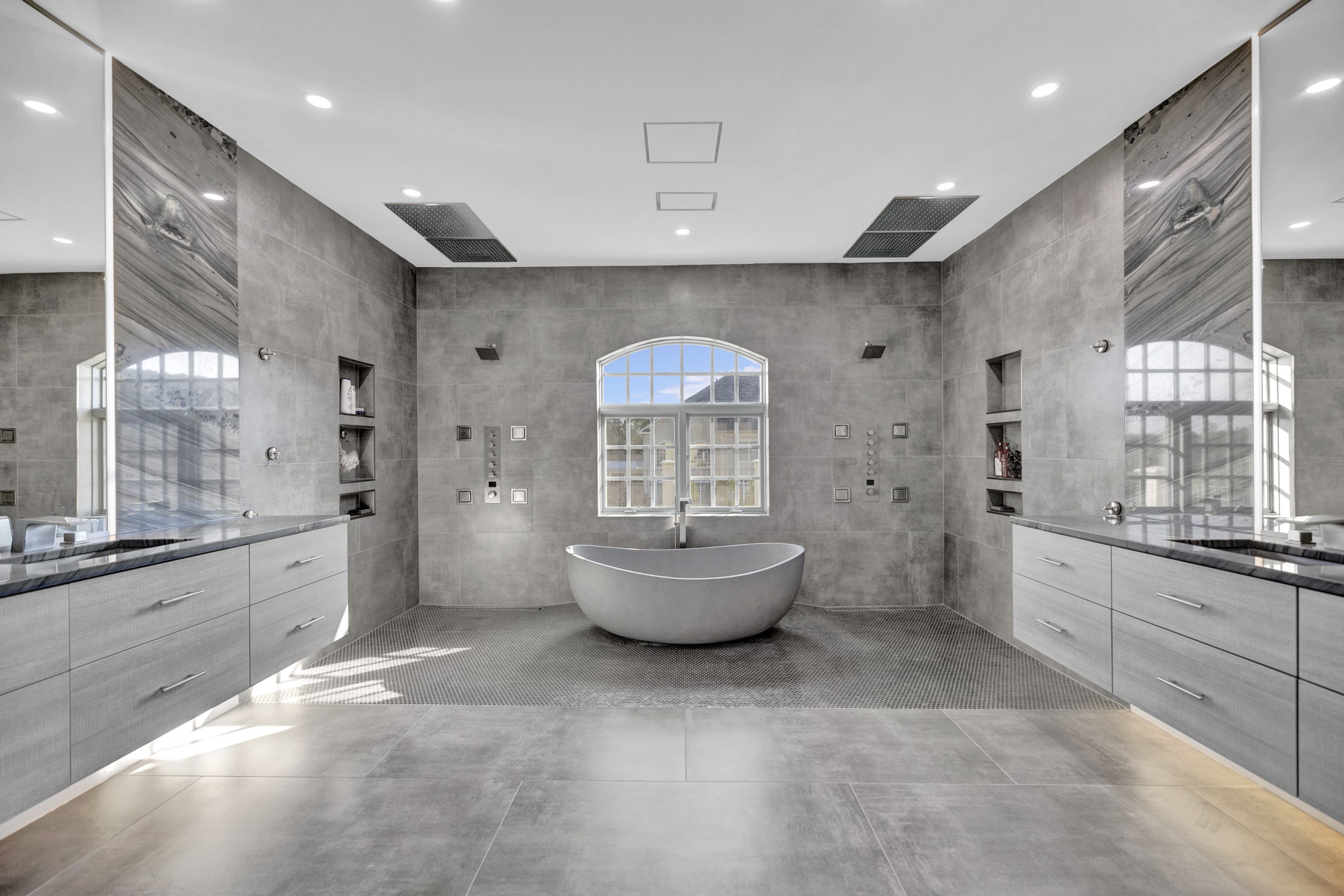
The 25 Mistakes at a Glance
| Stage | The mistakes | What they usually cost |
|---|---|---|
| Planning | A guessed budget with no contingency, no decision on scope, a skipped permit, a contractor chosen on price, materials ordered late, no plan for the weeks without a bathroom, no written scope | Overruns of 20 to 30 percent, weeks of delay, resale problems |
| Layout and design | An inherited layout that never worked, the only tub removed, a cramped shower with a curb, no storage, the wrong vanity, lighting left to the end, no thought for aging in place, trend finishes on permanent surfaces | $1,500 to $5,000 per fixture moved later, or a room you dislike for twenty years |
| Construction and materials | The old shower pan reused, no proper waterproofing, slippery or wrong tile, the wrong grout, a fan too small or vented into the attic, shared circuits and no outlet, old valves and supply lines left in place, no blocking, no niche, the subfloor ignored | $12,000 leak repairs, mold, re-tiled walls, a shower rebuilt in year three |
| Finish and decisions | Fixtures bought online without the rough in checked, changes made mid build, nothing left for paint and accessories | Change order premiums, returns, a finished room that looks unfinished |
The figures through this guide come from our own Northern Virginia projects and match our bathroom remodel cost guide: a full hall bathroom runs $30,000 to $55,000 in 2026, a primary bathroom $60,000 to $120,000 and a powder room $10,000 to $20,000. Every mistake below is measured against those numbers.
Planning Mistakes
1. Guessing the Budget and Leaving Out the Contingency
The most common mistake is also the first one. A homeowner reads a national survey that puts a midrange bathroom near $25,000, carries that number into a Fairfax County remodel that will cost $30,000 to $55,000 for a hall bath done properly, and spends the project feeling cheated by a market they did not price. The second half of the mistake is leaving no room for what the walls hide. Houses built in the 1970s, 1980s and 1990s, which is most of Fairfax County, hide shared circuits, attic vented fans, cast iron drains, polybutylene supply lines, soft subfloors and the occasional surprise behind a tub surround. Carry a contingency of 10 to 15 percent and expect to use some of it.
2. Not Deciding the Scope Before Pricing It
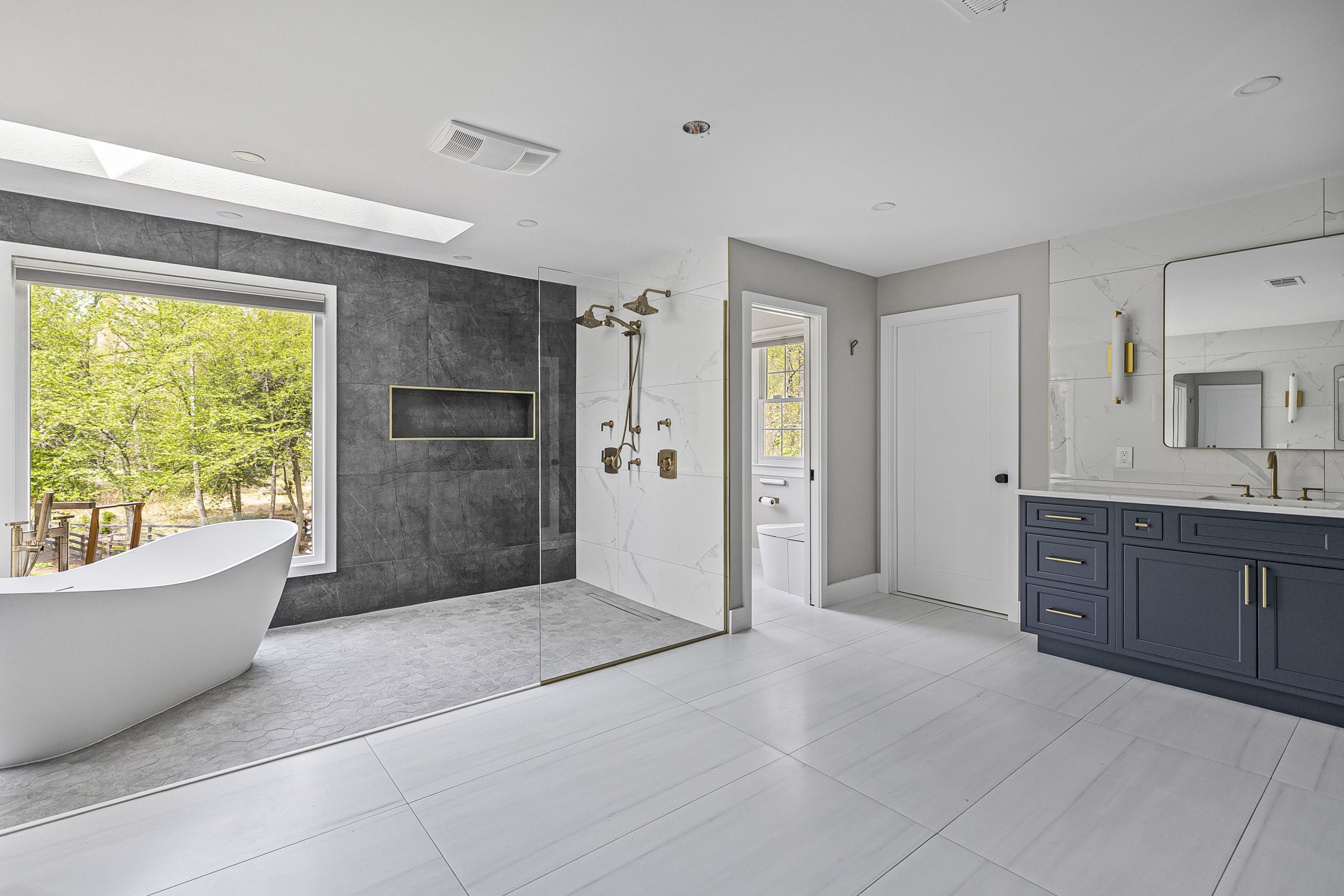
There are three different bathroom remodels and they cost three different amounts. The refresh, $10,000 to $25,000, keeps every fixture where it is and changes the surfaces: vanity, top, toilet, lighting, mirror, paint and floor. The pull and replace, which is the $30,000 to $55,000 hall bath and the $60,000 to $120,000 primary, takes the room to the studs and rebuilds it in the same footprint. The gut and reconfigure, $60,000 and up, moves walls and fixtures. Homeowners who price a refresh and then ask for a moved toilet during demolition get the third remodel at the first remodel’s schedule, and nobody is happy. Decide which of the three you are buying, then get it in writing.
3. Skipping the Permit
In Fairfax County a permit is needed whenever plumbing is moved, an electrical circuit is added or changed, or a wall is altered, which covers nearly every remodel beyond a refresh. Fees run roughly $200 to $600 for a bathroom and processing takes one to three weeks. Homeowners skip it to save the weeks and the inspections, and the saving comes due at resale, when an unpermitted bathroom shows up in a title search or an appraisal, or at the insurance claim after a leak. Our permits and inspections checklist walks through the county process; the short version is that a contractor who suggests skipping it is telling you something about the rest of the job.
4. Choosing the Contractor on Price Alone
The lowest of three bids is usually the one that left something out: the permit, the waterproofing membrane, the new valve, the dedicated circuit, the dumpster, the contingency. Compare the scope line by line before comparing the total. Check the Virginia contractor license, the insurance certificate, and three Fairfax County references from the last year, and ask to see a bathroom the firm finished three years ago, because that is when a bad shower pan announces itself.
5. Ordering Materials Late
A bathroom is small and its materials are slow. Tile from a specialty line, a custom vanity, a freestanding tub and frameless shower glass each carry lead times of several weeks, and the glass cannot even be measured until the tile is set. A remodel that starts with every material on site runs its construction weeks back to back, 2 to 4 of them for most bathrooms; one that starts with the tile in transit runs them with gaps, and the gaps are where budgets go. Our bathroom remodel timeline lays the sequence out week by week.
6. No Plan for the Weeks Without a Bathroom
A primary bathroom is out of service for 3 to 6 weeks of construction, a hall bath for 2 to 4, and the household has to shower somewhere. Families with one full bathroom either plan a temporary arrangement or stage the work; the ones who do neither pressure the crew to rush the step that most needs time, the waterproofing cure, and pay for the rush later.
7. Nothing in Writing
Every bathroom has forty decisions in it, from the valve trim to the grout color to which way the door swings, and the ones made by a text message at 9 p.m. are the ones that get built wrong. Insist on a written scope, a finish schedule listing every product by model and color, a drawing of the layout with dimensions, and a change order process with prices. A few hundred dollars of design time before construction is the cheapest money in the project.
Layout and Design Mistakes
8. Keeping a Layout That Never Worked
The toilet is the first thing you see from the hall. The door hits the vanity. The shower is in the dark corner and the window is over the tub nobody uses. A pull and replace in the same footprint is the right call for most hall baths, but it is worth asking, once, whether moving one fixture would fix the room. Moving a fixture costs $1,500 to $5,000 each in Northern Virginia depending on distance and what the floor structure allows, and the right $3,000 move is the best money in a $45,000 bathroom. Reversing or pocketing a door that fights the layout runs $1,000 to $3,000.
9. Removing the Only Tub
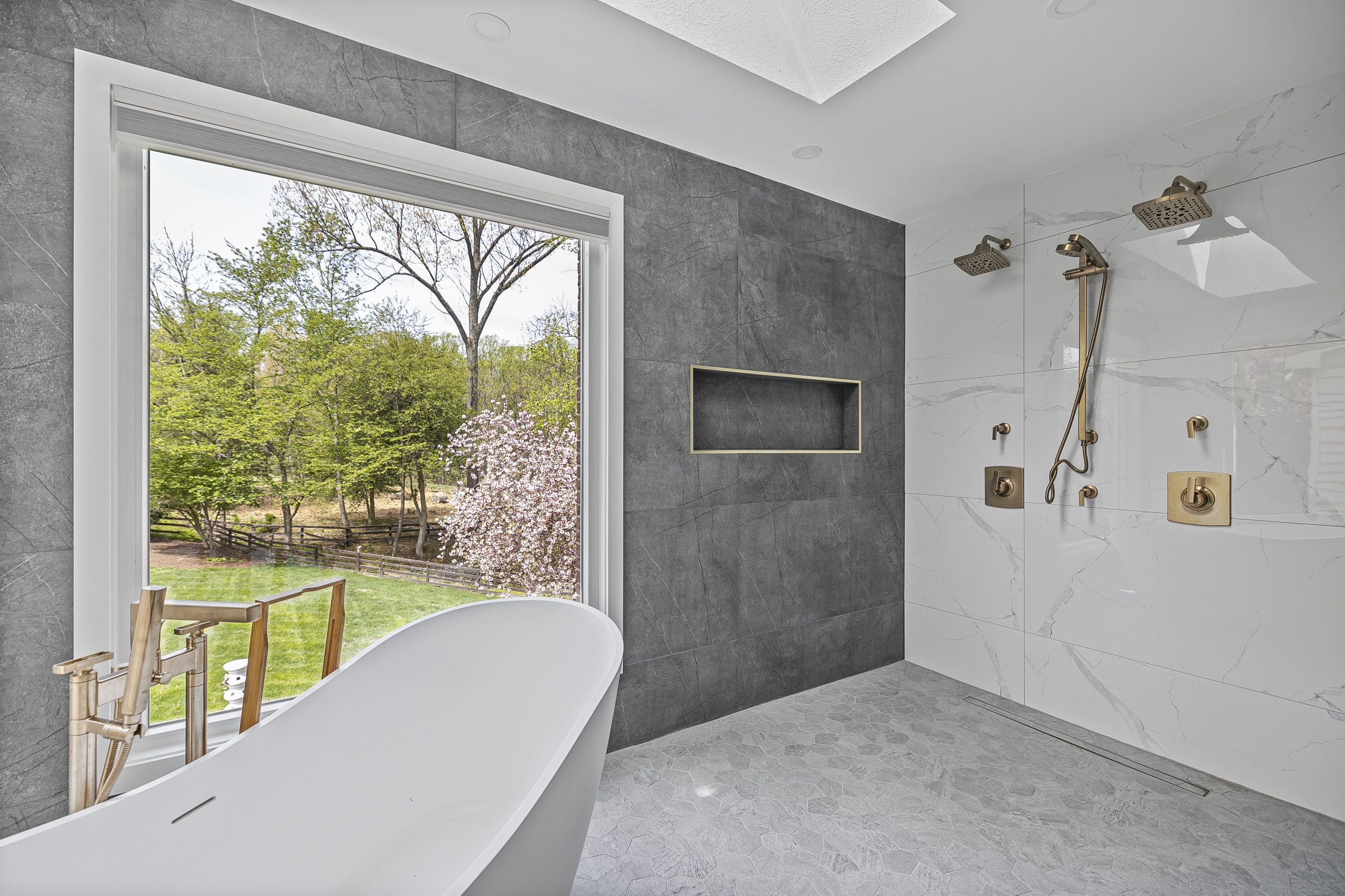
Replacing a rarely used tub with a large walk in shower is the single most requested change in bathroom remodeling and usually the right one, at $12,000 to $25,000 in Northern Virginia. The mistake is doing it to the only tub in the house. Families with small children and future buyers with small children both want one bathtub somewhere, and a four bedroom colonial with no tub sells to a narrower market. Keep one tub in the house, usually in the hall bath, and make the primary shower as generous as you like.
10. A Cramped Shower With a Curb When Curbless Was Possible
Showers get drawn too small because the tub they replace was 30 inches deep and the drawing kept the line. A shower people enjoy is at least 36 by 48 inches, and 42 by 60 where the room allows. The curb is the second half: a curbless shower with a linear drain adds roughly $2,500 to $6,000 to a curbed one and removes the step that every member of the household will one day be glad is gone. Our curbless versus walk in shower guide covers when it is worth it and when it is not.
11. Forgetting the Storage
A bathroom with nowhere to put the towels, the hair dryer and the twelve bottles that live in every shower is a bathroom that looks messy the week after it is finished. Storage is designed in, not added: a vanity with drawers rather than doors, a recessed medicine cabinet, a recessed shampoo niche or two, a bench, a linen tower or a recessed shelf stolen from the wall cavity. Niches and benches cost $300 to $800 each during shower construction and are impossible after the tile. Our bathroom storage guide has the full list.
12. The Wrong Vanity
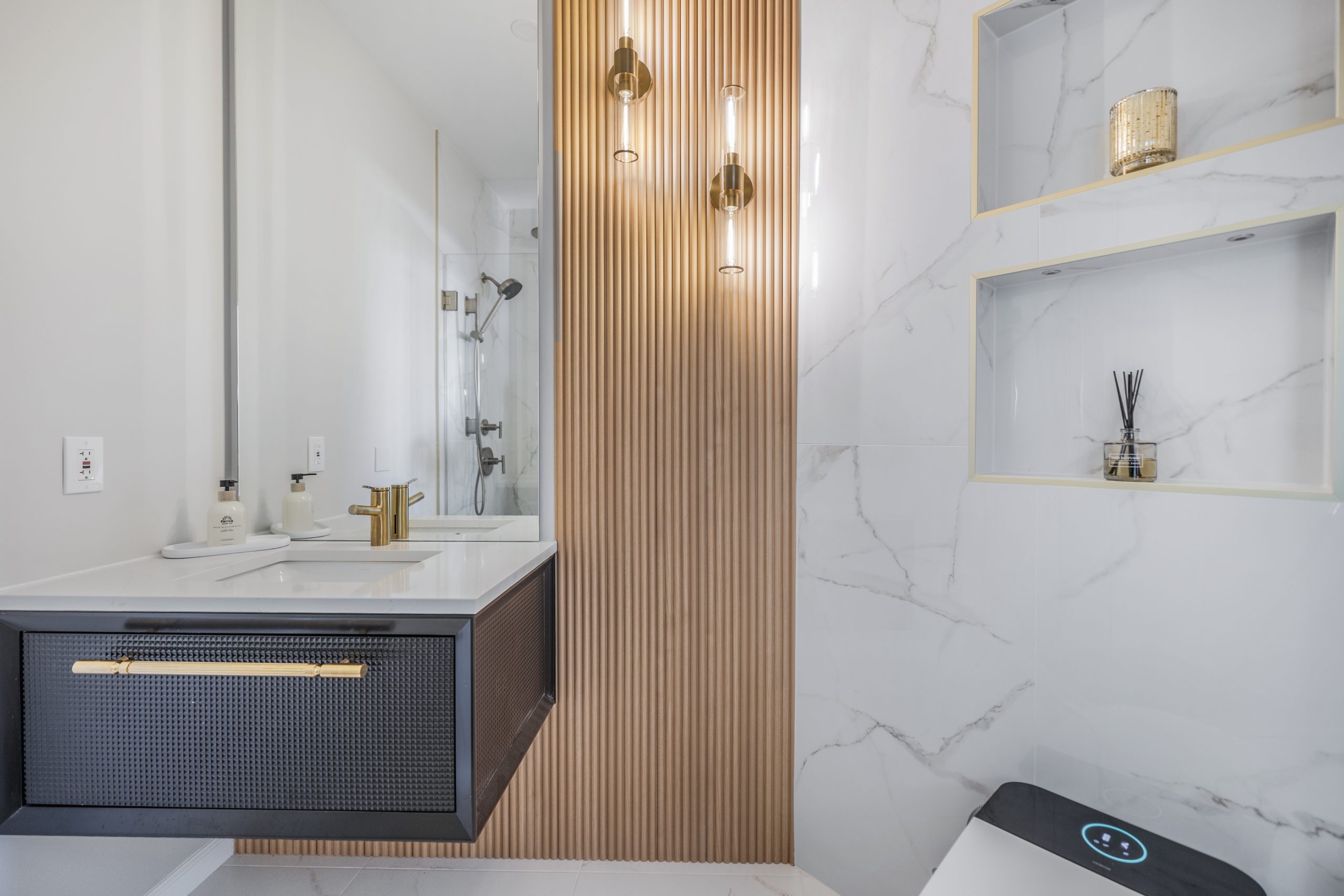
Three vanity mistakes repeat. One sink where two people get ready at the same time, when a double vanity where a single stands costs $3,000 to $6,000 plus plumbing and ends a decade of argument. A vanity at the old 30 inch height when 34 to 36 inches suits adults and saves backs. And a vanity bought for its photograph without checking that the drawers clear the plumbing, that the door clears the toilet, and that the top fits through the hall.

13. Lighting Left to the End
One ceiling light over a bathroom lights the top of your head and shadows your face. A bathroom needs layers: sconces or a lit mirror at face height on either side of the sink, a ceiling light for the room, a wet rated light in the shower, and a dimmer for the 2 a.m. visit. All of it is wiring, and wiring happens before drywall. Decide the lighting with the layout, not with the accessories.
14. Ignoring the Next Twenty Years
A bathroom remodeled at fifty is still in use at seventy. The changes that make it work then cost almost nothing now: blocking in the walls for future grab bars, a curbless or low curb shower, a handheld sprayer, a comfort height toilet, a wider door, lever handles and non slip floor tile. Blocking costs $100 to $300 during framing and $800 to $2,000 after tile. Virginia’s Livable Home Tax Credit can return 50 percent of qualifying accessibility costs up to $6,500.
15. Trend Finishes on Permanent Surfaces
Tile, stone and the shower glass are fifteen to twenty year decisions; paint, towels, the mirror and the hardware are two year decisions. The mistake is putting this year’s pattern on the fifteen year surface. Put the personality in the things that change and keep the tile, the tub and the counter in the finishes that have looked right for decades, which our timeless bathroom guide lists. The same goes for metals: one finish for the plumbing fixtures, a second at most for lighting and hardware, as our mixing metals guide explains, and a color on the walls chosen for a room with no window to speak of, which our room color guide covers under bathrooms.
Construction and Material Mistakes
16. Reusing the Old Shower Pan
This is the saving we will talk a client out of every time. A fifteen year old pan or a mortar bed of unknown condition under brand new tile is how a $40,000 bathroom becomes a $12,000 leak repair in year three, with the ceiling below it opened up for good measure. A new pan or a new sloped mortar bed with a bonded membrane is part of any shower built to last, and it is a small share of the $12,000 to $25,000 the shower costs.
17. Waterproofing That Stops at the Cement Board
Cement board is not waterproof; it is a stable surface for tile that happens not to rot. The waterproofing is the membrane over it, sheet or liquid, carried up the walls, into the niche, over the bench, through the corners and down to the drain with the right flange, and allowed to cure before the tile goes on. The mistakes are a membrane that stops short of the shower head, a niche that was never sealed, a bench top that slopes toward the wall, and tile set the same afternoon the liquid membrane went on. Ask to see the shower waterproofed before tile and photograph it; it is the one step you cannot inspect later.

18. The Wrong Tile for the Floor
A polished 24 by 24 porcelain that looks magnificent on a showroom wall is a skating rink on a wet bathroom floor. Floors need a slip rating made for wet areas, which in practice means a matte or textured finish or a small format tile with enough grout lines to grip, as in the mosaic shower floors that also let the pan drain properly. Large format tile belongs on the walls and, in a matte finish, on the dry floor. Replacing a slippery floor later means pulling the vanity and the toilet, $3,000 to $7,000 for a room that was new.
19. Grout, Sealant and the Corners
Cement grout in a shower stains, cracks at the corners and needs sealing every year or two; epoxy or high performance grout costs more per bag and almost nothing per year. Every change of plane in a shower, where wall meets wall, wall meets floor and tile meets tub, takes a flexible sealant rather than grout, because the house moves and grout does not. A shower grouted into its corners will crack there within a year.
20. A Fan Too Small or Vented Into the Attic
Older Fairfax County bathrooms vented their fans into the attic, and some still do. Code now requires exterior venting through the roof or a wall, the duct insulated where it runs through unconditioned space, and a fan sized for the room, roughly one cubic foot per minute per square foot of floor with more over a large shower or a tub. A properly sized and ducted fan runs $400 to $1,200 installed, and the quiet modern units with a humidity sensor and a timer are worth the top of that range. The attic vented fan or the undersized one is how a new bathroom grows old mold, and mold remediation with the affected wall re-tiled runs $3,000 to $8,000.

21. The Electrical Nobody Budgeted
Many houses from the 1970s through the 1990s tie the bathroom outlets into one ground fault circuit that also serves the other bathrooms, the garage and the outside, so two hair dryers reset the whole house. A dedicated 20 amp circuit for the bathroom, an outlet within reach of the vanity, a separate circuit for heated floors, and the wiring for the lighting layers are standard in a remodel and a surprise to owners who priced a refresh. Houses from the late 1960s and early 1970s may also carry aluminum branch wiring, which needs proper connectors or replacement when a circuit is touched. Adding an outlet after the tile is up costs $300 to $800; adding it during framing costs a fraction.
22. Old Valves, Old Pipes and the Subfloor Nobody Looked At
A remodel that leaves the thirty year old shower valve behind the new tile will open that tile when the valve fails. Replace the valve with a pressure balanced or thermostatic one, replace supply lines and stops, and look hard at the drains: cast iron from the 1960s and 1970s and polybutylene supply from 1978 to 1995 are both common in Fairfax County and both worth addressing while the walls are open. Underneath, a subfloor softened by twenty years of a leaking toilet flange needs replacing before anything is set on it; found during demolition it is a few hundred dollars, found after the floor tile is laid it is the floor again.
Finish and Decision Mistakes
23. Buying Fixtures Online Without Checking the Rough In
Owners save money buying the tub, the toilet and the faucets themselves and then discover the toilet needs a 10 inch rough in where the floor has 12, the tub filler needs a floor box the slab cannot take, the wall hung vanity needs blocking that is already behind drywall, and the faucet has three holes where the top has one. Buying your own fixtures is fine; buying them before the contractor has confirmed the rough in dimensions, the valve compatibility and the delivery date is not.

24. Changing Your Mind Mid Build
A tile change before the order is free. The same change after the tile is on site is a restocking fee, two weeks of delay and a crew rebooked, and after the tile is on the wall it is the wall again. Change orders carry a premium because they break the sequence everyone planned around; make the decisions in the design weeks, when they cost nothing, and treat the finish schedule as signed.
25. Nothing Left for the Finish
The mirror, the sconces, the towel bars, the hooks, the paper holder, the shower door hardware, the paint and the bath mat arrive at the end, when the budget is most tired, and they reliably absorb $500 to $1,500. A bathroom with a $4,000 tub and builder grade towel bars looks unfinished. Hold the finish money back from the start, and choose the hardware with the faucet so the metals match.

What Each Mistake Costs to Prevent and to Fix
The pattern in bathroom remodeling is that prevention is cheap and repair is a second remodel. These are the 2026 Northern Virginia figures we use.
| Mistake | Done right during the remodel | Fixed after the tile is up |
|---|---|---|
| Old shower pan reused | New pan and membrane, included in a $12,000 to $25,000 shower | $12,000 leak repair in year three, plus the ceiling below |
| Fan undersized or vented into the attic | $400 to $1,200 for a sized, ducted fan | $3,000 to $8,000 for mold remediation and a re-tiled wall |
| No niche or bench | $300 to $800 each during construction | The wall re-tiled, $2,000 to $5,000, or never |
| No blocking for grab bars | $100 to $300 during framing | $800 to $2,000 to open and patch tiled walls |
| No outlet by the vanity, shared circuit | A dedicated circuit and outlet, a few hundred dollars during rough in | $300 to $800 per outlet, more for a new circuit through finished walls |
| Slippery floor tile | A matte or small format tile at the same price | $3,000 to $7,000 to pull fixtures and relay the floor |
| Fixture moved after the fact | $1,500 to $5,000 planned in the design | The same plus demolition of new work and a second inspection |
| Door that fights the layout | $1,000 to $3,000 to reverse or pocket it in the plan | The same plus a re-trimmed opening and a repainted room |
| Skipped permit | $200 to $600 in fees and one to three weeks | A retroactive permit with walls opened for inspection, or a price cut at resale |
| Mid build change | Nothing, decided in the design weeks | Restocking, delay and a premium on the change order |
| Finish money spent early | $500 to $1,500 held back | A finished room that looks unfinished until it is found |
What Is Different About Fairfax County
Bathroom mistakes are universal; a few of them are local. Fairfax County issues the permits and performs the inspections, and the sequence for a typical remodel is a rough in plumbing inspection, a rough in electrical inspection, a framing or insulation check where walls change, and a final. Each one is a day the crew cannot close the wall, and a schedule that does not include them is a schedule that will slip. Townhome communities add an association, which may have a say in the exterior vent cap, the dumpster and the working hours.
The houses themselves set the second group of local traps. Fairfax County grew fastest between 1965 and 1995, so the typical remodel opens a bathroom of that age: fans vented into the attic, one ground fault circuit shared across the house, cast iron drain lines, polybutylene supply lines in homes from the late 1970s to the mid 1990s, aluminum branch wiring in some homes from the late 1960s and early 1970s, and the compact 5 by 7 or 5 by 8 hall bath that most colonials and townhomes carry at least one of. That hall bath costs $25,000 to $45,000 to remodel properly, and most of the mistakes above cost more in it than in a large primary because there is no room to absorb them.
Water is the third. Fairfax Water is moderately hard, which means scale on frameless glass and on dark fixtures; a squeegee hung in the shower, a protective coating on the glass and a finish that hides water spots, brushed rather than polished, are the cheap answers. Our Fairfax County bathroom remodeling page shows what the finished rooms look like in the county’s own houses, and our bathroom remodeling page covers the service across Northern Virginia.
The Pre Construction Checklist
- The scope is one of the three remodels, in writing, with a 10 to 15 percent contingency on top of the price.
- The permit is applied for and the inspections are on the schedule.
- The contractor’s Virginia license, insurance and three recent Fairfax County references are checked.
- The layout is drawn with dimensions: shower at least 36 by 48 inches, vanity height, door swing, toilet clearance, the tub kept somewhere in the house.
- The finish schedule lists every product by model and color: tile, grout, membrane, valve, trim, vanity, top, faucet, toilet, lighting, glass, hardware, paint.
- The lighting plan has layers and a dimmer, and the electrical plan has a dedicated circuit, an outlet by the vanity and the heated floor circuit if there is one.
- The fan is sized for the room and ducted outdoors.
- Blocking for grab bars, a handheld sprayer and a comfort height toilet are on the plan whether or not anyone needs them yet.
- Every niche and bench is on the drawing before the shower is framed.
- Every material is on site before demolition, and the glass is scheduled for after the tile.
- The household knows where it will shower for the construction weeks.
- The finish money is held back and the metals match.
What a Bathroom Remodel Costs in Fairfax County (2026)
For the budget mistake above to be avoidable, the real numbers have to be on the table. These are the ranges from our Northern Virginia bathroom cost guide, which also explains why they sit above national surveys.
| Bathroom or item | 2026 cost, Northern Virginia | Notes |
|---|---|---|
| Powder room | $10,000 to $20,000 | Vanity, toilet, tile floor, wallpaper or paint, mirror and sconces |
| Refresh, any bathroom | $10,000 to $25,000 | Fixtures stay put, surfaces change |
| Hall bathroom, full remodel | $30,000 to $55,000 | The 5 by 7 or 5 by 8 hall bath lands at $25,000 to $45,000 |
| Primary bathroom, full remodel | $60,000 to $120,000 | Gut and reconfigure starts at $60,000 |
| Tub replaced by a tiled walk in shower | $12,000 to $25,000 | Curbless adds $2,500 to $6,000 |
| Freestanding tub with a floor mounted filler | $4,000 to $9,000 installed | |
| Double vanity in place of a single | $3,000 to $6,000 plus plumbing | |
| Heated floors | $2,000 to $4,500 installed | The upgrade clients most often say they would never give up |
| Steam shower conversion | $10,000 to $20,000 | |
| Moving a fixture | $1,500 to $5,000 each | |
| Frameless shower glass | $2,000 to $5,000 | Measured after the tile |
| Exhaust fan, sized and ducted | $400 to $1,200 | |
| Permit fees | $200 to $600 | Processing one to three weeks |
| Paint and accessories | $500 to $1,500 | Held back for the end |
Projects we have completed across the county, with their scopes and costs, are in our case studies. For owners who want a bathroom that looks like more than it cost, our luxury bathroom ideas on a budget and spa bathroom on a budget guides show where the money shows, and our guide to remodels that pay off covers which bathroom decisions buyers reward.
Frequently Asked Questions
What are the most common bathroom remodel mistakes? Guessing the budget without a contingency, not deciding the scope before pricing, skipping the permit, reusing an old shower pan, stopping the waterproofing short, undersizing or attic venting the exhaust fan, forgetting storage and lighting until the end, choosing slippery floor tile, and spending the finish money early. The 25 in this guide are listed in the order they happen.
How much does a bathroom remodel cost in Fairfax County in 2026? A full hall bathroom runs $30,000 to $55,000, a primary bathroom $60,000 to $120,000, a powder room $10,000 to $20,000 and a refresh that keeps the fixtures in place $10,000 to $25,000. The compact 5 by 7 hall bath most colonials have costs $25,000 to $45,000 done properly.
Do I need a permit for a bathroom remodel in Fairfax County? Yes whenever plumbing is moved, an electrical circuit is added or changed, or a wall is altered, which covers nearly every remodel beyond a surface refresh. Fees run roughly $200 to $600 and processing takes one to three weeks, with rough in and final inspections during the work.
What is the biggest mistake when remodeling a bathroom? Reusing the old shower pan or skimping on waterproofing. Either one turns a $40,000 bathroom into a $12,000 leak repair in year three, usually with the ceiling below it opened as well. Ask to see the shower waterproofed before the tile goes on.
Should I remove the bathtub for a walk in shower? In the primary bathroom, usually yes; it is the most requested change in bathroom remodeling and costs $12,000 to $25,000 in Northern Virginia. Keep at least one tub somewhere in the house, usually the hall bath, for children and for resale.
How big should a shower be? At least 36 by 48 inches for a shower people enjoy, and 42 by 60 inches where the room allows. Showers get drawn too small when the drawing keeps the line of the 30 inch tub they replace.
Why does my new bathroom have mold? Almost always the fan: undersized, vented into the attic rather than outdoors, or never run long enough. A fan sized at roughly one cubic foot per minute per square foot, ducted outside and on a humidity sensor or timer costs $400 to $1,200 installed and prevents a $3,000 to $8,000 repair.
How long does a bathroom remodel take? Most take 2 to 4 weeks of construction once demolition begins and 6 to 9 weeks from the first design meeting to the final walkthrough, including design, materials and permits. Starting with every material on site is what keeps the construction weeks back to back.
Can I buy my own fixtures to save money? Yes, once the contractor has confirmed the rough in dimensions, the valve compatibility and the delivery dates. Fixtures bought before that are the ones that do not fit: the toilet with the wrong rough in, the wall hung vanity with no blocking, the faucet with the wrong number of holes.
How do I make a bathroom work as I get older? Plan it now while the walls are open: blocking for grab bars, a curbless or low curb shower, a handheld sprayer, a comfort height toilet, lever handles, non slip floor tile and a wider door. Blocking costs $100 to $300 during framing and $800 to $2,000 later, and Virginia’s Livable Home Tax Credit can return 50 percent of qualifying costs up to $6,500.
Avoiding Them Is Mostly a Matter of Order
Read the list again and notice that almost every mistake is a decision made late or not at all. Decide the scope, then the layout, then the finishes, then the electrical and the lighting, then order everything, then demolish. Insist on seeing the waterproofing. Keep the finish money. Do that and a Fairfax County bathroom comes in at the numbers above, on the weeks above, and looks the same in year ten as it did on the day the glass went in. EA Home Design plans and builds bathrooms across Fairfax County and the rest of Northern Virginia in exactly that order, and the general version of these lessons is in our guide to the mistakes that derail any remodel.