Basement Remodeling Ideas: Transform Your Northern Virginia Basement
Your basement may be the most underused space in your home.
For many Northern Virginia homeowners, it’s a dim storage area collecting boxes and forgotten gear.
But with the right plan, that lower level can become the most exciting room in the house.
A finished basement adds living space, boosts your home’s value, and gives your family room to spread out, without the cost of an addition.
In this guide, we’ll walk through the best basement remodeling ideas, the design and code factors that matter most in Fairfax and Loudoun County, realistic costs, and the mistakes to avoid.
Whether you dream of a home theater, a gym, a guest suite, or a full entertainment hub, here’s how to make it happen.
Why Finish Your Basement in Northern Virginia?
Finishing a basement is one of the smartest ways to add usable square footage to your home.
In the Northern Virginia market, where home values and demand are high, a finished lower level pays off in both lifestyle and resale.
Here’s what makes it worth the investment:
- Added living space without the cost or disruption of a home addition
- Strong return on investment at resale, often 70% or more
- Flexible function that grows with your family’s needs
- Rental or in-law potential if designed as a separate suite
- More comfort and storage for everyday living
For most homeowners, a basement remodel costs far less per square foot than building up or out, making it one of the best values in home improvement.
Is Your Basement Ready to Be Finished?
Before the fun design choices, your basement needs to pass a few practical checks. Addressing these early prevents expensive surprises later.
Moisture and Waterproofing
Water is the enemy of any finished basement. Look for signs of dampness, staining, or musty odors.
A proper remodel starts with sealing cracks, grading the exterior, and adding a sump pump or dehumidifier if needed. Never finish over a moisture problem, it will only resurface.
Ceiling Height
Most building codes require a finished ceiling height of at least 7 feet. Measure before you plan, especially if you want a dropped ceiling or recessed lighting.
Egress and Safety
If your basement will include a bedroom, code requires a proper egress window or exterior door for safe exit. This is a non-negotiable safety and permitting requirement.
Permits
Fairfax and Loudoun County both require permits for basement finishing that involves framing, electrical, plumbing, or egress work. A reputable contractor will handle permits and inspections for you.
The Best Basement Remodeling Ideas
Once your space is ready, the possibilities open up. Here are the most popular and rewarding ways to use a finished basement. For more inspiration, see our roundup of basement renovation ideas including home gyms, media rooms, and ADU-ready spaces.
1. Home Theater or Media Room
Basements are ideal for media rooms because they’re naturally darker and more sound-isolated. Add a large screen, surround sound, tiered seating, and blackout finishes for a true cinema feel.
2. Home Gym
Skip the gym membership and bring the workout home. A basement gym needs durable flooring, good ventilation, mirrors, and bright lighting. There’s room for cardio equipment, free weights, and a yoga area.
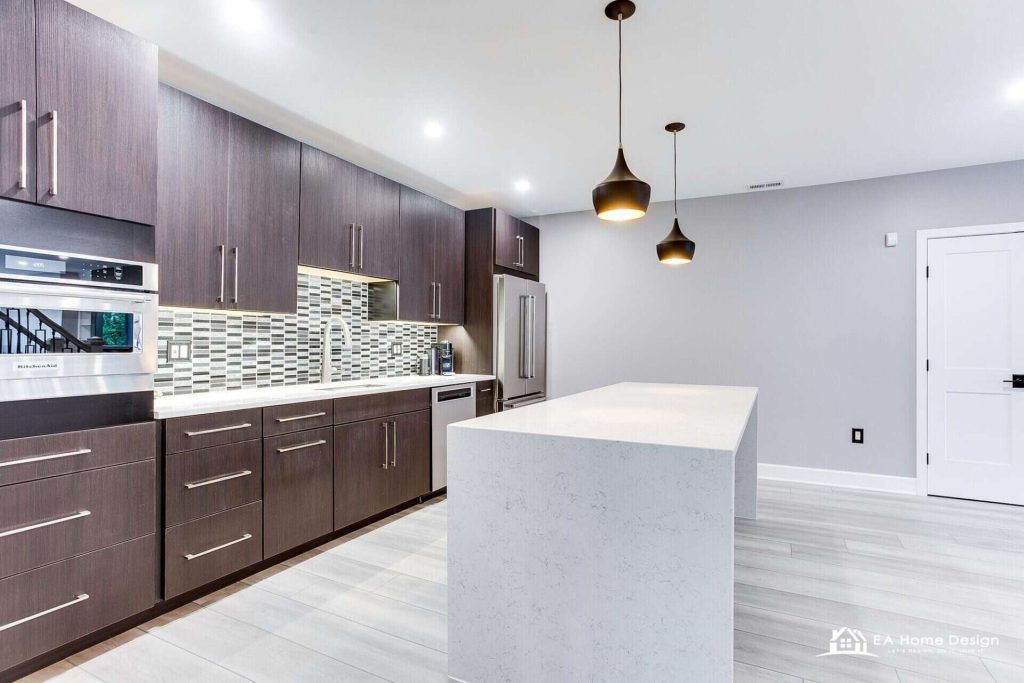
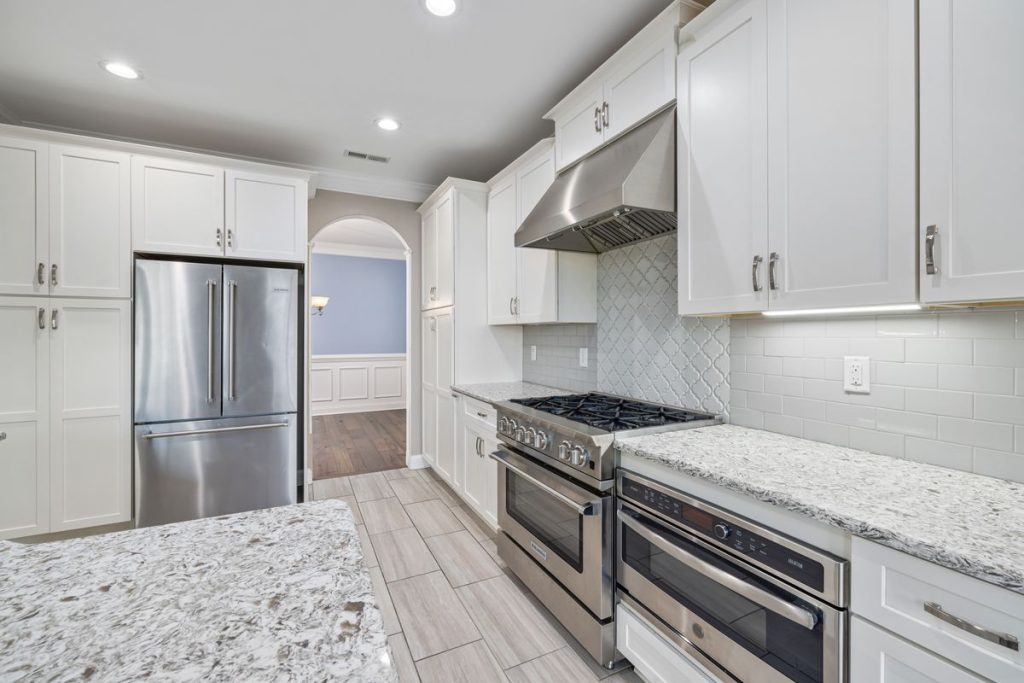
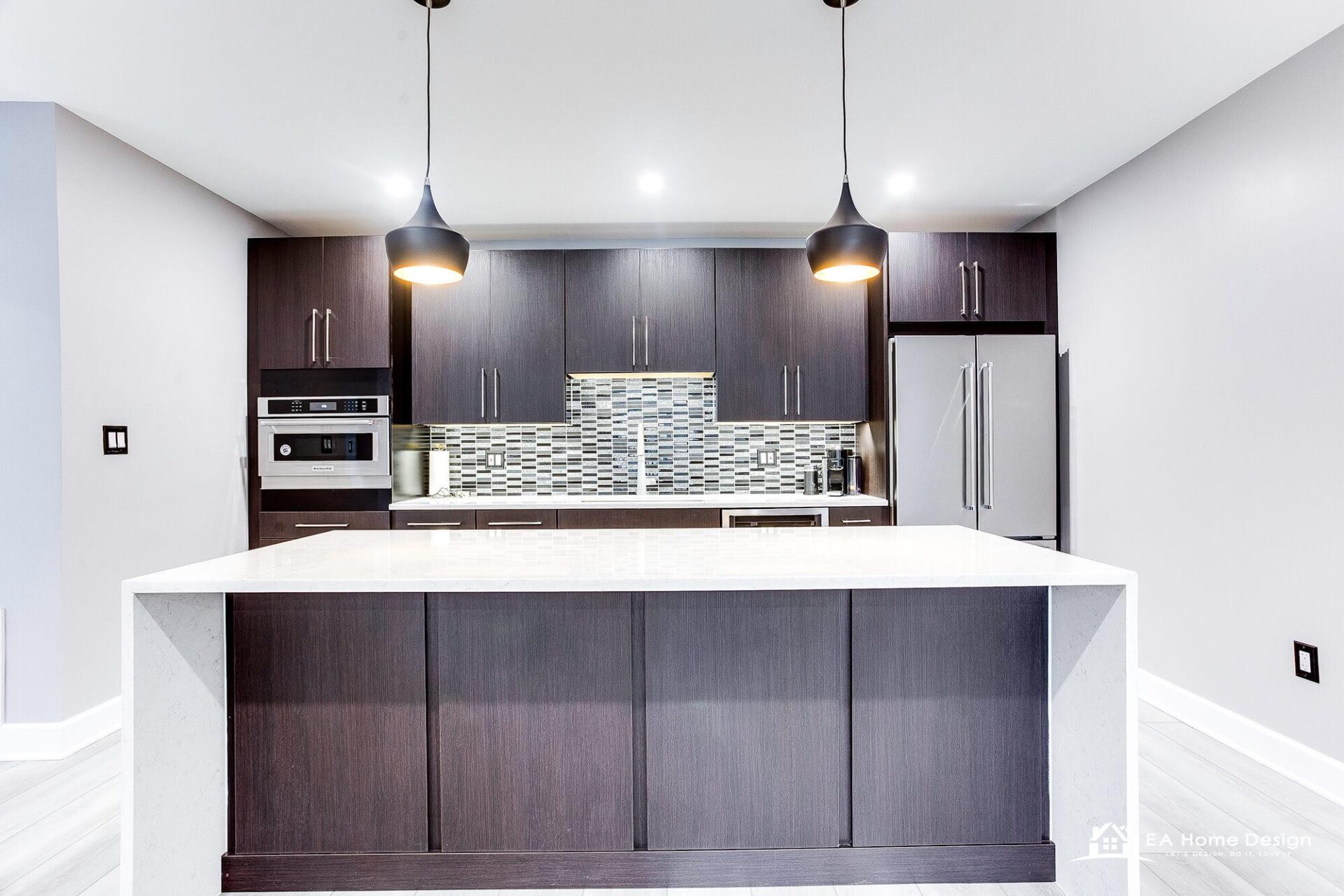
3. Wet Bar or Kitchenette
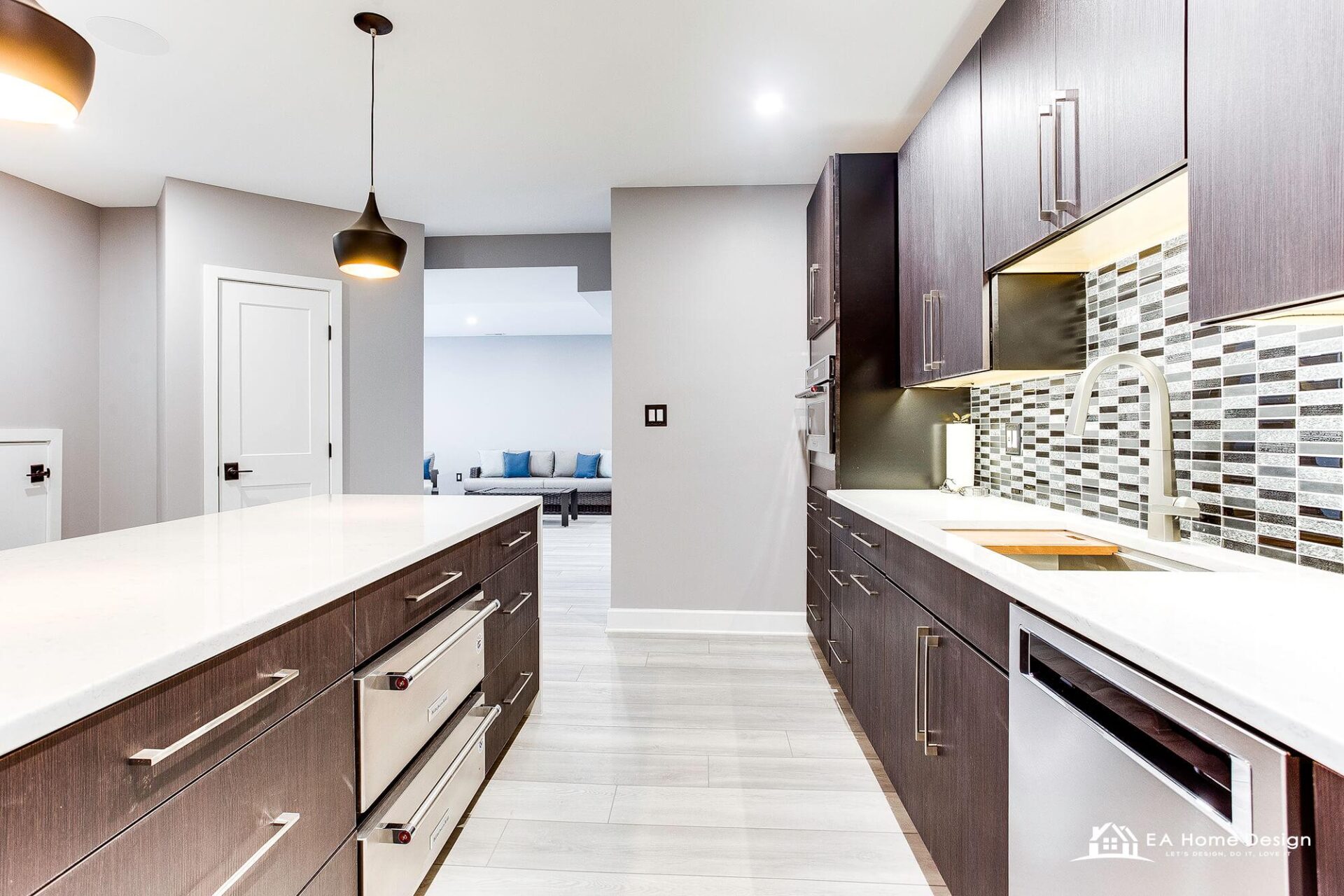
A bar or small kitchenette makes your basement perfect for entertaining. Include a sink, beverage fridge, cabinetry, and counter seating so guests never have to run upstairs.
4. Guest Suite or In-Law Apartment
A basement suite with a bedroom, bathroom, and small living area is perfect for guests, aging parents, or older kids. With the right layout, it can even function as an income-generating apartment.
5. Home Office
With more people working from home, a quiet basement office is a major asset. The separation from the main living areas helps you focus, and there’s room for a real desk setup and storage.
6. Playroom or Kids’ Zone
Keep toys and play contained on the lower level. A durable, washable floor and built-in storage make a basement the ideal kid-friendly retreat that keeps the upstairs tidy.
7. Game Room or Entertainment Hub
From pool tables to gaming setups, a basement game room is built for fun. Combine it with a bar and lounge seating for the ultimate hangout space.
8. Extra Bedroom
Adding a legal bedroom with proper egress increases both your living space and your home’s value. It’s a smart move for growing families or homes that need an extra guest room. The basement bedroom guide has the egress rules, suite layouts and costs in detail.
Basement Layout and Design Tips
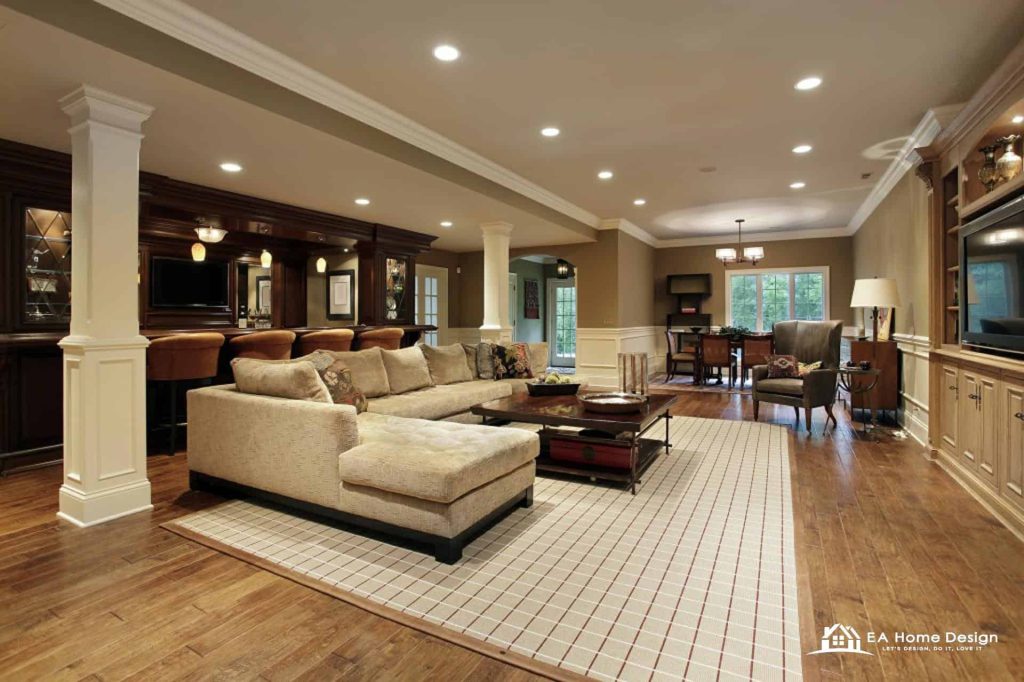
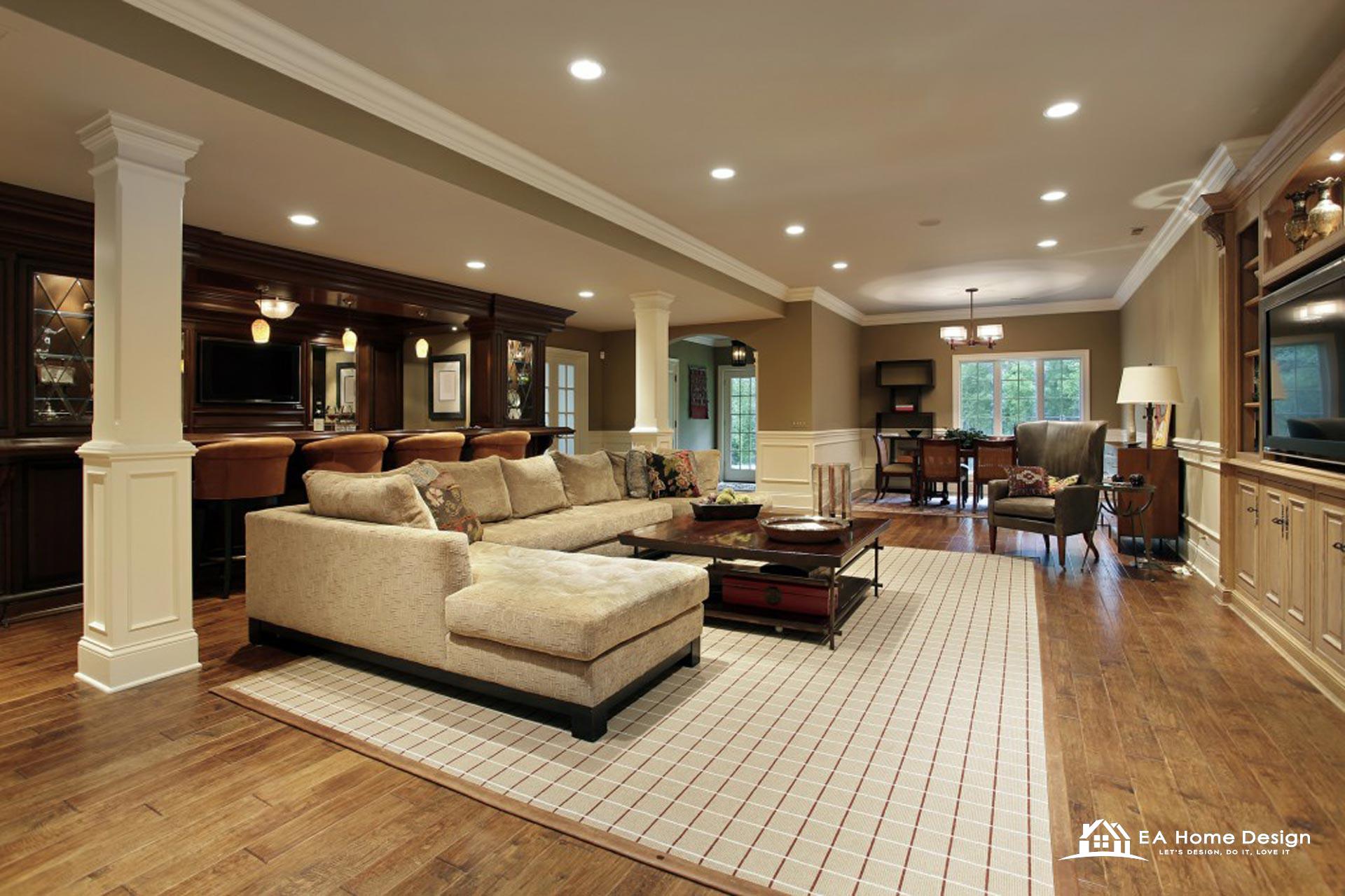
A great basement balances open gathering areas with defined zones. Thoughtful planning makes the space feel intentional rather than leftover.
- Create zones for different activities, such as a lounge, bar, and play area.
- Keep main pathways open so the space flows naturally.
- Use the perimeter for built-ins, storage, and seating.
- Plan around existing utilities like the furnace, water heater, and support columns.
- Disguise columns by wrapping them in trim or working them into the design.
An open-concept basement with multiple functional zones is often the most versatile and family-friendly approach.
Lighting a Basement the Right Way
Lighting is the single biggest factor in whether a basement feels welcoming or like, well, a basement.
Because natural light is limited, you’ll need a layered lighting plan.
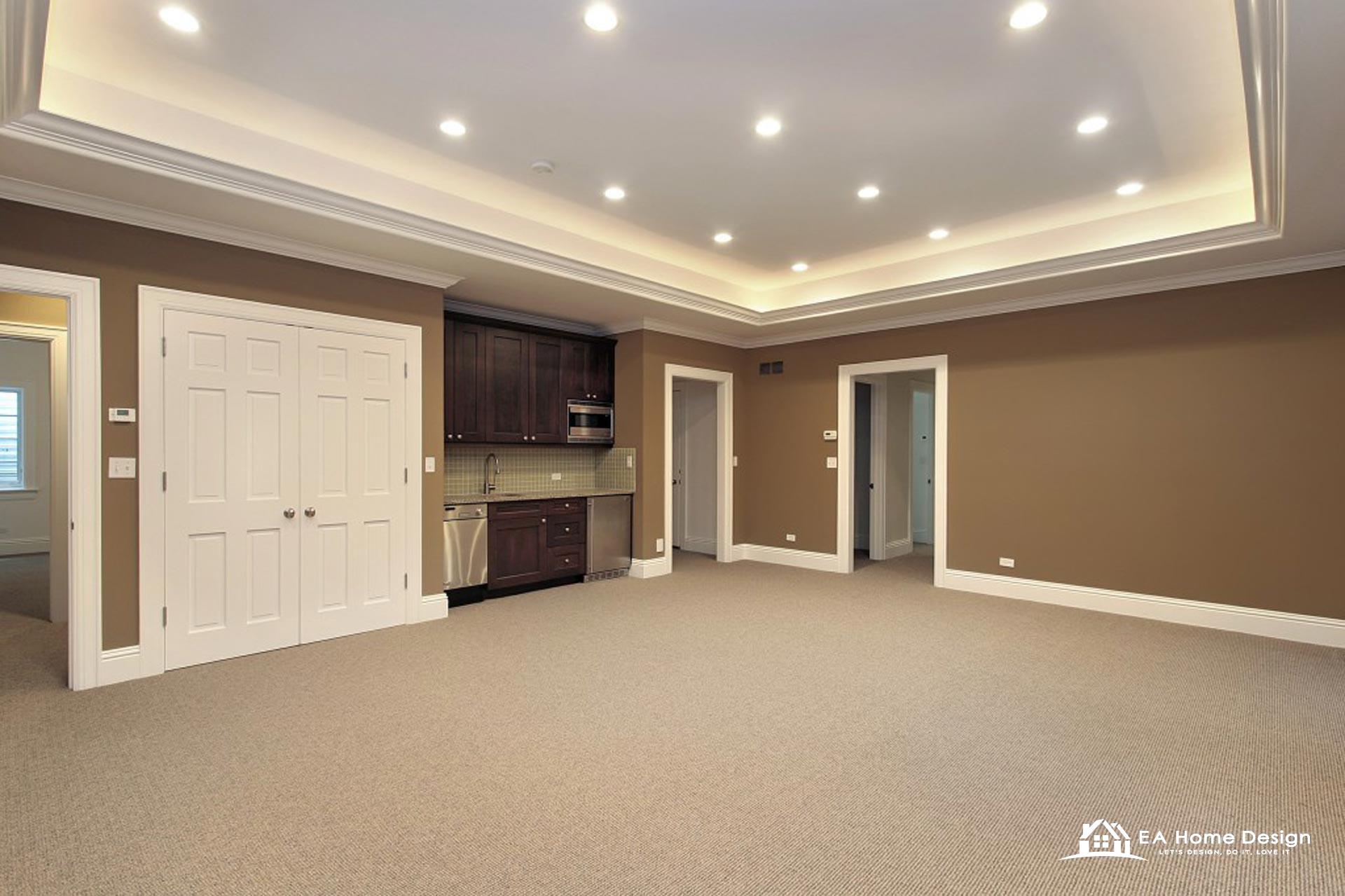
- Recessed lighting provides even, ceiling-mounted illumination ideal for low ceilings.
- Tray ceilings with cove lighting add depth and a warm glow.
- Pendant and accent lights highlight bars and seating areas.
- Dimmers let you shift from bright play light to cozy movie-night mood.
- Larger egress windows bring in valuable daylight where possible.
Light, neutral wall colors also help reflect light and make the space feel larger and brighter. For current color and lighting inspiration, browse the 2026 design trends for Northern Virginia.
Best Flooring for a Basement
Basement flooring must handle the possibility of moisture from below. Choose materials designed for below-grade spaces.
- Luxury vinyl plank (LVP): Waterproof, warm underfoot, and stylish, the top choice for most basements.
- Tile: Durable and fully waterproof, ideal for bars and bathrooms.
- Carpet: Cozy for media rooms and bedrooms, best paired with a moisture-resistant pad.
- Engineered wood: More stable than solid hardwood in below-grade conditions.
Avoid solid hardwood in basements, as it can warp with humidity. For a deeper comparison, see our guide to flooring choices for Northern Virginia: hardwood vs. tile vs. LVP.
Moisture Control and Waterproofing
It’s worth repeating: moisture management is the foundation of a lasting basement remodel.
Before finishing, address these essentials:
- Seal foundation cracks and check for any signs of water intrusion.
- Improve exterior grading so water flows away from the foundation.
- Install or service a sump pump in flood-prone areas.
- Add a dehumidifier to control humidity year-round.
- Use moisture-resistant materials for framing, insulation, and flooring.
Getting this right protects your investment and keeps the space healthy and comfortable for years.
Egress and Building Codes in Fairfax and Loudoun County
Building codes exist for safety, and basements have specific requirements you can’t skip.
If your basement includes a bedroom, it must have an egress window or door large enough to exit through in an emergency. The window well must also meet minimum size standards.
Electrical, plumbing, and framing work all require permits and inspections in both Fairfax and Loudoun County. Smoke and carbon monoxide detectors are required as well.
Working with an experienced local contractor ensures your project meets every code and passes inspection the first time.
How Much Does a Basement Remodel Cost in Northern Virginia?
Basement remodeling costs vary based on size, finishes, and features. Here are realistic 2026 ranges for the area.
- Basic finishing (drywall, flooring, lighting): $30,000 to $50,000
- Mid-range remodel (with bathroom and bar): $50,000 to $90,000
- High-end remodel (suite, theater, custom features): $90,000 to $150,000+
Adding a full bathroom, wet bar, or kitchenette increases the budget because of the plumbing and electrical work involved.
On a per-square-foot basis, expect roughly $50 to $100 for a finished basement in Northern Virginia, depending on the level of finish.
Does a Finished Basement Add Value?
Yes. A finished basement typically recoups 70% or more of its cost at resale, and it makes your home far more appealing to buyers.
In a competitive market like Northern Virginia, additional finished living space, especially a guest suite or media room, can be a deciding factor for buyers.
Beyond resale, the daily value is enormous. You gain a whole new floor of living space tailored exactly to how your family lives.
Common Basement Remodeling Mistakes to Avoid
A few avoidable mistakes cause most basement headaches. Watch out for these.
- Ignoring moisture: Finishing over a damp basement leads to mold and ruined materials.
- Skipping permits: Unpermitted work can cause problems at resale and fail inspections.
- Poor lighting: Too few fixtures leave the space feeling dark and unwelcoming.
- Forgetting storage: You still need room for seasonal items and utilities.
- Blocking access to the furnace, water heater, or electrical panel.
- Choosing the wrong flooring: Non-waterproof materials don’t belong below grade.
An experienced designer helps you plan around all of these from the start.
How Long Does a Basement Remodel Take?
Most basement remodels in Northern Virginia take 6 to 12 weeks, depending on size and complexity.
Here’s a general timeline:
- Design and planning: 2 to 4 weeks
- Permitting: 2 to 4 weeks
- Framing and rough-ins: 1 to 2 weeks
- Drywall, flooring, and finishes: 3 to 5 weeks
- Final inspections and details: about 1 week
Adding a bathroom or complex features can extend the schedule, so plan accordingly.
Adding a Basement Bathroom
A bathroom is one of the most valuable additions to a finished basement. It makes the space far more functional, whether for guests, a suite, or everyday use.
Because basements sit below the main sewer line, you may need a special pump system, such as an up-flush or sewage ejector, to move waste upward. This adds cost but opens up the possibility of a full bath anywhere in the basement.
Plan the bathroom near existing plumbing where possible to keep costs down. A half bath is the most affordable option, while a full bath with a shower adds the most value for a guest suite.
For design ideas you can adapt to a lower level, see our bathroom remodel guide for a spa-like bathroom in Northern Virginia.
The Basement ADU: In-Law Suites and Accessory Units
The most ambitious basement remodeling idea is also the most valuable: converting the lower level into a legal accessory dwelling, an in-law suite with its own kitchen, bathroom, and entrance. The rules are friendlier than most homeowners assume. Fairfax County permits accessory living units administratively, without a public hearing, provided the owner occupies the property, the unit stays within 800 square feet or 40 percent of the home’s floor area, and no more than two people live in it. Loudoun County allows accessory apartments under its own zoning provisions, and statewide, Virginia’s new ADU law will require localities to permit accessory dwelling units by right beginning in July 2027, with application fees capped at $500, which makes a basement roughed in for a future kitchen today a shrewd bet on tomorrow. Practical requirements are the ones covered throughout this guide: an egress window or walkout entrance, a full bathroom, proper ceiling height, and permits for everything. Done legally, a basement suite houses aging parents, a returning graduate, or rental income; done informally, it becomes an appraisal problem. Our garage conversion and ADU guide covers the same county rules from the garage side.
Heating, Cooling, and Insulation
Comfort matters year-round, and basements have unique climate needs. A well-insulated, properly conditioned basement feels like a true extension of your home.
- Insulate the walls with moisture-resistant materials to keep the space warm and dry.
- Extend your HVAC system or add a dedicated zone for consistent temperatures.
- Consider radiant floor heating for cozy warmth underfoot.
- Add a dehumidifier to manage humidity through Virginia’s humid summers.
Proper insulation also improves energy efficiency, lowering the cost of conditioning the new space.
Soundproofing Your Basement
If your basement will host a home theater, gym, or game room, soundproofing keeps noise from traveling upstairs, and vice versa.
- Insulate the ceiling to dampen sound between floors.
- Use acoustic drywall or add a second layer for problem areas.
- Add resilient channels to decouple the ceiling from the joists.
- Include soft finishes like carpet and upholstered furniture to absorb sound.
A little soundproofing investment pays off in peace and quiet for the whole household.
Maximizing a Small or Low-Ceiling Basement
Not every basement is large or tall, but smart design can make any lower level feel open and inviting.
- Use light colors on walls and ceilings to expand the sense of space.
- Choose low-profile recessed lighting to preserve every inch of headroom.
- Keep furniture scaled to the room to avoid crowding.
- Add mirrors to reflect light and create depth.
- Opt for an open layout rather than dividing the space into small rooms.
Even a compact basement can become a comfortable, hardworking part of your home with the right approach.
Smart Basement Storage Solutions
A finished basement still needs to handle storage for seasonal items, holiday decorations, and household overflow. The trick is to plan it in from the start so it doesn’t eat into your living space.
- Built-in cabinetry along one wall keeps clutter hidden and organized.
- Under-stair storage turns an awkward area into pull-out drawers or a closet.
- A dedicated utility room houses the furnace, water heater, and bins out of sight.
- Window-seat and bench storage adds function without taking floor space.
- Open shelving in a bar or play area keeps essentials within easy reach.
Thoughtful storage keeps your beautiful new basement looking clean and intentional, not crowded. Balancing living space with practical storage is one of the marks of a truly well-designed lower level.
Choosing a Basement Remodeling Contractor
The contractor you hire has the biggest impact on your project’s success. Look for these qualities in a basement remodeling partner.
- Licensed and insured in Virginia, with basement-specific experience.
- Knowledge of local codes in Fairfax and Loudoun County.
- A detailed written estimate covering materials, labor, and permits.
- A portfolio of completed basement projects and references.
- Clear communication and a realistic project timeline.
Get more than one estimate, but choose based on experience and trust rather than price alone. The right team gets your basement done right the first time.
Frequently Asked Questions
How much does it cost to finish a basement in Northern Virginia? Most projects range from $30,000 for basic finishing to $150,000 or more for high-end remodels with suites, bathrooms, and custom features.
Do I need a permit to finish my basement? Yes. Framing, electrical, plumbing, and egress work all require permits in Fairfax and Loudoun County.
What is the best flooring for a basement? Luxury vinyl plank is the top choice for its waterproof, comfortable, and stylish qualities. Tile and moisture-resistant carpet are also popular.
Can I add a bedroom in my basement? Yes, as long as it has a proper egress window or door and meets local building codes.
Does a finished basement add value to my home? Yes, it typically recoups 70% or more of its cost and makes your home more attractive to buyers.
How long does a basement remodel take? Most take 6 to 12 weeks from start to finish, plus design and permitting time beforehand.
Conclusion: Unlock Your Lower Level
Your basement holds enormous potential. With the right plan, it can become a theater, a gym, a guest suite, an entertainment hub, or all of the above.
Start with the essentials, moisture control, code compliance, and a smart layout, then design the space around how your family really lives.
A finished basement is one of the best investments you can make in your Northern Virginia home, adding comfort, function, and lasting value.
Take the time to plan around your family’s needs, set a realistic budget, and prioritize the features you’ll use most. With a clear vision and the right team, your basement can go from forgotten storage to the favorite room in the house.
When you’re ready to transform your lower level, the team at EA Home Design is here to help you plan, build, and love the result for years to come.
Related guides: home gym design, real before and after remodel photos, media room design and what $50,000 buys in a remodel. Explore our basement remodeling in Northern Virginia or browse our project gallery, and garage conversion costs and rules. Pricing the project? Start with what a basement remodel costs in Northern Virginia. For how one design-build team handles the moisture work, the egress and the permits as a single job, see our basement remodeling in Northern Virginia page.