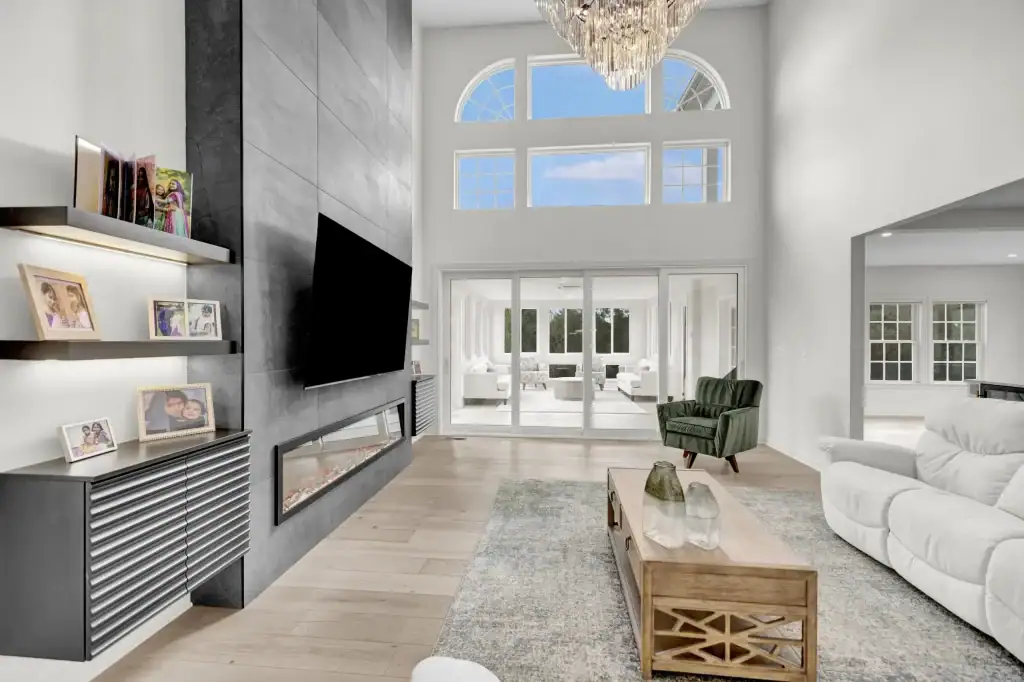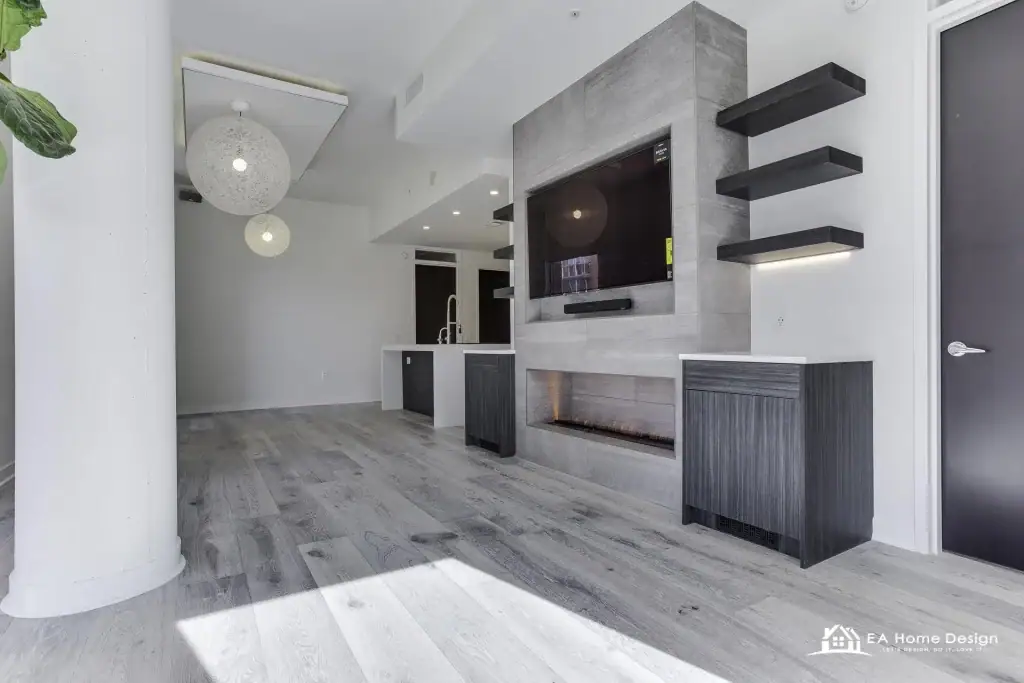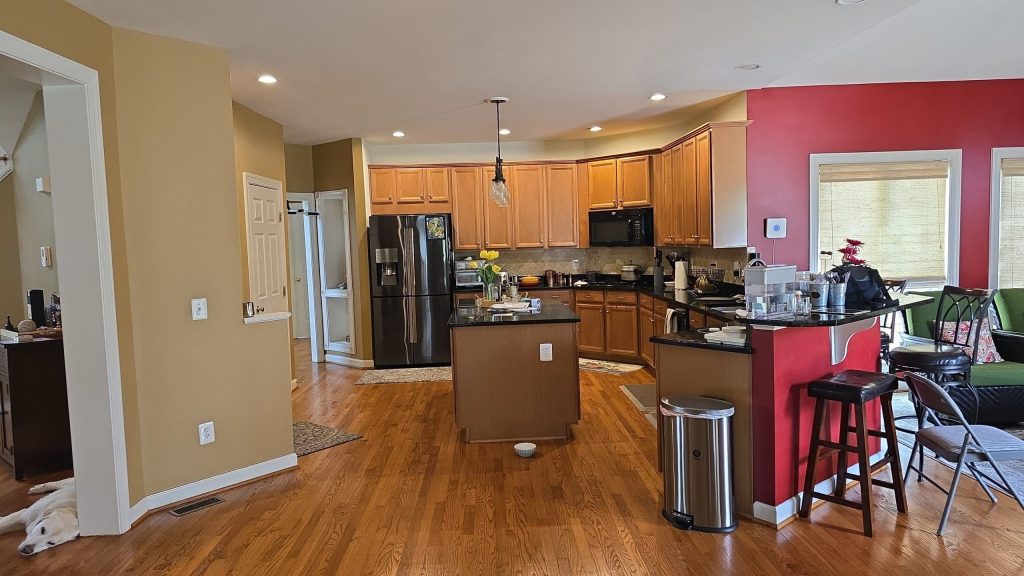
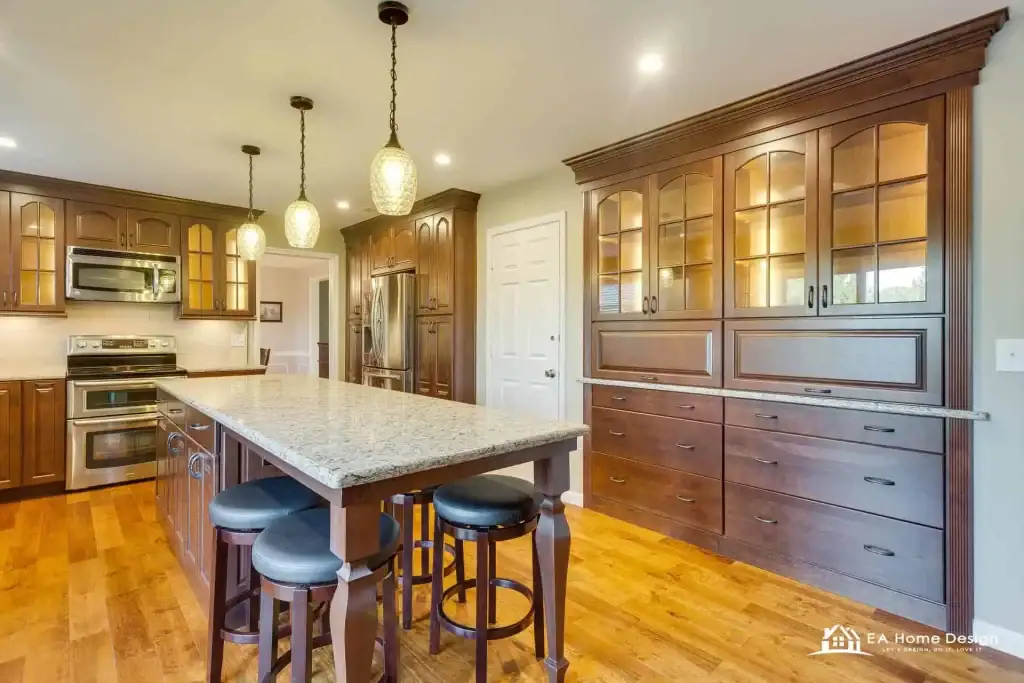
Cabinet refacing replaces your cabinet doors, drawer fronts, and hardware while keeping the existing cabinet boxes, delivering a brand new look for roughly 40 to 50 percent less than full replacement. In Northern Virginia, refacing typically costs $12,000 to $25,000 versus $25,000 to $55,000 or more for new cabinets. Refacing is the right choice when your cabinet boxes are sturdy and the layout works. Replacement is worth it when boxes are failing or you want a new layout. This guide walks Fairfax and Loudoun County homeowners through how refacing works, what it costs, and exactly how to decide between the two.
What Is Cabinet Refacing?
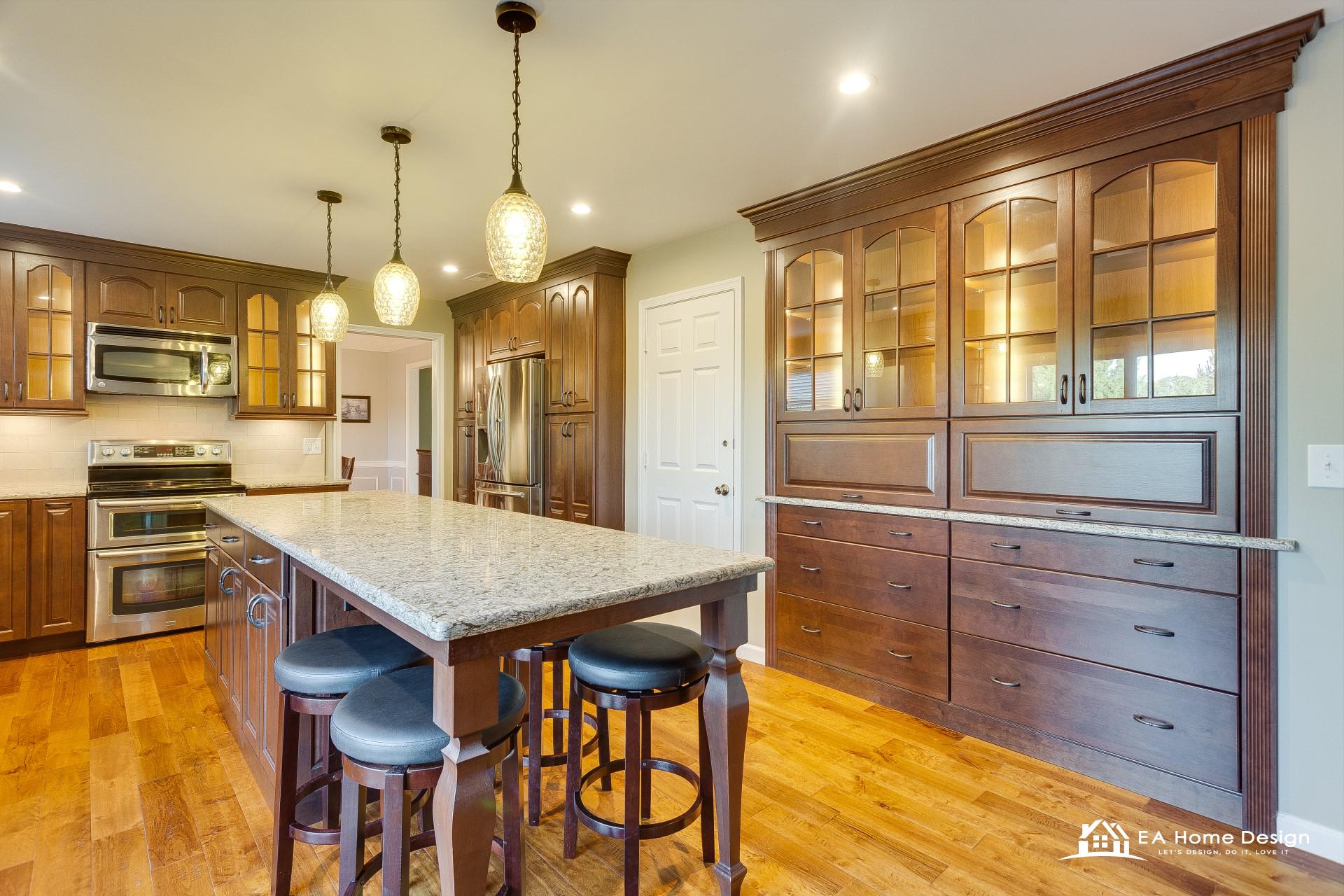
Cabinet refacing keeps your existing cabinet boxes, the frames attached to your walls, and replaces everything you actually see and touch. The process swaps the old doors and drawer fronts for brand new ones in the style and finish you choose, covers the exposed frames with matching veneer or laminate, and finishes with new hinges, pulls, and knobs. Because the boxes stay in place, there is no demolition, no plumbing or electrical work, and no weeks of living without a kitchen. From the outside, a well executed refacing job is indistinguishable from new cabinetry. What it cannot do is change your layout: the cabinets stay exactly where they are, at the same sizes, which is both its greatest efficiency and its main limitation.
Cabinet Refacing vs Replacing vs Painting
There are actually three paths to new looking cabinets, and each fits a different situation and budget. Here is how they compare in the Northern Virginia market:
| Option | Typical cost | Timeline | Best when |
|---|---|---|---|
| Painting / refinishing | $3,000 to $8,000 | 3 to 5 days | Doors and boxes are solid, you just want a new color |
| Refacing | $12,000 to $25,000 | 3 to 5 days | Boxes are sound, doors are dated or worn, layout works |
| Full replacement | $25,000 to $55,000+ | 3 to 6 weeks | Boxes are failing or you want a new layout |
Painting is the cheapest refresh but keeps your existing door style, including any dated profiles. Refacing gives you genuinely new doors and a new style. Replacement gives you everything, including a new layout, at the highest cost and disruption. For a deeper look at cabinet styles and what full replacement offers, see our guide to kitchen cabinet ideas for 2026.
How Much Does Cabinet Refacing Cost?
Cabinet refacing in Northern Virginia typically costs $12,000 to $25,000 for a standard kitchen, with the final number driven by kitchen size, door material, and hardware choices. Here is where the money goes:
- Laminate or thermofoil doors: The budget tier, roughly $12,000 to $16,000 for a typical kitchen. Durable and available in many styles, though edges can wear over time.
- Wood veneer doors: The mid tier, roughly $15,000 to $20,000. Real wood surfaces with the look of custom cabinetry.
- Solid wood doors: The premium tier, roughly $19,000 to $25,000 or more. The closest match to full custom replacement quality.
- Hardware: New hinges, pulls, and knobs add $200 to $1,000 depending on quality and count.
- Add-ons: Soft close hinges, new drawer boxes, pull-out shelves, and under cabinet lighting each add a few hundred dollars but meaningfully upgrade daily use.
Compare that to $25,000 to $55,000 or more for full replacement, and refacing saves roughly half, sometimes more. Cabinets are the single largest line item in a kitchen budget, which is why this decision matters so much. Our kitchen remodel cost guide breaks down the full picture, and our 10×10 kitchen remodel cost guide covers the standard kitchen size in detail.
When Is Refacing the Right Choice?
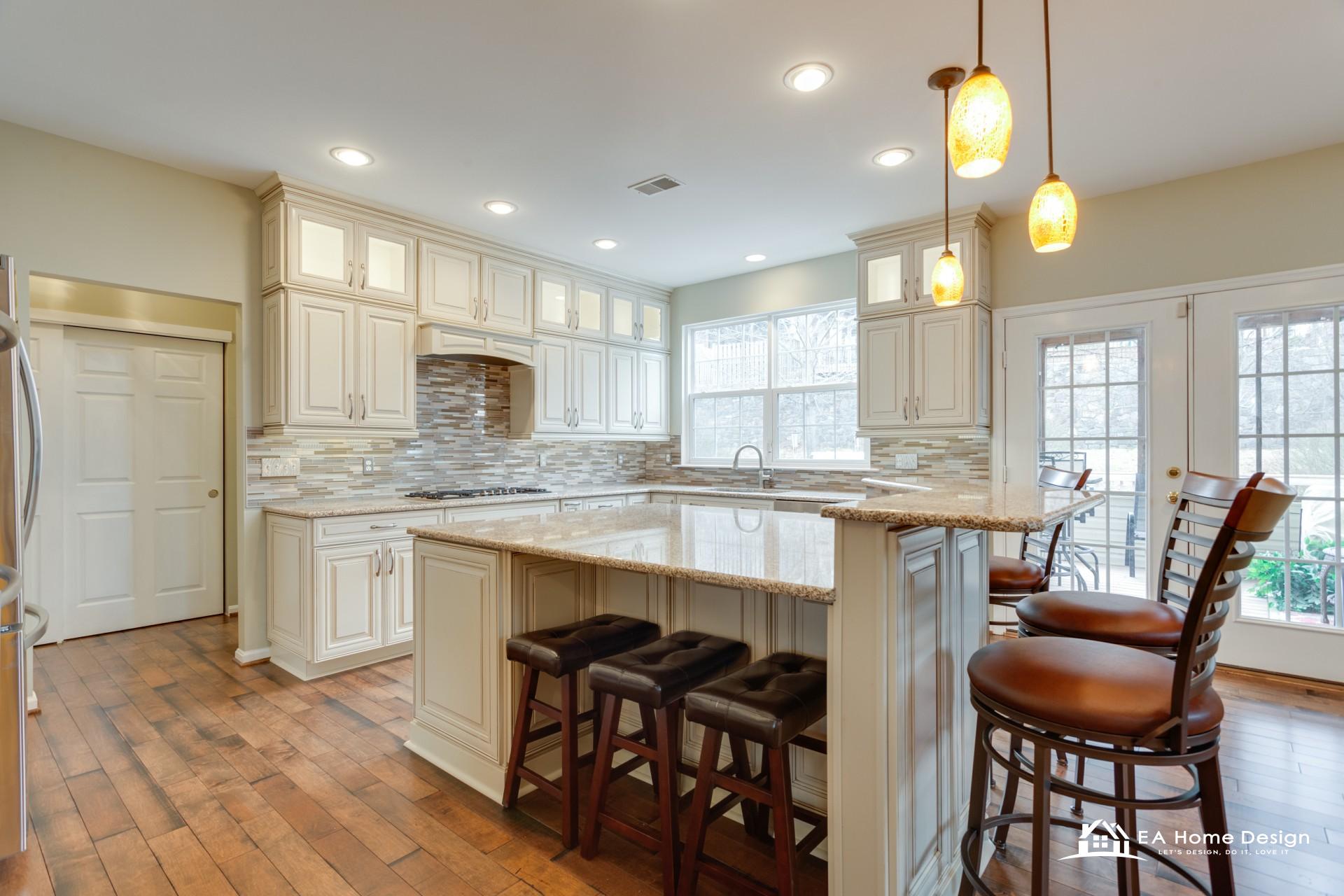
Refacing is the smart money move when three things are true. First, your cabinet boxes are structurally sound: solid frames, no water damage, no sagging shelves, no delaminating panels. Plywood boxes from a quality original build often outlast several door styles. Second, your layout already works: the sink, stove, and refrigerator are where you want them, and the storage is adequate. Third, you want a meaningful visual upgrade, not just a color change. If those describe your kitchen, refacing delivers 90 percent of the visual impact of new cabinets at half the price, in days instead of weeks. It is also the greener choice, keeping perfectly good cabinet boxes out of the landfill, which appeals to many Northern Virginia homeowners.
When Should You Replace Instead?
Refacing cannot fix everything, and putting new doors on failing boxes wastes money. Choose full replacement when any of these apply:
- The boxes are damaged: Water damage, warping, mold, or particleboard that is swelling or crumbling. New doors cannot rescue a failing structure.
- You want a new layout: Moving the sink, adding an island, or reworking the work triangle requires new cabinetry.
- Storage does not work: If you need fundamentally more or different storage, new cabinets designed around your needs beat retrofitting old boxes.
- The boxes are low quality: Thin particleboard builder grade boxes from decades ago may not justify premium new doors.
- You are doing a full remodel anyway: If counters, flooring, and layout are all changing, replacement usually makes more sense as part of the larger project.
An honest contractor will open your cabinets, check the boxes, and tell you which path fits. Be wary of anyone who recommends replacement without ever inspecting the boxes, and equally wary of refacing companies that pitch refacing over clearly failing cabinets. For more on vetting contractors, see our guide to what remodeling companies do not always tell you.
The Cabinet Refacing Process, Step by Step
A professional refacing project moves quickly because there is no demolition. Here is the typical sequence:
- Step 1, measure and design: Every door and drawer front is measured precisely, and you choose the door style, material, finish, and hardware. New doors are custom made to fit your boxes, which takes 2 to 4 weeks of fabrication before installation begins.
- Step 2, remove old fronts: Old doors, drawer fronts, and hardware come off in a morning.
- Step 3, prep and reface the frames: Exposed cabinet frames and end panels are cleaned, repaired as needed, and covered with matching veneer or laminate.
- Step 4, install new doors and drawer fronts: The custom made fronts are hung and aligned, with new hinges adjusted for a perfect fit.
- Step 5, hardware and finishing: New pulls and knobs go on, along with any add-ons like soft close hinges, molding, or under cabinet lighting.
Installation itself takes just 3 to 5 days for most kitchens, and your kitchen remains usable throughout, no washing dishes in the bathtub for a month. That speed is one of refacing’s biggest advantages over the multi-week timeline of full replacement.
Door Styles and Finishes for 2026
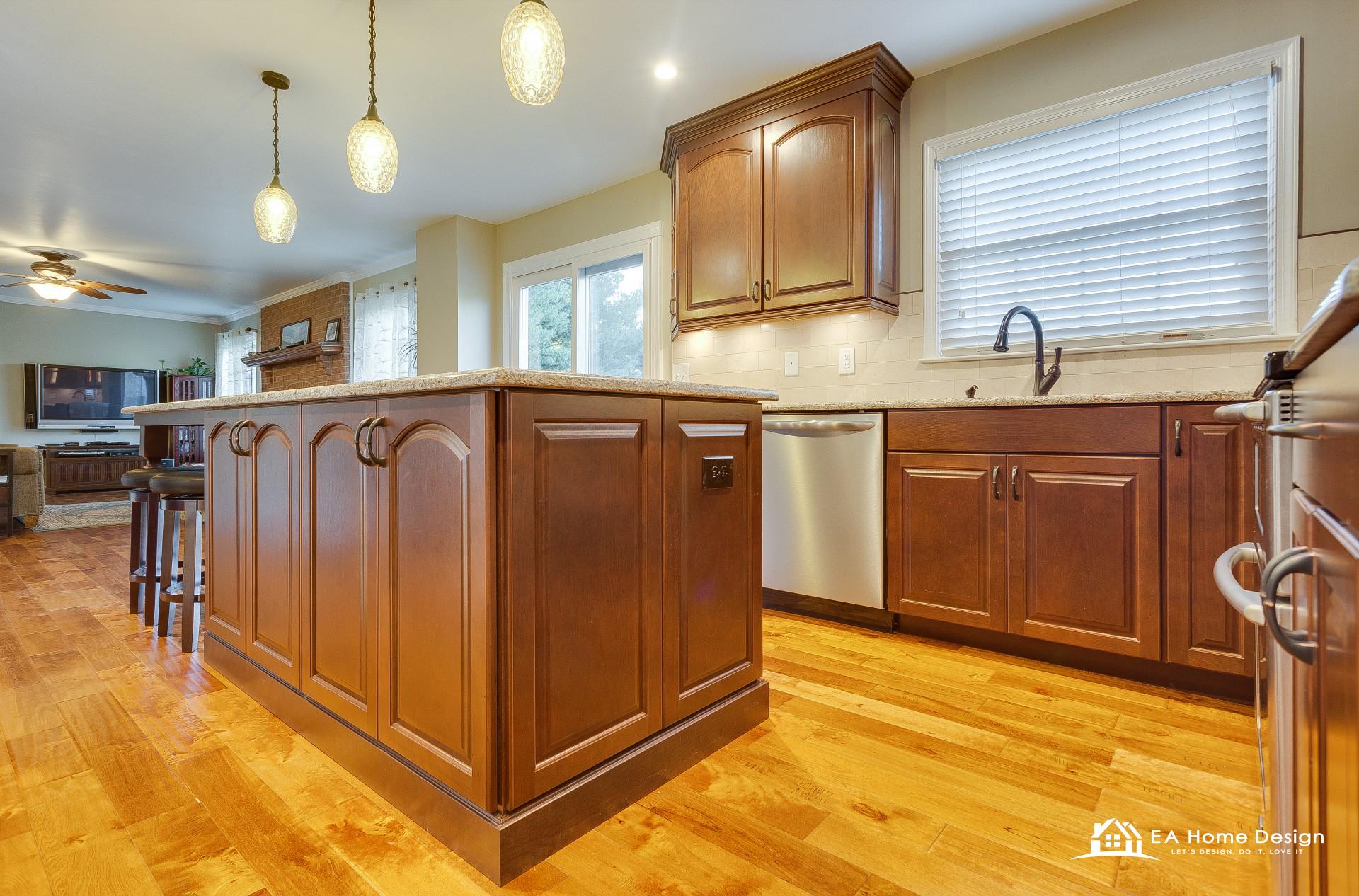
Because refacing gives you entirely new doors, you get access to the same styles driving 2026 kitchen design. Shaker doors remain the runaway favorite for their clean, timeless lines that suit both traditional and modern kitchens. Slab doors deliver a sleek, minimalist look popular in contemporary homes. For finishes, warm whites and creams lead, followed by earthy greens and blues on lower cabinets or islands, and natural wood tones are back in a big way. Matte finishes are outpacing gloss because they hide fingerprints and feel current. Pair the new doors with matte black or brushed brass hardware and the transformation is complete. The smartest play for resale is a classic door in a neutral finish, saving bolder color for easily changed elements. Our guide to the best kitchen countertops helps you coordinate surfaces if counters are next on the list.
Upgrades Worth Adding During Refacing
Since the installers are already working on every cabinet, refacing is the perfect moment to add the functional upgrades that make a kitchen genuinely better to use:
- Soft close hinges and glides: The single most appreciated upgrade, ending slammed doors forever for a modest cost.
- New drawer boxes: If old drawers stick or sag, new boxes with full extension glides transform daily use.
- Pull-out shelves: Bring the back of deep base cabinets within reach, a storage upgrade you use every day.
- Under cabinet lighting: LED strips add task lighting and ambiance for a few hundred dollars.
- Crown molding and trim: Finishes the top of the cabinets for a built-in, custom look.
- A matching island front: Refacing the island to match ties the whole kitchen together.
These add-ons typically raise the project cost by 10 to 25 percent while closing most of the functional gap between refaced and brand new cabinets. For more storage ideas, see our guide to kitchen organization and storage.
DIY Refacing Kits vs Professional Refacing
DIY refacing kits and peel-and-stick veneers cost $1,000 to $3,000 in materials, and the savings are real, but so are the risks. Professional refacing succeeds on precision: doors measured to the millimeter, veneer applied without bubbles or visible seams, and hinges aligned so every door sits flush. Those are exactly the details that go wrong in DIY attempts. A slightly misaligned door or a lifting veneer edge is visible every single day, and fixing failed DIY veneer often costs more than professional refacing would have originally. DIY also cannot match the door quality, since kits offer limited styles while professionals fabricate custom doors in any style and finish. If your budget only allows DIY, honest advice: painting your existing doors well usually produces a better result than amateur veneering. If you want the refaced look, the professional version is the one that still looks right in year ten.
Pairing Refacing With Other Kitchen Updates
Refacing rarely travels alone, and sequencing it with other updates multiplies the impact. The most popular pairing is new countertops, since counters and cabinet fronts together read as a completely new kitchen for a fraction of full remodel cost. If you are doing both, install counters after the refacing veneer work so nothing gets damaged. A new backsplash follows the counters naturally. New lighting, a faucet, and updated hardware complete the transformation. This bundle, refacing plus counters, backsplash, lighting, and fixtures, typically runs $15,000 to $25,000 in Northern Virginia and delivers a kitchen most visitors will assume was fully replaced. Compare that to $40,000 to $75,000 for a full mid-range remodel, and the appeal is obvious for kitchens with good bones. The one thing this bundle cannot buy is a new layout, so make peace with your floor plan before committing to the refacing path.
Does Cabinet Refacing Add Home Value?
Refacing adds real value because kitchens sell homes and refacing delivers a new looking kitchen at half the investment. In the Northern Virginia market, an updated kitchen is one of the first things buyers evaluate, and dated cabinet doors instantly age the whole room. Because refacing costs so much less than replacement, the percentage of cost recovered at resale is often higher, you spend $8,000 for most of the visual impact a $25,000 replacement would deliver. Refacing makes particular sense if you are updating a kitchen within a few years of selling: maximum buyer appeal, minimum investment, no risk of over improving for the neighborhood. For which projects return the most before a sale, see our guide to remodels that pay off.
Common Cabinet Refacing Mistakes to Avoid
- Refacing failing boxes: New doors on water damaged or crumbling boxes waste the entire investment. Inspect honestly first.
- Choosing the cheapest laminate: Bargain thermofoil can peel at the edges within a few years. Mid tier materials cost modestly more and last far longer.
- Skipping the frame veneer: New doors against old, yellowed frames look mismatched. Proper refacing covers every visible surface.
- Ignoring the add-on moment: Retrofitting soft close hinges or pull-outs later costs more than adding them during the project.
- Mismatched hardware finishes: New doors deserve coordinated hardware. Mixing old and new finishes undercuts the whole refresh.
How to Choose a Cabinet Refacing Contractor
Refacing quality lives entirely in the execution, so vet the installer as carefully as the materials. Ask to see completed refacing projects, not just catalog photos, since veneer seams and door alignment reveal craftsmanship instantly. Confirm the doors are custom fabricated to your measurements rather than forced from stock sizes. Get every material named in writing: door construction, veneer type, hinge brand, and hardware. Ask who does the installation, an employed crew or rotating subcontractors, because refacing rewards practiced hands. Check that the quote includes frame veneering and end panels, not just doors, since skipping those is the classic corner cut. Finally, ask the reface-or-replace question directly and listen to how they answer. A contractor who inspects your boxes before recommending anything is the one to trust with your kitchen.
Frequently Asked Questions About Cabinet Refacing
How much does cabinet refacing cost? In Northern Virginia, cabinet refacing typically costs $12,000 to $25,000 for a standard kitchen, depending on size and door material. That is roughly 40 to 50 percent less than full cabinet replacement, which runs $25,000 to $55,000 or more.
Is cabinet refacing worth it? Yes, when your cabinet boxes are structurally sound and your layout works. You get new doors, drawer fronts, and hardware, most of the visual impact of new cabinets, at about half the cost and in days instead of weeks.
How long does cabinet refacing take? Installation takes 3 to 5 days for most kitchens, after 2 to 4 weeks of fabrication while your custom doors are made. Your kitchen stays usable throughout installation.
How long does refacing last? Quality refacing with wood veneer or solid wood doors lasts 15 to 20 years or more, comparable to new cabinets, since the doors are new and the boxes were sound to begin with.
Can you reface cabinets and change the layout? No. Refacing keeps cabinets exactly where they are. If you want to move the sink, add an island, or rework storage, full replacement as part of a larger remodel is the right path.
Can I stay in my kitchen during refacing? Yes. There is no demolition, plumbing, or electrical work, so your kitchen stays functional throughout the 3 to 5 day installation. Expect some dust and workspace disruption during the day, but you cook dinner at night.
Is refacing cheaper than painting cabinets? No, painting is cheaper at $3,000 to $8,000 but keeps your existing door style. Refacing costs $12,000 to $25,000 and gives you entirely new doors in a new style, which is why it delivers a much bigger transformation.
Related guides: wallpaper for kitchen cabinets and walls. Explore our see your kitchen remodeled from a photo.
Reface or Replace: Get an Honest Answer
The reface or replace decision comes down to your boxes and your layout. Sound boxes plus a working layout means refacing delivers a stunning kitchen for half the money. Failing boxes or a layout that fights you means replacement is the better long term investment. The worst outcome is paying for the wrong one, which is why the decision deserves an honest professional assessment rather than a sales pitch. EA Home Design evaluates Fairfax and Loudoun County kitchens and recommends the path that actually fits, showing you the result in a full 3D rendering before any work begins. Explore our kitchen remodeling services in Virginia to get started.