
Closets are the most underestimated square footage in almost any home. We stuff them with coats we never wear, boxes we’ve forgotten about, and the vacuum cleaner we wrestle out twice a month. But with a little imagination, that forgotten closet can quietly become one of the hardest-working corners of your house.
When I first looked at the unused closet in my own hallway, all I saw was clutter. It took me a while to realize I wasn’t short on space – I was short on a plan. That shift in thinking is what closet conversions are really about. Whether you live in a compact apartment where every inch matters or a larger home with a spare closet sitting idle, a thoughtful conversion can add genuine function and personality without a major renovation budget.
In this guide, I’ll walk you through 15 clever closet conversion ideas, the practical thinking behind each one, and how to decide which transformation makes the most sense for your home.
Why Closet Conversions Are Worth Considering
Before we get into specific ideas, it helps to understand why these projects have caught on with homeowners and renters alike.
The biggest draw is space efficiency. Most homes have more storage than they actually use, and a disorganized closet usually holds clutter rather than anything essential. Reclaiming that space for something you’ll use daily instantly improves how your home functions.
Closet conversions are also far friendlier on the budget than building an addition or moving walls. Because the structure already exists, you’re mostly working with shelving, lighting, paint, and a few key furnishings. In my experience, many of these projects come together over a single weekend.
Finally, a well-executed conversion quietly raises your home’s appeal. Guests and buyers notice when a space feels intentional, and a clever use of otherwise dead space signals a home that’s been cared for.
15 Clever Closet Conversion Ideas
Here are 15 practical, design-forward ways to turn an unused closet into something you’ll actually love.
1. Mini Home Office Nook
With remote and hybrid work now part of everyday life, a dedicated workspace has never been more valuable – and a small closet is a perfect candidate. Often called a “cloffice,” this setup uses a desk at counter height, a couple of floating shelves above for supplies, and good task lighting so you’re not squinting at a screen.
The detail I appreciate most is the doors: when the workday ends, you simply slide or close them and the office disappears. No more staring at your to-do list from the couch.

2. Reading Nook Retreat
If you’d rather unwind than work, turn that closet into a reading nook. Remove the doors, add a cushioned bench or a comfortable armchair, and line the walls with built-in shelves for your books. A wall sconce or a small clip light makes it cozy after dark.
This was the first conversion I ever attempted, and it remains my favorite spot in the house – a little pocket of quiet that feels separate from everything else.
3. Mudroom Station
An entryway closet near the front or back door is begging to become a mudroom. Add hooks for coats and bags, cubbies or a low bench for shoes, and a few baskets for hats, gloves, and the odds and ends that always pile up by the door. It’s a simple change that keeps the chaos of arriving and leaving contained in one place.
4. Pantry Perfection
If your kitchen lacks proper food storage, a nearby closet can solve the problem beautifully. Install adjustable shelves so you can fit everything from tall bottles to short jars, then use clear containers and labels to keep it all visible. The goal is being able to open the door and see exactly what you have at a glance.

5. Pet Paradise
Our pets accumulate almost as much stuff as we do. A small closet makes a tidy pet station – shelves for food and supplies, hooks for leashes and harnesses, and a bin for toys. If the closet is roomy enough, you can even tuck a small bed inside to give your dog or cat a cozy spot of their own.
6. Crafting Corner
For anyone who crafts, a dedicated closet keeps the creative mess in one place. I added pegboard to the inside of the door for scissors and tools, open shelves for paper and supplies, and a fold-down table that disappears when I’m done. Everything stays out and ready while I’m working, then tucks away cleanly afterward.
7. Compact Laundry Room
A closet can comfortably hold a stacked washer and dryer, with shelves above for detergent and a slim hanging rod for items that need to air-dry. For small homes and apartments without a dedicated laundry room, this conversion is a genuine quality-of-life upgrade. Just confirm you have the plumbing and electrical hookups before you commit.
8. Home Gym Hideaway
You don’t need a spare bedroom to work out at home. A closet can store dumbbells, resistance bands, a yoga mat, and a foam roller, with a mirror on the back wall to check your form. Mount hooks for accessories and you’ve got a private little fitness zone that’s ready whenever you are.
9. Wine Cellar Closet
For wine lovers, a closet can become an elegant home cellar. Add proper wine racks, consider a compact climate-control unit to keep bottles at the right temperature, and use soft lighting to show off the collection. It’s a sophisticated touch that turns storage into something you’re happy to show guests.
10. Home Command Center
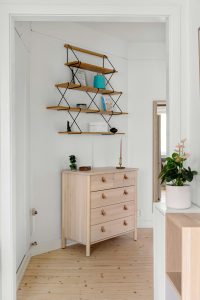
Every busy household needs a hub, and a closet is an ideal spot for one. Build in a small desk or counter, add a corkboard or whiteboard for calendars and reminders, and use shelves and slots to organize mail, bills, and school papers. Having one central place for the family’s logistics cuts down on a surprising amount of daily friction.
11. Entertainment Hub
A larger closet can hold a small media setup – shelves for a TV, console, and books, with comfortable seating tucked in. It becomes a private little nook for watching a film or escaping into a game, separate from the main living area.
12. Gift Wrapping Station
If you love giving gifts, a wrapping station saves you from the annual scramble for tape and scissors. Use vertical storage for rolls of wrapping paper, add small bins or hooks for ribbons, bows, and gift bags, and keep a flat surface free for wrapping. Come the holidays, you’ll be glad everything’s already in one place.
13. Kids’ Art Studio
Give your child a dedicated space to create by turning a closet into a mini art studio. A low desk or table at their height, open shelves for supplies, and a pegboard for tools encourage creativity while keeping the markers and glue contained. It’s a small change that can mean a lot to a kid who loves to make things.
14. Gaming Room Hideout
For the gamers in the house, a closet can store consoles, controllers, and a games library, with comfortable seating and good cable management. Add some soft lighting and it becomes an immersive little hideout dedicated entirely to play.
15. Travel Memory Showcase
Instead of letting souvenirs gather dust in drawers, dedicate a closet to your travels. Install display shelves for keepsakes, frame your favorite photos, and arrange your memorabilia like a small personal gallery. Every time you open the door, you get to relive the trips that mattered most.

How to Choose the Right Closet Conversion for Your Home
With so many options, the hard part is often deciding which one fits. A few questions help me narrow it down every time.
Start with what’s missing from your daily life. If you’re constantly carving out a corner of the kitchen table to work, a cloffice solves a real problem. If your entryway is always a mess, a mudroom earns its keep immediately. The best conversion fills a gap you actually feel.
Next, consider the closet’s location. An entryway closet naturally suits a mudroom, a kitchen-adjacent one leans toward pantry use, and a bedroom closet works well for an office or reading nook. Working with the location rather than against it makes the whole project easier.
Finally, be honest about your budget and skill level. A reading nook or display showcase can be done with basic tools and a free afternoon. A laundry station or wine cellar with climate control involves plumbing, wiring, or specialist equipment, and may be worth bringing in a professional.
Tips for a Successful Closet Conversion
A few practical pointers will keep your project on track regardless of which idea you choose.
Lighting is the detail people most often overlook. Closets are usually dim, so plan for it early – battery-powered LED strips, a plug-in sconce, or a proper fixture can completely change how the space feels and functions.
Go vertical with your storage. Closets are tall and narrow, so use the full height with shelves, hooks, and pegboard rather than letting everything pile up on the floor.
Think about ventilation too, especially for laundry stations, pantries, or anything involving moisture or electronics. A little airflow prevents stuffiness and protects your belongings.
And don’t skip the finishing touches. A fresh coat of paint, a removable wallpaper on the back wall, or a small piece of art turns a purely functional space into one that feels like a deliberate part of your home.
Frequently Asked Questions
How much does a closet conversion cost? It varies widely based on the project. Simple conversions like a reading nook or display area might cost very little if you already own the furnishings. More involved projects – a laundry station or a climate-controlled wine cellar -run higher because of plumbing, electrical, or specialist equipment.
Can I convert a closet if I’m renting? Often, yes, as long as you stick to non-permanent changes. Removable hooks, freestanding shelves, peel-and-stick wallpaper, and battery-powered lighting let you transform the space without damaging it. Check your lease first, and avoid anything that requires drilling or alterations unless your landlord approves.
What’s the easiest closet conversion for a beginner? A reading nook, a home command center, or a gift-wrapping station are great starting points. They mostly involve shelving, lighting, and a few furnishings rather than plumbing or electrical work.
Do I need to remove the closet doors? Not always. For open, inviting spaces like a reading nook, removing the doors helps. For a home office or laundry station you’d rather hide, keeping the doors lets you close everything away when it’s not in use.
Final Thoughts: Unlocking Hidden Potential
Clever closet conversions are one of the most satisfying ways to get more out of your home without major construction. Whether you build a functional home office, a cozy reading retreat, or a specialized storage zone, these transformations improve both organization and everyday enjoyment.
The closet I once saw as nothing but clutter is now a space I use every single day -and that’s the real lesson here. Look at the unused closets in your home not as dead space, but as hidden potential waiting for the right plan. Pick the idea that solves a problem you actually have, start small, and enjoy the more versatile, personalized home you’ll create.