You need an architect for a remodel when the project changes the structure of the house: an addition, a second story, removing load bearing walls, reworking a roofline, or a whole home renovation that touches most of the floor plan. You usually do not need one for a kitchen or bathroom remodel inside existing walls, a basement finish, or a room refresh, where a design build firm’s in house designers and a structural engineer produce everything the county needs. In Virginia, most single family remodels do not legally require an architect’s seal at all; what counties require is a complete, code compliant set of drawings, with stamped structural engineering wherever the structure changes. We are a Class A licensed design build remodeler (VA #2705157182) that carries design, engineering, and construction under one roof, and this guide explains what an architect actually does on a remodel, what the blueprints contain, how the design process runs step by step, and how to decide whether your project needs an architect, an interior designer, or a design build team. For fees specifically, see our guide to architect costs; this page is about the role.

Do You Need an Architect for Your Remodel? The Honest Answer by Project
The question homeowners actually ask is not whether architects are valuable but whether their specific project requires one. The answer depends almost entirely on whether the structure or the envelope of the house changes. The table below is how we answer it on a first call.
| Project | Architect needed? | Who produces the drawings |
|---|---|---|
| Kitchen or bathroom remodel within existing walls | Rarely | Design build designer; engineer only if a wall comes out |
| Removing a load bearing wall, open concept conversion | Sometimes | Designer plus stamped structural engineering |
| Basement finish | Rarely | Design build designer; engineer for egress window cuts |
| Room addition, bump out, above garage room | Often | Architect or design build architect, plus engineer |
| Second story addition | Yes | Architect and structural engineer |
| Whole home renovation with floor plan changes | Yes | Architect led design team |
| Historic district or HOA architectural review | Usually | Architect, because review boards expect elevations and material specs |
Two clarifications keep this honest. First, “architect needed” describes what produces a good outcome, not what the law demands: Virginia’s building code lets qualified people who are not licensed architects prepare plans for one and two family homes, and county plan reviewers care that the drawings are complete and the structural work is engineered, not who holds which license. Second, a design build firm that employs architects and designers collapses the question. The homeowner gets architectural design where the project needs it and does not pay for a separate architect’s engagement where it does not, which is the practical reason the model has taken over residential remodeling in Northern Virginia.
Architect, Interior Designer, or Design Build Firm: Who Does What
The three roles overlap enough to confuse anyone, so here is the working distinction. An architect is licensed to design buildings: structure, envelope, spatial planning, code compliance, and the technical drawings a contractor builds from. On a remodel, the architect is the person who decides where the walls go, how the roof resolves, and how the addition meets the house. An interior designer shapes the space inside those walls: layout at the room scale, cabinetry and millwork, finishes, lighting plans, and fixtures. Virginia offers a voluntary certification for interior designers rather than a mandatory license, and a strong residential designer will carry a kitchen or bath from concept to construction documents without an architect. A design build firm employs both kinds of talent alongside the construction team, so one contract and one point of accountability covers the whole project. Our guide to interior design in Northern Virginia covers the designer’s side of the line in detail; this page stays on the architect’s.
The practical rule: if your remodel is defined by what happens inside existing rooms, the designer leads. If it is defined by changing the rooms themselves, the architect leads. Most whole home projects need both, and the value of a design build team is that the two are already talking to each other, and to the person pricing the work, before the first drawing is finished.
What a Remodel Architect Actually Does
A remodel architect is not a new home architect working at a smaller scale. New construction starts from a cleared lot and a rulebook; a renovation starts from a house that already exists, was built to an older code by people who left no drawings behind, and has to stay standing, and usually occupied, while it changes. The work is diagnostic before it is creative, and it helps to know what the fee is paying for.
- Reads the existing house. Measures it, photographs it, traces the load paths through the floors and the roof, locates the beams, the stair, the plumbing stack, the panel and the ductwork, and looks at the foundation. On a 1970s colonial in Fairfax or a 1990s two story in Loudoun this is a day on site and a week at the desk, and it is where most of the surprises are found while they are still cheap.
- Turns the wish list into a program. What the space has to do, for whom, within what budget and in what order of priority, written down so every later decision can be measured against it.
- Solves the plan. Where the walls move, how the addition attaches, where the stair lands, how the roof resolves, how light and circulation change. This is the part of the job most homeowners picture, and on a remodel it is perhaps a third of the work.
- Coordinates the structure. Works with the structural engineer on beam and header sizes, posts and footings, and the connections between new framing and old, and makes sure the engineer’s design fits inside the ceilings and walls the plan promises.
- Checks the code and the zoning. Egress, stair geometry, headroom, energy code for any new envelope, the smoke and carbon monoxide alarms a permit triggers in the rest of the house, setbacks and lot coverage for anything that grows the footprint, and HOA or historic rules on top.
- Produces the permit set. The drawings the county reviews and the crew builds from, described sheet by sheet in the next section.
- Answers the county. Plan review comments come back in writing, and someone has to respond to each one with a revised sheet or a code citation.
- Stays through construction. Site visits at framing and rough in, answers to the questions the crew asks when the wall opens and the joists run the other way, review of the cabinet and steel shop drawings, and a final check that what was built is what was drawn.
On a design build project those eight jobs still exist. They are done by architects and designers who share an office with the estimator and the project manager, which is why a price appears in week three instead of month four. What changes is not the work but who carries the risk when the drawings and the budget disagree; our design build process shows how the two run together.
When the Drawings Legally Need a Licensed Architect
Virginia’s law is more permissive than most homeowners expect. Plans for one and two family homes may be prepared by people who are not licensed architects, so a design build firm, a residential designer or a contractor can draw a house remodel and submit it, and Fairfax, Loudoun, Arlington and Prince William accept those sets every day. The county’s test is completeness and code compliance, and the structural work must be engineered and stamped wherever it goes beyond the code’s prescriptive span tables, which in practice means any steel beam, any flush beam, any long span and any change to a foundation. An architect’s seal becomes a legal requirement when the building is not a one or two family home: a condominium or apartment building, where even a unit remodel that touches structure or fire separation falls under the rules for larger buildings, or a townhouse with commercial space below it. It becomes a practical requirement in two more places. Historic review boards, from Leesburg and Waterford to Old Town Alexandria, expect drawings at an architect’s standard even where they do not demand the license, and some construction lenders want a licensed design professional named on the project before they fund it. Whoever you hire, check the license: architects and Class A contractors are both listed in the Virginia Department of Professional and Occupational Regulation’s public license lookup, and a design build firm should show up there twice, once for the contractor license it builds under and once for the architect on its staff.
What Remodeling Blueprints Actually Contain
Homeowners picture blueprints as a single floor plan. A permit ready remodeling set for a structural project in Fairfax or Loudoun County is closer to a small book, and understanding its parts explains what the design fee buys.
- Existing conditions, or as builts: measured drawings of the house as it stands today, because no one has accurate plans of a 1978 colonial, and every decision downstream depends on the real dimensions.
- Demolition plan: what comes out, drawn so the crew and the inspector both know which walls are leaving and which are staying.
- Proposed floor plans: the new layout, dimensioned, with door swings, fixtures, and cabinetry located.
- Elevations and sections: the vertical views, inside and out, showing ceiling heights, window and door heads, roof pitches, and how the new work meets the old. Additions and second stories live or die on these sheets.
- Structural sheets: beam sizes, headers, posts, footings, and connections, stamped by a licensed engineer. This is the part the county reads most carefully and the part a homeowner should never see done informally.
- Electrical, plumbing, and mechanical plans: outlet and lighting layouts, fixture locations, and how the HVAC system reaches new space. On smaller projects these are simple; on additions they decide whether the new room is ever comfortable.
- Schedules and specifications: the lists of windows, doors, finishes, and fixtures with sizes and models, which is where the drawings turn into a price that can actually be held.
- Site plan: for anything that changes the footprint, the lot with setbacks, easements, and the proposed addition, because zoning review happens on this sheet.
A set missing any of these is not a bargain; it is a set of questions the county will ask, or the framing crew will answer on their own. The difference between a concept drawing and construction documents is the difference between a picture of a kitchen and instructions for building one.
How much of that set a project needs depends on what changes. This is the sheet list we plan for on our own submissions in Fairfax and Loudoun County, project by project.
| Project | Sheets the county expects | Who produces and stamps them |
|---|---|---|
| Kitchen or bathroom within existing walls | Existing and proposed floor plans, an electrical layout, a note of any plumbing that moves; cabinet elevations are for the client, not the county | Design build designer; no stamp needed. Our kitchen permit guide walks through the submission |
| Load bearing wall removal | Existing and demolition plans, the proposed plan, a framing plan with the beam, posts and the load path to the foundation, and the engineer’s calculations | Designer for the plans; a licensed engineer stamps the framing sheet and the calculations |
| Basement finish | Proposed floor plan with room uses, the egress window location and well detail, electrical, plumbing and mechanical layouts, insulation and ceiling height notes | Design build designer; engineer for the foundation cut at the egress window |
| Room addition or bump out | Site plan with setbacks, existing and proposed plans, four exterior elevations, a building section, foundation and framing plans, roof framing, energy code compliance, electrical and mechanical | Architect or design build architect; engineer stamps the foundation and framing |
| Second story addition | Everything above plus an assessment of the existing foundation and bearing walls, a stair plan, and framing that ties the new floor to the old walls | Architect and structural engineer, both essential |
| Whole home renovation | Complete existing and proposed sets for every floor, demolition plans, structural sheets for every opening, full electrical, plumbing and mechanical, schedules and specifications | Architect led team with an engineer; a design build firm supplies all of it under one contract |
| Historic district or HOA architectural review | The county set plus rendered elevations, material and color samples, window and door specifications and sometimes a streetscape drawing | Architect, because the boards read elevations and materials before anything else |
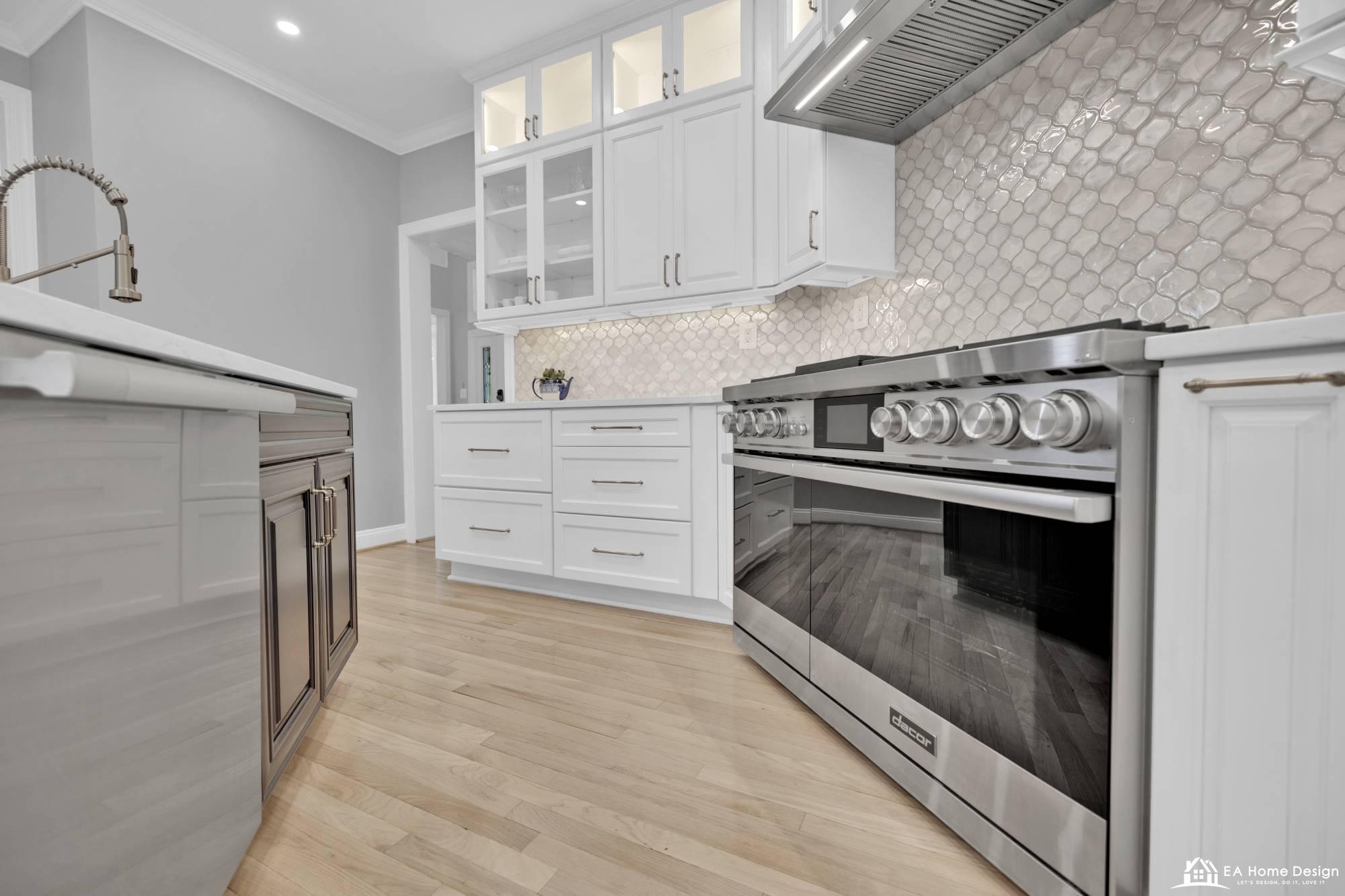
The Remodel Design Process, Step by Step
The design phase is where a remodel is actually decided, and it runs in a sequence that is the same whether an independent architect or a design build team leads it. What changes with design build is that pricing runs alongside every step instead of arriving at the end as a surprise.
- 1. Discovery and program. A first meeting at the house to establish what the space must do, who uses it, what the budget range is, and what the deal breakers are. The output is a written program: the list of needs the design will be measured against.
- 2. Site analysis and as builts. The house is measured and photographed, structure and utilities are located, and for additions the lot’s zoning constraints are pulled. Surprises found here are cheap; the same surprises found after demolition are change orders.
- 3. Concept design. Two or three layout directions, sketched loosely enough to compare honestly. This is the stage for big decisions, such as whether the wall comes out or the addition goes up rather than out, and it is the cheapest stage to change your mind in.
- 4. Design development. The chosen concept is refined into real dimensions, elevations, and material directions. In our studio this is where the 3D model appears, so clients walk through the space before it exists; see our 3D design services. A preliminary budget is priced against this level of drawing.
- 5. Construction documents. The permit set described above, with engineering stamped and specifications written. Final pricing is fixed against these documents, which is why allowances shrink and certainty grows at this stage.
- 6. Permitting. Submission to Fairfax or Loudoun County, response to reviewer comments, and any HOA or historic board review that runs alongside. Our Northern Virginia permit checklist covers what each county looks for.
- 7. Construction administration. The architect or designer stays involved during the build: answering questions from the field, reviewing shop drawings for cabinetry and steel, and verifying that what is built matches what was drawn. This step is the one most often skipped when an architect is hired separately from the builder, and its absence is where finger pointing starts.
Timing, honestly stated: steps one through five take six to twelve weeks for a kitchen or bath scale project and three to five months for an addition or whole home renovation, driven mostly by how quickly decisions get made. Permitting adds several weeks. Design is slow on purpose; the construction phase is where speed is expensive.
Creative Approaches to Custom Remodels: Where an Architect Earns the Fee
The value of architectural thinking on a remodel is rarely the drawing itself; it is the idea that makes the drawing worth building. A few patterns recur in our Northern Virginia work. Borrowing space: the best additions are often not additions at all, but reorganizations that absorb a formal living room nobody uses into a kitchen everyone does, or capture a two story foyer’s upper volume as a bedroom. Following the light: an architect reads a house by its orientation, and moving a kitchen to the south facing corner or opening a stair hall to a new window changes a home more than any finish. Resolving the roof: on colonials and split levels, the difference between an addition that looks original and one that looks bolted on is almost entirely in how the new roof meets the old, which is architecture, not decoration. Designing the sequence: entries, sightlines from the front door, the view from the kitchen sink, the path from garage to pantry with groceries. Custom remodels succeed when someone has thought about how the house is lived in hour by hour, and that thinking is what a good architect or design lead brings to the table before a single wall moves.
Remodel Architecture by Project: What the Architect Solves
Each type of remodel has one or two problems that decide it, and the architect’s first job is to solve those before anything else is drawn. These are the ones we meet in Fairfax and Loudoun County, project by project.
Room Additions and Bump Outs
Zoning first: side and rear setbacks, lot coverage limits and, in Loudoun’s newer communities, HOA setbacks that are tighter than the county’s. Then the connection, which is where additions look right or wrong. The new roof has to meet the old at a pitch and a height that read as original, the new floor has to land level with the existing one through a wall that was never meant to be an opening, and the new foundation has to step around footings, utilities and, in much of western Loudoun, a septic drainfield. The architect resolves the roof, the floor levels and the foundation on the elevations and sections before the framing plan exists. Our home addition service page shows the finished results, our home addition cost guide has the 2026 budgets, and the Loudoun County additions guide covers the septic and HOA layer.
Second Story Additions
A second story is a structural question in architectural clothing. The first job is finding out whether the existing foundation and bearing walls can carry another floor, which means an engineer probing the footings and checking the wall framing. The answer is often no for a mid century rambler on shallow footings and usually yes for a 1980s two story taking a partial third level over the garage. The second job is the stair: a new floor needs a code compliant stair, and where it lands rewrites the floor below it. Only after those two answers does the design begin, and an architect who draws a second story without them is drawing a picture.
Whole Home Renovations
The whole home project is about circulation and load paths more than rooms. The architect maps how the family moves through the house, from the garage to the pantry, from the front door to the kitchen, from the bedrooms to the laundry, then finds the walls that block that movement and the beams that would let them go. The structure has to be solved as a system, because removing three walls on the first floor changes where the second floor’s loads reach the ground. Our Northern Virginia home remodeling guide covers the costs and permits of a whole home project; the architecture is the part that decides whether the result feels like a new house or a patched one.
Open Concept Conversions and Load Bearing Walls
The most common structural remodel in Northern Virginia is the wall between the kitchen and the family room. The architect’s decisions are the beam type, steel or engineered lumber, whether it drops below the ceiling or sits flush inside the floor framing, where the posts land and how their loads reach the foundation, and what happens to the ducts, wiring and plumbing that were living inside the wall. A flush beam costs more and gives you the ceiling you were picturing; a dropped beam is cheaper and becomes the line every eye follows. Our open concept kitchen guide walks through the beams, the costs and the permits.
Kitchens and Bathrooms That Move
A kitchen that stays put is a designer’s project. A kitchen that moves to the back of the house, or a primary bath that grows into the bedroom next door, brings in the architect, because the plumbing stack, the range vent, the floor structure under a tiled shower and the window placement all change at once. The design questions are where the new drains run without a bulkhead in the room below, how the vent reaches the exterior, and whether the floor can carry a stone shower and a freestanding tub without deflection that cracks the tile.
Basements
Basements are code projects. Egress from every bedroom, headroom under the ducts, a fire separation at the furnace, insulation on the foundation walls and, in older Fairfax neighborhoods, water that has to be managed before anything is framed. The architect or designer plans the ceiling around the mechanicals, which is the difference between a seven foot basement that feels like a basement and one that does not, and places the egress window where the grade and the yard allow it. The basement remodel cost guide has the budgets.
Exterior Facelifts and Historic Homes
Changing the face of a house, a new front porch, new windows, a dormer, siding in a different material, is architecture even when nothing structural moves, because proportion is what makes or ruins it. In a historic district it also becomes a review board project, with drawings of every elevation, material samples and often a hearing. Our historic home renovation guide covers the districts, the rules and the costs.
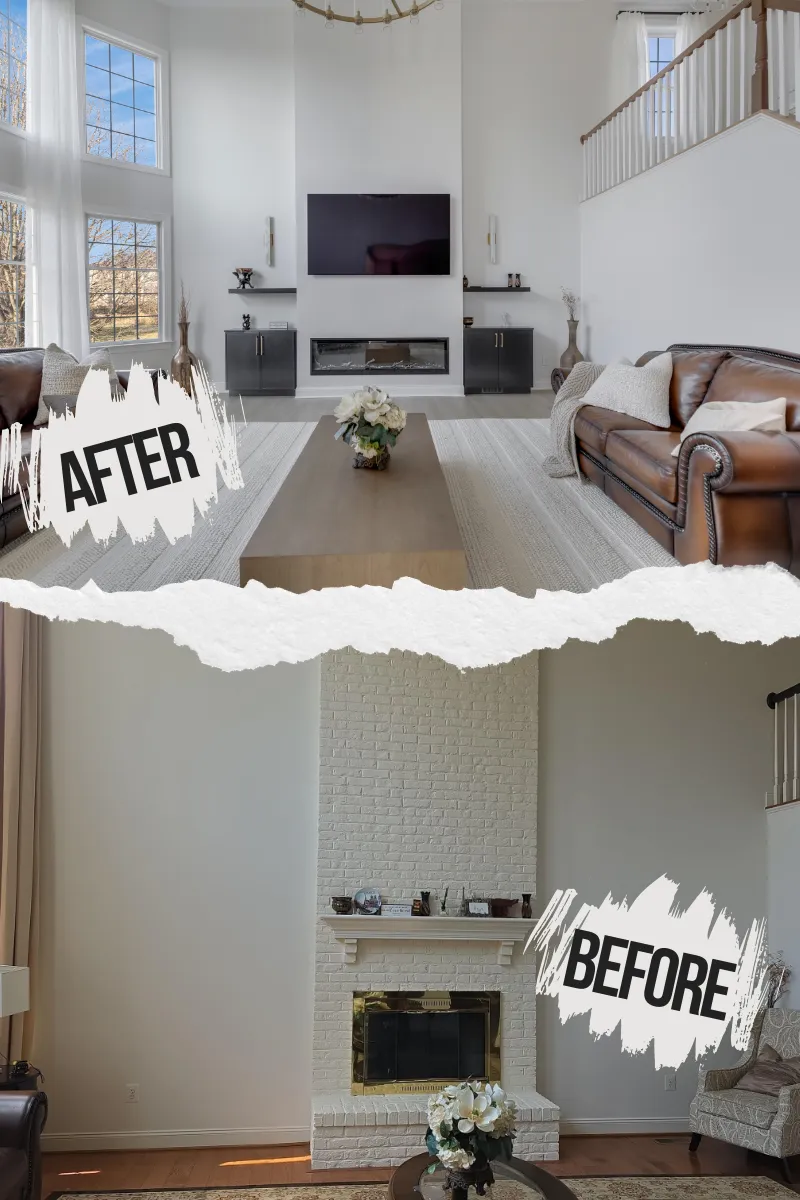
How Architect Led Remodels Go Wrong, and How Design Build Fixes It
The traditional model hires an architect first, finishes the drawings, then puts them out to contractors for bids. It produces beautiful sets and a recurring disaster: the design prices out at far more than the budget because nobody who builds for a living was in the room while it was drawn. The homeowner then pays to redesign, or builds a compromised version of a plan they already paid for in full. The second failure is the gap during construction, when the architect has moved on, the contractor interprets the drawings alone, and every ambiguity becomes a change order or an argument about whose fault it was. The third is simple accountability: with three parties, the homeowner becomes the project manager, relaying questions between people who do not answer to each other.
Design build exists to close those gaps. The architect and designer work beside the estimator, so every concept is priced as it is drawn and the plan that reaches construction documents is one the budget can carry. The people who drew the plan stay through the build, because they are the same company building it. And when something unexpected turns up behind a wall, one team decides what to do and owns the outcome. It is not that independent architects do worse work; it is that the structure of the traditional arrangement puts the risk on the homeowner, and the structure of design build puts it on the firm. Our guide to hiring a remodeler in Fairfax County covers how to vet either kind of team.
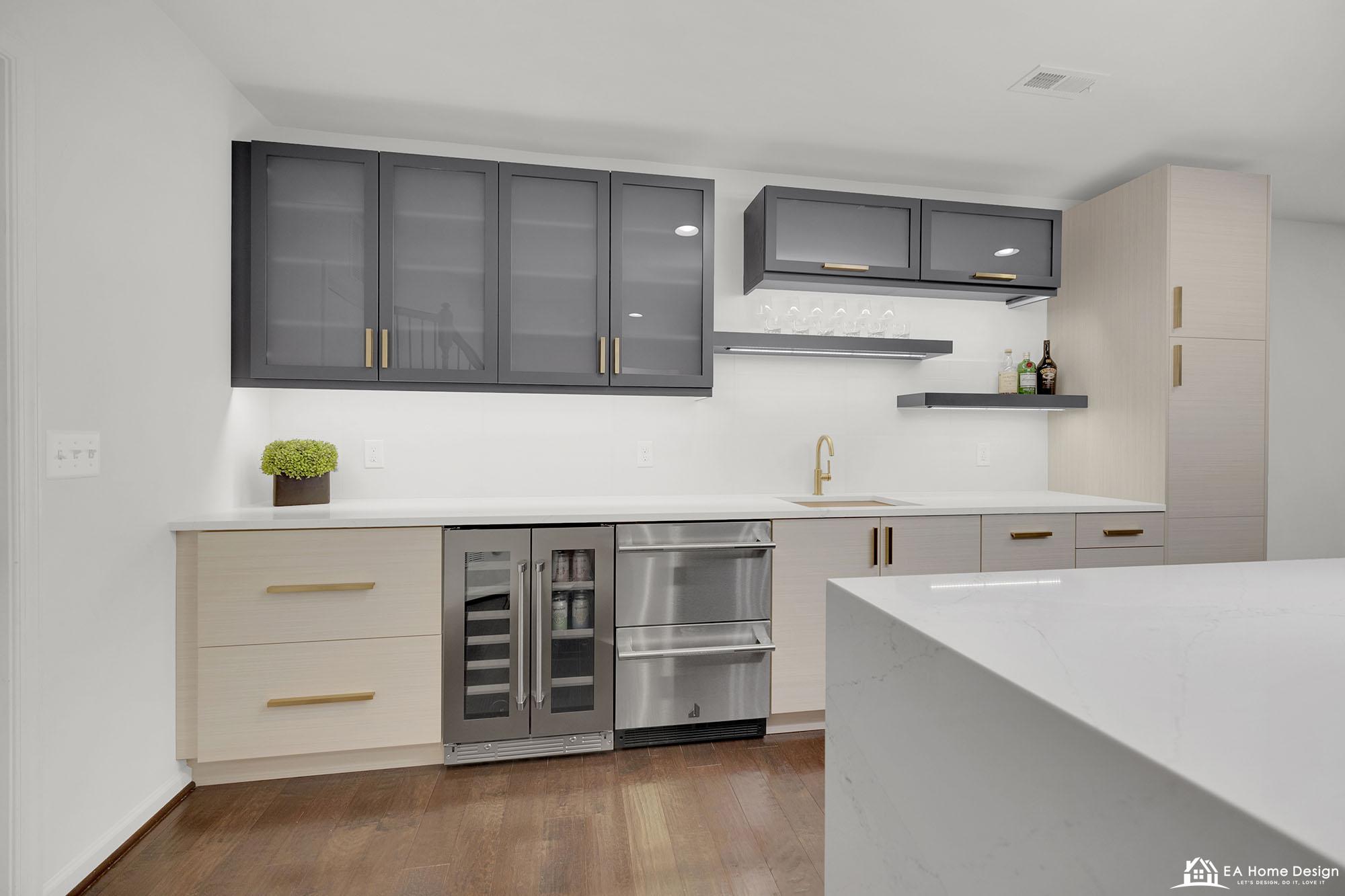
Architect Led or Design Build: How the Same Remodel Runs Two Ways
The difference is easiest to see stage by stage. The table follows one project, a family room addition on a Fairfax colonial, through both models. Fees are in the cost guide; this is about who does what, and when you learn what it costs.
| Stage | Architect led, then bid | Design build |
|---|---|---|
| First meeting | An architect visits, discusses the program and proposes a design agreement | An architect or designer and an estimator visit together; the program and a budget range are set in the same conversation |
| Measuring and as builts | The architect’s staff measure and draw the house | The design team measures while the production team walks the site to flag access, utilities and the crawlspace |
| Concept design | Two or three schemes, chosen on design merit; cost is an estimate by the square foot | Two or three schemes, each with a preliminary price, so the scheme is chosen with its cost known |
| Design development | Drawings refined; the budget is still the architect’s estimate | Drawings refined against a running estimate; selections priced as they are made |
| Construction documents | A full permit set, with engineering | A full permit set, with engineering, and a fixed construction contract priced from it |
| Pricing | The set goes to three contractors; bids arrive four to eight weeks later and often land well above the architect’s estimate, which sends the project back to redesign | Known before the drawings are finished; there is no bid round |
| Permitting | The architect submits, or the chosen contractor does; comments route back through the architect | The firm submits under its Class A license and answers the comments itself |
| Construction | The architect visits when the fee includes it, typically a handful of times; the contractor interprets the drawings between visits | The designer and architect sit down the hall from the project manager; questions are answered the same day |
| The surprise behind the wall | The contractor stops, calls the architect, the architect redraws, the owner approves a change order, the schedule waits | One team decides, prices and continues; the owner signs one change order or none |
| Contracts and accountability | Two contracts; each party points at the other when something goes wrong | One contract; one firm owns the design and the build |
Independent architects do excellent remodels in Northern Virginia, and for a homeowner who wants competitive bids on a large, unusual project, the traditional route is a legitimate choice. The honest trade is that it costs more in fees, takes longer and puts the coordination on you. For the kitchens, baths, basements, additions and whole home projects that make up most residential work, design build produces the same drawings faster, with the price attached.
The Northern Virginia Specifics
A few local realities shape how architectural work runs here. Fairfax and Loudoun County each run their own plan review, with their own submission formats and comment cycles, and an architect who submits in both regularly knows what each reviewer will flag. Newer Loudoun communities add HOA architectural review, which runs on the association’s calendar and expects elevations and material samples before the county ever sees the plans. Historic districts, from Leesburg’s old town to parts of Alexandria and Waterford, add a review board with real authority over exterior changes. And the housing stock itself sets the problems: mid century ramblers with foundations that may or may not carry a second story, 1980s colonials with two story foyers begging to be captured, townhomes where every square foot of a bump out must be justified against the setback. For addition specific decisions, our guides to home addition types and planning a home addition step by step pick up where this one leaves off.
How to Hire a Remodel Architect in Northern Virginia
Whether you hire an independent architect or a design build firm with architects on staff, the vetting is the same, and it is worth a week. These are the steps we would follow if we were sitting on the other side of the table.
- Decide the model before you decide the person. If you want competitive bids and are prepared to manage two contracts, look for an independent architect. If you want one contract, pricing during design and the designers on site during construction, look for design build. Interviewing one of each is fair; interviewing five architects when you actually want design build wastes everyone’s month.
- Look for remodel work, not new homes. Ask to see three finished renovations of houses like yours, a colonial addition, a rambler second story, a townhouse bump out, and ask what went wrong on each. A new home portfolio tells you nothing about how someone handles a 1978 foundation.
- Check the license. Architects and Class A contractors are both licensed by the state and the lookup is public. The license should be current and in the firm’s own name, and a design build firm should hold the contractor license itself rather than borrowing one.
- Ask who measures and who engineers. The person who measures the house should be the person who designs it, and the structural engineer should be named, licensed in Virginia and included in the fee, not left for you to find.
- Ask about Fairfax and Loudoun specifically. How many permit sets did they submit to each county in the last year, and what did the reviewers flag? An architect who submits in both regularly knows what each reviewer will question before it is questioned, and that saves a review cycle.
- Ask what happens when the price comes in high. The answer tells you everything. An architect who says it rarely happens has not been watching the bids; one who explains their estimating process and their redesign terms has. A design build firm should be able to show you how its pricing tracks the design from concept to contract.
- Ask about construction administration. How many site visits are in the fee, at which stages, and what is the hourly rate beyond them? On a remodel the visits at framing and rough in are the ones that matter.
- Read the design agreement for the deliverables. It should list the sheets you will receive, name the engineer, say who submits to the county and answers comments, say who owns the drawings and whether you may build them with a different contractor, and put dates on the design phases.
- Start with a paid feasibility visit if you are unsure. Two or three hours of a remodel architect’s or design builder’s time on a house you are thinking of buying, or an addition you are not sure the lot allows, is the cheapest decision in the whole process.
Questions to Ask a Remodel Architect Before You Sign
Bring these to the first meeting, in writing. The cost guide has the five fee questions; these are the process ones.
- How many remodels of houses like mine have you drawn in the last two years, and can I speak to two of those owners?
- Who will measure my house, and who will be my day to day contact through design?
- Who does the structural engineering, are they licensed in Virginia, and is their fee included in yours?
- Will you submit to the county and respond to plan review comments, or does that fall to the contractor or to me?
- What is your record on bids or contract prices landing within the budget we set today?
- How many site visits are included during construction, and at which stages?
- What happens if the framing crew opens a wall and finds something the drawings did not show?
- Who owns the drawings, and can I build them with another contractor if we part ways?
- If my HOA or a historic board has to approve the exterior, who prepares and presents that submission?
- What will you tell me at this first meeting that I will not want to hear?
What a Remodel Architect Costs, in Brief
Fees are covered in full, with project scenarios, in our architect cost guide. The short version for planning purposes, in 2026 Northern Virginia numbers:
| Service | Typical 2026 cost | What it buys |
|---|---|---|
| Initial consultation | Free to about $500, often credited if you hire the firm | A feasibility read on the house and the idea, and a first sense of the budget range |
| Hourly work | $150 to $250 per hour for experienced practitioners in Northern Virginia | Feasibility studies, small scopes and extra site visits; cap it in writing |
| Plans only, permit ready set | $6,000 to $18,000 for remodels and additions, starting nearer $8,000 locally | Construction documents with engineering, for a project you will bid out or build with your own contractor |
| Full service on a renovation or addition | 10 to 20 percent of construction cost | Design through construction administration; $20,000 to $40,000 on a $200,000 renovation |
| Structural engineering on its own | $500 to $1,500 for a single beam or wall removal; more for additions and second stories | The stamped framing and foundation sheets the county reads first |
| Design build design fee | Typically 3 to 8 percent of construction, often credited toward the build | The same drawings, engineering and permitting, with pricing developed alongside the design |
The number that matters more than any fee is the one the fee protects: the construction budget. Design at 10 percent that keeps a $300,000 addition at $300,000 is cheaper than design at 6 percent that produces a $380,000 set of drawings, and the second outcome is the common one when nobody who builds was in the room while it was drawn.
Architect for a Remodel: FAQs
What does a remodel architect do?
A remodel architect measures and documents the existing house, writes the program, solves the plan, coordinates the structural engineering, checks the code and zoning, produces the permit set, answers the county’s plan review comments and stays involved during construction. On a design build project the same work is done by architects and designers who work beside the estimator and the project manager, so pricing develops with the design.
Do I need an architect to remodel a kitchen?
Almost never, if the kitchen stays within its existing walls. A design build firm’s kitchen designer produces the layout, the cabinetry drawings, the electrical and plumbing plans and the specifications the county needs. If a wall comes out, a structural engineer sizes and stamps the beam, and that is still not an architect’s engagement. The exception is a kitchen that moves to a different part of the house or grows through an addition, where architectural design is worth having.
Do I need an architect for a home addition?
For most additions, yes, or a design build firm with architects on staff. An addition changes the footprint, the roof and the structure, and it must satisfy zoning, so the drawings need a site plan, elevations, sections and stamped engineering. Small bump outs are sometimes handled by a designer and an engineer together, but second stories, above garage rooms and anything that reshapes the roofline benefit from architectural design.
Do I need an architect to remove a load bearing wall?
No. A load bearing wall removal needs a structural engineer’s stamped design for the beam, the posts and the load path to the foundation, plus a permit and a framing inspection before the beam is covered. A design build designer produces the plans and the engineer stamps the structure. An architect adds value when the opening is part of a larger replan of the floor, or when the choice between a flush and a dropped beam changes how the whole room reads.
Can a contractor draw the plans instead of an architect?
In Virginia, plans for one and two family homes can be prepared by people who are not licensed architects, so a contractor or design build firm can produce them, with the structural portions engineered and stamped. Whether they should depends on the firm. A design build company with degreed designers and architects on staff produces professional sets; a contractor sketching on graph paper does not, and the county reviewer will send that set back. Ask to see a recent permit set before you hire anyone to draw yours.
How do I find a good remodel architect in Northern Virginia?
Decide first whether you want an independent architect and competitive bids or a design build firm and one contract. Then look for finished remodels of houses like yours rather than new homes, check the architect’s or the firm’s license in the state’s public lookup, ask who measures and who engineers, ask how many permit sets they submitted to Fairfax and Loudoun County last year, and ask what happens when the price comes in high. A paid feasibility visit is a good way to test the fit before signing a design agreement.
How much does an architect cost for a remodel?
Full architectural services on a renovation or addition run 10 to 20 percent of construction cost in 2026, so $20,000 to $40,000 on a $200,000 renovation. Plans only packages with permit ready drawings run about $6,000 to $18,000, hourly rates in Northern Virginia are $150 to $250, and consultations range from free to about $500. Design build firms typically charge 3 to 8 percent for the same drawings and engineering, often credited toward construction.
How long does the design phase of a remodel take?
Six to twelve weeks for a kitchen, bath or basement, and three to five months for additions and whole home projects, from the first meeting to permit ready drawings. The variable is decision speed: a client who chooses finishes in a week keeps the calendar moving, and one who revisits the layout in month three restarts it. Permitting then adds several weeks on top.
Does the architect handle permits?
In a design build arrangement the firm handles permitting end to end under its own contractor license, including responses to reviewer comments. An independent architect typically prepares the permit set and may submit it, but the building permit itself is pulled by the contractor doing the work. Either way, the homeowner should never be the one pulling the permit; that shifts code responsibility away from the professionals and onto you.
Is it better to hire an architect or a design build firm for a renovation?
For most kitchens, baths, basements, additions and whole home renovations, design build is the better fit: the same drawings and engineering, pricing that develops with the design instead of arriving as a bid four to eight weeks after the drawings are done, one contract, and the designers still on the project during construction. An independent architect makes sense for a large or unusual project where you want to run competitive bids and are prepared to manage the coordination yourself.
What is the difference between an architect and a designer for a remodel?
An architect designs the building: structure, envelope and how spaces are arranged and connected. An interior designer designs what happens within the spaces: layout at the room level, cabinetry, finishes, lighting and fixtures. A kitchen remodel is a designer’s project, a second story is an architect’s, and a whole home renovation needs both, which a design build firm supplies under one roof.
The short version of this whole guide: hire architectural thinking in proportion to how much your house is changing, insist on a complete set of drawings whoever produces them, and make sure the people who design the remodel are still in the room when it is built. If you are planning a project in Fairfax or Loudoun County, we design and build under one contract, from the first sketch to the final inspection.
Related guides: how much an architect costs, interior design in Northern Virginia, and our design build process. Explore our remodeling services or see finished work in our case studies.