Designing the Perfect Home Office for Maximum Productivity
Introduction
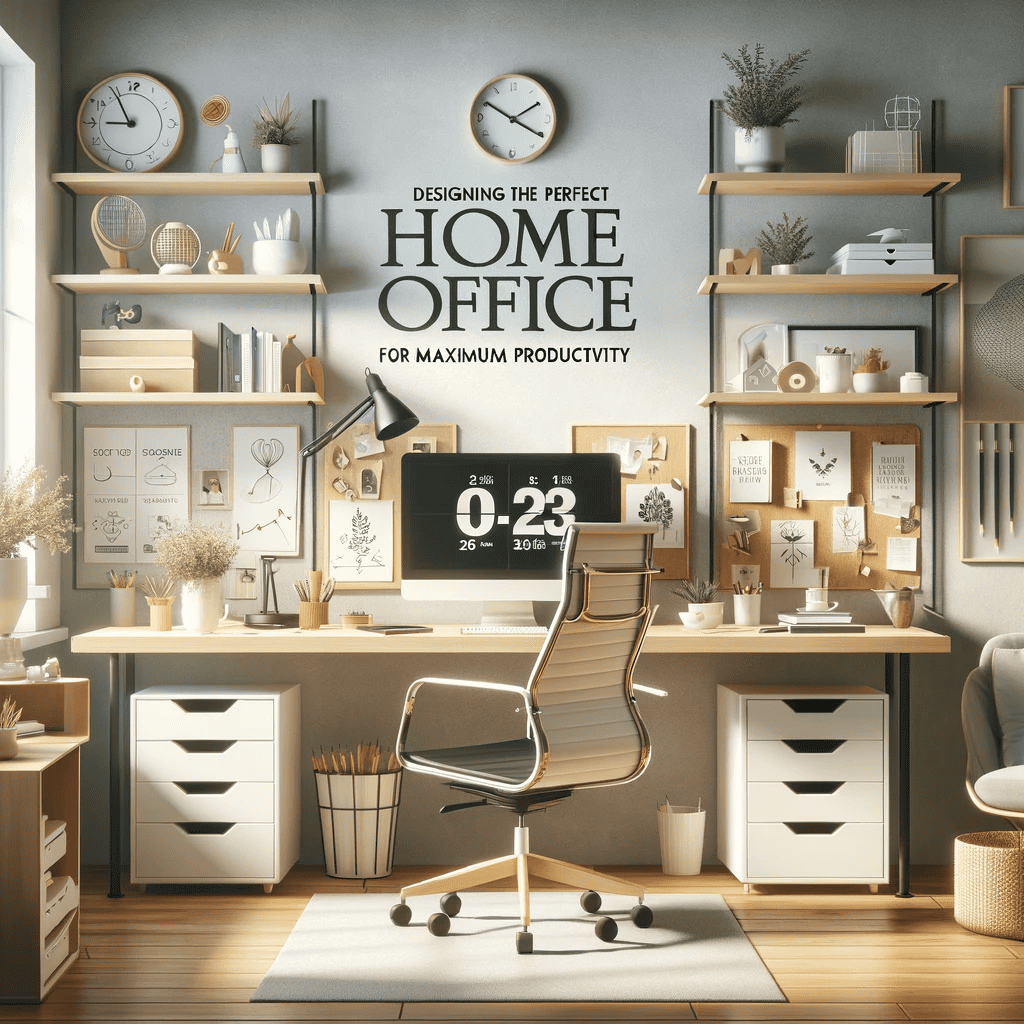
The shift towards remote work has underscored the importance of having a dedicated home office that is not only functional but also conducive to productivity. A well-designed home office can make a significant difference in your work performance and overall well-being. Drawing inspiration from the image showcasing an ideal home office setup, this blog post, “Designing the Perfect Home Office for Maximum Productivity,” will guide you through creating a workspace that combines efficiency, comfort, and style.
1. Ergonomic Furniture: The Foundation of a Productive Workspace
- Comfortable Seating: Invest in an ergonomic chair that supports good posture and reduces strain during long working hours. Features like adjustable height, lumbar support, and comfortable cushioning are key.
- Spacious Desk: Choose a desk that offers ample space for your work essentials. Consider adjustable standing desks to alternate between sitting and standing.
2. Natural Light: Boosting Energy and Focus
- Maximize Natural Light: Set up your workspace near a window to benefit from natural light, which can boost mood and energy levels. Use sheer curtains to diffuse light without causing glare.
- Positioning: Ensure your desk is positioned to avoid direct glare on your computer screen, reducing eye strain.
3. Organized Storage: Keeping Clutter at Bay
- Shelving and Cabinets: Utilize shelving or wall-mounted cabinets for organized storage. Keeping your workspace clutter-free can enhance focus and efficiency.
- Personalized Organizers: Use desk organizers, file holders, and drawer dividers to keep your office supplies and documents neatly arranged.
4. Motivational Decor: Personalizing Your Space
- Inspirational Elements: Decorate your office with items that inspire and motivate you, such as motivational quotes, personal mementos, or artwork.
- Color Psychology: Incorporate colors that stimulate productivity and creativity. Blues and greens are known for their calming effects, while yellows can foster creativity.
5. Technology and Connectivity
- Reliable Tech Tools: Equip your office with the necessary technology – a high-speed internet connection, efficient computer, and essential peripherals like a printer and scanner.
- Cable Management: Implement cable management solutions to keep cords organized and out of sight, contributing to a streamlined workspace.
6. Creating a Comfortable Environment
- Temperature Control: Ensure your office is well-ventilated and maintain a comfortable temperature. Consider a portable heater or fan if needed.
- Personal Comfort: Add a personal touch with comfortable accessories like a soft rug, a cushion for your chair, or a small plant for a touch of nature.
7. Lighting the Space
- Layered Lighting: In addition to natural light, incorporate layered lighting with a combination of overhead lights, task lamps, and accent lights to reduce eye strain and create a pleasant ambiance.
- Adjustable Lighting: Use adjustable and dimmable lights to tailor the lighting to different times of the day and specific tasks.
8. Conclusion
Designing the perfect home office is about creating a space that meets your work needs while reflecting your personal style. By considering ergonomic furniture, natural light, organized storage, and motivational decor, you can create a workspace that not only looks great but also boosts your productivity and job satisfaction.