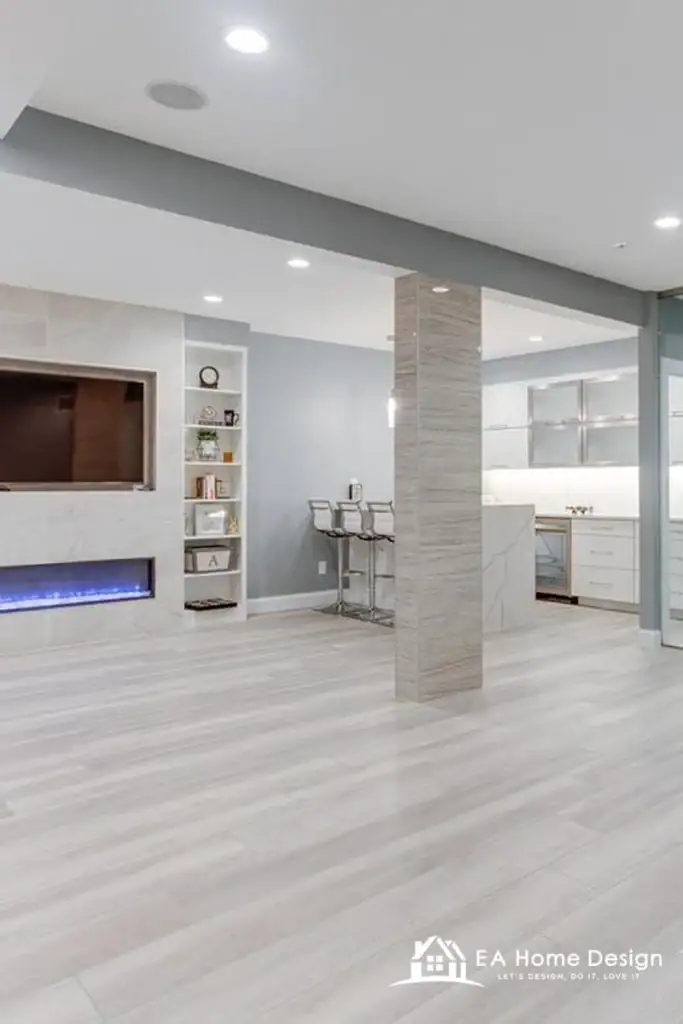
Finishing a basement on a budget in Northern Virginia runs $35 to $65 per square foot for a smart, value focused build out, against $100 or more for a high end finish, and the difference comes from a handful of decisions: an open layout instead of many rooms, luxury vinyl plank instead of hardwood, a painted exposed ceiling or drywall instead of coffered details, and a dry bar instead of a full kitchenette. If your basement is already finished, most of the ideas below cost hundreds, not thousands, because paint, lighting, and layout do the heavy lifting. Here are fifteen finished basement ideas that respect a real budget, with honest 2026 costs for each, followed by the places you should never save a dollar. For the full price picture across all three finish tiers, with the bathroom, kitchenette and egress add-ons priced separately, see our Northern Virginia basement remodel cost guide.

What “On a Budget” Actually Buys in Northern Virginia
Budget is relative, so let us anchor it. These are the three realistic tiers we see across Fairfax and Loudoun County in 2026:
| Tier | Typical spend | What you get |
|---|---|---|
| Refresh an already finished basement | $2,000 to $15,000 | Paint, lighting, flooring in one zone, furniture, decor |
| Value focused full finish (around 800 sq ft) | $30,000 to $55,000 | Open plan, one bathroom, LVP floors, recessed lighting |
| Full finish with premium zones | $60,000 to $90,000+ | Multiple rooms, wet bar, theater wiring, custom built-ins |
The single biggest cost lever is plumbing: every idea on this list gets more expensive the moment water moves. The second is partitions, since each new wall brings framing, drywall, electrical, and often a door. Budget basements stay open and dry wherever possible. For how we finish a lower level from the moisture check to the final inspection, with before and after photos of a completed EA Home Design basement, see our basement remodeling in Northern Virginia page.
Fifteen Finished Basement Ideas on a Budget
1. The Big Family Room
The best value in basement finishing is also the simplest: one generous family room instead of three small rooms. A sectional facing a wall mounted TV, a rug to warm the floor, and dimmable recessed lights deliver the room families actually use every day. Budget move: skip built-ins and use freestanding media furniture, saving $4,000 to $8,000. Typical cost inside a finish: this is the baseline. As a refresh of an existing space: $1,500 to $5,000 with furniture.
2. Home Theater Without the Theater Price
A dedicated theater with tiered seating and acoustic panels runs $25,000 to $60,000. The budget version delivers 90 percent of the experience: a 100 inch projector screen or large TV on a dark painted wall ($1,200 to $3,500 for projector and screen), blackout curtains, a soundbar or used surround set, and reclining seats bought on sale. Basements are naturally dark and quiet, which is the expensive part of theater construction handled free by your house.
3. Game Room With a Pool Table
The classic basement idea, and the one people forget to measure for. A standard table needs roughly 13 by 17 feet of clear space for full cue clearance, so check before you buy, not after. A quality used table runs $800 to $2,500 delivered, and a ping pong conversion top ($150 to $300) makes it two rooms in one. Add a dartboard wall and a card table and the whole zone costs less than one custom cabinet run.
4. Home Gym on Rubber and Mirrors
Interlocking rubber tiles ($2 to $4 per square foot), a wall of mirror panels, a rack, bench, and adjustable dumbbells put a real gym in 200 square feet for $2,500 to $6,000, less than a year of two gym memberships in this area. Concrete floors that disqualify a space for living are perfect under a deadlift platform, so gyms suit even partially finished basements.
5. The Quiet Home Office
Below grade is the best office in the house: cool, quiet, and away from the doorbell. A desk facing the room, task and ambient lighting to compensate for small windows, and one accent wall of paint or peel and stick paper make video calls look intentional. Cost as part of a finish: essentially free beyond one wall and a door. As a refresh: $800 to $2,500. Our bedroom accent wall ideas guide shows what each treatment costs and how it is built.
6. Guest Suite, the Honest Version
A legal basement bedroom requires an egress window, and cutting one into the foundation costs $4,000 to $8,000 in this region. That is the unavoidable price of doing it right, and it is worth stating plainly because listings that call a windowless room a bedroom create appraisal and safety problems later. Budget approach: a quality sleeper sofa or murphy bed in the family room handles occasional guests for $1,500 to $4,000 with zero construction, and the egress window becomes a phase two project. Our basement bedroom guide covers the egress rules, the layouts and what each costs.
7. Kids’ Playroom That Converts Later
Foam mat flooring over LVP, open bins on low shelving, a craft table, and washable paint make a playroom for under $2,000. The budget wisdom is in what you skip: no themed murals, no built-in play structures, nothing a twelve year old will veto. Design it as a neutral room wearing a playroom costume and it becomes the teen den or office later for the cost of new furniture.
8. Dry Bar Instead of Wet Bar
A wet bar with sink, plumbing, and tile runs $8,000 to $20,000. A dry bar, meaning cabinets, a countertop, a beverage fridge, and open shelving, delivers the same evening for $2,000 to $6,000 because no water moves. Put it on the wall closest to the stairs and the future wet bar conversion stays cheap if you ever want it.
9. Reading Nook and Basement Library
Bookcases along one wall, a pair of comfortable chairs, a floor lamp, and a rug turn the awkward corner every basement has into its most loved ten feet. IKEA cases trimmed with a site built top and side panels read as custom built-ins for a quarter of the price, roughly $1,200 versus $6,000 plus.
10. Craft and Hobby Room
Sewing, models, painting, tying flies: hobbies want exactly what basements offer, durable surfaces and forgiveness. A wall of pegboard ($100 to $300), a big work surface made from a door blank on cabinets, and bright 4000K lighting build the room for under $1,500. This is the one space where the exposed ceiling look costs nothing and fits perfectly.
11. Teen Hangout
Gaming corner with a cheap but large TV, bean bags and a futon, a mini fridge, and string or LED strip lighting they choose themselves. Budget $1,500 to $3,500 and accept that the aesthetic belongs to them. The strategic value is real: a basement teens actually use is a basement you always know they are in.
12. The Under Stairs Bar or Nook
The triangle under the basement stairs is free square footage. A built-in bar with a beverage fridge, a dog den, a kids’ reading cave, or simply beautiful open shelving all fit. Done with stock cabinets and a fitted countertop, expect $1,000 to $3,000 for the kind of detail guests photograph.
13. Laundry That Does Not Feel Like Punishment
If the machines live in the basement anyway, $1,500 to $4,000 in cabinets, a folding counter, good lighting, and cheerful paint converts a chore corner into a real room. This is consistently the highest satisfaction per dollar upgrade in basement projects, and it photographs far better than its budget suggests when you sell.
14. Music and Practice Room
Below grade concrete and dirt are natural sound insulation. Add a thick rug, moving blankets or budget acoustic panels on two walls ($200 to $600), and a drum kit or amplifier stops being a family crisis. Full soundproofing costs five figures; strategic absorption costs a weekend.
15. Storage That Looks Finished
Keep one zone unfinished on purpose, then make it disciplined: sealed floor, painted walls, industrial shelving in matched rows, labeled bins. Cost, $500 to $1,500. A curtain wall or barn door ($300 to $900) hides it from the finished side. Every basement needs this room, and planning it is what keeps the finished side from silting up with boxes.
Basement Decorating Ideas on a Budget
If the basement is finished and simply feels dated or dark, decorating solves more than most owners believe, and none of it requires a contractor:
- Paint everything light, including the ceiling: One weekend and $200 to $400 of paint does more for a dark basement than any single purchase. Warm whites and soft greiges bounce the limited light; a dark accent wall behind the TV adds depth.
- Fix the lighting temperature: Swap every bulb to matching 2700K to 3000K LEDs and add two or three floor and table lamps. Basements feel like basements mostly because of gloomy, mismatched overhead light.
- Layer rugs generously: Large, inexpensive rugs over LVP or carpet define zones and warm the floor. Oversize beats quality at this price point; a 9×12 budget rug outperforms a small designer one.
- Hide the utility honestly: Floor to ceiling curtains across the mechanical corner, a folding screen, or a painted pegboard panel wall costs under $300 and removes the number one “unfinished” signal.
- Bring in plants that tolerate low light: Pothos, snake plants, and ZZ plants survive basement conditions and erase the bunker feeling for $100.
Furniture and Layout: The Free Remodel
Basement furniture placement follows different rules than upstairs rooms, and getting it right costs nothing. Float the seating away from the walls to create a conversation island under the best light rather than pushing sofas to the cold perimeter. Zone the open plan with rugs and the backs of furniture, television lounge here, game table there, so one long room reads as three destinations. Choose low backed, leggy furniture that light passes through, because bulky pieces eat both the limited height and the limited light. And leave the traffic spine from the stairs to each zone clear, since a basement you have to slalom through is a basement nobody uses. These are the same principles from our guide to maximizing comfort in small living spaces, applied below grade.

Where to Save, and Where Never To
Every dollar in a budget basement should be taken from finishes, never from the envelope. Save freely on: flooring (quality LVP at $3 to $5 per square foot is genuinely better below grade than hardwood), ceilings (smooth drywall or a cleanly painted exposed ceiling both beat dated drop tile), doors and trim (paint grade, simple profiles), and anything decorative. Never save on: moisture, meaning any history of dampness gets diagnosed and fixed before one stud goes up, because flooring over a wet slab is money composted; egress, if anyone will sleep down there; electrical capacity, since theaters, gyms, and bars all want circuits; and permits. Fairfax and Loudoun County both require permits for basement finishing, inspectors catch real safety issues, and an unpermitted finish resurfaces at appraisal and sale, a lesson covered in detail in our Northern Virginia permit checklist.
Is a Budget Basement Finish Worth It?
Financially, basement finishing returns roughly 70 to 75 percent of its cost at resale in our region, and the value focused tier returns the best percentage because appraisers count finished square footage, not the price of your ceiling details. Practically, it is the cheapest livable square footage you can add: $30,000 to $55,000 for 800 finished square feet is a fraction of any addition’s cost per foot. If your ambitions grow beyond the budget tier, toward a full apartment, wet bar, or home theater build, our complete basement transformation guide covers the larger playbook, and our post on what $50,000 buys in a remodel shows where a basement sits among competing projects.
The Order of Operations That Protects Your Budget
Budget overruns in basements are almost always sequencing failures, not pricing failures. The order that protects you: test for moisture through at least one heavy rain before committing to finishes. Pull permits and settle the full layout on paper, including the future wet bar or bathroom you are not building yet, so rough plumbing and wiring can be stubbed in now for hundreds instead of retrofitted later for thousands. Run all electrical while walls are open, adding more circuits and outlets than you think you need, because basements collect equipment. Only then do flooring, paint, and furniture enter the conversation. Phasing this way also spreads cost across years painlessly: a family that finishes the shell and family room this year adds the bathroom in two years without demolishing anything they already paid for.
Budget Killers to Catch Early
Four conditions turn a budget finish into a full renovation, and all four are visible before you spend a dollar. Ceiling height under about seven feet limits what code allows and what feels livable, and lowering a slab is a five figure conversation. A bathroom located far from the existing drain line usually needs a sewage ejector pump, adding $2,000 to $4,000. An older electrical panel already near capacity may require an upgrade before the basement adds its circuits. And ductwork or pipes crossing the middle of the ceiling at head height need rerouting or a design that embraces soffits. None of these kill a project, but every one of them belongs in the estimate on day one, which is exactly what a thorough site visit is for.
Related guide: planning to swing the hammer yourself on the strip out? Start with our demolition safety guide.
Frequently Asked Questions
What is the cheapest way to finish a basement? Keep the layout open, keep plumbing where it is, use LVP flooring, paint the exposed ceiling instead of installing drywall, and put the budget into lighting and paint. In Northern Virginia this approach lands near $35 to $45 per square foot with a contractor, less if you legitimately DIY the finishes.
How much does it cost to finish a 1,000 square foot basement in Northern Virginia? A value focused finish runs $35,000 to $65,000 in 2026 depending on whether a bathroom is included, since that single decision swings the total by $15,000 to $25,000.
Do I need a permit to finish my basement in Fairfax or Loudoun County? Yes. Both counties require building permits for finishing work, plus trade permits for electrical and plumbing. Bedrooms require egress windows. Skipping permits saves weeks now and costs more at refinance or sale.
Should I drywall the basement ceiling or paint it? Drywall looks most finished and helps resale; a well painted exposed ceiling saves $3,000 to $8,000, preserves ceiling height, and keeps mechanicals accessible. In a budget finish, paint it and spend the savings on lighting, which matters more.
Does finishing a basement add value? Yes, typically returning 70 to 75 percent of cost at resale in this market while adding the living space that keeps families from moving. Value tier finishes return the highest percentage.
What should I not put in a basement? Solid hardwood flooring, anything ruined by humidity, and a bedroom without egress. Everything else on this list is fair game.
Finish It Once, Finish It Right
A budget basement done in the right order, moisture, permits, layout, then finishes, becomes the most used floor in the house for the least money per square foot you will ever spend. Done in the wrong order, it becomes the expensive room nobody trusts. EA Home Design is a Class A licensed design build firm serving Fairfax and Loudoun County, and basement finishing at every tier is core work for our team. Schedule a consultation and we will tell you honestly which tier your basement, and your budget, actually calls for.